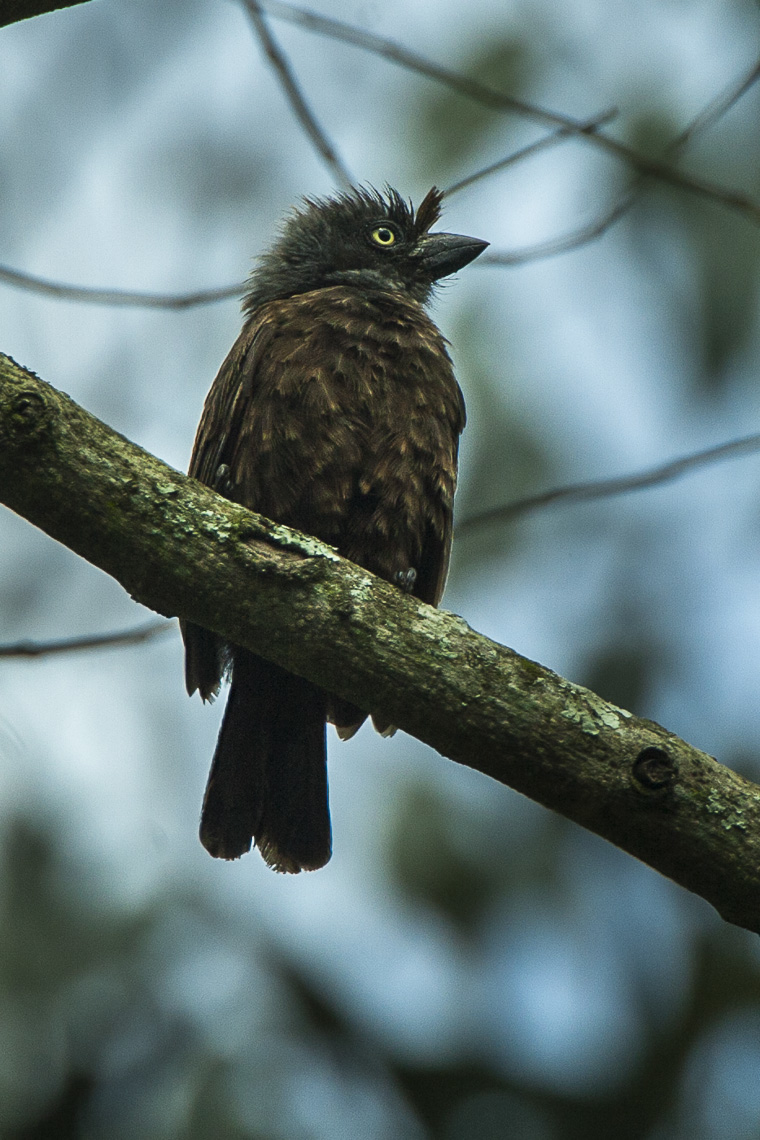
Capitonides europeus
Capitonides europeus
Order: Piciformes / Family: Lybiidae
About the Capitonides europeus
Capitonides europeus, commonly referred to as the European Barbet, is an intriguing bird belonging to the Piciformes order. This species is a fascinating subject for ornithologists and bird enthusiasts alike due to its vibrant appearance and complex ecological role. Found predominantly in the temperate and mixed forests of Europe, the European Barbet's presence is a key indicator of healthy forest ecosystems. Its activities contribute significantly to seed dispersal, thereby maintaining the diversity and dynamics of its habitat. The Capitonides europeus plays a crucial role in controlling insect populations, as it feeds extensively on various insects during its breeding season. This feeding habit not only benefits the bird but also supports the ecological balance by naturally regulating pest populations. During the winter months, when insects become scarce, the European Barbet shifts its diet to include a higher proportion of fruits and berries. This dietary flexibility is essential for its survival during harsh conditions. The seasonal behaviors of Capitonides europeus are characterized by its migration patterns and breeding activities. While some populations remain resident throughout the year, others migrate to milder climates, ensuring access to food resources. Breeding typically occurs in late spring, where the European Barbet's courtship displays and nest-building activities are a spectacle to behold. These activities are not just vital for reproduction but also serve as a means of strengthening pair bonds and establishing territories within the forest canopy.
The Capitonides europeus belongs to the family Lybiidae, within the order Piciformes. These birds typically live Unknown due to its extinct status..
How to Identify a Capitonides europeus
The European Barbet, or Capitonides europeus, can be readily identified by its striking plumage and robust build. Adult birds exhibit a combination of vibrant yellow and green feathers, with conspicuous black markings on the head and wings. The male of the species typically displays more vivid colors compared to the female, whose plumage is slightly duller, assisting in camouflage while nesting. Juvenile barbets, on the other hand, have a more muted coloration, which gradually intensifies as they mature. In terms of size, the European Barbet is a medium-sized bird, measuring approximately 20-25 centimeters in length. Its stout bill, adapted for excavating nest holes in tree trunks, is a distinctive feature that sets it apart from similar species. While perched, the European Barbet often exhibits a relaxed posture, with its tail slightly fanned and wings close to the body. In flight, the bird's silhouette is characterized by broad wings and a relatively short tail. Though it shares some plumage similarities with other Piciformes, such as woodpeckers, its unique color pattern and bill shape help avoid confusion. Observers should note its rhythmic flight pattern, which consists of rapid wingbeats followed by brief glides.
Having trouble telling birds apart? Upload a photo to our bird identification tool for an instant species match.
Capitonides europeus Habitat and Range
Preferred Habitat
The preferred habitat of the Capitonides europeus includes a variety of forest types, predominantly temperate and mixed woodlands. These environments provide ample opportunities for nesting and foraging. The species thrives at elevations ranging from lowland forests up to 1500 meters, depending on the availability of suitable nesting sites and food sources. During the breeding season, the European Barbet shows a preference for mature forests with dense canopy cover, which offer protection and an abundance of feeding opportunities. As seasons change, some individuals may venture into more open areas such as orchards and gardens, particularly in search of fruit. The species has demonstrated adaptability to both urban and rural environments, though it remains more commonly associated with undisturbed natural habitats. Seasonal habitat shifts are influenced by food availability, prompting some populations to move from higher elevations to lowland areas during winter.
Geographic Range
The range of Capitonides europeus spans across several countries in Europe, with populations breeding primarily in central and southern regions. Key breeding territories include countries such as Germany, France, and Switzerland, where the bird finds favorable conditions in mixed and deciduous forests. During the winter months, some populations migrate to warmer areas along the Mediterranean, including parts of Spain and Italy, to take advantage of milder climates and abundant food resources. Migration corridors often extend through the Balkans and into parts of Western Asia. While the European Barbet is generally widespread across its range, certain regions host denser populations, particularly in areas with extensive undisturbed forest cover. These hotspots serve as critical breeding and foraging grounds, supporting both resident and migratory birds.
Want to know which birds visit your area? Browse our backyard birds by location guides for region-specific species lists.
What Does the Capitonides europeus Eat?
The diet of the European Barbet, Capitonides europeus, is diverse, primarily comprising insects and fruits. During the breeding season, insects form the bulk of its diet, with a preference for beetles, ants, and caterpillars. The bird employs a variety of foraging techniques, often gleaning insects from bark and foliage. It also exhibits a remarkable ability to peck into wood to extract grubs and larvae, a skill facilitated by its strong bill. As the seasons change and insect availability declines, the European Barbet shifts its diet to include a higher proportion of fruits and berries, such as cherries, figs, and grapes. This dietary flexibility allows the bird to sustain itself through winter when food resources are scarce. The barbet's foraging activities typically occur during early morning and late afternoon, aligning with peak insect activity and optimal fruit ripeness.
Capitonides europeus Behavior and Social Structure
Capitonides europeus exhibits a complex array of behaviors, reflective of its social structure and environmental interactions. This species is generally monogamous, with pairs forming strong bonds that last throughout the breeding season. During this time, males engage in elaborate courtship displays, which include vocalizations and synchronized movements to attract mates. Territorial behavior is pronounced, particularly during nesting, when pairs actively defend their chosen sites from intruders. The European Barbet is also known for its communal roosting habits outside the breeding season, often gathering in small flocks. This social behavior aids in predator detection and foraging efficiency. Daily activity patterns are primarily diurnal, with peak activities occurring during dawn and dusk. In response to predators, the European Barbet exhibits a range of strategies, from mobbing to alarm calls, alerting nearby conspecifics and other species of potential threats.
Capitonides europeus Nesting and Reproduction
Nesting in Capitonides europeus is a meticulously planned affair, with pairs selecting sites in tree cavities, often excavated by the birds themselves. The European Barbet prefers mature trees with soft wood, which facilitate easier excavation. Nest construction involves the use of wood chips and leaves to line the cavity, providing a soft bedding for the eggs. Typically, a clutch consists of 3 to 5 eggs, which undergo an incubation period of approximately 14-16 days. Both parents share incubation duties, with the female taking a slightly larger share of the responsibility. Once hatched, the chicks remain in the nest for about 30 days, during which time they are fed by both parents. The species usually raises one brood per year, although favorable conditions may occasionally allow for a second clutch. Parental care extends beyond fledging, with adults continuing to feed and protect the young for several weeks post-fledging.
Capitonides europeus Sounds and Vocalizations
The vocalizations of the European Barbet are both distinctive and varied, playing a crucial role in communication. Its primary song is a series of melodious, flute-like notes delivered in a rhythmic pattern, often described as 'tu-tu-tu.' These sounds serve to establish territory and attract mates. The call notes are shorter and sharper, often used in social interactions or to alert others to potential dangers. Alarm calls are harsher and more abrupt, signaling immediate threats. During the dawn chorus, the European Barbet's song contributes significantly to the vibrant soundscape of its forest habitat, often overlapping with other bird species. The quality of its song has been likened to the sound of a gently flowing stream, soothing yet commanding attention.
Interesting Facts About the Capitonides europeus
- 1European Barbets have been observed using anvils to crack open hard-shelled seeds, showcasing their intelligence.
- 2Capitonides europeus can excavate nesting cavities in as little as 2-3 days, highlighting their strong bills.
- 3Unlike many birds, European Barbets sometimes reuse nest sites for several consecutive years, reducing energy expenditure.
- 4During courtship, males perform acrobatic flights and offer food to females as part of their bonding ritual.
- 5The European Barbet's songs are often mistaken for those of native European thrushes due to their melodic quality.
- 6In some regions, the European Barbet forms mixed-species flocks, enhancing foraging efficiency and predator awareness.
- 7Despite their tropical relatives, European Barbets are well adapted to temperate climates and seasonal food availability.
Capitonides europeus Conservation Status
Currently, Capitonides europeus holds a conservation status of Least Concern on the IUCN Red List, reflecting its relatively stable population numbers. However, the species faces several threats, primarily habitat loss due to deforestation and land-use changes. Conservation efforts focus on preserving crucial forest habitats and promoting sustainable forestry practices. Historical data indicates a decline in certain regions, primarily driven by urban expansion and agricultural development. Despite these challenges, the European Barbet has shown resilience through its adaptability to modified landscapes, although continued habitat conservation is vital to ensure its long-term survival.