
Chapin's Babbler
Kupeornis chapini
Order: Passeriformes / Family: Leiothrichidae
About the Chapin's Babbler
Chapin's Babbler (Kupeornis chapini), a member of the family Leiothrichidae, exhibits a fascinating blend of characteristics that make it an intriguing subject for ornithologists and bird enthusiasts alike. This small bird is mostly known for its rich, rufous coloration, which helps it blend seamlessly into the forested landscapes it inhabits. Found primarily in the dense montane forests of the Democratic Republic of the Congo and Uganda, Chapin's Babbler plays a critical role in its ecosystem by contributing to the control of insect populations. The species thrives in subtropical and tropical moist montane forests, where it is often observed in small flocks, engaging in complex social interactions.
The significance of Chapin's Babbler extends beyond its ecological contributions. It serves as an important bioindicator of forest health, as its presence often signifies a well-preserved and diverse habitat. The bird's preference for undisturbed forest areas highlights the need for conservation efforts in regions where deforestation poses a threat to biodiversity. As a non-migratory species, Chapin's Babbler relies heavily on the stability of its habitat, making it vulnerable to changes in land use and climate.
In terms of ecological role, Chapin's Babbler participates actively in seed dispersal and pest control. By foraging on insects and small invertebrates, it helps maintain a balanced ecosystem. The bird's feeding habits also contribute to the dispersal of seeds, promoting forest regeneration. During the breeding season, Chapin's Babbler exhibits increased territorial behavior, defending its nesting area against intruders. This behavior ensures the survival of its offspring and maintains the integrity of its territory. Overall, Chapin's Babbler represents a vital component of the montane forest ecosystems in Central Africa.
The Chapin's Babbler belongs to the family Leiothrichidae, within the order Passeriformes. These birds typically live average 5-7 years, with some individuals living up to 9 years..
How to Identify a Chapin's Babbler
Identifying Chapin's Babbler involves noting its distinctive rufous-brown plumage, a key feature that sets it apart from other birds in its habitat. The adult birds display a uniform rufous color that covers their body, contrasting with lighter underparts. This coloration serves as excellent camouflage among the leaf litter and tree trunks of the forest. The head is slightly darker, with a more pronounced brow, giving the bird a somewhat inquisitive appearance.
Juveniles of the species resemble adults but may exhibit slightly duller plumage, lacking the full intensity of color seen in mature individuals. Differences between males and females are subtle, with females generally being slightly smaller in size, although this is not a reliable field mark.
In flight, Chapin's Babbler can be recognized by its rapid, fluttering wing beats and slightly rounded wings, which are well-suited for maneuvering through dense foliage. When perched, the bird often holds its body upright and flicks its tail, a behavior that can help in identification. While Chapin's Babbler might be confused with other rufous-toned birds, its distinctive sociable behavior and specific habitat preferences aid in proper identification.
Having trouble telling birds apart? Upload a photo to our bird identification tool for an instant species match.
Chapin's Babbler Habitat and Range
Preferred Habitat
Chapin's Babbler is closely associated with the montane forests of Central Africa, particularly those found in the Democratic Republic of the Congo and Uganda. These birds favor subtropical and tropical moist montane forests, where dense tree cover and abundant undergrowth provide ideal conditions for foraging and nesting. Typically, Chapin's Babbler inhabits elevations ranging from 1,500 to 3,000 meters, where the climate is cooler and moisture levels are high.
The bird's habitat preferences show little variation throughout the year, as it resides in these forested regions year-round. While Chapin's Babbler is not commonly found in urban or heavily disturbed areas, it can occasionally be spotted at the forest edges, where it may venture in search of food. However, the species predominantly remains within dense, undisturbed forest interiors, highlighting the importance of conserving these habitats.
Geographic Range
Chapin's Babbler has a relatively restricted range limited to Central Africa, with its presence confirmed primarily in the Democratic Republic of the Congo and Uganda. Its range closely follows the montane forest zones within these countries. The bird is non-migratory, residing within this limited geographic range throughout the year.
Within its range, Chapin's Babbler exhibits a preference for specific areas where montane forests remain intact. These regions serve as population density hotspots, as the bird avoids heavily degraded or deforested areas. The species' limited range and reliance on specific forest types underscore the importance of habitat preservation efforts, as loss of these forests could significantly impact Chapin's Babbler populations.
Want to know which birds visit your area? Browse our backyard birds by location guides for region-specific species lists.
What Does the Chapin's Babbler Eat?
The diet of Chapin's Babbler primarily consists of insects and small invertebrates, which it actively forages for in the leaf litter and undergrowth of montane forests. Its diet includes beetles, ants, and various larvae, which provide essential protein and nutrients. During the breeding season, the bird's dietary needs may shift slightly, with an increased intake of protein-rich insect prey to support egg production and chick development.
Chapin's Babbler employs a foraging technique characterized by hopping along the forest floor and probing the leaf litter with its bill. This behavior, coupled with its keen eyesight, allows it to locate hidden prey efficiently. While not a strict frugivore, the bird occasionally supplements its diet with small fruits and seeds, especially when insect availability decreases during certain seasons.
The feeding schedule of Chapin's Babbler generally follows a pattern of increased activity during the cooler morning and late afternoon hours, when insect activity peaks. This schedule helps the bird maximize its foraging success while avoiding the heat of midday.
Chapin's Babbler Behavior and Social Structure
Chapin's Babbler exhibits a highly social structure, often observed in small flocks consisting of family groups or pairs. This social behavior facilitates cooperative foraging and enhances predator detection, as the birds communicate through a series of calls and movements. Territorial behavior becomes more pronounced during the breeding season, with pairs aggressively defending their nesting area from intruders. Courtship displays involve mutual preening and synchronized movements, reinforcing pair bonds.
While Chapin's Babbler generally maintains small groups, larger flocks may form outside of the breeding season, allowing for efficient resource sharing and increased vigilance against predators. The bird's response to predators includes alarm calls and evasive maneuvers, often retreating into dense vegetation. Daily activity patterns align with foraging needs, with peak activity occurring during the early morning and late afternoon.
Chapin's Babbler remains active throughout the year, with no significant seasonal changes in behavior. However, during times of food scarcity, the birds may expand their foraging range or adjust their diet to include more plant material. Overall, Chapin's Babbler's behavior reflects a well-adapted strategy for survival in the challenging environments of Central Africa's montane forests.
Chapin's Babbler Nesting and Reproduction
Chapin's Babbler constructs its nest in dense vegetation, typically choosing a location well-concealed by foliage to protect against predators. The nest itself is a cup-shaped structure made from twigs, grasses, and leaves, providing a secure environment for its young. The birds select nesting sites within their established territories, often at a height of 1 to 3 meters above ground.
Clutch size for Chapin's Babbler usually ranges from 2 to 4 eggs, which the female incubates for approximately 14 to 16 days. During this period, the male assists by bringing food to the female and maintaining vigilance over the territory. Once hatched, the chicks are altricial, requiring significant parental care. Both parents participate in feeding the young, which fledge roughly 20 days after hatching.
The species typically raises one to two broods per year, depending on environmental conditions and food availability. Successful breeding is closely tied to the health of the habitat, as adequate food resources and safe nesting sites are crucial for chick survival.
Chapin's Babbler Sounds and Vocalizations
The primary song of Chapin's Babbler features a series of melodious whistles and trills, with a rhythmic pattern that varies between individuals. The song often begins with a clear whistle, followed by a series of descending notes, creating a harmonious sequence. These vocalizations serve as both territorial signals and mating calls.
In addition to its primary song, Chapin's Babbler emits a variety of call notes, including short, sharp chirps used for communication within flocks. Alarm calls are more abrupt and harsh, signaling potential threats to other members of the group. During the dawn chorus, this babbler's song contributes to the vibrant symphony of the forest, blending with the calls of other species and enhancing its presence within the ecosystem.
Interesting Facts About the Chapin's Babbler
- 1Chapin's Babbler was named in honor of the American ornithologist James Paul Chapin, who extensively studied African birds.
- 2The species exhibits cooperative breeding behaviour, with older siblings sometimes helping to raise new chicks.
- 3Chapin's Babbler spends most of its life within a 1-2 kilometer range, rarely venturing far from its home territory.
- 4Unlike many other bird species, Chapin's Babbler does not engage in long-distance migrations, remaining in its habitat year-round.
- 5The bird's call can often be heard before it is seen, as it frequently remains hidden within dense foliage.
- 6Chapin's Babbler plays a vital role in its ecosystem by helping control insect populations, acting as a natural pest regulator.
- 7Despite its vibrant color, Chapin's Babbler expertly camouflages itself among the reddish-brown leaf litter of its forest home.
Chapin's Babbler Conservation Status
Chapin's Babbler currently holds a status of Least Concern according to the IUCN Red List, although its populations face pressures from habitat loss due to deforestation. The bird's reliance on intact montane forests makes it vulnerable to logging and agricultural expansion. Conservation efforts focus on habitat protection and sustainable land use practices to ensure the survival of this species. Historical population changes suggest a decline in areas where forest cover has significantly diminished. Active conservation measures, including the establishment of protected areas and community-based forest management, aim to stabilize and potentially increase Chapin's Babbler populations. Continuous monitoring and research are essential to understanding population trends and implementing effective conservation strategies.
Other Leiothrichidae Species

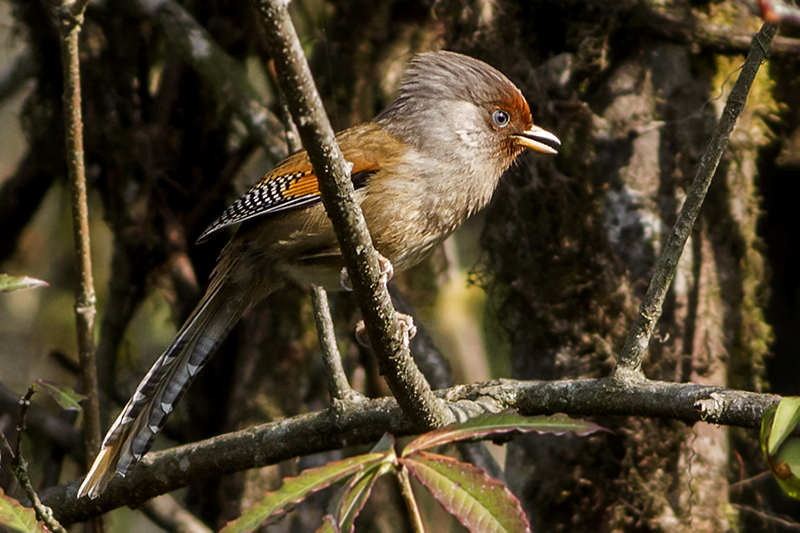

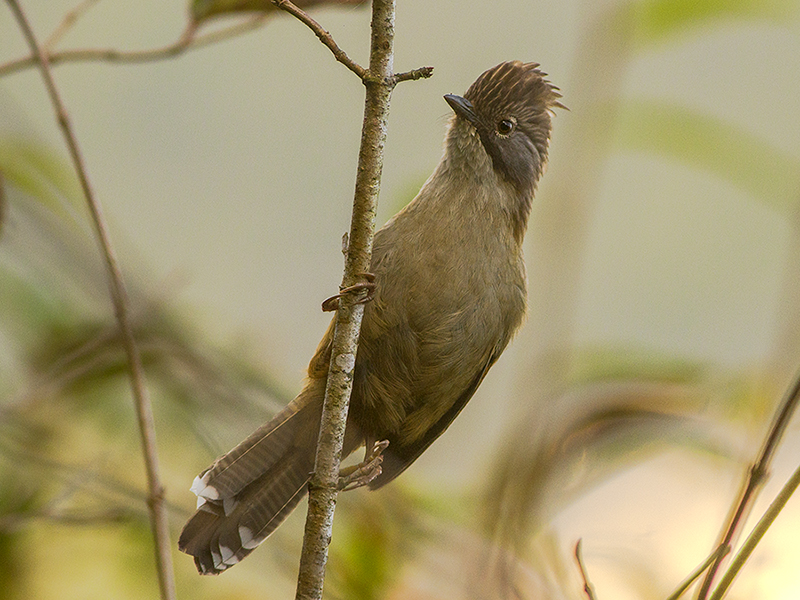
Birds Similar to the Chapin's Babbler
These species are often confused with the Chapin's Babbler due to similar appearance or overlapping range.
