Chestnut-capped Laughingthrush
Ianthocincla mitrata
Order: Passeriformes / Family: Leiothrichidae

Wikimedia Commons
About the Chestnut-capped Laughingthrush
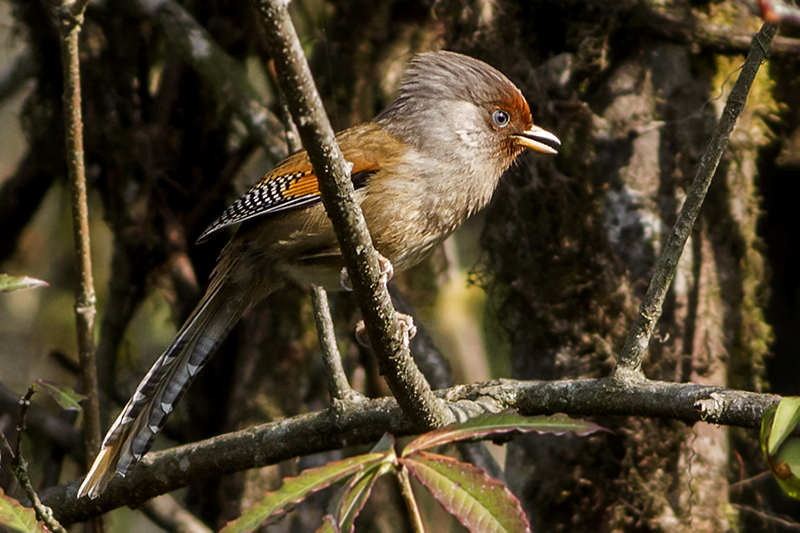
The Chestnut-capped Laughingthrush (Ianthocincla mitrata) is a captivating avian species belonging to the family Leiothrichidae. This bird is prominently known for its chestnut-colored crown, contrasting sharply with its otherwise gray plumage. Found predominantly in Southeast Asia, it inhabits countries such as Thailand, Malaysia, and Indonesia. The Chestnut-capped Laughingthrush makes its home in montane forests, often at elevations ranging from 900 to 2,500 meters. These birds are usually found in dense undergrowth and bamboo thickets, where they can forage with ease. The ecological role of the Chestnut-capped Laughingthrush is significant due to its frugivorous diet, which aids in seed dispersal and thus contributes to forest regeneration. Furthermore, its insectivorous tendencies help in controlling insect populations, maintaining a balanced ecosystem. These birds exhibit seasonal behaviors that are fascinating to observe. During the breeding season, typically from March to June, the Chestnut-capped Laughingthrush becomes more territorial. Outside the breeding season, they are often seen in flocks, indicating a highly social nature. Their vocalizations, which include a variety of chatters and whistles, become more pronounced during the early mornings and late afternoons. The Chestnut-capped Laughingthrush holds cultural significance in the regions it inhabits. Often admired for its melodious calls, it is a subject of interest for birdwatchers and naturalists. Conservation of its habitat is crucial, as deforestation poses a threat to its population. Despite these challenges, the species remains relatively common, adapting well to changes in its environment.
The Chestnut-capped Laughingthrush belongs to the family Leiothrichidae, within the order Passeriformes. These birds typically live average 6-9 years with max recorded at 12 years.
How to Identify a Chestnut-capped Laughingthrush
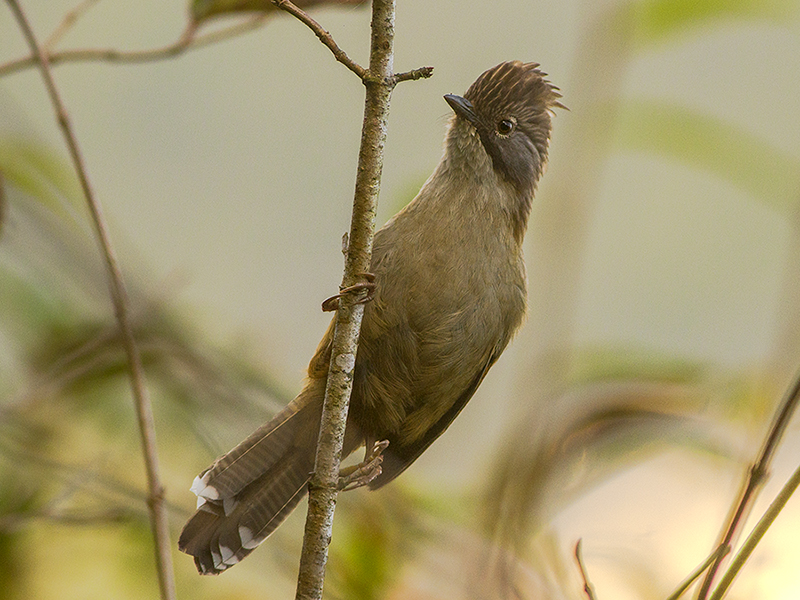
Identifying the Chestnut-capped Laughingthrush involves noting several distinctive field marks. Adults exhibit a striking chestnut crown, which is their most recognizable feature, while the rest of their body is primarily gray. Their wings and tail have a slight olive hue, providing a subtle contrast. The eye ring is pale, enhancing the bird's expressive gaze. Juveniles differ slightly in coloration, possessing a more muted version of the adults' plumage. The chestnut crown may appear less pronounced in younger birds, but it becomes more vivid as they mature. There is no significant difference in appearance between males and females, making sexing in the field challenging. Similar species include other laughingthrushes, such as the Black-throated Laughingthrush, but the chestnut crown of the Chestnut-capped Laughingthrush is a reliable differentiator. In flight, they exhibit a compact silhouette with quick, bounding wingbeats. Perched, they often assume an upright posture, alert and active, ready to dart into the underbrush at any sign of disturbance.
Having trouble telling birds apart? Upload a photo to our bird identification tool for an instant species match.
Chestnut-capped Laughingthrush Habitat and Range
Preferred Habitat
The Chestnut-capped Laughingthrush primarily inhabits montane forests, thriving in regions with dense undergrowth and bamboo thickets. It is commonly found at elevations from 900 to 2,500 meters, preferring the cool, moist climates of mountain forests. In countries like Malaysia and Indonesia, these birds are often seen in protected areas such as national parks and forest reserves. During different seasons, the Chestnut-capped Laughingthrush may exhibit slight shifts in habitat preference, moving to lower elevations during particularly harsh weather conditions. Despite its preference for forested environments, this bird occasionally ventures into secondary growth and edges of plantations, especially in search of food. Urban presence is rare for this species, as it tends to avoid heavily populated areas. However, rural settings adjacent to forested regions can occasionally host these birds, particularly when forest cover intersects with human-modified landscapes.
Geographic Range
The Chestnut-capped Laughingthrush's range is predominantly in Southeast Asia. It breeds and resides year-round in countries such as Thailand, Malaysia, and Indonesia, particularly on the islands of Sumatra and Borneo. Within these regions, it favors montane environments with rich biodiversity. Being a non-migratory species, it does not exhibit long-distance seasonal migrations. However, the bird might undertake altitudinal movements, descending to lower elevations during adverse weather conditions or in search of food resources. Population density hotspots include areas like Malaysia's Cameron Highlands and the Kinabalu Park in Sabah, where dense, diverse forests provide ideal conditions for breeding and survival. The Chestnut-capped Laughingthrush thrives in these protected areas, where human disturbance remains minimal, allowing for stable population maintenance.
Want to know which birds visit your area? Browse our backyard birds by location guides for region-specific species lists.
What Does the Chestnut-capped Laughingthrush Eat?
The diet of the Chestnut-capped Laughingthrush is diverse and adapts seasonally to available resources. Primarily frugivorous, it consumes a wide variety of fruits and berries, thus playing a crucial role in seed dispersal within its forest habitat. In addition to fruits, the bird supplements its diet with insects and other small invertebrates. During the breeding season, when energy demands are higher, insect consumption increases, providing necessary protein for chick development. Prey items include beetles, caterpillars, and ants, which the bird forages from leaves and bark. The Chestnut-capped Laughingthrush employs a methodical foraging technique, often seen hopping along branches and the forest floor, meticulously inspecting foliage for hidden insects. Feeding generally occurs in the early morning and late afternoon, aligning with cooler temperatures and higher insect activity.
Chestnut-capped Laughingthrush Behavior and Social Structure
The Chestnut-capped Laughingthrush exhibits a highly social structure, often found in small flocks outside the breeding season. These groups forage together, their constant chatter and interaction maintaining group cohesion. Individual birds within a flock often take turns as sentinels, watching for predators while others feed. Territorial behavior becomes more pronounced during the breeding season, when pairs defend their nesting areas vigorously. Courtship displays include synchronized movements and vocal duets, strengthening pair bonds. Flocking patterns change with the seasons, with larger gatherings occurring in non-breeding months. These flocks can sometimes merge with other species, creating mixed-species feeding parties that enhance foraging success. When faced with predators, the Chestnut-capped Laughingthrush relies on its agility and dense habitat to escape. Alarm calls, a series of sharp, rapid notes, alert fellow flock members to danger, prompting a swift retreat into cover. Daily activity patterns are diurnal, with peak activity in the early morning and late afternoon. During the hottest parts of the day, the birds retreat to cooler, shaded areas of their habitat.
Chestnut-capped Laughingthrush Nesting and Reproduction
Nesting for the Chestnut-capped Laughingthrush involves constructing a cup-shaped nest, typically situated in dense shrubbery or low trees. The nest is crafted from twigs, leaves, and moss, providing both camouflage and comfort. Preferred nest locations are often within two to five meters off the ground, hidden among foliage to protect against predators. The breeding season runs from March to June, aligning with optimal weather conditions and food availability. Clutch size typically ranges from two to four eggs, with both parents sharing incubation duties over a period of approximately 14 to 16 days. After hatching, the young remain in the nest under the care of both parents, fledging after about 12 to 15 days. Parental roles are well-defined, with both males and females participating in feeding and protecting the chicks. The Chestnut-capped Laughingthrush may raise one or two broods per year, depending on environmental conditions and food resources.
Chestnut-capped Laughingthrush Sounds and Vocalizations
The primary song of the Chestnut-capped Laughingthrush is a series of melodious whistles and chatters, delivered in a rhythmic cadence that echoes through its forest habitat. The pitch varies, giving the song a lively, conversational quality. In addition to its song, the bird produces a variety of call notes, ranging from sharp, short alarms to softer contact calls used within flocks. These sounds facilitate communication among group members, maintaining social bonds and alerting to potential threats. Alarm calls are distinct, consisting of rapid, repeated notes that increase in urgency with the proximity of danger. The dawn chorus is a particularly lively affair, with both solo and duets resonating through the early morning mist, marking territory and reinforcing pair bonds. The Chestnut-capped Laughingthrush's vocalizations bear a resemblance to those of other laughingthrushes, though its distinct rhythm and tonal quality set it apart.
Interesting Facts About the Chestnut-capped Laughingthrush
- 1The Chestnut-capped Laughingthrush is often found in mixed-species foraging flocks, increasing foraging efficiency.
- 2Their prominent chestnut crown is a key identifier, setting them apart from other laughingthrushes in their range.
- 3Despite their melodious song, these birds are adept mimics, occasionally incorporating sounds from their environment.
- 4The species is named for its characteristic laughing calls, which resemble human laughter and carry through dense forests.
- 5They are a vital part of their ecosystem, aiding seed dispersal and keeping insect populations in check with their diet.
- 6Chestnut-capped Laughingthrushes are known to adapt well to secondary forests, allowing them to survive habitat changes.
- 7Breeding pairs exhibit strong bonds, often staying together across seasons and sharing all nesting duties equally.
Chestnut-capped Laughingthrush Conservation Status
The Chestnut-capped Laughingthrush currently holds a conservation status of Least Concern according to the IUCN. Despite facing threats from habitat loss due to deforestation and land conversion, its population remains stable. Primary threats include logging and agricultural expansion, which reduce the availability of suitable forest habitat. However, the bird's adaptability allows it to thrive in secondary growth, mitigating some habitat loss effects. Conservation efforts focus on preserving montane forest ecosystems, particularly in protected areas like national parks. Community engagement and sustainable land management practices are crucial in these efforts. Historically, the population of the Chestnut-capped Laughingthrush has remained relatively stable, with local fluctuations influenced by habitat changes. Continued monitoring and habitat conservation are essential to ensure its long-term survival.