Chestnut-hooded Laughingthrush
Ianthocincla treacheri
Order: Passeriformes / Family: Leiothrichidae

Wikimedia Commons
About the Chestnut-hooded Laughingthrush
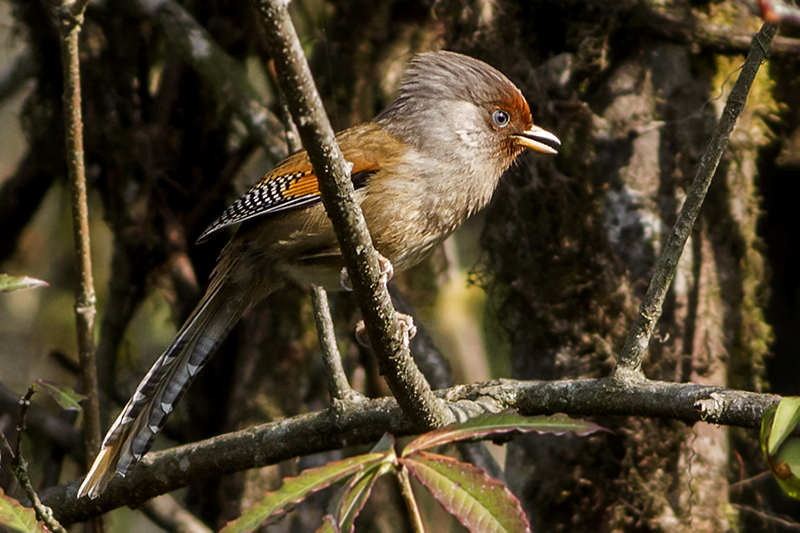
The Chestnut-hooded Laughingthrush (Ianthocincla treacheri) is a vibrant and distinctive species belonging to the Leiothrichidae family. This bird is endemic to the island of Borneo, specifically thriving in the montane forests that span the Malaysian states of Sabah and Sarawak, as well as the Kalimantan region of Indonesia. It frequents altitudes ranging from 900 to 3,000 meters, demonstrating a preference for dense undergrowth and forest edges where it can forage in relative seclusion. As a key component of the ecosystem, the Chestnut-hooded Laughingthrush plays an important role in seed dispersal and insect population control. Its diet, rich in fruits and insects, allows it to contribute significantly to the ecological balance of its habitat. During the breeding season, this bird becomes more vocal and can often be heard before it is seen, adding a lively acoustic layer to the forest environment. The Chestnut-hooded Laughingthrush is a non-migratory species, maintaining its presence in the same territories year-round. This consistency in location makes it a reliable subject of study for ornithologists and bird watchers alike. The bird's ecological role extends beyond food sources; it also serves as an indicator of forest health. Its presence often signals a well-preserved environment, as it relies on intact forest cover for nesting and feeding. Conservation efforts aimed at preserving the montane forest habitats directly benefit the Chestnut-hooded Laughingthrush, ensuring that this vibrant species continues to thrive. The laughingthrush is not only significant in its ecological contributions but also holds cultural value for the indigenous peoples of Borneo, often featuring in local folklore and traditional practices. Researchers and naturalists are keenly aware of the importance of this species, both for its ecological role and its potential as a flagship species for conservation initiatives on the island.
The Chestnut-hooded Laughingthrush belongs to the family Leiothrichidae, within the order Passeriformes. These birds typically live typically lives 5-8 years, with a maximum recorded lifespan of 10 years..
How to Identify a Chestnut-hooded Laughingthrush
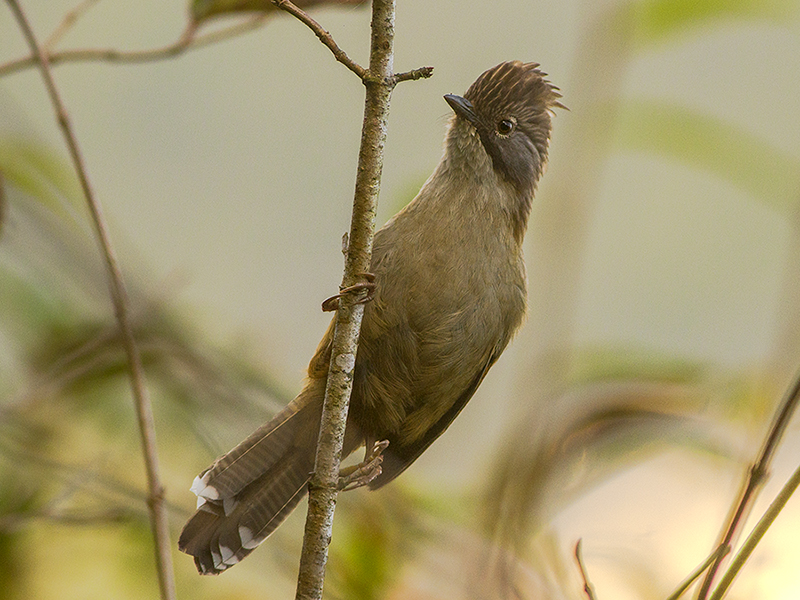
The Chestnut-hooded Laughingthrush is easily recognized by its rich chestnut-colored head and nape, which contrasts sharply with its grayish body. The rest of the plumage is primarily olive-brown, making it blend seamlessly into its forested environment when perched. This bird measures approximately 25 centimeters in length and showcases a stout, slightly curved bill that is well-suited for its omnivorous diet. Juvenile birds display a less vivid chestnut coloration on the head, with a more uniform brown body, making it slightly challenging to distinguish them from adults at a distance. There is no significant sexual dimorphism in this species; males and females look alike, which is common among laughingthrushes. When in flight, the bird's rounded wings and long tail can be observed, but it often prefers to move through dense foliage, making short, hopping flights between branches. The Chestnut-hooded Laughingthrush's perching posture is upright, frequently positioning itself in a manner that allows for quick takeoff. This species can be confused with the Sunda Laughingthrush, but the latter lacks the distinctive chestnut hood that makes the Chestnut-hooded Laughingthrush so recognizable.
Having trouble telling birds apart? Upload a photo to our bird identification tool for an instant species match.
Chestnut-hooded Laughingthrush Habitat and Range
Preferred Habitat
The Chestnut-hooded Laughingthrush mainly inhabits montane forests. It thrives in areas with dense underbrush, favoring the edges and clearings within these forests where food is abundant. It is commonly found at elevations ranging from 900 to 3,000 meters, although it is more frequently observed in the lower montane zones. This bird does not typically inhabit urban areas, preferring the secluded environment of the rainforest. Seasonal habitat shifts are minimal, as the species is non-migratory and remains within its montane environment year-round. While it favors primary forests, it can also adapt to secondary growth, provided the area maintains sufficient cover and food resources.
Geographic Range
The breeding range of the Chestnut-hooded Laughingthrush is confined to the island of Borneo. It is primarily found in the Malaysian states of Sabah and Sarawak, as well as the Indonesian region of Kalimantan. The bird does not undertake long migrations, maintaining a relatively stable presence within these specific areas throughout the year. Its population density is highest in well-preserved montane forests where human disturbance is minimal. While it is not considered a migratory species, there may be minor movements to slightly different elevations in response to resource availability or climatic conditions. The bird's range does not extend significantly beyond Borneo, making it an endemic species of this island.
Want to know which birds visit your area? Browse our backyard birds by location guides for region-specific species lists.
What Does the Chestnut-hooded Laughingthrush Eat?
The Chestnut-hooded Laughingthrush has an omnivorous diet that includes a wide variety of fruits and insects. Its primary food sources are berries and small fruits, which it forages from the underbrush and lower canopy. Insects such as beetles, caterpillars, and ants form a significant part of its diet, particularly during the breeding season when protein demand is higher. The bird employs a methodical foraging technique, moving deliberately through dense foliage to locate food. It often feeds in small groups, which enhances its ability to find scattered food resources. Seasonal diet changes are minimal, given the relatively stable climate of its montane habitat, but it may consume more insects during wetter months when they are more abundant.
Chestnut-hooded Laughingthrush Behavior and Social Structure
The social structure of the Chestnut-hooded Laughingthrush is characterized by small family groups or loose flocks that exhibit cooperative behavior. These birds are highly social and communicate with a variety of calls to maintain group cohesion. Territorial behavior is minimal, with flocks often overlapping in their home ranges without significant conflict. During courtship, males may engage in displays that include vocalizations and subtle physical gestures to attract females. The Chestnut-hooded Laughingthrush also exhibits a daily routine of foraging and preening, with peak activity in the early morning and late afternoon. When predators are detected, the flock responds with alarm calls and may take cover in dense vegetation.
Chestnut-hooded Laughingthrush Nesting and Reproduction
Chestnut-hooded Laughingthrushes build cup-shaped nests using twigs, leaves, and moss, often situated in low shrubs or small trees. They prefer locations that offer cover from predators and harsh weather. The typical clutch size ranges from two to three eggs, which are pale blue with fine speckles. Incubation lasts about 14 to 16 days, with both parents sharing duties. After hatching, the chicks remain in the nest for approximately 14 days before fledging. The parents continue to care for the fledglings for several weeks post-fledging, teaching them essential survival skills. The species typically has one to two broods per year, depending on environmental conditions.
Chestnut-hooded Laughingthrush Sounds and Vocalizations
The primary song of the Chestnut-hooded Laughingthrush is a series of melodious, cascading notes that rise and fall in pitch, often described as a mixture of whistles and chuckles. These vocalizations are more frequent during the breeding season and serve to strengthen pair bonds and signal territory presence. In addition to its song, the bird produces a variety of call notes, including sharp, repetitive 'chit-chit' sounds used to maintain contact within flocks. Alarm calls are harsher and more urgent, alerting other birds to potential dangers. During the early morning, the Chestnut-hooded Laughingthrush participates in the dawn chorus, contributing its unique voice to the forest symphony.
Interesting Facts About the Chestnut-hooded Laughingthrush
- 1The Chestnut-hooded Laughingthrush is one of the few species endemic to the island of Borneo, highlighting its unique evolutionary path.
- 2Despite its vibrant plumage, the Chestnut-hooded Laughingthrush can be surprisingly elusive, often hiding in dense underbrush.
- 3Its scientific name, Ianthocincla treacheri, honors Walter Hood Treacher, a British colonial administrator and naturalist.
- 4The bird's melodious song and calls are a prominent feature of the montane forest soundscape, especially during the breeding season.
- 5The Chestnut-hooded Laughingthrush is known for its cooperative breeding behavior, often involving extended family members.
- 6These birds are not only important seed dispersers but also help control insect populations, contributing to forest health.
- 7They prefer undisturbed habitats, making them indicators of environmental quality and forest integrity.
Chestnut-hooded Laughingthrush Conservation Status
The Chestnut-hooded Laughingthrush is currently listed as Least Concern by the IUCN, with a stable population trend. However, habitat loss due to logging and agricultural expansion poses significant threats to its montane forest habitats. Conservation efforts focus on preserving these critical areas through protected reserves and sustainable land-use practices. Historical population changes indicate that the bird has maintained stable numbers in areas where forests remain intact. Continued conservation initiatives are essential to ensure this species does not face future declines due to ongoing habitat pressures.