Chestnut-tailed Minla
Minla strigula
Order: Passeriformes / Family: Leiothrichidae

Wikimedia Commons
About the Chestnut-tailed Minla
The Chestnut-tailed Minla (Minla strigula) is a captivating bird species belonging to the Leiothrichidae family, thriving predominantly in the montane forests of southern Asia. This species displays a remarkable adaptability to the lush, densely vegetated areas within its range. Found at elevations ranging from 2,000 to 3,500 meters, this bird primarily inhabits the Himalayas, stretching across regions from northeastern India to Bhutan, Nepal, and extending into parts of China and Myanmar. The Chestnut-tailed Minla plays a crucial ecological role as a seed disperser and insect predator within its habitat. With its foraging habits, it helps maintain the balance of insect populations and facilitates the growth of various plant species by spreading seeds. The Minla's habitat preferences include subtropical or tropical moist montane forests, where it often encounters dense undergrowth and bamboo stands. Seasonally, the Chestnut-tailed Minla adapts its behavior to the availability of food resources. During the breeding season, typically from March to June, these birds become more territorial and vocal, establishing and defending their nesting territories. Outside the breeding season, they may form mixed-species flocks, enhancing their foraging efficiency and protection against predators. This seasonal shift in behavior highlights the species' adaptability, allowing it to thrive in varied environmental conditions. The significance of the Chestnut-tailed Minla extends beyond its ecological contributions. Its vibrant plumage and melodious calls make it a favorite among birdwatchers and nature enthusiasts. As an indicator species, changes in its population can reflect shifts in ecosystem health, making it a valuable subject for ecological studies. Despite its relatively stable population, ongoing habitat loss due to deforestation poses a threat to its habitat. Conservation efforts focused on preserving montane forest ecosystems are vital for ensuring the long-term survival of the Chestnut-tailed Minla and other cohabiting species. Engaging local communities in conservation initiatives and promoting sustainable land use practices are crucial steps towards safeguarding this enchanting bird for future generations.
The Chestnut-tailed Minla belongs to the family Leiothrichidae, within the order Passeriformes. These birds typically live average 5-7 years with max recorded around 9 years..
How to Identify a Chestnut-tailed Minla
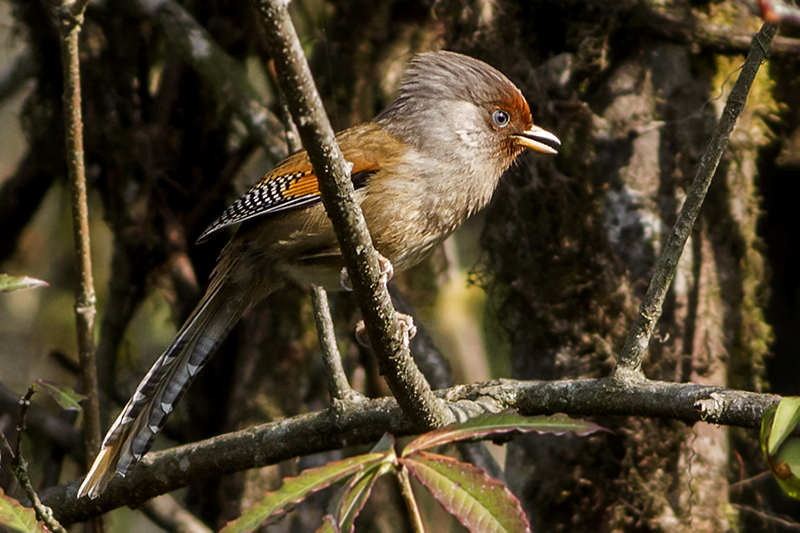
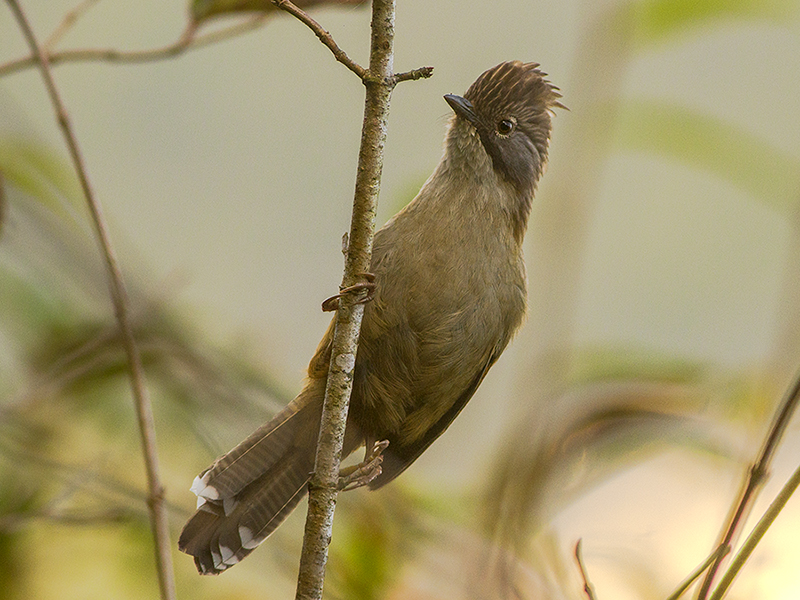
The Chestnut-tailed Minla is a medium-sized songbird, measuring approximately 14-16 cm in length, with a wingspan of about 20-25 cm. Its most striking feature is the chestnut-colored tail, which contrasts beautifully with its olive-green back and wings. The underparts are pale, often exhibiting a subtle yellowish tinge, while the head features a distinct white eye-ring that enhances its expressive appearance. Males and females exhibit similar plumage, although males may have slightly brighter markings on the head and wings. Juveniles resemble adults but often have duller plumage, lacking the full intensity of colors seen in mature individuals. The Minla's flight silhouette is characterized by rapid, slightly undulating movements, a common trait among small forest-dwelling songbirds. When perched, it often holds its tail slightly cocked upwards, a stance typical of its foraging behavior. The Chestnut-tailed Minla can be confused with similar species such as the Rufous-winged Fulvetta or the Bar-throated Minla. However, its distinctive chestnut tail and white eye-ring serve as reliable field marks to distinguish it from these lookalikes. Observers should also note its active foraging behavior, often seen flitting through the forest understory in search of insects and fruits.
Having trouble telling birds apart? Upload a photo to our bird identification tool for an instant species match.
Chestnut-tailed Minla Habitat and Range
Preferred Habitat
The Chestnut-tailed Minla primarily inhabits subtropical or tropical moist montane forests, thriving in elevations between 2,000 and 3,500 meters. These lush environments offer abundant food sources and shelter, essential for the Minla's survival. The bird is commonly found in regions like the Eastern Himalayas, where dense undergrowth and bamboo stands provide ample cover and foraging opportunities. Seasonal shifts in habitat preference are minimal, as the Minla remains within montane forests year-round, adapting to changes in food availability. Unlike some species that venture into urban areas, the Chestnut-tailed Minla prefers the tranquility and seclusion of forested regions. Its presence in these habitats underscores the importance of preserving montane forest ecosystems, which support a diverse range of flora and fauna.
Geographic Range
The Chestnut-tailed Minla's range is primarily concentrated in the Eastern Himalayas, extending across northeastern India, Bhutan, and Nepal. It also inhabits parts of southern China and northern Myanmar, where suitable montane forest habitats exist. Unlike many migratory birds, the Minla is largely non-migratory, maintaining a stable presence within its range throughout the year. While its population density can vary, hotspots include areas with dense forest cover and abundant food resources, such as the temperate forests of Sikkim and Arunachal Pradesh in India. The Minla's relatively stable range reflects its adaptability to its preferred habitat, though ongoing deforestation and habitat fragmentation pose significant threats to its long-term survival. Conservation efforts in these regions aim to protect the integrity of montane forest ecosystems, ensuring the continued presence of this charming bird.
Want to know which birds visit your area? Browse our backyard birds by location guides for region-specific species lists.
What Does the Chestnut-tailed Minla Eat?
The diet of the Chestnut-tailed Minla consists primarily of insects and other small invertebrates, which it actively hunts among the foliage. The Minla's foraging technique involves flitting through the forest understory, often joining mixed-species flocks to enhance foraging success and reduce predation risk. During the breeding season, its diet shifts slightly to include more protein-rich insects, vital for chick development. In addition to animal prey, the Minla consumes fruits and berries, particularly when insect availability declines. This dietary flexibility allows it to adapt to seasonal fluctuations in food resources. Prey size varies, but the Minla typically targets small insects such as caterpillars, beetles, and spiders, which it gleans from leaves and branches. Feeding occurs primarily during daylight, with peak activity in the early morning and late afternoon when insect activity is highest.
Chestnut-tailed Minla Behavior and Social Structure
The Chestnut-tailed Minla exhibits a variety of intriguing behaviors that reflect its adaptability and social nature. It often forages in small, loose groups or joins mixed-species flocks, a strategy that offers increased foraging efficiency and protection from predators. Social interactions within these flocks are generally amicable, though occasional disputes over food resources may occur. During the breeding season, the Minla becomes more territorial, with pairs establishing and defending nesting territories. Courtship displays involve vocalizations and aerial acrobatics, with males showcasing their agility to attract females. Once paired, both partners engage in nest-building, incubation, and chick rearing. The Minla's daily activity patterns follow a diurnal rhythm, with heightened activity during the cooler hours of the day. At dawn, these birds engage in a chorus of calls, which serve as both a social bonding exercise and a territorial declaration. In the presence of predators, the Minla exhibits defensive behaviors such as mobbing and alarm calling, often coordinating with other species in the vicinity to deter threats.
Chestnut-tailed Minla Nesting and Reproduction
The Chestnut-tailed Minla constructs its nest in the dense undergrowth of montane forests, often choosing locations well-concealed by foliage. The nest is a compact cup structure made from grasses, mosses, and small twigs, lined with softer materials for insulation. Nesting typically occurs between March and June, coinciding with the abundance of food resources necessary for rearing young. Clutch size ranges from 2 to 4 eggs, with both parents sharing incubation duties over a period of approximately 14 days. Following hatching, the chicks remain in the nest for about two weeks, during which both parents actively feed and care for them. Parental roles are well-distributed, with both males and females participating in feeding and brooding. The Minla often raises one brood per year, although favorable conditions may occasionally allow for a second. The success of each breeding season is closely tied to environmental conditions and food availability, making habitat preservation crucial for sustaining Minla populations.
Chestnut-tailed Minla Sounds and Vocalizations
The Chestnut-tailed Minla's vocal repertoire is diverse and melodious, characterized by a series of high-pitched, musical notes. Its primary song consists of rapid sequences of clear, sweet whistles, often delivered with a rising and falling rhythm. This song serves as a territorial advertisement and a means of communication between mates. In addition to its song, the Minla employs a variety of call notes, including sharp 'chip' and 'tsee' sounds, used to maintain contact with flock members and signal alarm. During the dawn chorus, the Minla's song contributes to the vibrant symphony of forest sounds, enhancing the acoustic landscape of its habitat. Alarm calls are more urgent and harsh, designed to alert conspecifics and neighboring species to potential dangers. These vocalizations play a critical role in the Minla's social interactions and survival, allowing it to navigate the complex dynamics of its forest environment.
Interesting Facts About the Chestnut-tailed Minla
- 1The Chestnut-tailed Minla can be found at elevations as high as 3,500 meters, showcasing its adaptability to montane environments.
- 2Despite its vibrant plumage, the Chestnut-tailed Minla often remains well-camouflaged in the dense foliage of its forest habitat.
- 3The Minla's social nature often leads it to join mixed-species flocks, which can include up to 20 different bird species.
- 4In its natural habitat, the Chestnut-tailed Minla plays a vital role in controlling insect populations, acting as a natural pest regulator.
- 5The Chestnut-tailed Minla's song is not only a territorial declaration but also plays a role in strengthening pair bonds during the breeding season.
- 6This species exhibits a remarkable ability to adapt its diet, switching between insects and fruits based on seasonal availability.
- 7The Chestnut-tailed Minla's ability to thrive in high-altitude forests makes it an important indicator species for the health of montane ecosystems.
Chestnut-tailed Minla Conservation Status
The Chestnut-tailed Minla is currently listed as a species of Least Concern by the IUCN, reflecting its relatively stable population across its range. However, the primary threat to its long-term survival is habitat loss due to deforestation and land conversion for agriculture. As montane forests are increasingly fragmented, the Minla's habitat becomes more restricted, posing challenges to its dispersal and genetic diversity. Conservation efforts focus on preserving and restoring montane forest ecosystems, with initiatives aimed at sustainable land use and community engagement in conservation practices. Historical population changes have been largely driven by habitat alteration, underscoring the importance of proactive measures to mitigate these impacts. Continued monitoring of population trends and habitat quality is essential to ensure the species' continued survival in its natural range.