Chinese Babax
Ianthocincla lanceolata
Order: Passeriformes / Family: Leiothrichidae

Wikimedia Commons
About the Chinese Babax
The Chinese Babax, Ianthocincla lanceolata, is a notable member of the Leiothrichidae family, thriving in the mountainous and forested regions of southern China, extending into northern Southeast Asia. This bird plays a significant ecological role in its habitat through its voracious diet of invertebrates and plant material, contributing to pest control and seed dispersal. The Chinese Babax's range includes provinces such as Sichuan, Yunnan, and Guangxi, where it inhabits dense undergrowth and scrublands. Its presence in these regions is vital for maintaining the ecological balance, as the bird acts as both predator and prey within its food web.
The Chinese Babax is known for its adaptability to various forested environments, from subtropical and temperate forests to bamboo groves. This adaptability is not just limited to habitat, but also extends to its diet, which shifts with the seasons. During the breeding season, the bird's diet primarily consists of insects and other invertebrates, providing essential protein for raising its young. In non-breeding seasons, the Chinese Babax incorporates more fruits and seeds into its diet, illustrating its role in plant propagation.
Seasonal behaviors of the Chinese Babax are marked by its breeding activities in spring and summer. The bird's melodious song, a series of clear, whistling notes, becomes more pronounced during these times as males establish territories and attract mates. Outside the breeding season, the Chinese Babax may form small flocks, showcasing its social nature. These flocks often engage in cooperative foraging, enhancing their ability to find food and evade predators. The Chinese Babax is a vital component of its ecosystem, serving as an indicator of forest health and biodiversity.
The Chinese Babax belongs to the family Leiothrichidae, within the order Passeriformes. These birds typically live average 5-7 years with max recorded at 10 years.
How to Identify a Chinese Babax
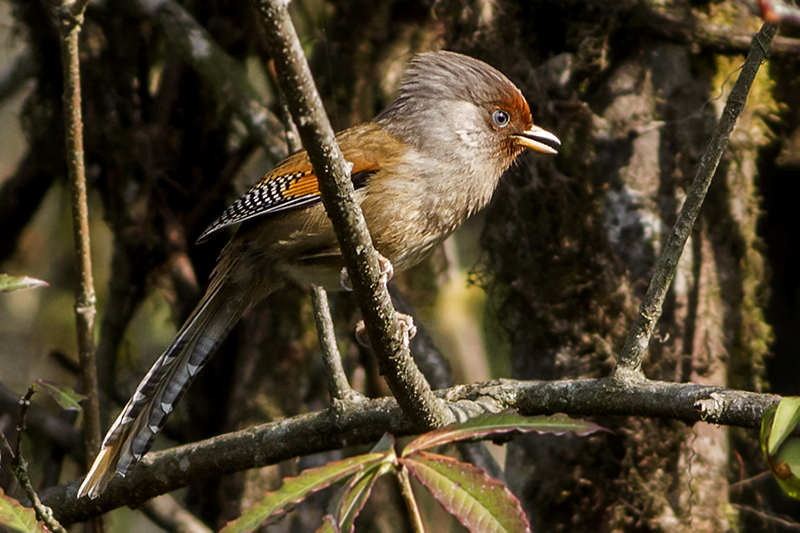
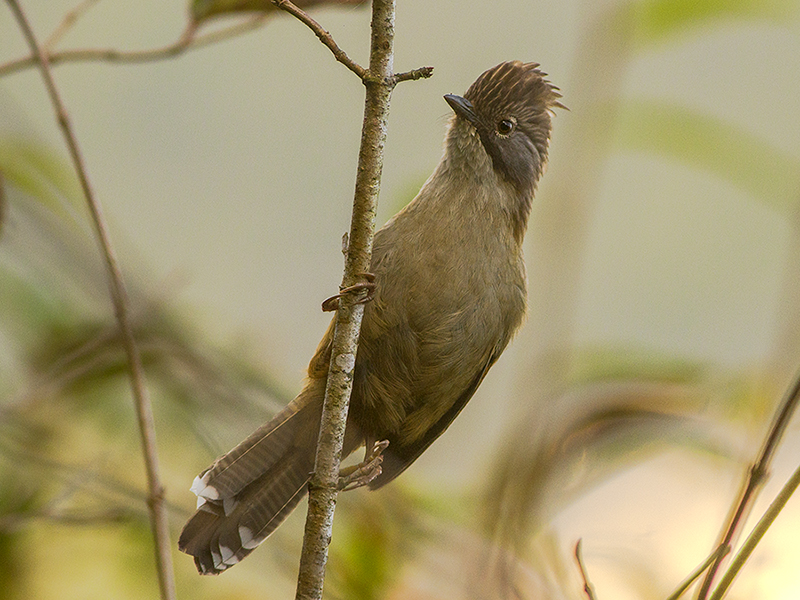
The Chinese Babax is a medium-sized bird, notable for its rich brown plumage that provides excellent camouflage in its forested habitat. Its upperparts are a warm brown, with subtle streaks that blend seamlessly with the dappled sunlight of its environment. The bird's underparts are lighter, often exhibiting a mottled pattern that aids in breaking up its outline. Adult Chinese Babax have a distinct white throat patch, contrasting with their predominantly brown coloration. This feature can be a key field mark when identifying the bird in the wild.
Juvenile Chinese Babax resemble adults but often have duller plumage, lacking the distinct throat patch found in mature individuals. Males and females are similar in appearance, making them challenging to differentiate in the field without observing behavior. The Chinese Babax's flight is characterized by rapid wingbeats, typical of forest-dwelling birds, and its perching posture is upright, often accompanied by a flick of the tail.
In terms of confusion with similar species, the Chinese Babax may be mistaken for the much larger Giant Babax or other species within the Leiothrichidae family. However, its size, distinct song, and specific habitat preferences help distinguish it from these relatives. Observers should note the bird's characteristic song and distinct throat patch when making identifications.
Having trouble telling birds apart? Upload a photo to our bird identification tool for an instant species match.
Chinese Babax Habitat and Range
Preferred Habitat
The Chinese Babax inhabits a variety of forest environments, primarily favoring subtropical and temperate forests rich in undergrowth. It is frequently found in the mountainous regions of southern and southwestern China, such as the Yunnan-Guizhou Plateau, where elevation ranges from 1,000 to 3,000 meters. These high-altitude forests provide the dense vegetation that the Chinese Babax prefers for foraging and nesting.
During different seasons, the bird may shift slightly in its habitat preferences, moving to lower elevations in winter where food is more abundant. While primarily a forest bird, the Chinese Babax can sometimes be found in bamboo thickets and dense scrub, adapting to both natural and secondary growth forests. Despite its adaptability, it is less commonly found in urban or heavily disturbed environments, maintaining a preference for rural settings where natural habitats remain intact.
Geographic Range
The Chinese Babax is primarily found in the southern regions of China, with its range extending to parts of northern Vietnam and Myanmar. Within China, it is prevalent in provinces like Sichuan, Yunnan, and Guangxi, where it occupies mountainous and forested areas. These regions provide the ideal conditions for its survival, with ample food supply and nesting sites.
The bird's breeding range is largely confined to these areas, with little evidence of extensive migration. However, some altitudinal movement occurs, as populations may descend to lower elevations during the colder months to escape harsh weather conditions and find more accessible food sources. The Chinese Babax is generally considered a resident bird in these regions, with stable population densities in well-preserved habitats.
Population hotspots are often found in protected areas and national parks, where conservation efforts help maintain the bird's natural environment. While not a migratory species, the Chinese Babax's range does show some seasonal flexibility, reflecting its need to adapt to varying environmental conditions throughout the year.
Want to know which birds visit your area? Browse our backyard birds by location guides for region-specific species lists.
What Does the Chinese Babax Eat?
The diet of the Chinese Babax is diverse, reflecting its adaptability to seasonal changes in food availability. Primarily insectivorous during the breeding season, it consumes a wide variety of invertebrates, including beetles, caterpillars, and spiders. This protein-rich diet is crucial for supporting the energy demands of raising young chicks. The bird employs a foraging technique of probing leaf litter and turning over debris on the forest floor to uncover hidden prey.
In the non-breeding season, the Chinese Babax shifts its diet to include more plant-based foods, such as berries, seeds, and fruits from a variety of trees and shrubs. This dietary flexibility highlights its role as both a predator and a seed disperser within its ecosystem. The bird's feeding schedule is largely diurnal, with peak activity occurring in the early morning and late afternoon when temperatures are cooler and prey is more active.
Prey size varies, but the bird typically targets insects and other invertebrates that are small to medium-sized, making them manageable to handle and consume. This diverse diet allows the Chinese Babax to thrive in its forested habitat, contributing to its overall resilience and success as a species.
Chinese Babax Behavior and Social Structure
The Chinese Babax exhibits a range of intriguing behaviors that reflect its social and ecological adaptations. It is a gregarious bird, often seen in small flocks outside the breeding season. These flocks, typically composed of family groups, engage in cooperative foraging, which enhances their ability to locate food and detect predators. During the breeding season, however, the Chinese Babax becomes more territorial, with pairs establishing and defending nesting territories through vocalizations and displays.
Courtship displays are subtle yet effective, often involving a combination of song and physical posturing to attract mates and reinforce pair bonds. The male may sing from a high perch while fluffing its feathers and flicking its tail to catch the attention of a potential mate. Once paired, the Chinese Babax exhibits strong pair bonds, with both parents participating in raising their young.
In response to predators, the Chinese Babax relies on its cryptic plumage and the dense cover of its habitat for protection. It may also use alarm calls to alert flock members of danger, prompting a coordinated retreat into thicker underbrush. Daily activity patterns show peaks in the early morning and late afternoon, coinciding with cooler temperatures and optimal foraging conditions. This routine helps minimize exposure to midday heat and predators.
Chinese Babax Nesting and Reproduction
The nesting habits of the Chinese Babax are well adapted to its forested environment. It constructs a cup-shaped nest using twigs, grass, and leaves, often incorporating softer materials like moss or feathers for lining. These nests are typically situated in dense shrubs or small trees, at heights ranging from 1 to 3 meters above the ground, providing concealment from predators.
The Chinese Babax usually lays a clutch of 3 to 5 eggs, which are pale blue or green with speckled markings. The female primarily undertakes incubation, which lasts about 14 to 16 days. During this period, the male assists by providing food and guarding the nesting territory. Once hatched, the chicks are altricial, requiring significant parental care and feeding for about 12 to 14 days until they fledge.
Both parents participate in feeding the chicks, bringing a steady supply of insects and other small prey to the nest. The Chinese Babax typically raises one brood per year, although in optimal conditions, a second brood may be attempted. This reproductive strategy helps ensure the survival of the offspring in the variable conditions of its mountainous habitat.
Chinese Babax Sounds and Vocalizations
The Chinese Babax is renowned for its melodious song, which consists of a series of clear, whistling notes that rise and fall in a rhythmic pattern. This song serves multiple purposes, including territory defense and mate attraction, and is often heard during the breeding season. The bird's call notes are simpler, comprising short, sharp whistles used for communication within flocks.
Alarm calls are more abrupt and harsh, alerting other birds to potential threats. These calls can trigger a chorus of responses from nearby birds, enhancing the collective awareness of danger. During the dawn chorus, the Chinese Babax's song is a prominent feature in its habitat, contributing to the rich tapestry of sounds that mark the start of a new day.
Compared to other forest birds, the Chinese Babax's song is distinct in its clarity and musicality, which makes it relatively easy to identify by sound alone. This vocal prowess is not only a delight to birdwatchers but also an essential tool for the bird's survival and reproduction.
Interesting Facts About the Chinese Babax
- 1The Chinese Babax can mimic the calls of other birds, a skill that enhances its communication within mixed-species flocks.
- 2Studies show that the Chinese Babax's song can vary between regions, with subtle differences in pitch and rhythm.
- 3The Chinese Babax has a lifespan of up to 10 years in the wild, showcasing its adaptability and resilience.
- 4Despite its preference for dense forests, the Chinese Babax can occasionally be found in rural gardens, drawn by food sources.
- 5The Chinese Babax's nest is intricately woven, with some nests containing over a hundred individual twigs and grass strands.
- 6During cooperative foraging, Chinese Babax flocks can cover large areas, demonstrating their efficiency in resource utilization.
- 7The Chinese Babax is known for its agility, able to navigate through dense underbrush with remarkable speed and precision.
Chinese Babax Conservation Status
The Chinese Babax is currently listed as a species of Least Concern by the IUCN, with stable population trends in much of its range. However, habitat loss due to deforestation and land conversion poses a significant threat to its long-term survival. Conservation efforts are primarily focused on habitat preservation and restoration, ensuring that the forested environments the Chinese Babax depends on remain intact. Protected areas and national parks in regions like Yunnan and Sichuan play a crucial role in safeguarding the bird's habitat. Historical population changes have seen fluctuations due to habitat degradation, but recent efforts to curb deforestation have helped stabilize populations. Community-based conservation initiatives also contribute to raising awareness and promoting sustainable land-use practices that benefit both local communities and wildlife. Continued monitoring and research are essential to understanding the full impact of environmental changes on the Chinese Babax and implementing effective conservation strategies. These efforts will help ensure that this melodious bird remains a thriving part of its forest ecosystem.