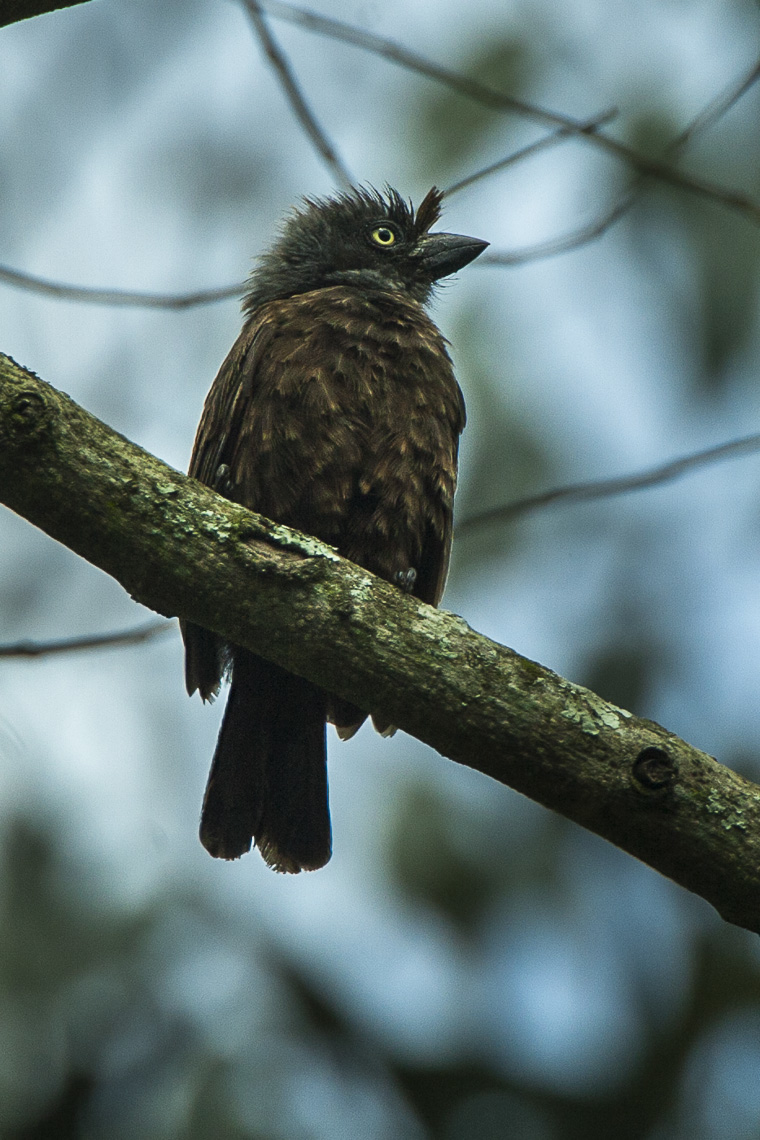
Crested Barbet
Trachyphonus vaillantii
Order: Piciformes / Family: Lybiidae

Wikimedia Commons
About the Crested Barbet
The Crested Barbet (Trachyphonus vaillantii) is a striking bird known for its vivid coloration and unique crest. It is a member of the family Lybiidae and can commonly be found across southern Africa. This bird inhabits a variety of environments, including open woodlands, savannas, and suburban gardens, where it plays an integral role in the ecosystem as both a predator and a seed disperser. Its presence is most notable in countries such as South Africa, Namibia, Botswana, Zimbabwe, and Mozambique. The Crested Barbet is non-migratory, remaining in its territory year-round.
Ecologically, the Crested Barbet contributes to the health of its habitat by controlling insect populations and dispersing seeds, thereby aiding in plant propagation. Its diet primarily consists of insects such as beetles and caterpillars, complemented by fruits and seeds. This varied diet highlights its adaptability to different food availability throughout the year. During the dry season, the Crested Barbet may rely more heavily on fruits, while in the wet season, insects become more abundant and form a larger portion of its diet.
The bird's adaptability extends to its nesting habits. Crested Barbets are cavity nesters, often using natural tree holes or excavating their own in dead wood. Their choice of nesting site is crucial for maintaining a stable population, especially in regions where tree density is affected by human activities. Seasonal behaviors of the Crested Barbet include increased vocal activity during the breeding season, which typically spans from September to February. This period is marked by the bird's distinctive trills and calls, which serve both to attract mates and to defend territory.
In the broader context of biodiversity, the Crested Barbet serves as an indicator species for healthy woodland ecosystems in its range. Its presence signifies a balanced environment where both flora and fauna can thrive. Conservation efforts to preserve its habitat are crucial, given the ongoing threat of deforestation and habitat fragmentation. The Crested Barbet's vibrant presence is not only a symbol of ecological health but also a testament to the rich avian diversity of the African continent.
The Crested Barbet belongs to the family Lybiidae, within the order Piciformes. These birds typically live average 6-8 years, with a max recorded of 10 years..
How to Identify a Crested Barbet
The Crested Barbet is a medium-sized bird, measuring about 23 cm in length. Its most striking feature is the prominent crest on its head, which is yellow with a black crown and streaks. The underparts are a mix of yellow and white, with black spots, while the upperparts display a combination of yellow, green, and black. The wings and tail are similarly marked, with a distinctive black and white pattern on the wings. Males and females are similar in appearance, though males may exhibit slightly brighter plumage.
Juvenile Crested Barbets are less vividly colored, with more subdued shades of yellow and green, lacking the full development of the adult's striking crest. However, their distinctive patterning is still evident, making them recognizable. In flight, the Crested Barbet shows a characteristic undulating pattern, with rapid wing beats interspersed with brief glides. When perched, it often adopts an upright posture, displaying its colorful plumage to full effect.
The Crested Barbet may be confused with other barbet species, such as the Black-collared Barbet, but its unique crest and vivid coloration set it apart. Observers should note the combination of yellow, green, and black in the plumage, along with the bird's distinctive call, which can aid in identification.
Having trouble telling birds apart? Upload a photo to our bird identification tool for an instant species match.
Crested Barbet Habitat and Range
Preferred Habitat
The Crested Barbet thrives in a variety of habitats, predominantly favoring open woodlands and savannas. It can also be found in suburban gardens and parks, making it a familiar sight in both rural and urban environments. This adaptability allows it to occupy elevations ranging from lowland areas to moderate altitudes. It often chooses habitats with abundant trees, which provide both food resources and nesting sites.
In terms of seasonal habitat shifts, the Crested Barbet remains relatively sedentary, not undertaking long migrations. Instead, it may move locally in response to food availability or environmental changes. In urban areas, the Crested Barbet demonstrates remarkable adaptability, often taking advantage of garden habitats where native vegetation is preserved.
While the bird is commonly associated with woodland environments, it can also occupy scrubland and forest edges. Its presence in a range of habitats underscores its adaptability and resilience, making it a common and widespread species across its range.
Geographic Range
The Crested Barbet's range covers a substantial part of southern Africa. It is resident in countries such as South Africa, Namibia, Botswana, Zimbabwe, and Mozambique. Within these regions, it occupies a variety of habitats, from woodlands and savannas to urban gardens.
Unlike some other barbet species, the Crested Barbet does not migrate over long distances. It is largely sedentary, maintaining a stable presence within its territories year-round. This non-migratory behavior contributes to its widespread distribution and stable population dynamics.
Population density hotspots for the Crested Barbet include areas with dense tree cover and abundant food resources. In South Africa, for example, it is commonly found in the provinces of Gauteng, Limpopo, and Mpumalanga, where suitable habitats are prevalent. Despite its broad range, the bird's presence is closely tied to the availability of suitable nesting sites and food sources.
Want to know which birds visit your area? Browse our backyard birds by location guides for region-specific species lists.
What Does the Crested Barbet Eat?
The diet of the Crested Barbet is primarily insectivorous, with a significant portion comprising beetles, caterpillars, and other insects. It also consumes fruits and seeds, indicating its dietary flexibility. This adaptability is crucial for survival across different seasons, allowing the bird to exploit various food sources as availability changes.
During the wet season, insects become more abundant, and the Crested Barbet takes full advantage, using its strong bill to forage on tree bark and foliage. In the dry season, when insects are less available, it shifts its focus to fruits such as figs and berries, which provide essential nutrients and moisture.
The Crested Barbet employs a variety of foraging techniques, including gleaning insects from leaves and branches and occasionally feeding on the ground. Its ability to adapt its diet and foraging behavior to seasonal changes underscores its resilience in diverse environments.
Crested Barbet Behavior and Social Structure
The Crested Barbet exhibits a range of interesting behaviors, particularly in its social and territorial interactions. It is typically solitary or found in pairs, although it may occasionally join mixed-species flocks. Territorial behavior is pronounced, with both males and females actively defending their territory through vocalizations and displays.
Courtship displays involve both visual and auditory signals, with males often performing a series of calls and wing movements to attract females. Once paired, Crested Barbets demonstrate strong pair bonds, with both partners involved in nest building and rearing young.
The Crested Barbet's daily activity pattern includes periods of foraging interspersed with rest and preening. Early morning and late afternoon are peak activity times, when the bird is most vocal and actively searching for food. In response to predators, it employs loud alarm calls, often retreating to dense foliage for cover.
Crested Barbet Nesting and Reproduction
Crested Barbets are cavity nesters, often choosing to nest in natural tree holes or excavate their own cavities in dead wood. The nest site is typically located 2-6 meters above ground, providing protection from ground-based predators. Nest construction involves both partners, who use their powerful bills to create the cavity and line it with plant material and feathers.
A typical clutch consists of 2-5 eggs, which are incubated primarily by the female over a period of about 18 days. During incubation, the male provides food to the female. After hatching, both parents participate in feeding the chicks, which fledge approximately 31 days post-hatching.
The Crested Barbet may raise multiple broods per year, depending on food availability and environmental conditions. Successful nesting is closely tied to the availability of suitable nesting sites and the ability to defend them from competitors.
Crested Barbet Sounds and Vocalizations
The Crested Barbet's vocalizations are distinctive and varied, forming an essential part of its communication repertoire. Its primary song is a series of loud, rhythmic trills that can carry over long distances. These trills vary in pitch and tempo but are generally fast-paced and continuous.
In addition to its song, the Crested Barbet produces a range of call notes used in different contexts, such as contact calls between mates and alarm calls in response to threats. The alarm calls are sharp and piercing, serving to alert others of nearby danger.
Dawn chorus behavior is pronounced, with the Crested Barbet often being one of the first birds to sing at daybreak. Its calls are sometimes likened to the sound of a fast-paced drumroll, adding a distinctive auditory signature to its habitat.
Interesting Facts About the Crested Barbet
- 1Crested Barbets can often be heard before they are seen; their trills can last over a minute.
- 2The Crested Barbet's diet includes geckos and small rodents, showcasing its varied palate.
- 3Despite their small size, Crested Barbets have been known to aggressively defend territory against larger birds.
- 4Crested Barbets are known to use their strong bills to excavate nesting holes in dead wood, a unique behavior among barbets.
- 5They are one of the few barbet species that thrive in urban areas, adapting well to human-altered landscapes.
- 6Their colorful plumage includes almost every color of the rainbow, making them one of Africa's most vibrantly hued birds.
- 7The Crested Barbet's call is so distinctive that it is often used as a natural sound effect in African documentaries.
Crested Barbet Conservation Status
Currently, the Crested Barbet holds a conservation status of Least Concern according to the IUCN. Its population trend is considered stable, benefiting from its adaptability to a range of environments, including suburban areas. However, habitat loss due to deforestation and urban expansion poses a potential threat. Conservation efforts focus on preserving natural woodlands and promoting urban greenery, which provide essential habitat and resources for the Crested Barbet. Historical population changes indicate resilience, with the species maintaining stable numbers despite environmental pressures. Ongoing monitoring and habitat protection are crucial to ensure the long-term survival of the Crested Barbet, along with broader conservation initiatives aimed at preserving biodiversity in southern Africa.