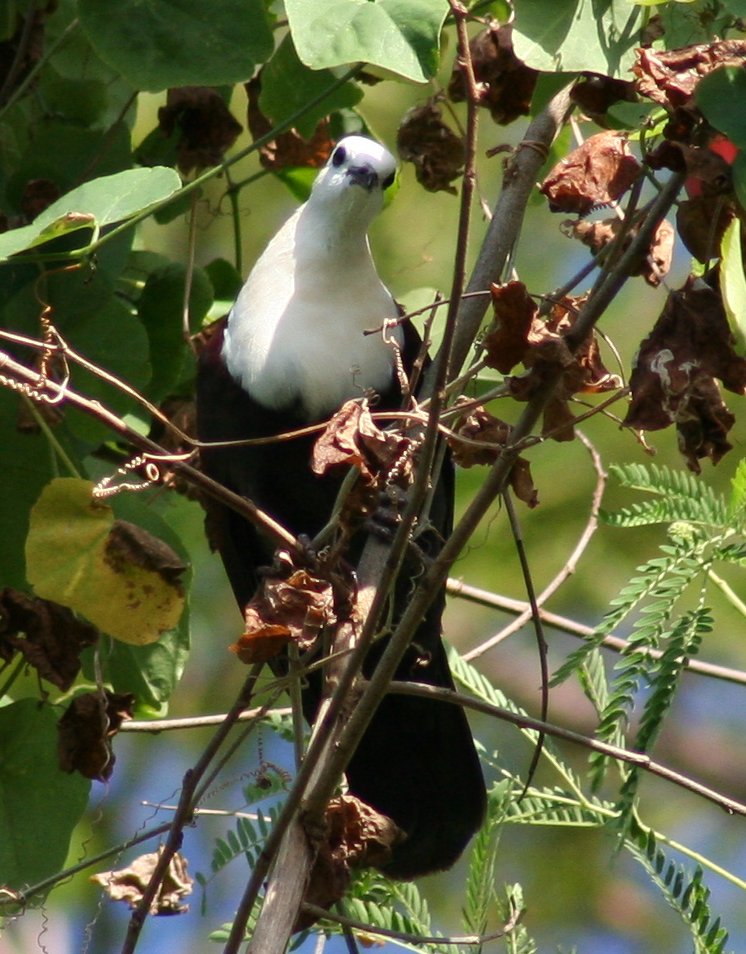
Crossophthalmus reichenbachi
Crossophthalmus reichenbachi
Order: Columbiformes / Family: Columbidae

Wikimedia Commons
About the Crossophthalmus reichenbachi
The Crossophthalmus reichenbachi, a member of the Columbidae family, captivates bird enthusiasts with its striking appearance and distinctive behaviors. This bird showcases a fascinating eye structure that gives it its common name, Crossophthalmus. Found primarily in tropical regions, the Crossophthalmus reichenbachi inhabits areas within Africa's lush forests and South America's diverse landscapes. Its presence highlights the ecological richness and complexity of these habitats. As a frugivore, this species plays a vital role in seed dispersal, contributing significantly to forest regeneration and health. During the breeding season, its behavior shifts dramatically, with males becoming more territorial and vocal to attract mates. These birds adapt to seasonal variations by altering their feeding and nesting behaviors, demonstrating their flexibility and resilience. Importantly, the Crossophthalmus reichenbachi is not just a subject of scientific interest but also part of the cultural and natural heritage of the regions it inhabits. Its role in the ecosystem underscores the interconnectedness of species and the importance of preserving biodiversity. As habitats face ongoing threats from human activity, understanding the Crossophthalmus reichenbachi's ecological role becomes ever more critical. Observers often note the bird's preference for densely forested areas, where it finds both food and shelter. Its activity patterns, such as feeding during dawn and dusk, align with the rhythms of its environment. The Crossophthalmus reichenbachi stands as a testament to nature's adaptability, offering insights into the delicate balance of tropical ecosystems. Whether in the vibrant rainforests of the Congo Basin or the expansive woodlands of the Amazon, the Crossophthalmus reichenbachi remains a symbol of avian diversity and resilience.
The Crossophthalmus reichenbachi belongs to the family Columbidae, within the order Columbiformes. These birds typically live 5-7 years with a maximum recorded of 10 years.
How to Identify a Crossophthalmus reichenbachi
The Crossophthalmus reichenbachi can be identified by its medium size, typically measuring around 30-35 cm from beak to tail. Adults exhibit a striking plumage with a mix of earthy browns and subtle hints of green and gray, which blend harmoniously with their forest environments. The most distinguishing feature is their eye structure, which appears unusually prominent and cross-like, giving them a somewhat intense gaze. Male and female Crossophthalmus reichenbachi have similar plumage, making sex differentiation challenging without close observation of behavior or size, as males are slightly larger. Juveniles resemble adults but with duller coloration, lacking the full vibrancy seen in mature birds. In flight, the Crossophthalmus reichenbachi showcases a robust silhouette with broad wings and a slightly rounded tail, features that aid in navigating dense forest canopies. It perches with a relaxed posture, often seen on tree branches where it remains alert to its surroundings. While similar species may cause confusion, the unique eye appearance and specific call notes of the Crossophthalmus reichenbachi help in accurate identification.
Having trouble telling birds apart? Upload a photo to our bird identification tool for an instant species match.
Crossophthalmus reichenbachi Habitat and Range
Preferred Habitat
Crossophthalmus reichenbachi thrives in tropical and subtropical forests, favoring dense, humid environments rich in fruit-bearing trees. These birds are commonly found at elevations ranging from sea level to 1500 meters, though they show a preference for lower altitudes where food sources are abundant. During certain seasons, they may venture into secondary growth or edge habitats, especially when primary forest resources become scarce. Urban sightings are rare, as the species typically avoids human-altered landscapes, preferring the cover and complexity of natural forest settings. Seasonal habitat shifts are minimal, as the Crossophthalmus reichenbachi tends to remain within stable, resource-rich areas year-round.
Geographic Range
The Crossophthalmus reichenbachi's range extends across various tropical regions in Africa and South America. In Africa, it is most frequently observed in the rainforests of the Congo Basin, while in South America, its presence is notable in the Amazon Basin. These areas represent population density hotspots where the species finds ideal conditions for breeding and feeding. The Crossophthalmus reichenbachi exhibits minimal migratory behavior, largely remaining within its established territories throughout the year. However, some local movements may occur in response to seasonal fluctuations in food availability or breeding demands.
Want to know which birds visit your area? Browse our backyard birds by location guides for region-specific species lists.
What Does the Crossophthalmus reichenbachi Eat?
The diet of the Crossophthalmus reichenbachi primarily consists of fruits, making it a crucial frugivore within its ecosystem. It favors a variety of tropical fruits available in its habitat, including figs, berries, and small drupes. Seasonal diet changes occur as different fruits come into season, ensuring a consistent food supply. Foraging typically takes place during morning and late afternoon hours, aligning with peak fruit availability. This bird employs a methodical foraging technique, using its robust beak to pluck fruit from branches with precision. Occasionally, it supplements its diet with seeds and small invertebrates, particularly during the breeding season when nutritional demands increase.
Crossophthalmus reichenbachi Behavior and Social Structure
The Crossophthalmus reichenbachi displays fascinating behaviors that reflect its adaptability and social nature. Typically, these birds form loose flocks, especially outside the breeding season, which aids in foraging efficiency and predator vigilance. During courtship, males engage in elaborate displays, showcasing their plumage and vocal skills to attract females. Territorial behavior becomes prominent as males fiercely defend nesting sites from intruders. In response to predators, Crossophthalmus reichenbachi relies on swift flight and the safety of dense foliage to evade capture. Its daily activity patterns include periods of intense feeding interspersed with rest and preening, ensuring well-maintained plumage and readiness for quick escapes.
Crossophthalmus reichenbachi Nesting and Reproduction
The Crossophthalmus reichenbachi constructs nests in trees, preferring locations that offer concealment and protection. Nests are typically a loose assembly of twigs and leaves, lined with softer materials for egg security. Clutch size ranges from two to three eggs, with both parents sharing incubation duties over a period of approximately 14-16 days. Upon hatching, chicks are altricial, requiring significant parental care. Fledging occurs around 24-26 days post-hatching, with young birds remaining dependent on parents for several weeks thereafter. This species generally produces one to two broods per year, contingent on environmental conditions and food availability.
Crossophthalmus reichenbachi Sounds and Vocalizations
The vocalizations of the Crossophthalmus reichenbachi are characterized by a series of rhythmic, resonant coos, often described as soothing yet commanding. These primary songs serve to establish territory and attract mates during the breeding season. In addition to these songs, the bird emits distinct call notes that vary in pitch and urgency, often used in social interactions or to alert others of potential threats. Alarm calls are sharper and more urgent, effectively conveying the presence of predators. During the dawn chorus, the Crossophthalmus reichenbachi contributes a melodic and repetitive sequence that harmonizes with the sounds of its forest habitat, creating a rich acoustic tapestry.
Interesting Facts About the Crossophthalmus reichenbachi
- 1The Crossophthalmus reichenbachi can consume over 50 types of fruit, critical for seed dispersal.
- 2During courtship, males engage in wing-flapping displays that can last several minutes.
- 3Despite its medium size, it can cover distances of up to 10 km a day in search of food.
- 4Its unique eye structure allows for enhanced peripheral vision, an advantage in dense forests.
- 5Breeding pairs often stay together for multiple seasons, exhibiting monogamous tendencies.
- 6These birds have been observed using their beaks to manipulate leaves and create makeshift shelters.
- 7The Crossophthalmus reichenbachi's call can be heard over 200 meters in dense forest environments.
Crossophthalmus reichenbachi Conservation Status
Currently listed as Least Concern by the IUCN, the Crossophthalmus reichenbachi maintains a stable population across its range. However, ongoing threats such as deforestation and habitat degradation pose significant risks to its long-term survival. Conservation efforts focus on habitat preservation and restoring degraded areas to ensure sustainable environments for this and other forest-dependent species. Historical data suggest moderate fluctuations in population size, primarily driven by changes in land use and climate dynamics. Active conservation measures aim to mitigate these impacts and safeguard the species' future.
Other Columbidae Species


Birds Similar to the Crossophthalmus reichenbachi
These species are often confused with the Crossophthalmus reichenbachi due to similar appearance or overlapping range.