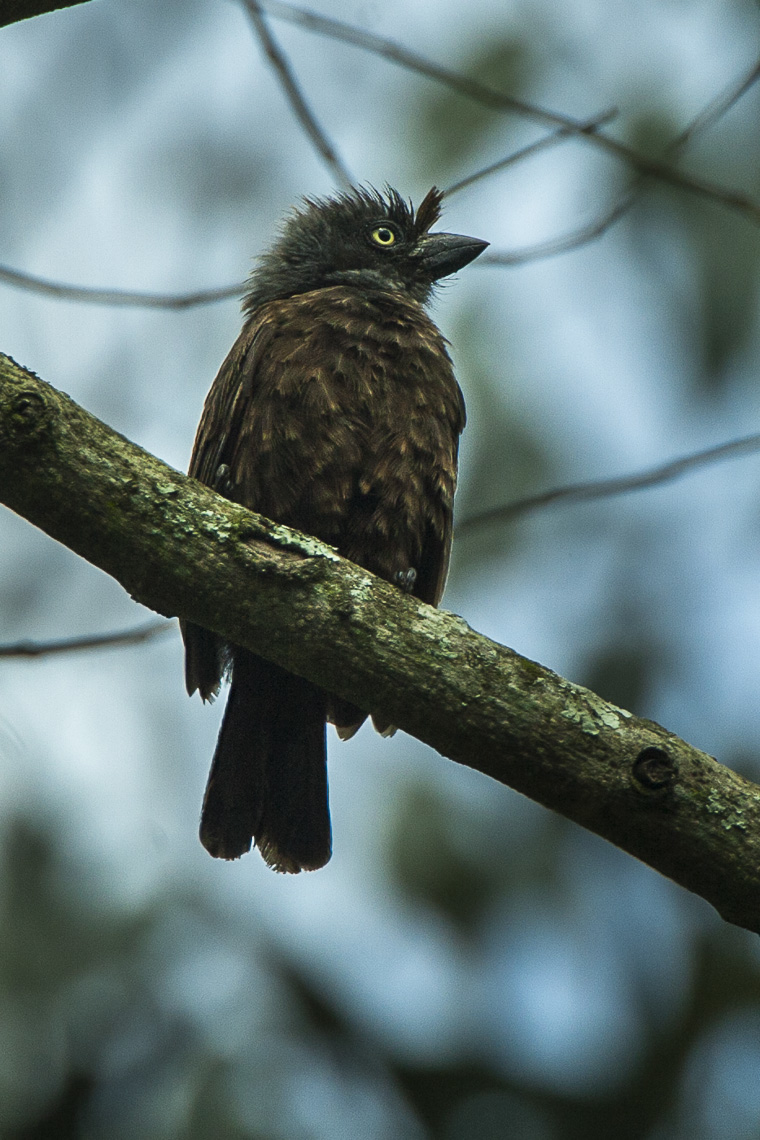
D'Arnaud's Barbet
Trachyphonus darnaudii
Order: Piciformes / Family: Lybiidae

Wikimedia Commons
About the D'Arnaud's Barbet
The D'Arnaud's Barbet, scientifically named Trachyphonus darnaudii, is a captivating species native to the African continent, particularly in the eastern regions. This barbet, belonging to the family Lybiidae and order Piciformes, is a small but vividly marked bird, often found in the savannas and scrublands of Kenya, Tanzania, and Uganda. Its significance within these ecosystems is notable, as it plays a crucial role in seed dispersal and insect population control. The bird's striking plumage and unique vocalizations make it an integral part of the avian biodiversity in these areas. D'Arnaud's Barbet thrives in semi-arid environments, often preferring open landscapes with scattered trees and shrubs. Its presence in these habitats is vital for maintaining the ecological balance, as it feeds on a variety of insects and fruits, aiding in seed dispersal. The barbet's seasonal behaviors are influenced by the availability of food and breeding opportunities. During the rainy season, when food is abundant, the D'Arnaud's Barbet actively engages in breeding activities, thereby enhancing its population numbers. In contrast, the dry season sees a shift in its foraging habits, as it adapts to the changing landscape by expanding its diet to include more insects. The D'Arnaud's Barbet is not just a visual delight; it is also a key species in the functioning of its ecosystem. Its role extends beyond mere aesthetics, as it contributes to the health of the flora and fauna around it. By consuming insects, the barbet helps control pest populations, thereby benefiting agricultural activities in the region. Additionally, its seed dispersal activities contribute to the regeneration of native plant species, ensuring the sustainability of its habitat. As such, the D'Arnaud's Barbet is a species of considerable ecological importance.
The D'Arnaud's Barbet belongs to the family Lybiidae, within the order Piciformes. These birds typically live average 5-7 years, with a maximum recorded of 10 years..
How to Identify a D'Arnaud's Barbet
D'Arnaud's Barbet is easily identifiable by its small size, measuring about 16-18 cm in length. The adult plumage is characterized by a combination of bright yellow and black spots, with a distinctive red patch on the forehead. The throat and upper breast exhibit a white background, adorned with black spots. Juvenile barbets are similar in appearance but have a more subdued coloration, lacking the vibrant red forehead seen in adults. Both males and females share similar plumage, making it difficult to distinguish between the two sexes in the field. However, males typically exhibit slightly brighter coloration during the breeding season. The bird's silhouette in flight is compact, with rounded wings and a short tail, often seen flitting between trees or shrubbery. When perched, the D'Arnaud's Barbet maintains an upright posture, frequently observed on branches or termite mounds. Confusion with similar species, such as the Spot-flanked Barbet, can occur, but D'Arnaud's Barbet can be differentiated by its unique vocalizations and more pronounced red forehead patch.
Having trouble telling birds apart? Upload a photo to our bird identification tool for an instant species match.
D'Arnaud's Barbet Habitat and Range
Preferred Habitat
D'Arnaud's Barbet inhabits a range of semi-arid environments, including savannas, open woodlands, and scrublands. It is commonly found at elevations ranging from sea level to about 2000 meters. The bird shows a preference for areas with scattered trees and shrubs, providing both food and nesting opportunities. In urban areas, it can be seen in gardens and parks, adapting well to human-altered landscapes. Seasonal habitat shifts are minimal, as the bird remains largely resident throughout the year, though it may move locally in response to food availability.
Geographic Range
The D'Arnaud's Barbet is primarily found in East Africa, with its range extending across countries such as Kenya, Tanzania, and Uganda. It is a resident species, with no major migratory movements recorded. The bird's population density is highest in regions where suitable habitats, such as savannas and open woodlands, are abundant. In Kenya, it is commonly observed in areas like the Maasai Mara and Amboseli National Parks. In Tanzania, it thrives in the Serengeti and Tarangire ecosystems. Despite its relatively stable range, localized movements may occur in response to environmental changes and food availability.
Want to know which birds visit your area? Browse our backyard birds by location guides for region-specific species lists.
What Does the D'Arnaud's Barbet Eat?
The diet of D'Arnaud's Barbet consists primarily of insects and fruits, with a notable preference for termites and beetles. During the wet season, when insect populations are at their peak, the barbet actively forages for these protein-rich food sources. Its feeding technique involves gleaning insects from foliage and probing into crevices of bark. Fruits, particularly figs and berries, form a significant part of its diet, especially during the dry season when insect availability decreases. The barbet's diet is opportunistic, allowing it to adapt to seasonal changes in food resources. Feeding occurs mostly during the early morning and late afternoon, coinciding with peak insect activity.
D'Arnaud's Barbet Behavior and Social Structure
D'Arnaud's Barbet exhibits a social structure that is both fascinating and complex. It tends to form small family groups, often observed foraging together. The bird is highly territorial, with pairs defending their nesting and feeding grounds vigorously against intruders. Courtship displays are intricate, involving a series of calls and mutual preening between mates. The bird's daily activity pattern includes an early morning chorus, followed by foraging and nest maintenance activities. During the heat of the day, it retreats to shaded areas, resuming activity in the cooler late afternoon. In response to predators, the barbet employs alarm calls and seeks refuge in dense vegetation. Its flocking patterns are most evident during the non-breeding season, when groups may join forces to forage more effectively.
D'Arnaud's Barbet Nesting and Reproduction
D'Arnaud's Barbet constructs its nests in tree cavities or termite mounds, using plant fibers, feathers, and small twigs as nesting materials. The preferred location is often a vertical surface, providing protection from ground predators. Clutch size typically ranges from 2 to 4 eggs, with both parents sharing incubation duties over a period of approximately 14 days. Upon hatching, the chicks remain in the nest for about 30 days before fledging. Parental roles are well-defined, with both parents involved in feeding and caring for the young. The species usually raises one to two broods per year, depending on food availability and environmental conditions.
D'Arnaud's Barbet Sounds and Vocalizations
The primary song of D'Arnaud's Barbet is a melodious series of trills and whistles, delivered in a rapid sequence. The rhythm is lively, with a pitch that varies from low to high notes. Call notes are distinctive, consisting of sharp 'chik' sounds that serve as communication signals among group members. Alarm calls are more urgent, characterized by a fast-paced series of short notes. During the dawn chorus, the barbet's song is prominent, contributing to the vibrant soundscape of its habitat. Its vocalizations are often compared to the jingling of small bells, adding a charming auditory element to its presence.
Interesting Facts About the D'Arnaud's Barbet
- 1D'Arnaud's Barbet can excavate its own nest cavities, often choosing termite mounds for added protection.
- 2Despite its small size, D'Arnaud's Barbet can produce remarkably loud calls that carry over long distances.
- 3This barbet is known to engage in cooperative breeding, where older offspring help care for new siblings.
- 4The species' diet flexibility allows it to thrive in various habitats, from open savannas to urban gardens.
- 5D'Arnaud's Barbet plays a key role in seed dispersal, aiding in the regeneration of its native ecosystem.
- 6The bird's name honors Joseph Pons d'Arnaud, a French explorer who contributed to African ornithology.
- 7D'Arnaud's Barbet uses its strong beak not only for feeding but also for chiseling into wood to create nesting sites.
D'Arnaud's Barbet Conservation Status
The IUCN currently lists D'Arnaud's Barbet as a species of Least Concern, with a stable population trend. However, habitat loss due to agricultural expansion and deforestation poses a significant threat to its long-term survival. Conservation efforts focus on preserving natural habitats and promoting sustainable land-use practices. Historical population changes have been minimal, but ongoing monitoring is essential to ensure this species remains viable. Community-based conservation initiatives have seen success in protecting local populations, highlighting the importance of involving local communities in conservation strategies.