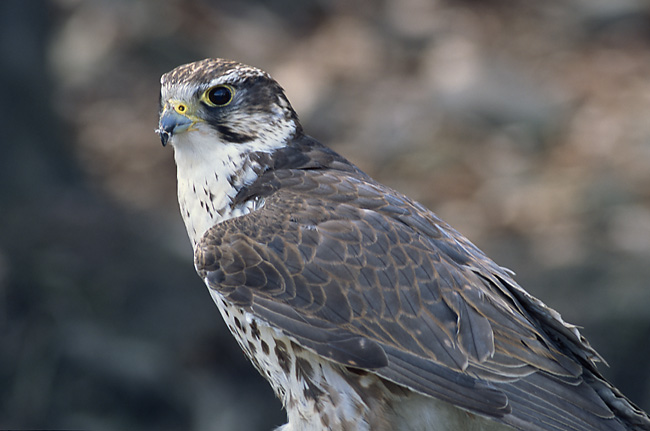
Lanner Falcon
Falco lanarius
Order: Falconiformes / Family: Falconidae

Wikimedia Commons
About the Lanner Falcon
The Lanner Falcon (Falco lanarius) is a large and powerful bird of prey, renowned for its speed and agility in the air. It belongs to the family Falconidae and is closely related to other falcons like the Peregrine Falcon. This species is widespread across Africa, the Middle East, and parts of southern Europe. In Africa, you can find them from Morocco and Egypt down to South Africa, occupying varied terrains from deserts to open savannas. In Europe, they are predominantly found in the southern regions, including Italy and the Balkans, where they favor open, rocky areas. One of the Lanner Falcon's most notable behaviors is its cooperative hunting strategy, often seen hunting in pairs or family groups, which is quite unusual for falcons. This social hunting behavior allows them to take down larger prey more efficiently than when hunting alone. The Lanner Falcon plays a critical ecological role as a top predator, helping to control populations of smaller birds and mammals. They are highly adaptable, with their diet shifting seasonally and geographically based on prey availability. During the breeding season, which generally coincides with the availability of prey, Lanner Falcons can be seen performing aerial displays, showcasing their agility and strength to potential mates. These displays are not only a fascinating spectacle but also an essential part of their courtship rituals. Despite their prowess as hunters, Lanner Falcons face numerous threats, including habitat destruction and persecution in some areas. Conservation efforts are crucial to ensure that this iconic raptor continues to thrive across its range.
The Lanner Falcon belongs to the family Falconidae, within the order Falconiformes. These birds typically live average 12 years in the wild, up to 20 years in captivity..
How to Identify a Lanner Falcon
Adult Lanner Falcons exhibit a distinctive plumage pattern with a bluish-gray back and wings, contrasted by a rufous crown and nape. Their underparts are pale, with fine streaking that provides camouflage against rocky and open landscapes. Juvenile Lanner Falcons differ significantly, displaying a more uniform brown coloration, which gradually changes as they mature into their adult plumage over the course of several years. Notably, females are generally larger than males, a common trait among raptors, though both sexes share similar coloration. When comparing the Lanner Falcon to similar species, its size and coloration can help differentiate it from the Peregrine Falcon, which tends to have a darker overall appearance and different vocalizations. In flight, the Lanner Falcon's silhouette is characterized by long, pointed wings and a relatively long tail, offering a sleek and agile profile. While perched, they often adopt an upright posture, with their sharp eyes constantly scanning for prey.
Having trouble telling birds apart? Upload a photo to our bird identification tool for an instant species match.
Lanner Falcon Habitat and Range
Preferred Habitat
Lanner Falcons occupy a wide range of habitats, primarily favoring open areas such as savannas, grasslands, and semi-deserts. They are particularly fond of regions with sparse vegetation, which allows for easier hunting and higher visibility. These falcons are commonly found from sea level to altitudes of up to 3,000 meters, especially in mountainous regions where cliffs provide ideal nesting sites. Unlike some raptors, Lanner Falcons have adapted well to human-modified landscapes and can occasionally be found in urban areas, where tall buildings mimic their natural cliffside roosts. Seasonal habitat shifts are not prominent in Lanner Falcons, as they tend to remain in their territories year-round, only moving in response to prey availability or environmental changes.
Geographic Range
The Lanner Falcon's range is extensive, covering large portions of Africa, the Middle East, and southern Europe. They breed across much of Africa, from Morocco and Egypt to the southern tip of the continent. In Europe, their breeding range includes Italy, Greece, and parts of the Balkans, though populations here are more fragmented. During the non-breeding season, some birds may disperse locally in search of food, but the species is largely sedentary, with no significant migratory movements. Population density hotspots include regions like the Sahel in Africa, where open habitats and abundant prey create ideal conditions for breeding and hunting.
Want to know which birds visit your area? Browse our backyard birds by location guides for region-specific species lists.
What Does the Lanner Falcon Eat?
The Lanner Falcon's diet consists primarily of medium-sized birds, such as pigeons and doves, but they are also known to hunt small mammals, reptiles, and insects. Seasonal changes in prey availability can lead to shifts in their diet, with some populations focusing more on birds during certain times of the year, while others may rely more on mammals or insects. Lanner Falcons employ a variety of hunting techniques, including high-speed aerial chases and cooperative hunting in pairs or small groups. This adaptability in hunting strategies allows them to exploit a wide range of prey species. When hunting, they prefer to launch from a perch or during low-level flight, utilizing their agility and speed to catch prey by surprise. Feeding typically occurs at dawn or dusk, capitalizing on the activity patterns of their prey.
Lanner Falcon Behavior and Social Structure
Lanner Falcons exhibit a fascinating array of behaviors, particularly their social structure. Unlike many other raptors, they often hunt in pairs or family groups, showcasing a level of cooperation uncommon among falcons. This social hunting allows them to target larger or more challenging prey. Territorial behavior is pronounced during the breeding season, with pairs defending their nesting sites vigorously against intruders. Courtship displays involve dramatic aerial maneuvers and vocalizations, strengthening pair bonds and ensuring successful mating. In response to predators, Lanner Falcons display aggressive behaviors, including swift aerial attacks to drive away potential threats. Their daily activity patterns typically include hunting at dawn and dusk, though they may adjust their schedule based on prey activity.
Lanner Falcon Nesting and Reproduction
Lanner Falcons typically nest on cliff ledges, using existing scrapes or ledges to lay their eggs. They do not build elaborate nests, instead opting for simple scrapes lined with minimal vegetation. Occasionally, they may utilize abandoned nests of other large birds. Preferred nesting sites include rocky outcrops, cliffs, and even tall buildings in urban areas. A typical clutch consists of 2 to 4 eggs, with an incubation period of about 32 to 34 days. Both parents share incubation duties, with the female taking the primary role. After hatching, the young fledge within 40 to 45 days, though they remain dependent on their parents for food and protection for several more weeks. Lanner Falcons usually raise one brood per year, with breeding success closely tied to prey availability.
Lanner Falcon Sounds and Vocalizations
The vocalizations of the Lanner Falcon include a series of sharp, piercing calls, often described as 'kek-kek-kek' sounds. These calls are typically used during courtship displays and territorial disputes. Alarm calls are more rapid and intense, serving to alert mates or signal the presence of predators. While the Lanner Falcon does not participate in a dawn chorus like many songbirds, its calls are most frequently heard during active periods around dawn and dusk. The tone and rhythm of their calls resemble that of other falcons, though the Lanner's calls are notably louder and more resonant.
Interesting Facts About the Lanner Falcon
- 1Lanner Falcons can reach speeds of up to 90 miles per hour during their hunting stoops, showcasing their incredible agility.
- 2This species often hunts cooperatively in pairs or groups, a behavior rare among falcons that allows them to tackle larger prey.
- 3The Lanner Falcon is one of the few raptors that has adapted to urban environments, sometimes nesting on tall buildings.
- 4They demonstrate remarkable aerial displays during courtship, including complex flight patterns and acrobatics.
- 5Lanner Falcons are known to use their long tails as rudders, aiding in precise maneuvers and tight turns when hunting.
- 6They have a wide range of vocalizations, with calls that are louder and more resonant than those of many other falcon species.
- 7In the wild, Lanner Falcons have been observed living up to 15 years, though lifespans can be longer in captivity.
Lanner Falcon Conservation Status
The Lanner Falcon is currently listed as Least Concern by the IUCN, though its population trend varies across its range. In some areas, numbers are stable, while in others, particularly in Europe, populations show a decline due to habitat loss and human disturbance. Primary threats include urbanization, agricultural expansion, and persecution. Conservation efforts focus on habitat protection and reducing human-wildlife conflict. Historical population changes have seen declines in certain regions, necessitating targeted conservation strategies to ensure long-term viability.
Other Falconidae Species


Birds Similar to the Lanner Falcon
These species are often confused with the Lanner Falcon due to similar appearance or overlapping range.