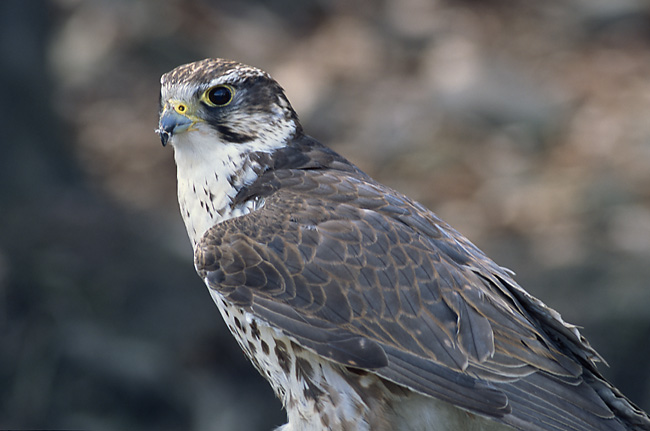
Falco pterocles
Falco pterocles
Order: Falconiformes / Family: Falconidae
About the Falco pterocles
The Falco pterocles, known for its swiftness, plays a vital role in maintaining ecological balance in the desert habitats it frequents. This falcon is a remarkable predator, adept at hunting small mammals and birds. Its presence is most notable in arid landscapes, where it uses its keen eyesight and unparalleled flight skills to pursue prey. Found predominantly in the deserts of Northern Africa and the Arabian Peninsula, the Falco pterocles also inhabits parts of Central Asia. These regions provide the vast, open spaces it requires for its high-speed hunting pursuits. During the breeding season, this falcon establishes territories that allow it to capitalize on abundant prey. The Falco pterocles significantly influences the population dynamics of its prey species, thereby contributing to the control of small mammal and bird populations. In turn, this control helps maintain the integrity of the ecosystem by preventing overgrazing and the depletion of vegetation. This falcon's adaptability to arid and semi-arid environments highlights its critical role in these ecosystems, where it thrives despite harsh conditions. Seasonal behaviors of the Falco pterocles include migrations to slightly cooler regions during the hottest months of the year. This migration is not extensive, but rather a strategic relocation to areas that offer more favorable temperatures and continued access to prey. As a sentinel species, the presence and health of Falco pterocles populations can provide insights into the state of their desert habitats. Monitoring these falcons offers valuable data on environmental changes, prey availability, and the overall health of the ecosystems they inhabit. Understanding the ecological role of Falco pterocles is essential for conservation efforts, particularly in regions facing the challenges of climate change and habitat degradation.
The Falco pterocles belongs to the family Falconidae, within the order Falconiformes. These birds typically live average 10-13 years with max recorded 17 years.
How to Identify a Falco pterocles
Identifying the Falco pterocles involves noting its sleek, streamlined body and pointed wings, which are characteristic of the falcon family. Adults exhibit a predominantly sandy-brown plumage that blends seamlessly with the desert landscapes they inhabit. The underside is lighter with a buff hue, and the chest features subtle streaking. Males and females are similar in appearance, though females are typically slightly larger. Juveniles can be distinguished by their more pronounced streaking and slightly darker plumage until they mature. In flight, the Falco pterocles displays a distinctive silhouette with long, pointed wings and a long tail, allowing it to maneuver with exceptional agility. When perched, this falcon often adopts an upright posture, scanning its surroundings for potential prey. The species could be confused with other smaller falcons, but its unique habitat choice and specific coloration aid in clear identification. The presence of a narrow, dark mustache mark on its face is another identifying feature, setting it apart from similar species.
Having trouble telling birds apart? Upload a photo to our bird identification tool for an instant species match.
Falco pterocles Habitat and Range
Preferred Habitat
Falco pterocles primarily inhabits arid desert regions and semi-arid steppes. It thrives in environments such as the Sahara Desert and the Arabian Peninsula's expansive sand dunes. These regions provide the open spaces necessary for its hunting style. The elevation range for this species is typically low, as it prefers vast flatlands that facilitate its high-speed pursuits. During seasonal shifts, particularly in extreme heat, Falco pterocles may move to slightly cooler nearby regions with similar terrain. While it is adapted to desert life, its presence in urban areas is rare, as it requires undisturbed spaces for hunting and nesting.
Geographic Range
The breeding range of Falco pterocles extends across Northern Africa, including countries like Algeria, Libya, and Egypt, as well as the Arabian Peninsula. In Central Asia, it can be found in Kazakhstan and surrounding regions. During winter, some populations may move southwards or to slightly higher elevations within their range, but they do not typically engage in long-distance migrations. Population density hotspots include the central Sahara and Arabian deserts, where the species is most commonly observed. While not abundant, they are a consistent presence in these arid zones, indicating healthy desert ecosystems.
Want to know which birds visit your area? Browse our backyard birds by location guides for region-specific species lists.
What Does the Falco pterocles Eat?
Falco pterocles primarily preys on small mammals and birds, which constitute the bulk of its diet. It has a preference for rodents and small passerines. During certain seasons, its diet may include insects, particularly when mammal prey becomes scarce. The falcon employs a combination of soaring and stooping techniques to capture prey, often diving at high speeds to catch its target by surprise. The size of prey ranges from small mice to birds weighing up to 100 grams. The falcon is predominantly diurnal, hunting in the early morning and late afternoon when temperatures are cooler.
Falco pterocles Behavior and Social Structure
Falco pterocles exhibits solitary or paired territorial behavior, especially during the breeding season. It establishes territories within its preferred desert habitats to ensure a steady food supply. Courtship displays involve aerial acrobatics and food exchanges between mates. Outside the breeding season, this falcon may occasionally be seen in loose flocks, particularly around abundant food sources. Its response to predators includes evasive flight and aggressive aerial maneuvers. Daily activity patterns are influenced by temperature, with increased activity during cooler parts of the day.
Falco pterocles Nesting and Reproduction
Nesting sites for Falco pterocles are typically on the ground, often in shallow scrapes lined with vegetation or pebbles. The choice of nesting location is crucial, as it provides camouflage and protection from harsh desert conditions. Clutch sizes generally range from 2 to 4 eggs, which are incubated primarily by the female for about 28 to 31 days. During this period, the male provides food for the incubating female. After hatching, both parents participate in feeding the chicks, which fledge approximately 35 to 40 days post-hatching. The species typically raises one brood per year, although conditions permitting, a second brood may be attempted.
Falco pterocles Sounds and Vocalizations
The vocalizations of Falco pterocles include a series of high-pitched calls, often described as sharp and repetitive. These calls serve various functions, such as communication between mates and signaling alarm. During the breeding season, its call becomes more frequent and can be heard at dawn and dusk as part of territorial displays. The alarm call is a rapid, repeated 'kek-kek-kek,' which is more urgent and louder than its regular communication sounds.
Interesting Facts About the Falco pterocles
- 1Falco pterocles can reach speeds of up to 150 kilometers per hour during a hunting dive.
- 2This falcon's camouflage is so effective that it can be nearly invisible against desert sands.
- 3The species has been known to cover territories as large as 15 square kilometers in search of prey.
- 4Falco pterocles can detect prey from over a kilometer away thanks to its exceptional vision.
- 5Despite harsh conditions, the falcon's diet can be surprisingly varied, adapting to prey availability.
- 6The falcon's wingbeats are rapid and powerful, allowing it to change direction quickly during flight.
- 7It has one of the longest breeding seasons among desert raptors, lasting up to four months.
Falco pterocles Conservation Status
Falco pterocles is currently listed as Least Concern by the IUCN, with stable population trends. However, the species faces threats from habitat loss due to human encroachment and climate change, which could alter its desert habitats. Conservation efforts focus on monitoring population numbers and habitat conditions. Historically, the population has remained relatively stable, but ongoing environmental changes necessitate continued conservation vigilance.
Other Falconidae Species


Birds Similar to the Falco pterocles
These species are often confused with the Falco pterocles due to similar appearance or overlapping range.