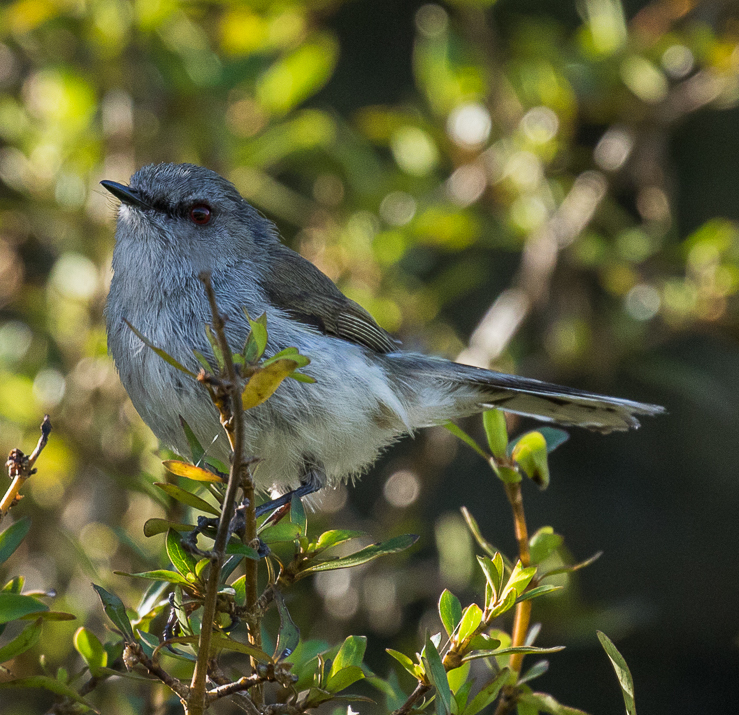
Fan-tailed Gerygone
Gerygone flavolateralis
Order: Passeriformes / Family: Acanthizidae

Wikimedia Commons
About the Fan-tailed Gerygone
The Fan-tailed Gerygone, known scientifically as Gerygone flavolateralis, is a small, agile bird belonging to the family Acanthizidae. This bird is primarily found in Oceania, with its range extending across New Caledonia, Vanuatu, and the Loyalty Islands. It thrives in a variety of habitats, including subtropical or tropical dry forests and moist lowland forests. The Fan-tailed Gerygone plays a crucial ecological role, acting as both a predator of insects and a prey species for larger birds. Its presence in forest ecosystems contributes to the control of insect populations, thereby maintaining a balance within its environment.
In terms of its ecological significance, the Fan-tailed Gerygone is a key player in forest dynamics. Its diet primarily consists of insects, which it gleans from leaves and branches, contributing to pest control. Additionally, by serving as prey for raptors and other larger avian predators, it forms an integral part of the food chain. The bird's foraging activities also facilitate seed dispersal, aiding in plant reproduction and forest regeneration.
Seasonal behaviors of the Fan-tailed Gerygone are particularly interesting. During the breeding season, which typically aligns with the warm months, these birds exhibit increased vocal activity. Their energetic songs and calls become prominent aspects of their behavior as they establish territories and attract mates. Outside the breeding season, the Fan-tailed Gerygone may exhibit more subdued vocalizations while maintaining its role in the ecosystem. The species' adaptability to different forest types and its resilience against environmental changes underscore its importance as an indicator species in assessing forest health and biodiversity.
The Fan-tailed Gerygone belongs to the family Acanthizidae, within the order Passeriformes. These birds typically live average 2-5 years, with a maximum recorded of 8 years..
How to Identify a Fan-tailed Gerygone
The Fan-tailed Gerygone is a small bird, measuring approximately 11 to 12 centimeters in length. Its most notable feature is its fan-shaped tail, which it often spreads during displays and while foraging. The upperparts of the bird are generally olive-green, blending seamlessly with its forest habitat. The underparts are a contrasting pale yellow, offering a distinctive field mark for identification.
Adult plumage does not show significant sexual dimorphism, meaning males and females appear similar. However, juveniles can be distinguished by their duller coloration and less pronounced tail pattern. The Fan-tailed Gerygone's flight is characterized by rapid, fluttering wingbeats, and it often appears restless while moving through the canopy.
In terms of similar species, the Fan-tailed Gerygone might be confused with other small passerines like the Golden Whistler. However, the Gerygone's unique fan-shaped tail and its distinctive song help differentiate it. Observing its perching posture, which is upright and alert, further assists in correct identification.
Having trouble telling birds apart? Upload a photo to our bird identification tool for an instant species match.
Fan-tailed Gerygone Habitat and Range
Preferred Habitat
The Fan-tailed Gerygone inhabits a variety of forested environments. It is most commonly associated with subtropical and tropical dry forests, as well as moist lowland forests. These habitats provide the necessary cover and resources for foraging and nesting. It is also adaptable enough to be found in secondary growth and forest edges. Generally, the species is found at elevations ranging from sea level to about 1,000 meters, though it is more prevalent in the lower to mid-elevations where insect abundance is higher.
During seasonal shifts, such as the breeding season, the Fan-tailed Gerygone may move slightly to exploit areas with optimal food availability or suitable nesting sites. While primarily a forest dweller, this bird occasionally ventures into nearby clearings or gardens, especially when seeking food. In terms of urban presence, the Fan-tailed Gerygone is not typically a city bird but may be observed in rural areas where natural and semi-natural habitats persist.
Geographic Range
The Fan-tailed Gerygone is endemic to Oceania, with its range prominently covering New Caledonia, Vanuatu, and the Loyalty Islands. It is a resident species, meaning it does not undertake long-distance migrations like some other passerine birds. Instead, it remains within its range year-round, albeit with slight local movements in response to food availability and breeding requirements.
Within its range, population densities can vary, with higher concentrations often found in well-forested areas that offer ample foraging opportunities. The bird's absence from mainland Australia and other nearby regions highlights its specialization in island ecosystems. However, within its preferred habitats, the Fan-tailed Gerygone is considered relatively common and not restricted to small, isolated populations.
Want to know which birds visit your area? Browse our backyard birds by location guides for region-specific species lists.
What Does the Fan-tailed Gerygone Eat?
The Fan-tailed Gerygone's diet primarily consists of insects and other small arthropods, which it actively gleans from foliage. It employs a methodical foraging technique, moving through the canopy with agility while inspecting leaves and branches for prey. The bird's small size allows it to navigate dense vegetation effectively, giving it an advantage in reaching hidden insects.
Throughout the year, its diet remains largely insectivorous, though seasonal variations in prey availability can influence its exact dietary composition. During periods of insect abundance, such as the rainy season, the Fan-tailed Gerygone may increase its feeding activity. In contrast, during drier months, it may rely on a broader range of prey items, including spiders and small caterpillars.
The bird feeds at various times throughout the day, often taking advantage of morning and late afternoon periods when insects are most active. Its foraging schedule is flexible, allowing it to exploit different microhabitats and food sources as conditions change.
Fan-tailed Gerygone Behavior and Social Structure
The Fan-tailed Gerygone exhibits a range of behaviors characteristic of small forest songbirds. It is a social bird, often found in pairs or small family groups. However, during the breeding season, it becomes more territorial, with pairs establishing and defending nest sites vigorously.
Courtship displays involve both vocalizations and visual signals. Males sing to attract females and may engage in aerial displays to demonstrate fitness and vigor. These displays often include the characteristic fanning of the tail, a behavior that is both a courtship gesture and a means of communication.
In terms of daily activity patterns, the Fan-tailed Gerygone is diurnal, with peak foraging occurring in the early morning and late afternoon. It exhibits a high degree of alertness, responding quickly to potential predators with alarm calls and evasive maneuvers. When faced with larger threats, it may rely on dense foliage as cover, using its agility to escape danger.
Fan-tailed Gerygone Nesting and Reproduction
The Fan-tailed Gerygone constructs a unique, dome-shaped nest with a side entrance, typically suspended from branches or hidden within foliage. The nests are primarily made from grasses, plant fibers, and spider silk, providing both camouflage and structural integrity.
Preferred nesting sites are usually located in sheltered areas of trees or shrubs, offering protection from predators and the elements. A typical clutch consists of two to three eggs, which are incubated by both parents for approximately 14 to 16 days. The nesting period includes attentive parental care, with both adults participating in feeding and protecting the young.
After hatching, the chicks remain in the nest for about 15 days before fledging. The parents continue to support the fledglings for a short period post-fledging, ensuring they can feed independently. Typically, the Fan-tailed Gerygone raises one or two broods per year, depending on environmental conditions and food availability.
Fan-tailed Gerygone Sounds and Vocalizations
The Fan-tailed Gerygone is known for its distinctive song, a series of rapid, high-pitched notes delivered in a rhythmic sequence. The song carries a bright and cheerful quality, making it a familiar sound in its forest habitats. Call notes are often short and sharp, used for communication between mates or signaling alarm.
During the dawn chorus, the Fan-tailed Gerygone's song is particularly prominent, contributing to the acoustic landscape of its habitat. The bird's vocal repertoire also includes a variety of calls used in social interactions and territorial defense, each with subtle variations in pitch and rhythm.
Interesting Facts About the Fan-tailed Gerygone
- 1The Fan-tailed Gerygone can fan its tail widely, a behavior that aids in communication and courtship displays.
- 2Despite its small size, the Fan-tailed Gerygone is known for its loud and complex song, which resonates through its forest habitats.
- 3The species is adept at using spider silk to construct its nest, providing both flexibility and strength to its intricate structures.
- 4The Fan-tailed Gerygone's diet largely consists of insects, playing a vital role in controlling pest populations in its native habitats.
- 5The bird's range is restricted to specific islands in Oceania, highlighting its specialization in island ecosystems.
Fan-tailed Gerygone Conservation Status
The Fan-tailed Gerygone currently holds a status of Least Concern on the IUCN Red List, reflecting its stable population trend. Despite its restricted range, the bird benefits from its adaptability to various forest types and its ability to thrive in both primary and secondary growth. Primary threats to the species include habitat loss due to deforestation and land-use changes, particularly in regions experiencing logging or agricultural expansion. However, conservation efforts in protected areas and the bird's presence in some national parks help mitigate these risks. Monitoring population trends and maintaining habitat integrity remain crucial for ensuring the long-term survival of the Fan-tailed Gerygone.
Other Acanthizidae Species


Birds Similar to the Fan-tailed Gerygone
These species are often confused with the Fan-tailed Gerygone due to similar appearance or overlapping range.