
Forest Wagtail
Dendronanthus indicus
Order: Passeriformes / Family: Motacillidae

Wikimedia Commons
About the Forest Wagtail
The Forest Wagtail, Dendronanthus indicus, is a distinctive member of the Motacillidae family, primarily observed in wooded environments across Asia. Unlike other wagtails, this species wags its tail side-to-side rather than up-and-down. This characteristic behavior aids in its identification among the dense foliage where it often resides. The bird holds significant ecological value as an insectivore, playing a role in controlling insect populations in various forested regions. It inhabits deciduous and mixed forests, showing a preference for areas with open undergrowth, which facilitate its foraging behavior. During the breeding season, which takes place in parts of northeastern Asia, the Forest Wagtail can be found in countries such as China, Korea, and parts of Russia. In winter, it migrates to warmer locales, including India, Southeast Asia, and the Malay Peninsula. This seasonal movement highlights its adaptability to different environments, from temperate to tropical zones. The Forest Wagtail's presence in diverse habitats underscores its role in various ecological systems, where it contributes to the balance of insect populations. Observing its behavior provides insights into the health of these ecosystems, as changes in wagtail populations can indicate broader environmental shifts.
The Forest Wagtail belongs to the family Motacillidae, within the order Passeriformes. These birds typically live up to 7 years in the wild..
How to Identify a Forest Wagtail
The Forest Wagtail exhibits a striking plumage that aids in field identification. Adults display a soft olive-brown upper body contrasting with a white underbody. Distinctive features include a black breast band and wing bars, which are prominent against the lighter plumage. Males and females appear similar, though males may exhibit slightly brighter colors during the breeding season. Juveniles resemble adults but have more subdued markings, lacking the distinct breast band found in mature birds. Its side-to-side tail wagging behavior is a key identification trait, setting it apart from other wagtails that exhibit vertical tail movements. When perched, the Forest Wagtail's posture is characteristically upright, often seen on low branches or foraging on the ground. In flight, the bird shows a slender silhouette with rapid wingbeats, which is common among wagtails. While similar species such as the Yellow Wagtail may cause confusion, the Forest Wagtail's unique tail motion and habitat preference help in distinguishing it.
Having trouble telling birds apart? Upload a photo to our bird identification tool for an instant species match.
Forest Wagtail Habitat and Range
Preferred Habitat
The Forest Wagtail thrives in a variety of forested environments, particularly favoring deciduous and mixed woodlands. It can be found at elevations ranging from sea level to moderate altitudes in hilly regions. During the breeding season, it prefers habitats with open undergrowth to facilitate its ground-foraging behavior. In winter, it transitions to more tropical climates, often found in secondary forests and sometimes near human settlements, indicating its adaptability. While primarily a forest dweller, the wagtail occasionally appears in urban parks and gardens, especially during migration periods.
Geographic Range
The breeding range of the Forest Wagtail extends across parts of northeastern Asia, including regions in China, Korea, and Russia. As winter approaches, it undertakes long migrations to the Indian subcontinent, Southeast Asia, and the Malay Peninsula. The migration corridors are crucial for its survival, providing stopover sites rich in resources. Population density is highest in key wintering areas like the forests of India and Thailand, where the bird finds abundant food and suitable habitats. Its adaptability to various climates is evident in its wide geographic range, spanning temperate and tropical regions.
Want to know which birds visit your area? Browse our backyard birds by location guides for region-specific species lists.
What Does the Forest Wagtail Eat?
Primarily insectivorous, the Forest Wagtail's diet consists of ants, beetles, and caterpillars, which it forages from the ground. During the breeding season, it may also consume spiders and small mollusks to meet increased energy demands. The bird employs a methodical foraging technique, walking briskly on the forest floor while swinging its tail side-to-side, helping to flush out hidden prey. Seasonal diet variations occur, with a shift towards more diverse invertebrates during migration. Feeding typically occurs during daylight hours, with peak activity in the early morning and late afternoon.
Forest Wagtail Behavior and Social Structure
The Forest Wagtail exhibits a solitary or pair-based social structure, particularly during the breeding season. Territorial behavior is evident as males defend breeding areas through song and display flights. Courtship involves a series of intricate displays and calls, with the male showcasing its tail-wagging prowess. Outside the breeding season, it may join loose flocks, especially during migration. The wagtail remains vigilant against predators, utilizing its agility to escape threats. Daily activity peaks during the cooler parts of the day, aligning with insect availability.
Forest Wagtail Nesting and Reproduction
The Forest Wagtail constructs a well-camouflaged cup-shaped nest using grasses, leaves, and mosses. Nests are typically placed on the ground or low shrubs, blending seamlessly with the surrounding environment. A clutch usually consists of 3-5 eggs, which are incubated by the female for about 10-14 days. Both parents participate in feeding and protecting the fledglings, which leave the nest around two weeks after hatching. The species typically raises one brood per year, though favorable conditions may allow for a second.
Forest Wagtail Sounds and Vocalizations
The primary song of the Forest Wagtail is a series of melodious whistles and chirps, delivered with a rhythmic pattern. These vocalizations often occur during dawn and are used for both mate attraction and territory defense. Call notes are sharp and distinctive, serving as communication between individuals. Alarm calls are harsher, designed to warn of predators. Its vocal repertoire, though not as varied as some songbirds, plays a crucial role in its social and reproductive behavior.
Interesting Facts About the Forest Wagtail
- 1The Forest Wagtail is the only wagtail species that wags its tail side-to-side instead of up-and-down.
- 2During migration, the Forest Wagtail can travel over 3,000 kilometers between its breeding and wintering grounds.
- 3In India, the Forest Wagtail is often seen in gardens and parks, showing its adaptability to human-altered environments.
- 4The bird's distinct tail-wagging behavior might help in flushing insects from the ground, aiding its foraging.
- 5The Forest Wagtail's song is less complex than that of other songbirds, yet it plays a critical role in territory establishment.
Forest Wagtail Conservation Status
The IUCN lists the Forest Wagtail as Least Concern, with populations currently stable. However, habitat loss due to deforestation poses a significant threat, particularly in breeding and wintering areas. Conservation efforts focus on habitat preservation and restoration. Historical population trends show some fluctuations, but overall numbers remain relatively robust. Continued monitoring and habitat protection are essential to ensure the species' long-term survival.
Other Motacillidae Species

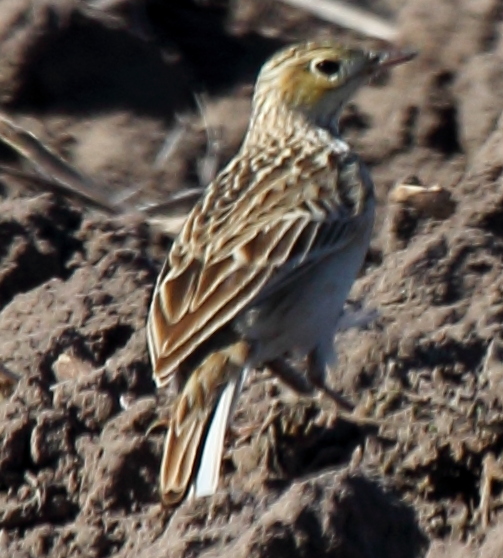


Birds Similar to the Forest Wagtail
These species are often confused with the Forest Wagtail due to similar appearance or overlapping range.
