Gadwall
Mareca strepera
Order: Anseriformes / Family: Anatidae

Wikimedia Commons
About the Gadwall
The Gadwall, Mareca strepera, is a medium-sized dabbling duck often overshadowed by more colorful waterfowl, yet it remains a fascinating species within the family Anatidae. Widely distributed across the Northern Hemisphere, the Gadwall occupies a significant ecological niche. Unlike many ducks that boast vibrant plumage, the Gadwall's understated brown-gray feathers make it a master of camouflage, especially in its preferred habitats of marshes and wetlands. This species plays a crucial role in aquatic ecosystems, providing control over the vegetation through its feeding habits. Gadwalls are commonly found in the temperate and subtropical regions of North America, Europe, and Asia, with large populations recorded in the central United States, particularly in the Prairie Pothole Region. During the breeding season, their presence is vital to the biodiversity of these regions as they contribute to the natural balance by feeding on aquatic vegetation and invertebrates. Gadwalls are known to migrate to warmer southern climates during the winter months, which includes parts of Mexico and the southern United States. This seasonal movement ensures the survival of the species and the continuation of its ecological contributions. Their preference for nesting in tall grasses and dense vegetation near water bodies helps in seed dispersal and provides cover for their young. The Gadwall is not just an interesting study in adaptability and camouflage but also a key player in maintaining the health of wetland ecosystems.
The Gadwall belongs to the family Anatidae, within the order Anseriformes. These birds typically live average lifespan of 5-10 years with a maximum recorded at 19 years..
How to Identify a Gadwall
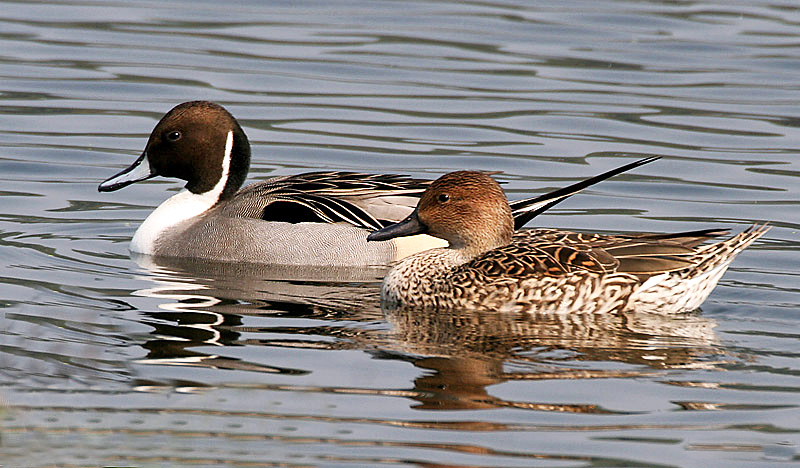
Gadwalls are medium-sized ducks, with males and females exhibiting subtle differences in plumage. Adult males demonstrate a sophisticated blend of gray, brown, and black feathers, with a distinctive white speculum and a black rear end that is particularly noticeable during flight. In contrast, females are mottled brown, resembling the appearance of female Mallards, though they are distinct in having a more delicate pattern and a smaller bill. Juvenile Gadwalls resemble females but with a more uniform and subdued color palette. The Gadwall's bill is dark, and the head is slightly rounded, giving it a less angular appearance compared to other ducks. In flight, Gadwalls can be recognized by their fast and direct flight pattern, with the white wing patch contrasting sharply against the darker body. Their posture while perching is upright, often seen near the water's edge. Despite these identifying marks, Gadwalls can sometimes be confused with similar species such as female Mallards, but a closer look at the distinct speculum and finer feather patterns helps in accurate identification.
Having trouble telling birds apart? Upload a photo to our bird identification tool for an instant species match.
Gadwall Habitat and Range
Preferred Habitat
Gadwalls thrive in a variety of wetland habitats, including marshes, ponds, and shallow lakes. They prefer freshwater environments but can also be found in brackish waters. In North America, the Prairie Pothole Region in states like North Dakota and South Dakota serves as a key breeding ground. During migration and winter, they frequent coastal lagoons and estuaries from the Gulf Coast to California. Gadwalls exhibit some flexibility in habitat choice, occasionally visiting urban ponds and reservoirs, but they primarily favor rural, undisturbed wetlands with abundant aquatic vegetation. They can be found from sea level to elevations of 2,500 meters in some areas, adjusting their habitat preferences based on availability of food and nesting sites.
Geographic Range
The Gadwall's breeding range spans across parts of North America, Europe, and Asia. In North America, they are widely distributed from southern Canada through the central United States. The Prairie Pothole Region is a particularly dense breeding ground. Their European range extends from the British Isles across to western Russia, while in Asia, they breed as far east as the Amur River basin. During the winter, Gadwalls migrate to southern areas including the southern United States, Mexico, and parts of Central America. They also winter in southern Europe, North Africa, and parts of southern Asia. Migration corridors often follow major river systems and coastal lines, where they can find suitable stopover habitat and food resources.
Want to know which birds visit your area? Browse our backyard birds by location guides for region-specific species lists.
What Does the Gadwall Eat?
Gadwalls are primarily herbivorous, feeding on aquatic vegetation such as pondweed, wild celery, and duckweed. These ducks exhibit a dabbling foraging technique, tipping forward in shallow water to access submerged plants. During breeding season, their diet broadens to include a higher proportion of invertebrates such as insects, mollusks, and crustaceans, which provide essential proteins for egg production and chick development. In winter, they rely more heavily on available plant material, shifting to agricultural grains when natural vegetation is scarce. Gadwalls feed most actively during early morning and late afternoon, taking advantage of low light conditions to avoid predators.
Gadwall Behavior and Social Structure
Gadwalls are generally more reserved than other dabbling ducks, often found in small groups rather than large flocks. During the breeding season, pairs form as early as January, with males engaging in subtle courtship displays that include head-bobbing and wing-fluttering to attract females. Gadwalls are territorial during breeding, with males defending their nesting areas from rivals. Outside of breeding, they become more social, joining mixed-species flocks for migration. These ducks are vigilant and quick to respond to potential threats, taking flight rapidly if disturbed. Gadwalls are diurnal, spending daylight hours feeding and resting near water, while evenings are often spent preening and communicating with conspecifics through a series of soft quacks and whistles.
Gadwall Nesting and Reproduction
Gadwalls prefer to nest in dense vegetation near water, often selecting sites in tall grasses or under shrubs for concealment. The female constructs a shallow bowl-shaped nest using grass, leaves, and down, lined with her own feathers for insulation. Clutch size ranges from 7 to 12 eggs, with an incubation period of approximately 24 to 27 days, solely managed by the female. After hatching, the ducklings are precocial and leave the nest within a day, following the female to water where she continues to care for them. Fledging occurs around 49 to 60 days after hatching. Typically, Gadwalls raise one brood per year, but in favorable conditions, they may attempt a second.
Gadwall Sounds and Vocalizations
Gadwalls produce a variety of vocalizations, with the male's 'burp' or 'whistle' being most distinctive. This call is a short, nasal sound often heard during courtship. Females emit a series of quacks, softer than those of the Mallard, used primarily for communication with ducklings. Alarm calls are sharp and repeated, designed to alert others of potential danger. Gadwalls do not participate in a prominent dawn chorus, but their calls contribute to the overall soundscape of their wetland habitats, often heard during early morning and evening when they are most active.
Interesting Facts About the Gadwall
- 1Gadwalls can hybridize with other duck species, occasionally producing offspring with Mallards and Pintails.
- 2Unlike many ducks, Gadwalls are known to steal food from other waterfowl, a behavior known as kleptoparasitism.
- 3Gadwalls are one of the few duck species that have increased in number over the last century, thanks to effective conservation.
- 4They are among the first ducks to start the breeding season, often nesting while ice still covers parts of their habitat.
- 5Gadwalls have a broad geographic range, found across three continents, showcasing their adaptability to diverse climates.
Gadwall Conservation Status
The Gadwall is currently listed as Least Concern by the IUCN, with a stable to increasing population trend. Primary threats include habitat loss due to wetland drainage and climate change affecting breeding and wintering sites. However, conservation efforts focused on wetland restoration and protection have been beneficial for their populations. Historically, the Gadwall faced declines due to hunting and habitat conversion, but legal protections and habitat management practices have enabled recovery in many regions.
Other Anatidae Species


Birds Similar to the Gadwall
These species are often confused with the Gadwall due to similar appearance or overlapping range.