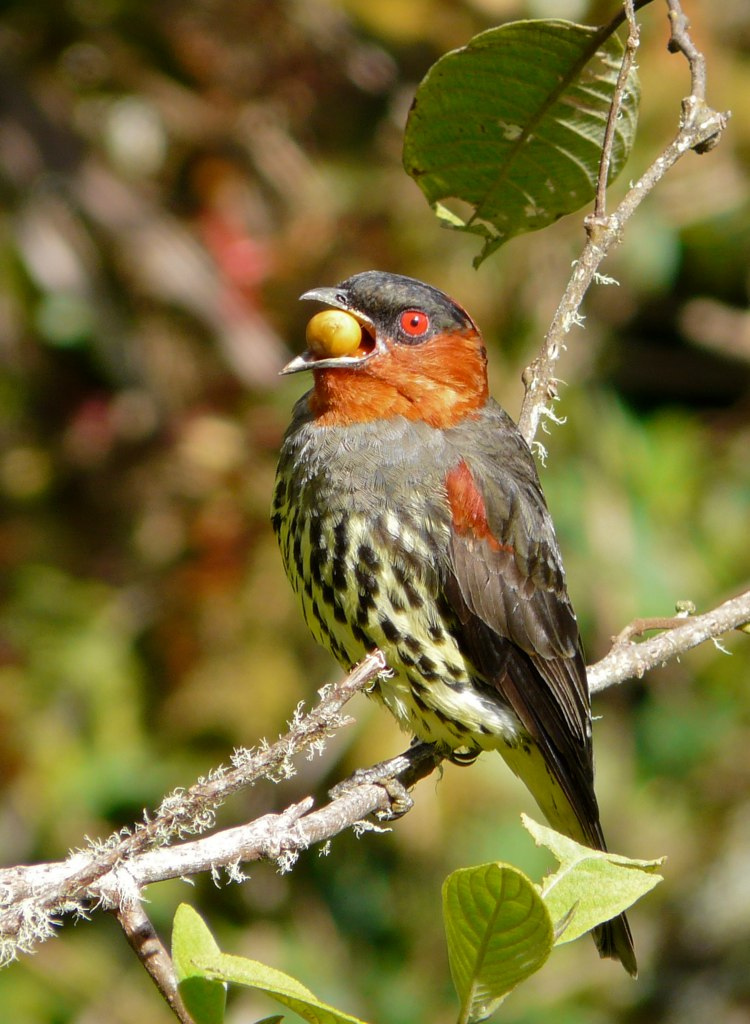
Glossy-backed Becard
Pachyramphus surinamus
Order: Passeriformes / Family: Cotingidae

Wikimedia Commons
About the Glossy-backed Becard
The Glossy-backed Becard (Pachyramphus surinamus) is a strikingly distinctive bird, belonging to the family Cotingidae. Its glossy black plumage makes it a standout amidst the verdant canopies of its tropical forest habitat. This bird is predominantly found in the lowland and foothill forests of northern South America, including the countries of Venezuela, Guyana, Suriname, French Guiana, and parts of northern Brazil. It plays a vital ecological role as part of the avian community that controls insect populations and aids in seed dispersal. The Glossy-backed Becard is typically a resident species, meaning it does not engage in long migrations, although some local movements within its range are possible, particularly in response to food availability. During the breeding season, which varies slightly depending on the region, this bird becomes more vocal and active. Its role in the ecosystem is underscored by its feeding habits, focusing on a diet that includes a variety of insects and fruits, contributing to the control of forest insect populations and the dispersal of seeds. The Glossy-backed Becard is not just a symbol of the tropical forests it inhabits but also a crucial participant in maintaining the health and balance of these ecosystems.
The Glossy-backed Becard belongs to the family Cotingidae, within the order Passeriformes. These birds typically live typically 5-7 years with a maximum recorded lifespan of 10 years..
How to Identify a Glossy-backed Becard
The Glossy-backed Becard exhibits a striking appearance with its glossy black feathers, which cover most of the body in males, giving it a sleek and shiny appearance. Females and juveniles, however, show a more subdued coloration with brownish tones and less gloss. This sexual dimorphism is typical in the species, making it easier to distinguish between males and females in the field. The bird measures approximately 15-17 cm (6-7 inches) in length, with a relatively stout body and a short, thick bill well-suited for its diet of insects and fruits. When in flight, its wings appear broad and rounded, and its tail is relatively short, contributing to its distinctive flight silhouette. On a perch, the Glossy-backed Becard often sits upright, displaying its sleek form and glossy plumage to advantage. It can sometimes be confused with other becard species, but the glossy back and uniform black coloration of the males are key identifying features. In mixed-species flocks, its unique calls and the visual contrast provided by its glossy feathers help it stand out among other forest birds.
Having trouble telling birds apart? Upload a photo to our bird identification tool for an instant species match.
Glossy-backed Becard Habitat and Range
Preferred Habitat
The preferred habitat of the Glossy-backed Becard is the humid lowland tropical forests, where it thrives in the dense canopy and sub-canopy layers. This bird is typically found from sea level up to 1,200 meters (approximately 3,900 feet) in elevation. Its presence is most strongly noted in areas with ample tree cover and abundant fruiting trees and shrubs, which provide both food and nesting sites. While primarily a forest dweller, the Glossy-backed Becard can also be found in secondary forests and well-vegetated plantations. It is less commonly found in urban or heavily deforested areas, as it relies on the complex forest environment to meet its ecological needs. Seasonal shifts in habitat are minimal, as this species is largely sedentary, but some movements may occur in response to local food resource availability.
Geographic Range
The Glossy-backed Becard's range is primarily within northern South America. Its breeding range includes Venezuela, Guyana, Suriname, French Guiana, and the northern region of Brazil, particularly in the states bordering the Amazon River. This species is a year-round resident in these areas, with little to no long-distance migration observed. It is found at varying population densities, with certain areas of Guyana and Venezuela harboring particularly dense populations due to favorable habitat conditions. Its range does not extend as far south as central Brazil, and it is absent from high Andean regions. There are no well-documented migration corridors for this species, as it tends to remain within its preferred forest habitats throughout the year.
Want to know which birds visit your area? Browse our backyard birds by location guides for region-specific species lists.
What Does the Glossy-backed Becard Eat?
The diet of the Glossy-backed Becard primarily consists of insects and fruits, reflecting its dual role as both insectivore and frugivore. It forages actively within the canopy and sub-canopy, using its strong bill to capture a variety of insects, such as caterpillars, beetles, and spiders. During the fruiting season, the Glossy-backed Becard incorporates a significant amount of fruit into its diet, consuming berries, small drupes, and seeds. This seasonal dietary shift highlights the bird's adaptability and its role in seed dispersal within its habitat. The becard employs a sallying technique, where it makes short flights from a perch to catch insects in mid-air or to pluck fruits. Its feeding schedule is most active during the early morning and late afternoon, taking advantage of the cooler parts of the day for foraging.
Glossy-backed Becard Behavior and Social Structure
The Glossy-backed Becard exhibits a solitary or paired lifestyle, especially during the breeding season when pairs establish and defend territories. Courtship displays involve vocalizations and aerial chases, with males often presenting food to females as part of the mating ritual. Outside of the breeding season, the Glossy-backed Becard may join mixed-species flocks, benefiting from the added protection and foraging opportunities such groupings provide. This bird remains vigilant against predators, often relying on alarm calls from other species as an early warning system. Its daily activity pattern follows a diurnal rhythm, being most active shortly after dawn and again before dusk. During the hottest part of the day, it retreats to the shaded canopy for rest and preening.
Glossy-backed Becard Nesting and Reproduction
The nesting habits of the Glossy-backed Becard involve the construction of a globular nest, often suspended from the tips of branches in the upper canopy. The nest is woven from plant fibers, leaves, and sometimes adorned with lichens for camouflage. The female typically lays 2-3 eggs, which are incubated for about 14-16 days. Both parents share in the duties of incubation and feeding the chicks, which fledge approximately 18-21 days after hatching. The role of the male in feeding and defending the nest is crucial for the survival of the brood. The Glossy-backed Becard typically raises one to two broods per year, depending on environmental conditions and food availability.
Glossy-backed Becard Sounds and Vocalizations
The primary song of the Glossy-backed Becard is a series of melodious whistles, often described as clear and flute-like in quality. These whistles carry well through the forest, serving both to attract mates and to establish territory. In addition to its song, the becard produces sharp call notes, often used as contact calls between mates or to signal alarm when predators are near. During the dawn chorus, its song can be a prominent feature, blending with the calls of other forest birds to create a rich tapestry of sound. The alarm calls are more abrupt and high-pitched, serving as an effective warning to other birds in the vicinity.
Interesting Facts About the Glossy-backed Becard
- 1The Glossy-backed Becard can consume over 50 different insect species, showing its dietary versatility.
- 2Its glossy plumage is not just for show; it helps in camouflage among the shiny leaves of the canopy.
- 3The species belongs to the Cotingidae family, known for its diverse and often brightly colored members.
- 4Despite its name, the Glossy-backed Becard is not related to the true becards of the family Tityridae.
- 5A typical clutch contains 2-3 eggs, with both parents sharing incubation duties for about 14-16 days.
- 6The Glossy-backed Becard's song has been noted for its flute-like quality, resonating through the forest.
- 7Its nests are often suspended from branches, providing protection from many ground-based predators.
Glossy-backed Becard Conservation Status
The Glossy-backed Becard is currently listed as 'Least Concern' by the IUCN, with a stable population trend. Despite this, habitat destruction due to logging and agricultural expansion poses a potential threat to its future. Conservation efforts are focused on preserving large tracts of its forest habitat and promoting sustainable land-use practices. Historically, the population of the Glossy-backed Becard has remained relatively stable, benefiting from its adaptability to secondary forests. Continued monitoring and habitat protection will be crucial to ensuring the long-term survival of this species.