
Gray-crowned Crocias
Crocias langbianis
Order: Passeriformes / Family: Leiothrichidae

Wikimedia Commons
About the Gray-crowned Crocias
The Gray-crowned Crocias, Crocias langbianis, is a notable bird species of the Leiothrichidae family. This elusive species is endemic to the montane forests of southern Vietnam, specifically the Lang Bian Plateau in the Annamite Range. These forests, rich in biodiversity, provide a habitat teeming with life, yet the Gray-crowned Crocias remains elusive, contributing to its mystique among birdwatchers and researchers alike. Its presence signals the health of the ecosystem, making it an important species for ecological studies. The bird's habitat consists of subtropical or tropical moist montane forests, where it plays a significant role in seed dispersal and insect population control. The Gray-crowned Crocias is non-migratory, residing year-round in its mountainous habitat. It adapts to the seasonal variations by altering its foraging techniques and diet according to the availability of food resources. During the breeding season, which aligns with the onset of the rainy season, the bird becomes slightly more vocal and visible as it engages in courtship and nest-building activities. Its ecological role extends beyond its immediate environment, as it contributes to the greater forest ecosystem's complexity and dynamism. Observing this bird provides insights into the interactions between species and the environment, underscoring its ecological significance.
The Gray-crowned Crocias belongs to the family Leiothrichidae, within the order Passeriformes. These birds typically live 5-7 years with a maximum recorded of 9 years.
How to Identify a Gray-crowned Crocias
The Gray-crowned Crocias is a medium-sized bird characterized by its striking gray crown, which contrasts with its otherwise brown plumage. Adults display a blend of gray, brown, and white, with a subtle streaking pattern on their underparts. Their wings are brown with white tips, and they have a distinctive white throat. Juveniles resemble adults but with a slightly duller plumage and less pronounced gray crown. Males and females are similar in appearance, making sex differentiation in the field challenging without behavioral cues. In flight, its silhouette is relatively rounded, with broad wings and a short tail, allowing for agile maneuvering through dense forest canopies. When perched, the Gray-crowned Crocias often adopts an upright posture, frequently seen foraging in pairs or small family groups. It can be confused with other Leiothrichidae species, such as the Black-hooded Laughingthrush, but its unique crown and throat markings are distinguishing features.
Having trouble telling birds apart? Upload a photo to our bird identification tool for an instant species match.
Gray-crowned Crocias Habitat and Range
Preferred Habitat
The Gray-crowned Crocias inhabits subtropical or tropical moist montane forests, primarily between 1,200 and 1,800 meters above sea level. These forests are characterized by dense foliage, a rich understory, and a diverse canopy layer, offering ample food resources and nesting sites. The bird shows a preference for areas with mature trees and relatively undisturbed forest conditions. Seasonal habitat shifts are minimal, as it remains within its montane range throughout the year. The Gray-crowned Crocias is not commonly found in urban or agricultural landscapes, as it relies heavily on the forest's natural structure and resources for survival.
Geographic Range
The Gray-crowned Crocias is restricted to the central highlands of Vietnam, with a primary concentration on the Lang Bian Plateau. It resides within the montane forests of the Annamite Range, where it occupies a limited geographic range. Despite its small range, the population density can be relatively high in suitable habitats, making specific areas crucial for conservation efforts. Unlike many other bird species, the Gray-crowned Crocias does not exhibit long-distance migration patterns, maintaining its presence within this confined area year-round. The restricted range highlights the importance of habitat protection in this region to ensure the species' continued survival.
Want to know which birds visit your area? Browse our backyard birds by location guides for region-specific species lists.
What Does the Gray-crowned Crocias Eat?
The diet of the Gray-crowned Crocias primarily consists of insects and other small invertebrates, obtained through active foraging among the foliage and forest understory. The bird employs a gleaning technique, meticulously searching leaves and branches for prey. During the breeding season, its diet may expand to include small fruits and seeds, providing essential nutrients for egg production and chick rearing. This dietary shift coincides with seasonal food abundance, showcasing the bird's adaptability to its environment. The Gray-crowned Crocias typically forages in the early morning and late afternoon, aligning its feeding schedule with peak insect activity.
Gray-crowned Crocias Behavior and Social Structure
The Gray-crowned Crocias exhibits social behavior, often found in pairs or small family groups. It is known for its territoriality, particularly during the breeding season, when pairs defend their nesting areas against intruders. Courtship displays involve vocalizations and mutual preening, strengthening pair bonds. The bird's response to predators includes alarm calls and evasive flight, often retreating to dense foliage for cover. Daily activity patterns are diurnal, with peaks of activity during cooler morning and late afternoon hours. Despite its vocal nature, the Gray-crowned Crocias can be challenging to spot due to its preference for dense forest habitats.
Gray-crowned Crocias Nesting and Reproduction
The Gray-crowned Crocias typically constructs cup-shaped nests using twigs, leaves, and moss, strategically located in the fork of a tree branch. Nesting occurs during the rainy season, with a clutch size of 2-3 eggs. Both parents participate in incubation, which lasts approximately 14-16 days. After hatching, the chicks remain in the nest for another 14-18 days before fledging. Parental roles are shared, with both adults contributing to feeding and protection of the young. The species generally produces one brood per year, although optimal conditions may allow for a second.
Gray-crowned Crocias Sounds and Vocalizations
The primary song of the Gray-crowned Crocias is a series of melodious whistles with a rhythmic pattern, often heard during the early morning hours. Its calls are sharp and clear, used for communication between mates and signaling alarm. During the dawn chorus, its song adds a distinctive layer to the forest's soundscape. The quality of its vocalizations can be compared to the flute-like tones of other songbirds, providing an auditory signature that aids in field identification.
Interesting Facts About the Gray-crowned Crocias
- 1The Gray-crowned Crocias was first discovered in 1939 and was thought extinct until its rediscovery in 1994.
- 2This bird species is one of the few restricted to the montane forests of the Annamite Range, highlighting its unique ecological niche.
- 3The Gray-crowned Crocias' song consists of up to ten distinct whistle notes, each varying in pitch and duration.
- 4Despite its limited range, the Gray-crowned Crocias contributes significantly to seed dispersal within its habitat.
- 5Both male and female Gray-crowned Crocias participate equally in nest building, a behavior not seen in all bird species.
- 6The Gray-crowned Crocias remains elusive, often detected more by its distinctive call than by visual sightings.
- 7Its rediscovery in the 1990s sparked renewed interest in the avifauna of Vietnam, highlighting the region's biodiversity.
Gray-crowned Crocias Conservation Status
The Gray-crowned Crocias is currently listed as Endangered by the IUCN. Its population is decreasing, primarily due to habitat loss from logging and agricultural expansion. Conservation efforts focus on protecting its montane forest habitat and promoting sustainable land use practices in the region. Historical population changes reflect a decline in available habitat, underscoring the need for continued habitat preservation and restoration initiatives.
Other Leiothrichidae Species


Birds Similar to the Gray-crowned Crocias
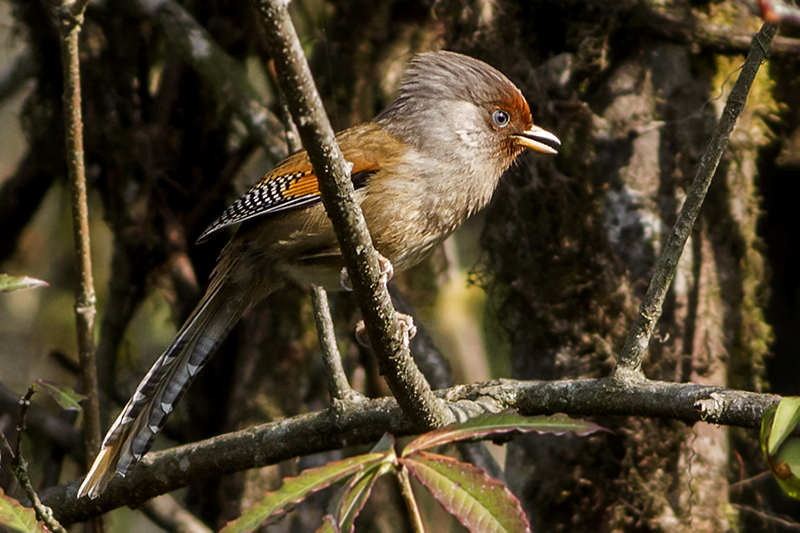
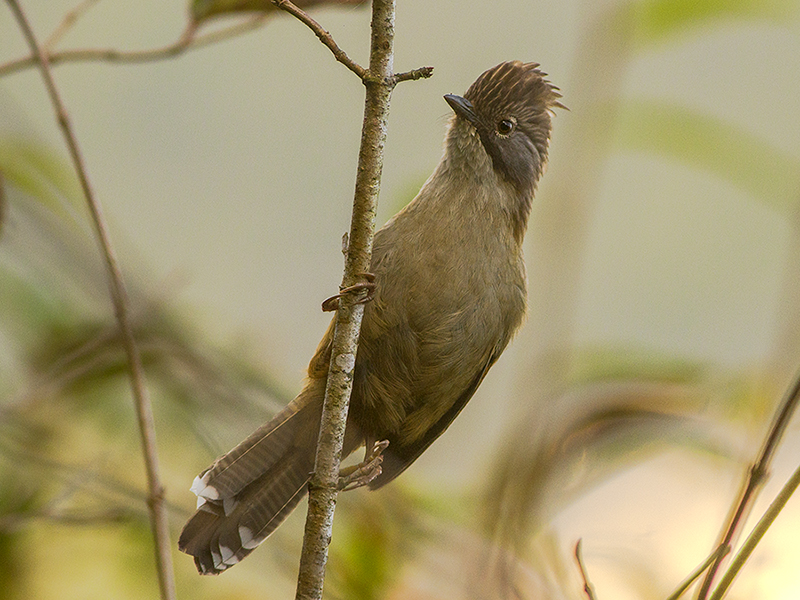
These species are often confused with the Gray-crowned Crocias due to similar appearance or overlapping range.

