
Gray Elaenia
Myiopagis caniceps
Order: Passeriformes / Family: Tyrannidae
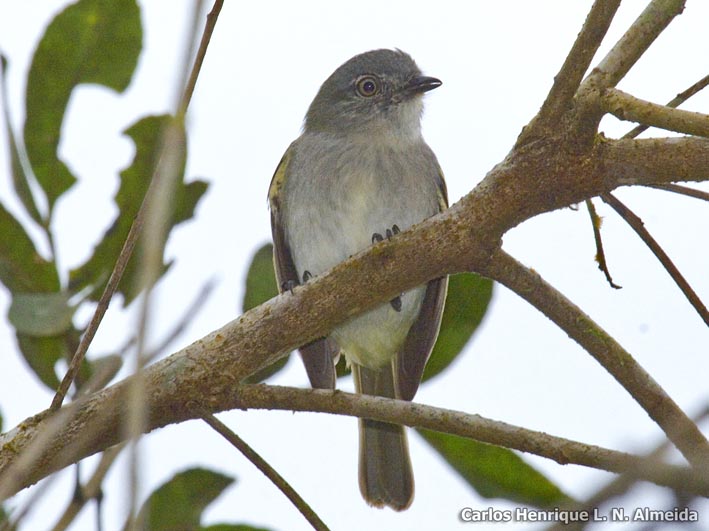
Wikimedia Commons
About the Gray Elaenia
The Gray Elaenia (Myiopagis caniceps) is a small, unobtrusive member of the Tyrannidae family, commonly found in the subtropical and tropical regions of Central and South America. This bird is primarily noted for its muted gray plumage, which allows it to blend seamlessly into the forest canopy. The species' range extends from southern Mexico through Central America and into the northern parts of South America, including countries like Colombia and Venezuela.
In terms of ecological significance, the Gray Elaenia plays a crucial role in its habitat as both a seed disperser and a consumer of various insects. By feeding on a wide range of fruits and arthropods, it helps maintain the ecological balance within the forest ecosystems. Particularly during the rainy season, the Gray Elaenia becomes a vital component of the food web, aiding in the control of insect populations while simultaneously promoting plant diversity through seed dispersal.
The Gray Elaenia exhibits interesting seasonal behaviors. During the breeding season, which usually coincides with the rainy months, it becomes more territorial and vocal. Outside of this period, the bird may join mixed-species flocks, which is a common strategy among small birds to enhance foraging efficiency and predator vigilance. Its ability to thrive in both primary and secondary forests, as well as forest edges, highlights its adaptability, making it a common sight in many of its native regions.
The Gray Elaenia belongs to the family Tyrannidae, within the order Passeriformes. These birds typically live average 4 years with a maximum recorded of 7 years..
How to Identify a Gray Elaenia
The Gray Elaenia is a small bird, approximately 12-14 centimeters in length, with a soft gray color that covers most of its plumage. Its underparts are slightly paler, with a whitish tint on the belly. This bird possesses a rather indistinct, short crest, and its bill is relatively short and broad, typical of many tyrant flycatchers. Juveniles resemble adults but may appear slightly more washed out in color, lacking the subtle contrast between upper and lower parts.
In terms of sexual dimorphism, there are no significant differences between males and females, making visual differentiation challenging. However, its vocalizations during the breeding season might offer some clues, as males tend to be more vocal. The Gray Elaenia's overall appearance can lead to confusion with other flycatchers, particularly those within the same genus. However, its consistent gray coloration and lack of distinctive markings such as wing bars or eye rings set it apart.
In flight, the Gray Elaenia displays a fairly direct and fluttery flight pattern, often moving from perch to perch within the forest canopy. When perched, it maintains a slightly upright posture, which is typical of many flycatchers, allowing it to scan for prey effectively.
Having trouble telling birds apart? Upload a photo to our bird identification tool for an instant species match.
Gray Elaenia Habitat and Range
Preferred Habitat
The Gray Elaenia predominantly inhabits tropical and subtropical forests, frequently found at forest edges and clearings. It thrives in both primary and secondary forests, showing a preference for areas with abundant foliage. This bird is adaptable and can be found from sea level up to elevations of about 1,500 meters, although it is more common in lower and mid-elevations.
While the Gray Elaenia is primarily associated with forested environments, it occasionally ventures into semi-open areas and can sometimes be spotted in gardens or plantations close to forested regions. Its presence in urban areas is relatively rare, as it prefers the cover and resources available in more natural settings.
Seasonal habitat shifts are minimal, as the Gray Elaenia is largely a resident species throughout its range. This consistency makes it a reliable indicator of the health of forest ecosystems in the regions it inhabits.
Geographic Range
The Gray Elaenia's range spans much of Central and parts of South America, stretching from southern Mexico through countries like Guatemala, Honduras, and Nicaragua, down into Costa Rica and Panama. In South America, its presence is noted in Colombia and Venezuela, with some populations potentially extending into northern Brazil.
Throughout its range, the Gray Elaenia is considered non-migratory, maintaining a consistent presence year-round in its preferred habitats. While this bird does not engage in long-distance migrations, local movements in response to food availability and breeding opportunities are common.
Population density tends to be higher in regions where forest edges and secondary growth forests are prevalent. Its adaptability to different forest types allows it to maintain a stable population across various parts of its range, though specific hotspots of population density often correlate with regions of abundant fruiting trees and insect activity.
Want to know which birds visit your area? Browse our backyard birds by location guides for region-specific species lists.
What Does the Gray Elaenia Eat?
The diet of the Gray Elaenia consists primarily of insects and fruits, reflecting its adaptation to a diverse tropical habitat. Insects, including beetles, caterpillars, and other small arthropods, form the bulk of its diet, especially during the breeding season when protein demands are higher.
Fruits, particularly small berries, become more prominent in its diet during seasons when they are abundant. This dietary flexibility allows the Gray Elaenia to exploit a range of food resources, contributing to its success in varied habitats. The bird employs a typical flycatcher foraging technique, sallying out from a perch to snatch insects in mid-air or gleaning them from foliage.
The size of prey captured is usually small to medium, in line with its overall body size and bill structure. Feeding typically occurs throughout the day, with peak activity during the cooler morning and late afternoon hours when insect activity is high and temperatures are moderate.
Gray Elaenia Behavior and Social Structure
The Gray Elaenia exhibits a variety of behaviors that are characteristic of the tyrant flycatchers. It is generally solitary or found in pairs, particularly during the breeding season, when it becomes more territorial. Territory defense involves vocalizations and occasional chases, with males often taking the lead in defending boundaries.
Courtship displays are subtle, relying more on vocalizations and mutual preening than elaborate physical displays. Outside of the breeding season, the Gray Elaenia may join mixed-species flocks. This behavior enhances foraging success and provides increased vigilance against predators.
Daily activity patterns show a preference for early mornings and late afternoons, aligning with peak insect activity. The bird remains alert and responsive to potential threats, often retreating to denser foliage when a predator is detected. Its flight is characterized by short bursts and quick maneuvers, enabling it to navigate the dense forest canopy effectively.
Gray Elaenia Nesting and Reproduction
Gray Elaenias construct cup-shaped nests typically nestled in the forks of tree branches. These nests are composed of fine grasses, plant fibers, and spider silk, which provide both strength and camouflage. Located usually several meters above the ground, the nests offer protection from ground predators.
A typical clutch consists of two to three eggs, which the female incubates for about 14 days. During this period, the male remains nearby, often bringing food to the female. After hatching, the young remain in the nest for approximately two to three weeks, during which both parents share feeding responsibilities.
Fledging occurs as the young develop the necessary skills for flight and foraging. The Gray Elaenia typically raises one to two broods per year, with the timing of nesting closely tied to the rainy season, ensuring an abundance of food for the growing chicks.
Gray Elaenia Sounds and Vocalizations
The primary song of the Gray Elaenia is a series of soft, whistled notes that can be described as musical and somewhat melancholic. This song is most frequently heard during the breeding season, serving as both a territorial and mate attraction call.
In addition to its primary song, the Gray Elaenia produces a variety of call notes, including sharp 'peet' sounds and short whistles used in communication between mates or to signal alarm. These calls are less melodic but serve critical functions in maintaining contact within pairs and alerting to potential threats.
During the dawn chorus, the Gray Elaenia's voice contributes to the rich tapestry of sounds in its forest home, though its song tends to be softer and less dominant compared to some of its louder neighbors.
Interesting Facts About the Gray Elaenia
- 1The Gray Elaenia can adapt to both primary and secondary forests, demonstrating remarkable ecological flexibility.
- 2Despite being a small bird, the Gray Elaenia plays a vital role in controlling insect populations through its diet.
- 3The Gray Elaenia's song, though soft, is a crucial component of its territorial defense strategy.
- 4Its nests are strategically built in tree forks, using materials like plant fibers and spider silk for strength.
- 5The Gray Elaenia has a preference for lower and mid-elevation forests, rarely venturing above 1,500 meters.
- 6This bird's ability to join mixed-species flocks enhances its foraging success and predator detection.
- 7The Gray Elaenia's non-migratory nature means it can often be observed in the same territories year-round.
Gray Elaenia Conservation Status
Currently, the Gray Elaenia holds a status of Least Concern on the IUCN Red List, with stable population trends across most of its range. While deforestation poses a potential threat, the bird's adaptability to secondary growth and edge habitats provides some resilience. Conservation efforts focus on preserving large tracts of tropical forests to ensure the continued availability of suitable habitats. Historically, populations have remained relatively stable, but continued monitoring is essential to detect any future declines. Efforts to curb habitat destruction and promote reforestation in areas of extensive agricultural development will be crucial in maintaining the ecological balance and supporting species like the Gray Elaenia.
Other Tyrannidae Species


Birds Similar to the Gray Elaenia
These species are often confused with the Gray Elaenia due to similar appearance or overlapping range.

