
Gray Silky-flycatcher
Ptilogonys cinereus
Order: Passeriformes / Family: Ptilogonatidae

Wikimedia Commons
About the Gray Silky-flycatcher
The Gray Silky-flycatcher, scientifically known as Ptilogonys cinereus, is a captivating bird found primarily in the highlands of Central America. This species inhabits the montane forests of countries like Mexico, Guatemala, and Honduras. Its distribution is largely restricted to cloud forests, where it plays a significant ecological role as a seed disperser, particularly for mistletoe, which relies on these birds for propagation. The Gray Silky-flycatcher is part of the family Ptilogonatidae and shares its range with other montane bird species, contributing to the rich biodiversity of these regions. During the breeding season, which typically occurs in the rainy months from May to August, the Gray Silky-flycatcher engages in elaborate courtship displays, essential for pair bonding and reproductive success. Outside of the breeding season, these birds are known to join mixed-species flocks, which helps in predator avoidance and increases foraging efficiency. Their presence in the cloud forests is vital for the sustenance of the forest ecosystem, as they help maintain the floral diversity by dispersing seeds through their droppings. The Gray Silky-flycatcher also exhibits seasonal altitudinal movements, descending to lower elevations during the non-breeding season. This behavior allows them to exploit different food resources as availability changes with the seasons. Such movements also highlight their adaptability and the ecological connectivity between highland and lowland ecosystems. As an integral component of the montane avifauna, the Gray Silky-flycatcher’s interactions with its environment demonstrate the complex interdependencies that characterize cloud forest ecosystems.
The Gray Silky-flycatcher belongs to the family Ptilogonatidae, within the order Passeriformes. These birds typically live average lifespan is 5-8 years, with some individuals living up to 10 years..
How to Identify a Gray Silky-flycatcher
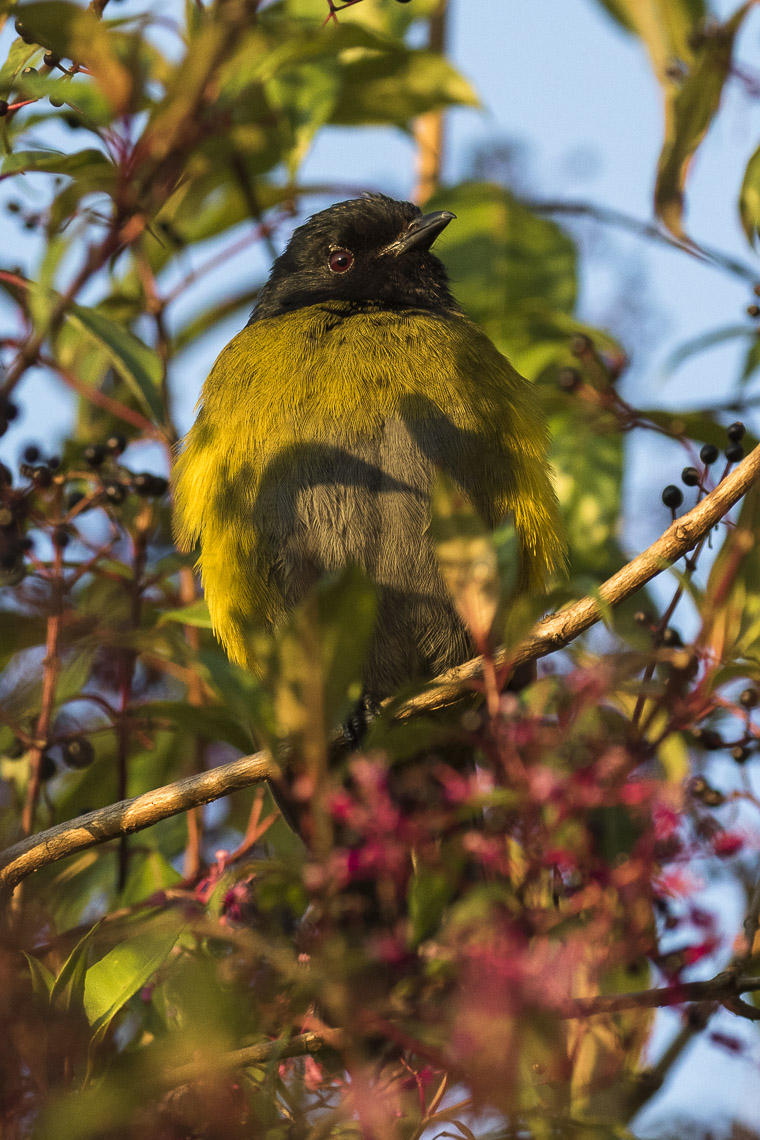
The Gray Silky-flycatcher is easily recognized by its sleek, elegant appearance. Adult males and females share a largely similar plumage, characterized by a smooth gray body and a distinctive long, crested head. However, males may exhibit slightly more vibrant plumage than females, especially during the breeding season. The eyes of the Gray Silky-flycatcher are surrounded by a subtle white ring, adding to its striking facial features. Juveniles appear more subdued, with less pronounced crests and a browner overall coloration compared to adults. When observing this species in flight, look for its long, slender wings that create a buoyant and graceful flight pattern. Perched, the Gray Silky-flycatcher maintains an upright posture, often flicking its tail gently. Though similar in silhouette and behavior to other silky-flycatchers, like the Black-and-yellow Silky-flycatcher, the Gray Silky-flycatcher can be distinguished by its uniform gray tones and lack of contrasting bright colors. Its vocalizations, though not as prominent as its appearance, complement its visual identification features.
Having trouble telling birds apart? Upload a photo to our bird identification tool for an instant species match.
Gray Silky-flycatcher Habitat and Range
Preferred Habitat
The Gray Silky-flycatcher thrives in montane cloud forests, a habitat known for its high humidity and dense vegetation. These forests, located at elevations ranging from 1,500 to 3,000 meters, provide the ideal conditions for this species. The bird primarily inhabits areas with abundant epiphytes and mistletoe, which form a crucial part of its diet. Seasonal shifts may see the Gray Silky-flycatcher moving to slightly lower elevations during colder months, where it can find more abundant food resources. While not typically found in urban settings, this species may occasionally venture into less disturbed rural areas adjacent to its preferred forest habitats.
Geographic Range
The Gray Silky-flycatcher has a relatively restricted range, found primarily in the highland regions of Central America. Its core population resides in the mountainous areas of Mexico, stretching through the Sierra Madre Occidental and Sierra Madre Oriental. It also inhabits the highlands of Guatemala and parts of Honduras. This species does not undertake long-distance migrations but instead exhibits altitudinal movements, adjusting its range according to seasonal climatic conditions. In these regions, it is often considered locally common, with certain population densities concentrated in well-preserved cloud forest habitats. These areas, characterized by their unique climate and vegetation, support the essential life cycle activities of the Gray Silky-flycatcher.
Want to know which birds visit your area? Browse our backyard birds by location guides for region-specific species lists.
What Does the Gray Silky-flycatcher Eat?
The diet of the Gray Silky-flycatcher is primarily frugivorous, with a strong preference for mistletoe berries, which are a staple throughout the year. This bird plays a pivotal role in the dispersal of mistletoe seeds, thanks to its feeding habits. In addition to mistletoe, it consumes a variety of other fruits and berries, depending on seasonal availability. During the breeding season, the Gray Silky-flycatcher may also supplement its diet with insects, providing essential protein for its growing chicks. Its foraging technique involves deftly plucking berries while hovering or perching, demonstrating both agility and precision. The ability to adapt its diet as per seasonal changes allows the Gray Silky-flycatcher to thrive in its montane environment.
Gray Silky-flycatcher Behavior and Social Structure
The Gray Silky-flycatcher exhibits fascinating social and territorial behaviors, particularly during the breeding season. Males engage in elaborate courtship displays to attract females, involving aerial acrobatics and song. These displays are crucial for establishing pair bonds and defending territories. Outside the breeding season, the Gray Silky-flycatcher is less territorial and often joins mixed-species flocks. This social structure enhances foraging efficiency and predator detection. The bird's response to predators is typically cautious, with alarm calls alerting others in the vicinity. Daily activity patterns show peaks in the early morning and late afternoon when foraging is most productive. Its adaptability to changing conditions is evident in its seasonal movements and varied diet, ensuring survival in diverse environmental conditions.
Gray Silky-flycatcher Nesting and Reproduction
The nesting habits of the Gray Silky-flycatcher are adapted to its montane forest environment. It constructs cup-shaped nests, often hidden among dense foliage to protect against predators. Preferred nesting sites include the forks of trees or secluded branches, usually at heights ranging from 3 to 15 meters above ground. The nest is built using a combination of mosses, lichens, and fine twigs, providing both camouflage and structural integrity. Clutch sizes typically range from two to three eggs, which are incubated primarily by the female over approximately two weeks. Both parents share feeding duties once the chicks hatch, ensuring a steady supply of food. Fledging occurs about three weeks after hatching, with young birds remaining under parental care for an additional few weeks before achieving independence. The Gray Silky-flycatcher may attempt multiple broods in a favorable season, depending on food availability and environmental conditions.
Gray Silky-flycatcher Sounds and Vocalizations
The Gray Silky-flycatcher’s vocalizations are subtle yet distinctive, consisting primarily of a series of soft, melodic notes. Its primary song is a rhythmic sequence of whistles and trills, delivered with a gentle pitch and a clear quality. These songs are more prominent during the breeding season, serving both to attract mates and to establish territory. Call notes are short and sharp, often used in communication between flock members or as alarm signals. The dawn chorus, featuring the Gray Silky-flycatcher, is less boisterous compared to other passerines but contributes to the rich acoustic tapestry of the montane forest. These vocalizations, though not as loud or varied, are integral to the bird’s communication and social interactions.
Interesting Facts About the Gray Silky-flycatcher
- 1The Gray Silky-flycatcher can disperse over 100 mistletoe seeds in a single day, aiding in forest regeneration.
- 2Both male and female Gray Silky-flycatchers participate in feeding chicks, showcasing strong parental collaboration.
- 3Unlike many birds, the Gray Silky-flycatcher is not migratory, but it does move altitudinally with the seasons.
- 4The Gray Silky-flycatcher's unique foraging includes hovering maneuvers similar to those of hummingbirds.
- 5It has a relatively small geographic range, limited to the high-altitude cloud forests of Central America.
Gray Silky-flycatcher Conservation Status
The Gray Silky-flycatcher is currently classified as Least Concern by the IUCN, with its population considered stable. However, habitat loss due to deforestation and land conversion poses significant threats to its long-term survival. Conservation efforts focus on preserving cloud forests, which are crucial for this species and many other endemic organisms. Historical data indicate that population sizes have fluctuated with changes in forest cover, underscoring the importance of habitat conservation. Initiatives to protect montane ecosystems and promote sustainable land use practices are essential to maintaining the ecological balance necessary for the Gray Silky-flycatcher and its habitat.
Other Ptilogonatidae Species

Birds Similar to the Gray Silky-flycatcher
These species are often confused with the Gray Silky-flycatcher due to similar appearance or overlapping range.