
Gray-tailed Piha
Snowornis subalaris
Order: Passeriformes / Family: Cotingidae

Wikimedia Commons
About the Gray-tailed Piha
The Gray-tailed Piha, scientifically known as Snowornis subalaris, is a captivating bird species belonging to the Cotingidae family. This medium-sized avian is endemic to the montane cloud forests of the Andes, primarily found in Ecuador and Peru. Its ecological role within these biodiverse habitats is significant, as it is both a seed disperser and an indicator species of forest health. These birds contribute to the regeneration and maintenance of their ecosystems by aiding in seed distribution. The Gray-tailed Piha resides in subtropical or tropical moist montane forests, typically at elevations ranging from 1,500 to 2,500 meters. Within these lush environments, they play a crucial role in the food web, interacting with a variety of plant and animal species. Seasonal behavior of the Gray-tailed Piha is influenced by the availability of fruits, its primary food source. Although its range does not vary dramatically with seasons, local movement may occur in response to fruit abundance. The Gray-tailed Piha is less conspicuous than some of its more vocal relatives, often relying on dense foliage for cover. Its presence is more often detected by sound than by sight, as it remains relatively stationary within its territory. These birds are integral to the forest ecosystems they inhabit, and their presence is an indicator of the health of the cloud forest biome.
The Gray-tailed Piha belongs to the family Cotingidae, within the order Passeriformes. These birds typically live typically 5-8 years, with a maximum recorded at 10 years..
How to Identify a Gray-tailed Piha
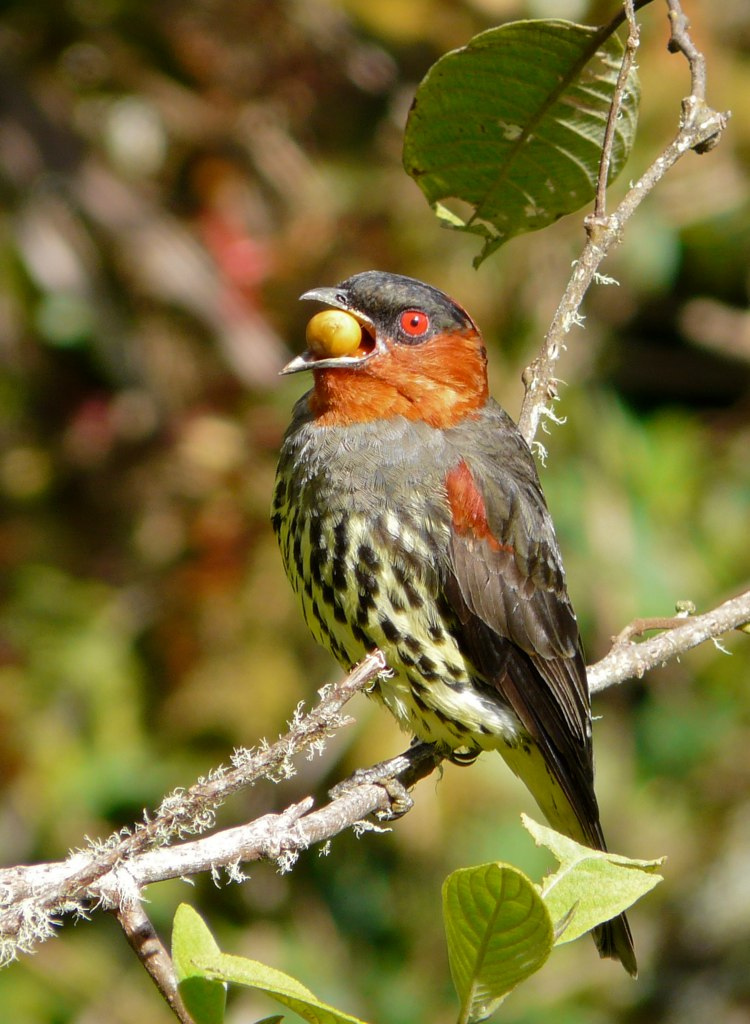
Identifying the Gray-tailed Piha involves noting its distinctive field marks, which include its uniformly gray tail, contrasting with its olive-brown body. The bird's plumage is understated yet elegant, with subtle variations between the sexes. Males and females appear similar, making sex differentiation challenging without close observation. Juveniles resemble adults but may possess slightly duller plumage. Unlike many of its colorful relatives in the Cotingidae family, the Gray-tailed Piha's muted color palette aids in its camouflage among the dense foliage. When perched, the Gray-tailed Piha maintains an upright posture, often remaining still for extended periods, which can make it difficult to spot. In flight, it exhibits a steady and direct pattern, lacking the flamboyant displays typical of some cotingas. The Gray-tailed Piha is sometimes confused with other members of the Snowornis genus, but its gray tail and specific vocalizations help distinguish it from similar species. Observers should note the bird's preferred perches in the mid to upper canopy when attempting to identify it in the field.
Having trouble telling birds apart? Upload a photo to our bird identification tool for an instant species match.
Gray-tailed Piha Habitat and Range
Preferred Habitat
The Gray-tailed Piha inhabits cloud forests, a unique environment characterized by persistent mist and moisture, fostering a rich diversity of flora and fauna. These forests, located primarily in the Andes of Ecuador and Peru, provide the ideal habitat for the species, with abundant fruiting trees and dense vegetation. Typically found at elevations between 1,500 and 2,500 meters, the Gray-tailed Piha favors areas with ample canopy cover and minimal human disturbance. Seasonal habitat shifts are minimal, as the bird primarily remains within its preferred montane environment year-round, adapting to the changing availability of food resources. In these habitats, the Gray-tailed Piha avoids urban areas and prefers undisturbed forest interiors, where it can effectively forage and breed. As a forest-dependent species, the Gray-tailed Piha's presence is often an indicator of relatively intact forest ecosystems.
Geographic Range
The Gray-tailed Piha's range is restricted to the Andes, specifically within Ecuador and Peru. It does not migrate extensively, maintaining a relatively stable presence within its montane cloud forest habitats year-round. Its breeding and non-breeding ranges overlap significantly due to this sedentary lifestyle. The species is most commonly found in the eastern slopes of the Andes, where the cloud forests offer ideal conditions. Population density tends to be higher in regions where forest cover is dense and fruit availability is plentiful. While its range is limited geographically, the Gray-tailed Piha can be locally abundant within its preferred habitat. Despite its limited distribution, the species has adapted well to the specific ecological niches offered by the Andean cloud forests.
Want to know which birds visit your area? Browse our backyard birds by location guides for region-specific species lists.
What Does the Gray-tailed Piha Eat?
The diet of the Gray-tailed Piha consists primarily of fruit, making it a key player in seed dispersal within its ecosystem. It forages quietly in the mid to upper canopy, selecting a variety of fruits, including berries and small drupes, based on seasonal availability. The Gray-tailed Piha's diet may also include insects, especially during breeding season when protein requirements increase. Its foraging technique involves careful selection and plucking of ripe fruits, often followed by a brief pause to ingest the seeds. This bird's feeding schedule aligns with the peak fruiting periods of forest trees, enabling it to maximize nutrient intake. While primarily frugivorous, the Gray-tailed Piha adapts its diet to include more insects when rearing young, providing essential proteins for chick development. The size of the fruits consumed typically ranges from small to medium, reflecting the bird's ability to process a variety of seed sizes.
Gray-tailed Piha Behavior and Social Structure
The Gray-tailed Piha exhibits solitary or loosely paired behavior, often maintaining a specific territory within the dense cloud forest. Territoriality is a key component of its behavior, with birds defending their space from rivals through vocal displays rather than physical confrontation. During the breeding season, males engage in courtship displays that include song, though these are less elaborate than those of some other cotingas. Flocking behavior is rare, with individuals preferring to stay within their established territories. When faced with predators, the Gray-tailed Piha relies on its cryptic plumage and the dense forest cover for protection, often remaining motionless to avoid detection. Its daily activity pattern centers around foraging and territorial maintenance, with peak activity occurring in the early morning and late afternoon. These birds are generally more vocal during dawn and dusk, when they assert their presence through song.
Gray-tailed Piha Nesting and Reproduction
The nesting habits of the Gray-tailed Piha involve constructing a relatively simple cup nest, usually placed in the fork of a tree branch within the mid to upper canopy. The nest is composed of twigs, moss, and other plant materials, providing a secure environment for the eggs. The typical clutch size ranges from 1 to 2 eggs, with the female primarily responsible for incubation. The incubation period lasts approximately two weeks, after which the chicks hatch and are attended to by both parents. The fledging timeline extends for another two to three weeks, during which the young are fed a diet rich in fruits and occasional insects. Parental roles are fairly evenly distributed, with both male and female participating in feeding and protection. The Gray-tailed Piha usually raises one brood per year, aligning with peak fruiting seasons to ensure ample food supply for offspring.
Gray-tailed Piha Sounds and Vocalizations
The Gray-tailed Piha's vocalizations include a primary song characterized by a series of soft, melodious notes delivered in a rhythmic sequence. The pitch is moderate and the quality is flute-like, making it distinct yet unobtrusive. These songs serve primarily in territorial defense and mate attraction. Call notes are less frequent and consist of short, sharp chirps used for communication between individuals. Alarm calls are rare but may consist of a series of rapid notes when a threat is perceived. During the dawn chorus, the Gray-tailed Piha contributes with its gentle melodies, adding to the symphony of forest sounds. Its song is less varied than those of some related species, but its consistency aids in identification.
Interesting Facts About the Gray-tailed Piha
- 1The Gray-tailed Piha is closely related to the Snowornis genus, sharing many behavioral traits with its relatives.
- 2Despite its muted colors, the Gray-tailed Piha's call is quite melodic, resembling a flute in a gentle breeze.
- 3This species plays an essential role in seed dispersal, aiding in forest regeneration by spreading seeds.
- 4The Gray-tailed Piha can remain motionless for long periods, making it difficult to spot in dense foliage.
- 5Unlike many cotingas, the Gray-tailed Piha's courtship display is understated, relying on song rather than extravagant plumage.
- 6The species' preferred elevation range of 1,500-2,500 meters places it in one of the most biodiverse regions of the Andes.
- 7The Gray-tailed Piha's habitat is critical for its survival, with conservation efforts focusing on protecting cloud forests.
Gray-tailed Piha Conservation Status
The Gray-tailed Piha is currently listed as Near Threatened on the IUCN Red List, with populations showing a declining trend. Habitat loss due to deforestation and agricultural expansion poses the primary threat to its survival. Conservation efforts focus on preserving and restoring cloud forest habitats, as well as establishing protected areas to mitigate human impact. Historical population changes have been relatively stable until recent decades, when increased human activities have led to habitat fragmentation. Efforts to monitor populations and implement sustainable land-use practices are crucial for the Gray-tailed Piha's continued survival.
Other Cotingidae Species



Birds Similar to the Gray-tailed Piha
These species are often confused with the Gray-tailed Piha due to similar appearance or overlapping range.

