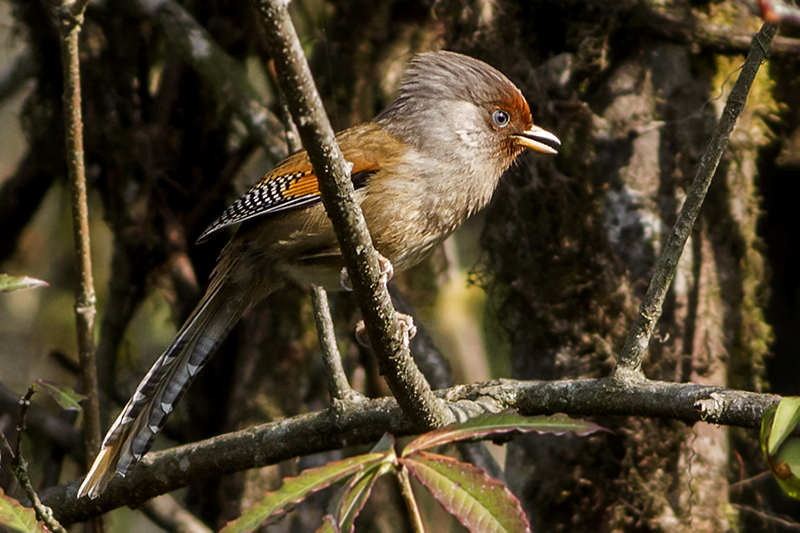
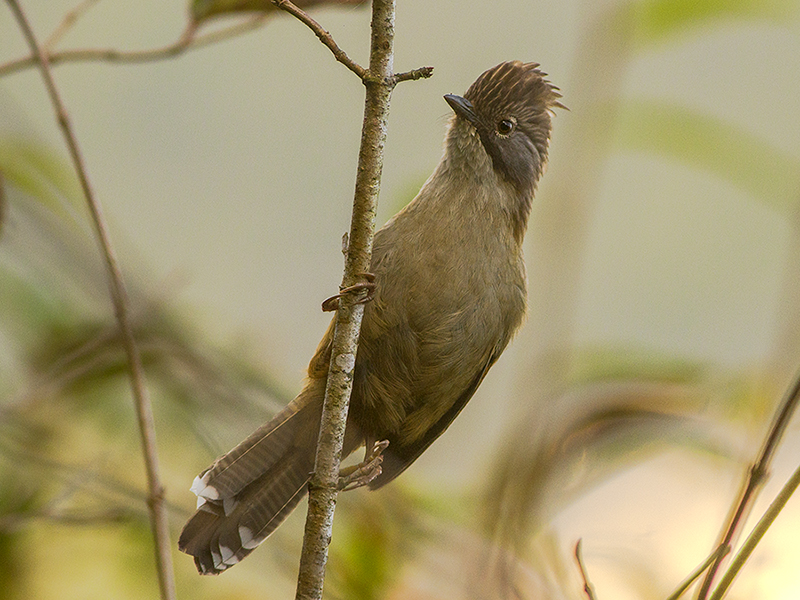
Greater Necklaced Laughingthrush
Garrulax pectoralis
Order: Passeriformes / Family: Leiothrichidae

Wikimedia Commons
About the Greater Necklaced Laughingthrush
The Greater Necklaced Laughingthrush (Garrulax pectoralis) is a captivating bird species renowned for its striking appearance and lively social behavior. This species belongs to the Leiothrichidae family and is primarily found in the dense forests of South and Southeast Asia. From the lush foothills of the Himalayas in Nepal and Bhutan to the tropical forests of Thailand, Vietnam, and Myanmar, this bird occupies a significant ecological niche. It plays a crucial role in the ecosystem by participating in seed dispersal and insect population control through its diverse diet. The Greater Necklaced Laughingthrush is an excellent example of the interconnectedness of avian life and forest habitats. In many regions, this bird is a year-round resident, although it may exhibit some altitudinal movements in response to seasonal changes. These movements are often influenced by food availability and weather conditions. The Greater Necklaced Laughingthrush thrives in both subtropical and tropical environments, preferring evergreen and deciduous forests with dense undergrowth. Its preference for natural habitats highlights the importance of forest conservation in maintaining biodiversity. Observers often note the bird's melodious vocalizations, which contribute to the vibrant soundscape of its natural habitat. The species' social structure further underscores its ecological significance, as these birds are often seen in small, noisy flocks. Such social behavior facilitates information exchange about food sources and potential threats, enhancing the survival of the group. The Greater Necklaced Laughingthrush's presence in diverse habitats and its role in maintaining ecological balance make it a species of considerable interest to ornithologists and conservationists alike.
The Greater Necklaced Laughingthrush belongs to the family Leiothrichidae, within the order Passeriformes. These birds typically live typically around 8-10 years, with the maximum recorded at 12 years..
How to Identify a Greater Necklaced Laughingthrush
The Greater Necklaced Laughingthrush is recognized by its bold, patterned plumage and distinctive calls. Adults exhibit a combination of brown, white, and black feathers, with a prominent black necklace-like pattern across the upper chest, giving the bird its name. This striking feature is set against a background of buff and white underparts. The upperparts are primarily brown, providing effective camouflage in forest environments. Juvenile birds appear similar to adults but may display a less pronounced necklace pattern and duller plumage overall. Males and females are generally similar in appearance, making visual sex differentiation challenging in the field. However, both sexes participate in vocalizations, which can aid in identifying the presence of the species. In flight, the laughingthrush presents a broad, rounded wing shape and a slightly long tail, contributing to a graceful silhouette. When perched, the bird exhibits a horizontal posture, often seen hopping through dense foliage in search of food. Observers should be aware of potential confusion with related species, such as the Lesser Necklaced Laughingthrush, which is smaller and has a less distinct neck pattern.
Having trouble telling birds apart? Upload a photo to our bird identification tool for an instant species match.
Greater Necklaced Laughingthrush Habitat and Range
Preferred Habitat
The Greater Necklaced Laughingthrush thrives in a variety of forested environments, primarily favoring subtropical and tropical forests with dense undergrowth. These habitats provide ample cover and foraging opportunities. The species can be found in evergreen, semi-evergreen, and deciduous forests, often at elevations ranging from lowlands up to 2,000 meters. While primarily a forest inhabitant, the bird can also be observed in secondary growth areas and forest edges, indicating some adaptability to habitat changes. Seasonal habitat shifts may occur, particularly in response to food scarcity or climatic conditions, but the species is largely non-migratory. Though preferring natural habitats, the Greater Necklaced Laughingthrush is occasionally encountered near rural settlements where forests are adjacent to human activity.
Geographic Range
The Greater Necklaced Laughingthrush's range spans several countries in South and Southeast Asia, including Nepal, Bhutan, India, Bangladesh, Myanmar, Thailand, Laos, Vietnam, and parts of southern China. It is a resident species, meaning it does not typically engage in long-distance migrations. However, it may perform local movements, often vertically, between different elevations in response to seasonal changes and food availability. Population density tends to be higher in regions where forest habitat remains intact and diverse. In areas with dense forest cover, such as the Terai region of Nepal or the forests of northeastern India, the species is relatively common. However, habitat fragmentation and deforestation pose significant challenges to their stable presence in some regions.
Want to know which birds visit your area? Browse our backyard birds by location guides for region-specific species lists.
What Does the Greater Necklaced Laughingthrush Eat?
The Greater Necklaced Laughingthrush has an omnivorous diet, feeding on a variety of insects, fruits, seeds, and small invertebrates. Insect prey includes beetles, caterpillars, and ants, which the bird actively forages from the forest floor and low vegetation. This species also consumes a range of berries and fruits, contributing to seed dispersal in its habitat. Seasonal changes influence dietary preferences, with insects becoming a more prominent food source during the warmer months when they are abundant. The bird often feeds in small groups, enhancing foraging efficiency and reducing individual predation risk. Its feeding schedule is primarily diurnal, with peak activity in the early morning and late afternoon when temperatures are cooler and prey is more accessible.
Greater Necklaced Laughingthrush Behavior and Social Structure
The Greater Necklaced Laughingthrush is a highly social bird, often seen in small, cohesive flocks that can number from a few individuals to over a dozen. These flocks are not only family groups but may also include unrelated individuals, reflecting a complex social structure. Within these groups, the birds engage in frequent vocal communication, essential for maintaining cohesion and coordinating activities such as foraging. Territoriality is evident, with flocks defending specific areas against intruders through vocal displays and physical posturing. During the breeding season, which typically occurs in the spring and early summer, courtship involves mutual preening and vocal duets between mates. This bird is generally non-migratory, remaining within its established range year-round, although some altitudinal movement may occur. Its response to predators includes loud alarm calls and coordinated mobbing behavior, where multiple individuals harass the intruder until it departs. Daily activity peaks during the cooler parts of the day, with periods of rest and preening observed at midday.
Greater Necklaced Laughingthrush Nesting and Reproduction
Greater Necklaced Laughingthrushes construct their nests in dense shrubbery or low tree branches, usually choosing locations that offer concealment from predators. The nest is a cup-shaped structure made from twigs, leaves, and grasses, lined with softer materials such as feathers or moss. Clutch size typically ranges from two to four eggs, which are incubated by both parents. The incubation period lasts approximately 14 to 16 days, during which the parents take turns sitting on the nest and foraging. Once hatched, the chicks are altricial and require significant parental care, receiving food and protection from both adults. Fledging occurs around 14 to 16 days post-hatching, but the young remain dependent on their parents for several weeks. The species may produce one to two broods per year, depending on environmental conditions and food availability.
Greater Necklaced Laughingthrush Sounds and Vocalizations
The Greater Necklaced Laughingthrush is known for its varied and melodious vocalizations, which include a series of clear, ringing notes that are often repeated in a rhythmic pattern. The primary song is loud and carries well through the forest, characterized by alternating high and low pitches with a flute-like quality. In addition to its song, the species produces a range of calls, including sharp whistles and chattering notes used in communication between flock members. Alarm calls are distinct and harsh, serving to alert other birds to potential danger. During the dawn chorus, the laughingthrush's vocalizations contribute significantly to the soundscape of its habitat, often leading to vocal exchanges between neighboring flocks.
Interesting Facts About the Greater Necklaced Laughingthrush
- 1The Greater Necklaced Laughingthrush is named for the black band across its chest that resembles a necklace.
- 2These birds are known for their complex social structures, often living in small flocks of up to 15 individuals.
- 3Their diet changes with the seasons, as they consume more insects in the warmer months when these are abundant.
- 4The species plays an important role in seed dispersal, aiding forest regeneration through its fruit consumption.
- 5Despite their loud calls, Greater Necklaced Laughingthrushes can be elusive, often remaining hidden in thick foliage.
- 6They exhibit strong territorial behavior, with flocks defending their area against other groups.
- 7Both male and female Greater Necklaced Laughingthrushes participate in incubation and feeding, ensuring equal parental investment.
Greater Necklaced Laughingthrush Conservation Status
According to the IUCN Red List, the Greater Necklaced Laughingthrush is currently classified as Least Concern, with a stable population trend. However, habitat destruction due to deforestation and land conversion for agriculture poses a significant threat to its long-term survival. Conservation efforts focus on preserving forest habitats and mitigating habitat fragmentation. The species benefits from protected areas and national parks that offer refuge from human encroachment. Historical data indicates that while populations have faced pressure from habitat loss, they have shown resilience in regions where conservation measures are implemented. Public awareness and habitat restoration programs are essential for sustaining healthy populations of this species.