Grey-sided Laughingthrush
Garrulax caerulatus
Order: Passeriformes / Family: Leiothrichidae

Wikimedia Commons
About the Grey-sided Laughingthrush
The Grey-sided Laughingthrush (Garrulax caerulatus) is a captivating member of the Leiothrichidae family, residing predominantly in the dense forests of the Himalayas. This bird thrives in subtropical and temperate montane forests, where its melodious calls echo through the canopies. Found primarily in Nepal, Bhutan, and parts of northern India, the Grey-sided Laughingthrush contributes significantly to the avian diversity of these regions. Its ecological role involves participating in the undergrowth's complex food web, where it aids in seed dispersal and insect population control. The Grey-sided Laughingthrush is a non-migratory species, favoring consistency in its habitat. However, some altitudinal movement may occur as it adapts seasonally to different elevations for optimal food availability. During the breeding season, these birds become particularly vocal and active, engaging in complex social interactions that strengthen pair bonds and establish territory. Outside of the breeding period, they often forage in small flocks, which enhances their efficiency in locating food and provides added protection against predators. The presence of the Grey-sided Laughingthrush in its native habitats is crucial for maintaining ecological balance, as it interacts dynamically with the flora and fauna of its environment. Its role as both predator and prey within its ecosystem underscores its importance in sustaining the health and diversity of the forest habitats it inhabits. As a species, the Grey-sided Laughingthrush continues to draw the interest of ornithologists and birdwatchers alike, who are captivated by its vibrant interactions and the distinctive sounds it adds to the forest soundscape.
The Grey-sided Laughingthrush belongs to the family Leiothrichidae, within the order Passeriformes. These birds typically live approximately 7-12 years, with some individuals living longer in optimal conditions..
How to Identify a Grey-sided Laughingthrush
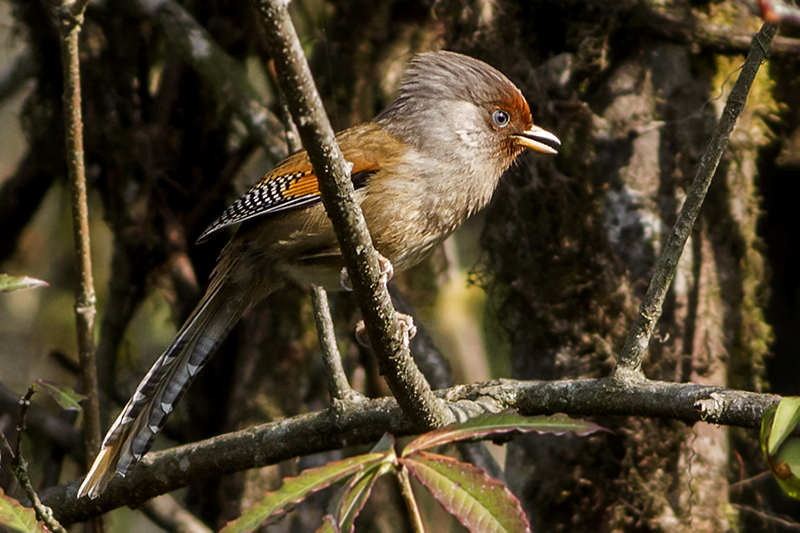
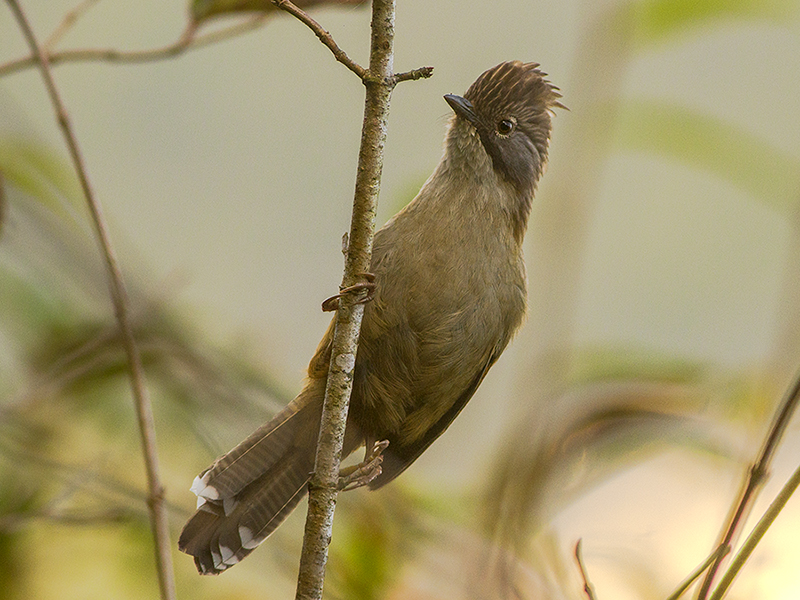
The Grey-sided Laughingthrush is a medium-sized bird, easily recognized by its striking plumage. Adult birds display a predominantly gray body with subtle variations in shade, giving them their common name. Their crown is darker, often appearing almost black, while the throat and breast are lighter gray. The wings and tail feature brown tones, providing a distinctive contrast against the gray body. Juveniles resemble adults but possess slightly duller plumage, lacking the stark color contrasts of mature birds. Males and females are similar in appearance, making sexing in the field a challenge without behavioral cues. In flight, the Grey-sided Laughingthrush shows a broad, rounded wing shape, typical of many forest-dwelling species. Its flight is generally short and direct, preferring to move from one dense cover to another rather than long-distance flying. When perched, this bird exhibits a relaxed posture, often seen in small groups or pairs. Confusion with similar species, such as the Chestnut-crowned Laughingthrush, may occur, but the Grey-sided Laughingthrush lacks the chestnut crown and has a more uniform gray appearance. Observers can distinguish it by its distinctive call, which sets it apart from its relatives.
Having trouble telling birds apart? Upload a photo to our bird identification tool for an instant species match.
Grey-sided Laughingthrush Habitat and Range
Preferred Habitat
The Grey-sided Laughingthrush predominantly occupies dense montane forests, thriving at elevations ranging from 1,500 to 3,500 meters. These forests, rich in undergrowth and foliage, provide the ideal environment for foraging and nesting. The species shows a preference for subtropical and temperate forest regions, where it can exploit the diverse food sources available. Seasonal habitat shifts are minimal, though some movement to lower elevations may occur during harsh winter months to escape extreme cold. While primarily a forest dweller, the Grey-sided Laughingthrush occasionally ventures into nearby scrublands or forest edges, particularly during foraging. Unlike some other species that have adapted to urban environments, this laughingthrush remains predominantly rural, relying on undisturbed habitats for survival and reproduction.
Geographic Range
The Grey-sided Laughingthrush is native to the Himalayan region, with its range extending across Nepal, Bhutan, and northern India. It is also found in parts of southern China and northern Myanmar. Within these countries, it occupies a relatively narrow altitudinal band, favoring montane forests. The bird's range is generally confined to areas where suitable forest habitats persist, with population density often higher in protected areas that offer abundant resources and minimal human disturbance. This species does not engage in long migrations, instead performing minor altitudinal shifts in response to seasonal climate changes. The Grey-sided Laughingthrush remains largely stable in its distribution, benefiting from the continuity of suitable habitats within its range.
Want to know which birds visit your area? Browse our backyard birds by location guides for region-specific species lists.
What Does the Grey-sided Laughingthrush Eat?
The diet of the Grey-sided Laughingthrush primarily consists of insects and other small invertebrates, which it actively forages for in the forest undergrowth. This bird employs a methodical approach to foraging, often seen rummaging through leaf litter or probing bark crevices. During the breeding season, the demand for protein increases, prompting a focus on caterpillars and beetles. Outside of this period, the Grey-sided Laughingthrush also consumes a variety of plant materials, including berries and seeds, which supplement its diet when insect availability declines. This omnivorous diet allows it to adapt to seasonal fluctuations in food resources, maintaining nutritional balance throughout the year. Foraging occurs primarily during daylight hours, with peak activity in the early morning and late afternoon when insects are most active.
Grey-sided Laughingthrush Behavior and Social Structure
The Grey-sided Laughingthrush is a social bird, often observed in small flocks outside the breeding season. These groups facilitate more efficient foraging and provide enhanced vigilance against predators. Territoriality becomes pronounced during the breeding season, with pairs establishing and defending nesting areas against intruders. Courtship displays involve vocalizations and physical displays, strengthening pair bonds and ensuring reproductive success. The Grey-sided Laughingthrush is diurnal, with activity peaks during the cooler hours of the day. Its response to predators includes alarm calls and evasive flights into dense cover. This bird's behavior underscores its adaptability and survival strategies within its forested habitats.
Grey-sided Laughingthrush Nesting and Reproduction
The nesting habits of the Grey-sided Laughingthrush are characterized by the construction of cup-shaped nests, typically built in dense shrubs or low trees. These nests are crafted from twigs, leaves, and grasses, providing a secure environment for the eggs and young. The clutch size generally consists of 2-4 eggs, which are incubated primarily by the female for about 14-16 days. Both parents participate in feeding the chicks, which fledge approximately 12-14 days after hatching. The Grey-sided Laughingthrush typically raises one brood per season, although conditions permitting, a second brood may be attempted. This species' nesting strategy emphasizes protection and resource allocation, ensuring the successful rearing of offspring.
Grey-sided Laughingthrush Sounds and Vocalizations
The vocal repertoire of the Grey-sided Laughingthrush is rich and varied, with a primary song consisting of melodious whistles and chattering notes. This song is delivered in repeated phrases, often during dawn and dusk when birds are most vocal. The calls are clear, with each note rising and falling in pitch, reminiscent of human laughter, which contributes to the bird’s common name. Alarm calls are harsher and more abrupt, used to alert conspecifics of potential threats. The complexity and variety of the Grey-sided Laughingthrush's vocalizations play a crucial role in social interactions and territory establishment.
Interesting Facts About the Grey-sided Laughingthrush
- 1The Grey-sided Laughingthrush's call resembles human laughter, contributing to its name.
- 2This bird can be found at altitudes up to 3,500 meters in the Himalayas.
- 3Despite its vibrant calls, the Grey-sided Laughingthrush prefers dense cover, making it hard to spot.
- 4Grey-sided Laughingthrushes often forage in groups, which helps in locating food efficiently.
- 5The species is non-migratory, but it may move to lower elevations during harsh winters.
- 6Grey-sided Laughingthrushes play a role in insect population control within their habitats.
- 7Both male and female Grey-sided Laughingthrushes participate in raising their young.
Grey-sided Laughingthrush Conservation Status
Currently classified as Least Concern by the IUCN, the Grey-sided Laughingthrush maintains a relatively stable population. However, habitat loss due to deforestation poses a potential threat to its long-term survival. Conservation efforts focus on preserving forest habitats and mitigating human-induced habitat fragmentation. Historically, the species has shown resilience, maintaining stable numbers across its range. Continued monitoring and habitat protection are essential to ensure this bird continues to thrive in its native ecosystems.