Hartlaub's Babbler
Turdoides hartlaubii
Order: Passeriformes / Family: Leiothrichidae

Wikimedia Commons
About the Hartlaub's Babbler
Hartlaub's Babbler (Turdoides hartlaubii) is a striking member of the Leiothrichidae family, known for its social nature and distinctive calls. This species thrives in the African continent, primarily found in the regions of central and southern Africa, including countries such as Angola, Zambia, and Namibia. Its preference for riverine woodlands and scrubby areas makes it a familiar presence along watercourses, where its melodious calls can often be heard echoing through the undergrowth. Ecologically, Hartlaub's Babbler plays an important role as both predator and prey. It helps control insect populations through its foraging habits and serves as a food source for larger predators. Its presence indicates a healthy ecosystem, as it prefers areas rich in biodiversity.
The significance of Hartlaub's Babbler extends beyond its ecological contributions. Culturally, this bird holds a place in the folklore of various indigenous communities, often featured in stories that highlight its cooperative behavior and communal living. It is a species that thrives in the company of its own kind, forming large, cohesive flocks that exhibit complex social structures. During the breeding season, these birds engage in cooperative breeding, with non-breeding individuals assisting in raising the young. This behavior enhances the survival rate of the offspring and strengthens the bonds within the group.
Seasonally, Hartlaub's Babbler displays minimal migratory behavior, remaining resident within its range throughout the year. However, it may undertake local movements in response to food availability and environmental conditions. During the dry season, flocks tend to concentrate around permanent water sources, whereas the wet season sees them disperse slightly as food becomes more abundant. This adaptability ensures their survival through varying environmental challenges. With its distinctive vocalizations and striking appearance, Hartlaub's Babbler continues to captivate bird watchers and researchers alike, providing insights into the dynamic world of avian social structures.
The Hartlaub's Babbler belongs to the family Leiothrichidae, within the order Passeriformes. These birds typically live average 5 years, with a maximum recorded of 10 years..
How to Identify a Hartlaub's Babbler
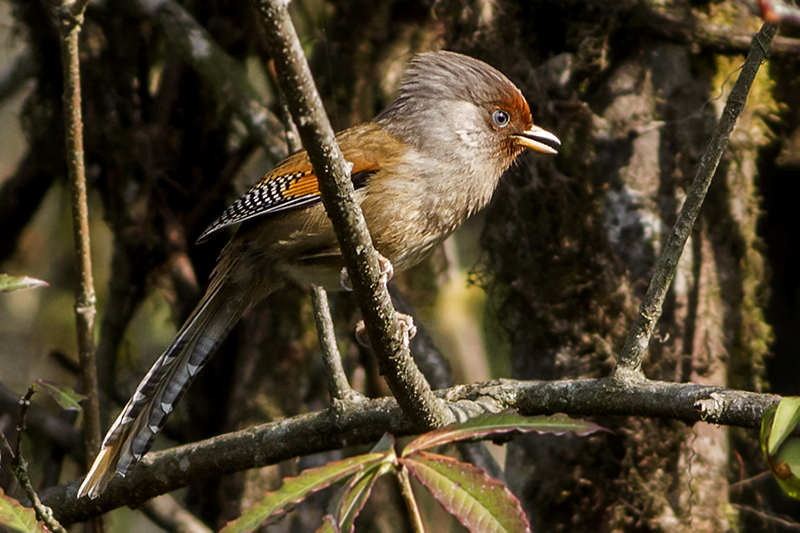
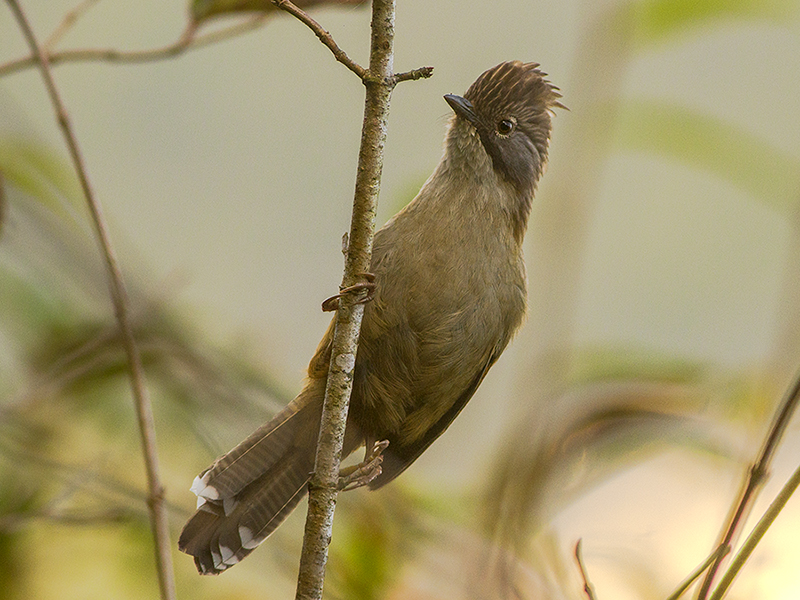
The Hartlaub's Babbler is a medium-sized bird, characterized by its warm brown plumage, which provides excellent camouflage in its woodland and scrub habitats. Adults exhibit a uniform brown color across their body with a contrasting white throat and upper breast, which are the most distinctive field marks for identification. The eyes are a striking red, adding a splash of color to their otherwise subdued appearance. Juveniles resemble adults but have a paler throat and less pronounced eye color.
Male and female Hartlaub's Babblers are monomorphic, meaning they are similar in appearance, making sexing in the field challenging without behavioral observation. However, both sexes share the same vocal and physical traits, contributing to their cooperative and social lifestyle. In flight, Hartlaub's Babbler shows a broad, rounded wing shape, with a slightly long tail that aids in maneuverability through the dense foliage it frequents.
Confusion may arise with other babbler species, such as the Arrow-marked Babbler, but the latter lacks the white throat and has distinct arrow-shaped markings on its breast. When perched, Hartlaub's Babbler often displays a relaxed posture, frequently seen in groups, which is a helpful behavioral cue for identification. Observers should listen for its characteristic calls, which are an integral part of its identification, further setting it apart from similar species.
Having trouble telling birds apart? Upload a photo to our bird identification tool for an instant species match.
Hartlaub's Babbler Habitat and Range
Preferred Habitat
Hartlaub's Babbler primarily inhabits riverine woodlands, dense scrub, and thickets, often near water bodies. These habitats provide ample foraging opportunities and suitable nesting sites. The bird prefers lowland areas but can be found at elevations up to 1500 meters. Seasonal shifts in habitat use are minimal, as it remains a resident species throughout the year. However, during dry periods, it may move closer to permanent water sources. In rural areas, Hartlaub's Babbler benefits from the presence of natural vegetation, whereas in urban settings, it may utilize parks and gardens with dense foliage, though it is less commonly seen in heavily populated areas.
Geographic Range
Hartlaub's Babbler has a relatively stable range across parts of central and southern Africa. It breeds primarily in countries like Angola, Zambia, Namibia, and northern Botswana. The species does not undertake long-distance migrations, but instead stays within its established territories year-round. Within its range, Hartlaub's Babbler exhibits a preference for habitats that provide sufficient cover and food resources, leading to population density hotspots around major river systems and wetlands. The bird's range is largely dictated by its habitat preferences, making areas with abundant riverine vegetation prime locations for observation.
Want to know which birds visit your area? Browse our backyard birds by location guides for region-specific species lists.
What Does the Hartlaub's Babbler Eat?
The diet of Hartlaub's Babbler predominantly consists of insects, making it an effective insectivore. It forages on the ground, rummaging through leaf litter and undergrowth to catch beetles, caterpillars, and other invertebrates. Occasionally, it supplements its diet with seeds and small fruits, particularly during the wet season when these resources are more abundant. The bird typically forages in groups, using cooperative strategies to flush out prey. Its feeding activity peaks in the early morning and late afternoon, coinciding with the cooler parts of the day when insects are more active. The ability to adapt its diet seasonally allows Hartlaub's Babbler to thrive in various environmental conditions.
Hartlaub's Babbler Behavior and Social Structure
Hartlaub's Babbler exhibits a highly social and cooperative behavior, often forming flocks of up to 15 individuals. These flocks maintain strong bonds, engaging in mutual preening and vocal communications to reinforce social cohesion. Territorial behavior is evident, with groups actively defending their area from intruders through vocalizations and displays of aggression.
During the breeding season, the babblers engage in cooperative breeding, where non-breeding members assist in raising the young by feeding and protecting the chicks. Courtship displays include mutual preening and synchronized movements, which strengthen pair bonds. In response to predators, Hartlaub's Babblers exhibit mobbing behavior, where the flock collectively harasses the intruder to drive it away.
Daily activity patterns revolve around foraging and social interactions, with periods of rest during the hottest parts of the day. At dawn and dusk, they participate in a communal chorus of calls, which serves both to advertise territory and to maintain group cohesion.
Hartlaub's Babbler Nesting and Reproduction
Hartlaub's Babbler builds cup-shaped nests using twigs, leaves, and grasses, typically placed in dense vegetation or trees close to the ground. These nests provide protection from predators and harsh weather, ensuring a higher chance of offspring survival. Clutch size ranges from two to four eggs, which are incubated by the breeding female, although other group members may assist occasionally. The incubation period lasts about 14 to 16 days, after which the chicks hatch blind and helpless.
Fledging occurs approximately 14 to 18 days after hatching, with young birds staying with the group for an extended period to learn essential survival skills. Hartlaub's Babblers typically raise one to two broods per year, depending on environmental conditions and food availability. Parental roles are shared within the group, with both males and females participating in feeding and caring for the young, a strategy that enhances the survival and integration of the fledglings into the flock.
Hartlaub's Babbler Sounds and Vocalizations
The primary song of Hartlaub's Babbler consists of a series of melodious whistles and warbles, often described as a cheerful and complex tune. These notes vary in pitch and rhythm, creating a rich acoustic tapestry that resonates through their habitat. Call notes are softer and more conversational, used for communication within the flock. Alarm calls are sharp and repetitive, designed to alert other members of the group to potential threats. At dawn, a chorus begins, with multiple individuals singing in unison, a behavior that reinforces group bonds and territorial claims. The variety and volume of their vocalizations make them a conspicuous presence in their environment.
Interesting Facts About the Hartlaub's Babbler
- 1Hartlaub's Babbler can form flocks of up to 15 individuals, showcasing remarkable social cooperation.
- 2The species gets its name from Gustav Hartlaub, a German ornithologist who contributed to avian studies.
- 3Hartlaub's Babbler is known for its cooperative breeding behavior, involving multiple group members in raising young.
- 4These birds have a distinctive white throat, which contrasts with their otherwise uniform brown plumage.
- 5While primarily insectivorous, Hartlaub's Babblers are known to adapt their diet seasonally, sometimes including fruits.
- 6The red eyes of Hartlaub's Babbler provide a striking visual feature amidst their subdued plumage.
- 7Despite being non-migratory, Hartlaub's Babblers may shift locally to find water during dry seasons.
Hartlaub's Babbler Conservation Status
Currently, Hartlaub's Babbler is classified as Least Concern on the IUCN Red List, with stable population trends. However, habitat loss due to agricultural expansion and urban development poses potential threats to its natural habitats. Conservation efforts focus on preserving riverine woodlands and promoting land-use practices that support biodiversity. Historical data suggests that while the species has maintained stable numbers, localized declines may occur where habitats are significantly altered. Continued monitoring and habitat protection remain essential to ensure the species' long-term survival.