Hinde's Pied-Babbler
Turdoides hindei
Order: Passeriformes / Family: Leiothrichidae

Wikimedia Commons
About the Hinde's Pied-Babbler
The Hinde's Pied-Babbler (Turdoides hindei) is a fascinating bird species that belongs to the family Leiothrichidae, within the order Passeriformes. It is endemic to Kenya, making it an important species for the country's biodiversity. This bird is primarily found in the semi-arid savannas and thickets of central and eastern Kenya, particularly in regions such as the Tana River, the Lamu District, and the Meru National Park. The significance of the Hinde's Pied-Babbler extends beyond its striking appearance, as it plays a vital role in the ecosystem by controlling insect populations and acting as a seed disperser.
Despite its limited range, the Hinde's Pied-Babbler is a resilient bird that has adapted well to its environment. It thrives in dense bushland and scrub habitats, where it finds ample cover and food resources. These habitats are often characterized by abundant acacia trees and thick undergrowth. During the dry season, the babbler may move to areas with more permanent water sources, although it generally remains within its restricted range throughout the year.
Ecologically, the Hinde's Pied-Babbler contributes significantly to the local food web. By preying on insects and small invertebrates, it helps maintain a balance in the ecosystem, preventing overpopulation of these species. Additionally, it aids in seed dispersal through its diet, which occasionally includes fruits and seeds. This bird's presence indicates a healthy ecosystem, and its absence could signal environmental challenges such as habitat degradation or climate change effects.
While the Hinde's Pied-Babbler is not migratory, it does display some seasonal behaviors. During the breeding season, which typically occurs after the onset of the rainy season, the species becomes more territorial and vocal. The males engage in elaborate displays to attract mates, showcasing their distinctive plumage and vocal abilities. These behaviors are crucial for understanding the species' ecology and the factors that influence its population dynamics.
The Hinde's Pied-Babbler belongs to the family Leiothrichidae, within the order Passeriformes. These birds typically live average 5-7 years, with a maximum recorded of 12 years..
How to Identify a Hinde's Pied-Babbler
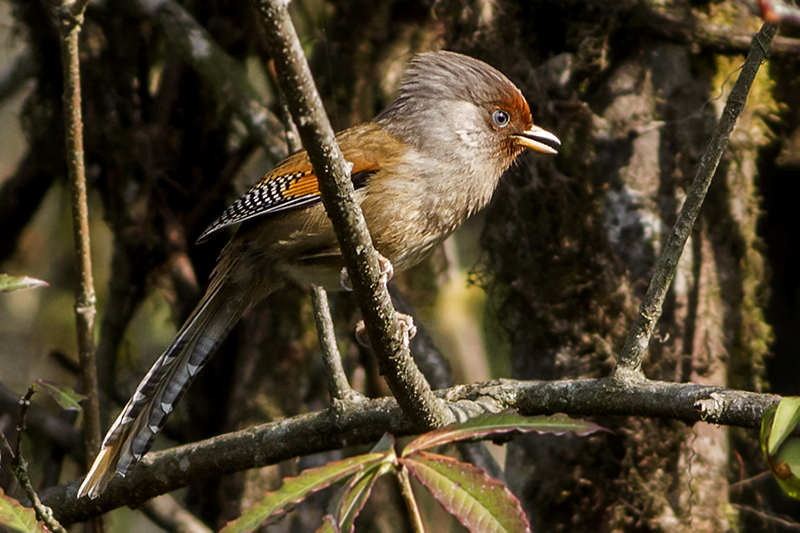
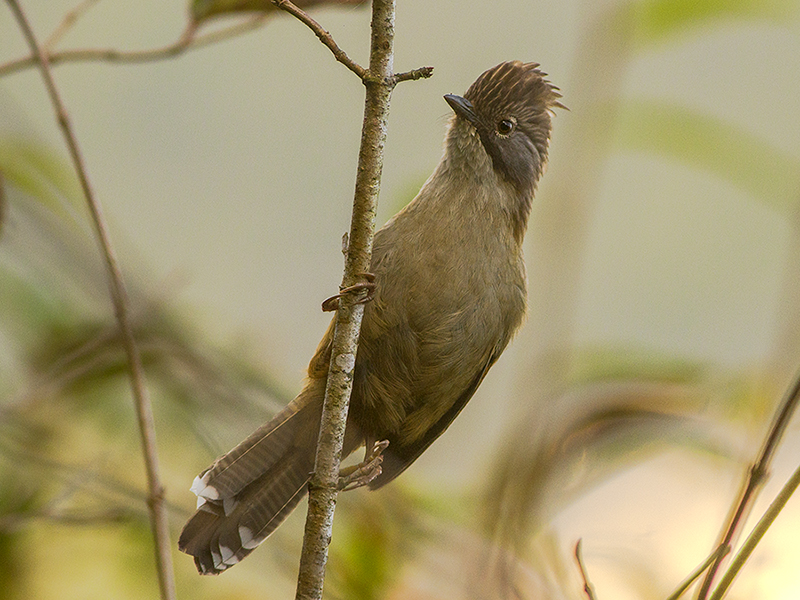
The Hinde's Pied-Babbler is a medium-sized bird, with adults typically measuring about 24 to 26 centimeters in length. Its plumage is predominantly black and white, with a striking contrast that makes it relatively easy to identify. The head, throat, and upperparts are black, while the underparts and wings are white, creating a pied appearance. A black mask extends from the beak across the eyes, giving it a somewhat masked appearance. The tail is long and black, with a slightly rounded tip.
Juvenile Hinde's Pied-Babblers differ from adults in their plumage, displaying a more muted coloration. Their feathers are generally brownish-gray, lacking the sharp contrast seen in mature birds. This difference helps juveniles blend into their surroundings, offering some protection from predators.
There is minimal sexual dimorphism in this species, meaning males and females are similar in appearance, which can make distinguishing between the sexes challenging without observing behavioral cues. When in flight, the bird's silhouette is characterized by its broad wings and long tail, which help it maneuver through dense thickets. On perches, the Hinde's Pied-Babbler often adopts an upright posture, frequently flicking its tail.
Having trouble telling birds apart? Upload a photo to our bird identification tool for an instant species match.
Hinde's Pied-Babbler Habitat and Range
Preferred Habitat
The Hinde's Pied-Babbler inhabits specific habitat types that include semi-arid savannas, thickets, and bushlands. These areas are typically found at elevations ranging from 500 to 1,500 meters above sea level. The presence of dense vegetation, particularly acacia trees and thick underbrush, is crucial for the species, providing necessary cover and feeding grounds.
Though the species is not strictly tied to water sources, it tends to favor habitats that have some level of moisture availability, especially during the dry season when resources become scarce. These habitats support a rich biodiversity that contributes to the Hinde's Pied-Babbler's diet and ecological interactions.
Urban presence of this species is rare, as it primarily relies on natural and semi-natural environments. However, it may occasionally be found in rural areas where human activity is minimal and the natural landscape remains relatively undisturbed.
Geographic Range
The Hinde's Pied-Babbler has a very limited range, confined to central and eastern Kenya. Its primary distribution includes regions such as the Tana River, Lamu District, and Meru National Park. This restricted range makes it an endemic species, underscoring its importance to Kenya's avian biodiversity.
The species does not exhibit significant migratory behavior, preferring to remain within its established territories year-round. However, within its range, it may shift to areas with more abundant resources during different seasons, particularly in response to rainfall patterns.
Population density hotspots for the Hinde's Pied-Babbler are often associated with areas that provide optimal habitat conditions, such as dense thickets and bushlands with ample food supply. These locales are critical for the bird's survival and reproduction.
Want to know which birds visit your area? Browse our backyard birds by location guides for region-specific species lists.
What Does the Hinde's Pied-Babbler Eat?
The diet of the Hinde's Pied-Babbler primarily consists of insects and small invertebrates, which it actively forages for in the dense underbrush of its habitat. Key prey items include beetles, ants, caterpillars, and various arthropods, which provide essential nutrients for the bird's maintenance and reproduction.
During certain seasons, the bird's diet may expand to include fruits and seeds, making it an occasional seed disperser. This dietary flexibility allows the Hinde's Pied-Babbler to adapt to changes in food availability and maintain its nutritional requirements throughout the year.
The Hinde's Pied-Babbler employs a variety of foraging techniques, often seen hopping on the ground or flitting through low vegetation while searching for food. It uses its sharp beak to probe into crevices and under leaves for hidden prey. Feeding activity typically peaks during the cooler parts of the day, such as early morning and late afternoon, when prey is more active and temperatures are more favorable.
Hinde's Pied-Babbler Behavior and Social Structure
The social structure of the Hinde's Pied-Babbler is characterized by its highly gregarious nature, often seen in small to medium-sized groups. These groups are typically composed of family members, including adults and juveniles from previous broods. Group living provides several advantages, such as increased vigilance against predators and enhanced foraging efficiency.
Territorial behavior is prominent, especially during the breeding season, when pairs become more vocal and assertive in defending their established territories. Males engage in courtship displays that include vocalizations and physical displays of their striking plumage to attract mates.
The Hinde's Pied-Babbler exhibits a variety of vocalizations, used for communication between group members and in response to potential threats. Alarm calls are common when predators are detected, helping to alert other members of the group.
Daily activity patterns are influenced by environmental conditions, with peak activity typically occurring during cooler periods of the day. Flocking patterns are evident during foraging, with group members often seen moving through their habitat in a coordinated manner.
Hinde's Pied-Babbler Nesting and Reproduction
The Hinde's Pied-Babbler constructs cup-shaped nests using materials such as twigs, grass, and leaves. These nests are typically located in dense bushes or shrubs, providing protection from predators and harsh weather conditions. The choice of nesting site is influenced by the availability of suitable vegetation and the need for cover.
Clutch size generally ranges from 3 to 5 eggs, with both parents participating in incubation and feeding of the chicks. The incubation period lasts about 14 to 16 days, after which the eggs hatch, and chicks are reared in the nest for an additional 16 to 18 days before fledging.
Parental roles are shared, with both male and female contributing to the care and feeding of the young. The number of broods per year can vary, but typically one to two broods are raised annually, depending on environmental conditions and food availability.
Hinde's Pied-Babbler Sounds and Vocalizations
The primary song of the Hinde's Pied-Babbler is a melodious series of whistles and trills, characterized by a rhythmical pattern and clear pitch. These vocalizations play a crucial role in territory defense and mate attraction during the breeding season.
Call notes are sharp and distinctive, often used for communication within groups. Alarm calls are more abrupt and designed to alert other birds to potential dangers. During the dawn chorus, the Hinde's Pied-Babbler’s song stands out due to its clarity and persistence, contributing to the acoustic landscape of its habitat.
The quality of its calls can be compared to a series of flute-like notes, providing a pleasant and distinctive soundscape in the regions it inhabits.
Interesting Facts About the Hinde's Pied-Babbler
- 1The Hinde's Pied-Babbler was named after Sir Sidney Langford Hinde, a British colonial administrator and ornithologist.
- 2Despite its striking plumage, the Hinde's Pied-Babbler often blends into its habitat, making it challenging to spot.
- 3The bird's vocalizations are diverse, with over 20 distinct calls recorded, each serving different communication purposes.
- 4Hinde's Pied-Babblers are cooperative breeders, meaning family members help raise the young, a behavior that enhances survival rates.
- 5This species often engages in 'anting,' a behavior where it uses ants to clean its plumage, a practice observed in various bird species.
- 6The restricted range of the Hinde's Pied-Babbler makes it a priority for birdwatchers visiting Kenya, seeking to observe its unique behaviors.
- 7The species' diet flexibility allows it to adapt to seasonal changes, shifting from primarily insectivorous to including more plant material when necessary.
Hinde's Pied-Babbler Conservation Status
The Hinde's Pied-Babbler is currently classified as vulnerable by the International Union for Conservation of Nature (IUCN). The primary threats to this species include habitat loss due to agricultural expansion, deforestation, and human encroachment. These activities result in the fragmentation of its already limited habitat, posing significant challenges to its survival. Conservation efforts focus on habitat preservation and restoration, particularly in key regions of its range. Initiatives include the establishment of protected areas and community-based conservation programs aimed at promoting sustainable land use practices. Historically, the population of the Hinde's Pied-Babbler has faced declines due to habitat degradation. However, recent conservation actions have shown some positive trends, indicating a potential stabilization of its population in certain areas. Continued efforts are essential to ensure the long-term survival of this unique and important species.