
Hylophilus flaviventris
Hylophilus flaviventris
Order: Passeriformes / Family: Vireonidae
About the Hylophilus flaviventris
The Yellow-green Vireo, scientifically known as Hylophilus flaviventris, is a small passerine bird belonging to the Vireonidae family. This species is an integral part of the tropical ecosystem, with its vibrant yellow plumage and melodic vocalizations making it a notable presence in its habitat. The bird's range is primarily concentrated in Central and South America, from southern Mexico through Panama and into the northern parts of South America, including Colombia and Venezuela. Its preferred habitats include lowland rainforests, secondary forests, and forest edges, where it plays a crucial role in seed dispersal and insect control.
Ecologically, the Yellow-green Vireo contributes significantly to its environment by aiding in the control of insect populations, which constitutes a major part of its diet. This insectivorous bird primarily feeds on small arthropods, including caterpillars and beetles, but it will also consume small fruits when available. During the breeding season, which typically aligns with the rainy season to ensure a rich food supply, the Yellow-green Vireo becomes particularly active. This period sees the birds engaging in complex courtship displays and vocalizations, which are key to mate attraction and territory establishment.
The Yellow-green Vireo's presence is a good indicator of healthy, biodiverse forest ecosystems. As a species, it is currently not considered threatened, but deforestation and habitat fragmentation pose potential risks. Conservation efforts focus on maintaining and protecting large tracts of continuous forest habitats to ensure the survival of this vibrant vireo and the myriad of other species that share its ecosystem. Its adaptability to secondary growth and edge habitats suggests some resilience to forest disturbance, yet the preservation of primary forests remains crucial.
The Hylophilus flaviventris belongs to the family Vireonidae, within the order Passeriformes. These birds typically live estimated 4-6 years, though specific data is sparse..
How to Identify a Hylophilus flaviventris
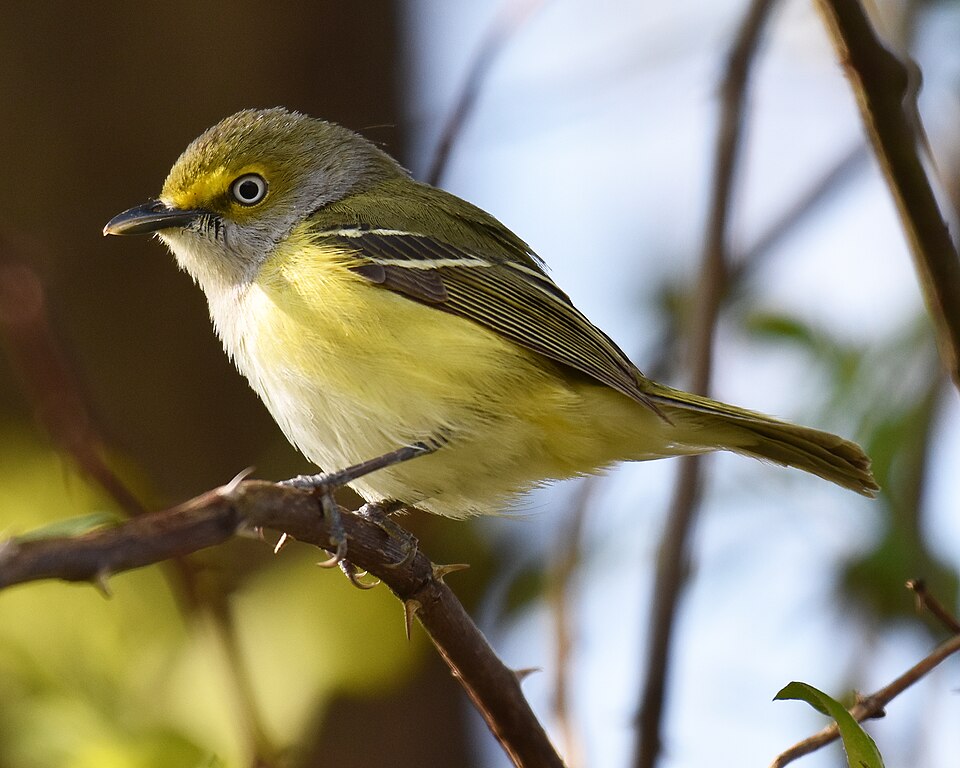
The Yellow-green Vireo is easily recognized by its bright yellow underparts and olive-green upperparts. Adult birds have a distinct head pattern with a grayish crown that contrasts with a greenish back, giving them a unique appearance among vireos. The eyes are surrounded by a subtle white eyering, and the bill is small and slightly hooked, typical of the vireo family. Juveniles appear similar to adults but may have duller plumage.
Both male and female Yellow-green Vireos exhibit similar plumage, making them challenging to differentiate in the field based solely on appearance. However, males are often more vocal, especially during the breeding season when they sing to establish territories and attract mates. The wing structure is relatively short with rounded tips, contributing to their agile flight through dense foliage.
In terms of flight silhouette, the Yellow-green Vireo displays a compact shape with rapid, direct flight patterns. Its perching posture is often upright, showcasing its striking yellow belly against the forest greenery. The bird may be confused with the Red-eyed Vireo, but the latter lacks the vivid yellow underparts and has a more prominent black border on its crown.
Having trouble telling birds apart? Upload a photo to our bird identification tool for an instant species match.
Hylophilus flaviventris Habitat and Range
Preferred Habitat
The Yellow-green Vireo primarily inhabits tropical and subtropical forests, with a preference for lowland rainforests and edge habitats. It thrives in areas with dense foliage, where it can forage for insects and fruits. These birds are commonly found at elevations ranging from sea level to 1,500 meters, though they are most abundant in lower elevations.
During different seasons, the Yellow-green Vireo may shift its habitat slightly, taking advantage of areas with abundant food resources. It is less commonly found in urban areas, preferring the tranquility of rural and forested environments. However, its adaptability allows it to exploit secondary growth areas, which can serve as important refuges in regions affected by deforestation.
In addition to tropical forests, this species can be found in secondary forests and forest edges, where a mix of open spaces and dense vegetation provides ample foraging opportunities. The bird's presence in such diverse habitats underscores its adaptability and ecological importance.
Geographic Range
The range of the Yellow-green Vireo extends across a wide swath of Central and South America. It breeds from southern Mexico, through Belize and Guatemala, down to Panama. In South America, its range continues into the northern regions, including Colombia and Venezuela. Some populations are resident year-round, particularly in the southern parts of its range, while others may be migratory, moving to different areas during the non-breeding season.
Migration patterns are somewhat variable, with some birds likely undertaking altitudinal migrations in response to food availability. While not typically known for long-distance migrations, the Yellow-green Vireo may shift to slightly different regions within its range depending on seasonal conditions.
Population density hotspots include the lowland rainforests of the Amazon Basin and the Atlantic Forest in Brazil, where the species finds ample resources and suitable nesting sites. Although its range is vast, the bird's preference for specific forested habitats means that its actual distribution can be patchy, depending largely on the availability of suitable environments.
Want to know which birds visit your area? Browse our backyard birds by location guides for region-specific species lists.
What Does the Hylophilus flaviventris Eat?
The diet of the Yellow-green Vireo predominantly consists of insects and other small arthropods. This includes caterpillars, beetles, and various larvae that the bird gleans from leaves and branches. The vireo employs a methodical foraging technique, moving through the canopy and understory in a deliberate manner, carefully inspecting foliage for hidden prey.
Seasonal changes can influence its diet, with the bird consuming more fruits and berries when insects are less abundant. This dietary flexibility helps the Yellow-green Vireo maintain its energy needs throughout the year. The fruits consumed are typically small and readily available in their forest habitats.
Foraging occurs throughout the day, but the bird is most active during the early morning and late afternoon when insect activity peaks. By maintaining a varied diet, the Yellow-green Vireo plays an important role in both pest control and seed dispersal within its ecosystem.
Hylophilus flaviventris Behavior and Social Structure
The Yellow-green Vireo exhibits a range of fascinating behaviors that reflect its adaptability and ecological niche. It is generally a solitary bird or found in pairs, especially during the breeding season. Territorial behavior is pronounced, with males singing persistently to defend their territory and attract mates. The song is a series of melodious phrases, which can vary among individuals.
Courtship involves both vocal displays and physical gestures, such as wing flicking and tail spreading, which help strengthen pair bonds. Once paired, the birds remain monogamous for the breeding season, working together to raise their young.
Flocking behavior is less common, but outside the breeding season, Yellow-green Vireos may join mixed-species foraging groups. This behavior provides increased protection against predators and improves foraging efficiency. The bird's daily activity pattern includes periods of active foraging interspersed with rest and preening sessions, typically at midday when temperatures peak.
Hylophilus flaviventris Nesting and Reproduction
The nesting habits of the Yellow-green Vireo are characterized by careful selection of nest sites and meticulous construction. These birds typically build their nests in the fork of a branch, preferring locations that are well-concealed by foliage. The nest is cup-shaped, constructed using fine plant materials like grass, leaves, and spider silk, which provides both strength and flexibility.
A typical clutch consists of 2 to 3 eggs, which are incubated primarily by the female over a period of about 12 to 14 days. During this time, the male remains vigilant, providing food for the female and guarding the nest site. Once hatched, the chicks grow rapidly and fledge approximately 10 to 12 days after hatching.
Both parents share the responsibility of feeding the chicks and keeping the nest clean. The Yellow-green Vireo typically raises one brood per year, though in optimal conditions, a second brood may be attempted. The success of breeding depends largely on food availability and predation pressures.
Hylophilus flaviventris Sounds and Vocalizations
The Yellow-green Vireo is known for its melodious song, which consists of a series of clear, whistled phrases that are repeated in a rhythmic pattern. The song serves multiple purposes: attracting mates, establishing territories, and communicating with other birds. The phrases are delivered at a moderate pace, with variations in pitch and tone adding complexity.
In addition to its song, the Yellow-green Vireo produces a variety of call notes, including sharp chips and trills used for communication between mates and to alert others of potential threats. Alarm calls are more abrupt and harsh, signaling the presence of predators.
During the dawn chorus, the vireo's song is prominent, contributing to the rich soundscape of tropical forests. The bird's vocalizations are often likened to those of other vireos, but with a distinctly softer quality.
Interesting Facts About the Hylophilus flaviventris
- 1The Yellow-green Vireo weighs about 12 to 14 grams, similar to a small chocolate bar.
- 2Unlike many birds, the Yellow-green Vireo remains quite vocal even during the non-breeding season.
- 3This species can consume up to 50% of its body weight in insects and fruit each day.
- 4Yellow-green Vireos have been observed using spider silk to bind their nest materials together.
- 5The bird's song repertoire can contain as many as 50 unique phrases, showcasing its vocal versatility.
- 6Juvenile Yellow-green Vireos may take several months to perfect their song, learning through imitation.
- 7During the breeding season, males may sing up to 60 songs per hour to establish their territory.
Hylophilus flaviventris Conservation Status
The Yellow-green Vireo is currently listed as Least Concern by the IUCN, with stable population trends in most of its range. However, habitat loss due to deforestation and agricultural expansion poses a significant threat to its habitat. Conservation efforts focus on preserving large tracts of forest, which are essential for the survival of this species and others. Historical population changes are not well-documented, but the bird's adaptability to secondary growth suggests some resilience to habitat disturbance. Nonetheless, ongoing monitoring and habitat protection are crucial to prevent future declines. Efforts to conserve the Yellow-green Vireo include the establishment of protected areas and sustainable land-use practices that balance human activities with the needs of wildlife. Community-based conservation initiatives also play a role in raising awareness and promoting the protection of tropical forests.
Other Vireonidae Species


Birds Similar to the Hylophilus flaviventris
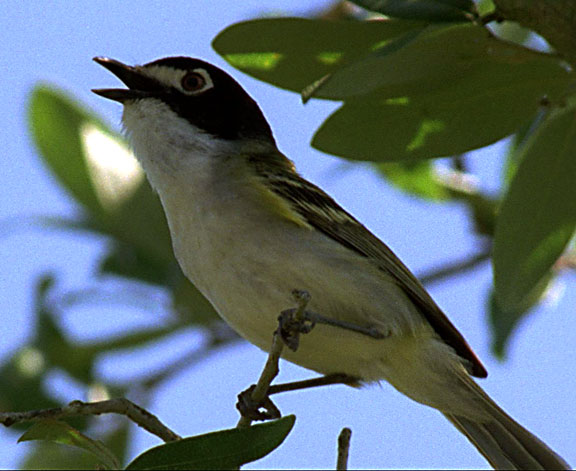
These species are often confused with the Hylophilus flaviventris due to similar appearance or overlapping range.

