Jungle Babbler
Turdoides striata
Order: Passeriformes / Family: Leiothrichidae

Wikimedia Commons
About the Jungle Babbler
The Jungle Babbler, scientifically known as Turdoides striata, is a common bird species found throughout the Indian subcontinent. As a member of the family Leiothrichidae, this bird is well known for its social behavior, often seen in small groups called 'parties' that range from six to ten individuals. These groups are highly vocal, their chattering calls a familiar sound in their native range.
Jungle Babblers inhabit a variety of environments, thriving in both urban and rural settings. They are particularly abundant in the plains of India, Nepal, and Bangladesh. Their adaptability allows them to occupy gardens, farmlands, open woodlands, and scrubby areas. This adaptability, combined with their social structure, plays a critical role in their survival and successful proliferation across such a vast region.
Ecologically, Jungle Babblers serve as important seed dispersers, aiding in the propagation of various plant species. Their foraging habits also help control insect populations, maintaining a balance in the ecosystems they inhabit. During the breeding season, which peaks from March to July, these birds exhibit cooperative breeding behavior. Non-breeding individuals assist in raising the young, a strategy that enhances the survival rates of their offspring.
In terms of seasonal behavior, Jungle Babblers are sedentary, exhibiting little to no migratory movements. Their range remains largely consistent throughout the year. However, they may shift slightly in response to local food availability and environmental conditions. Their ability to adapt to diverse habitats and climates makes them an essential component of the avian community in South Asia.
The Jungle Babbler belongs to the family Leiothrichidae, within the order Passeriformes. These birds typically live typically around 8-12 years in the wild..
How to Identify a Jungle Babbler
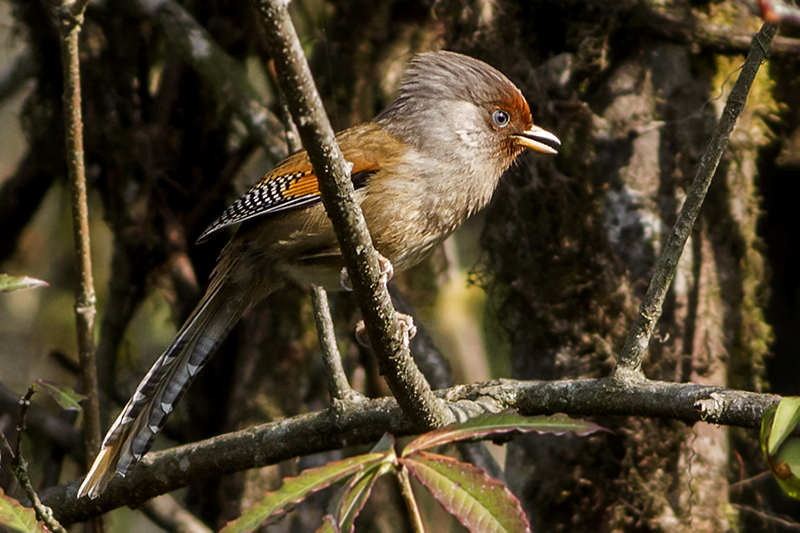
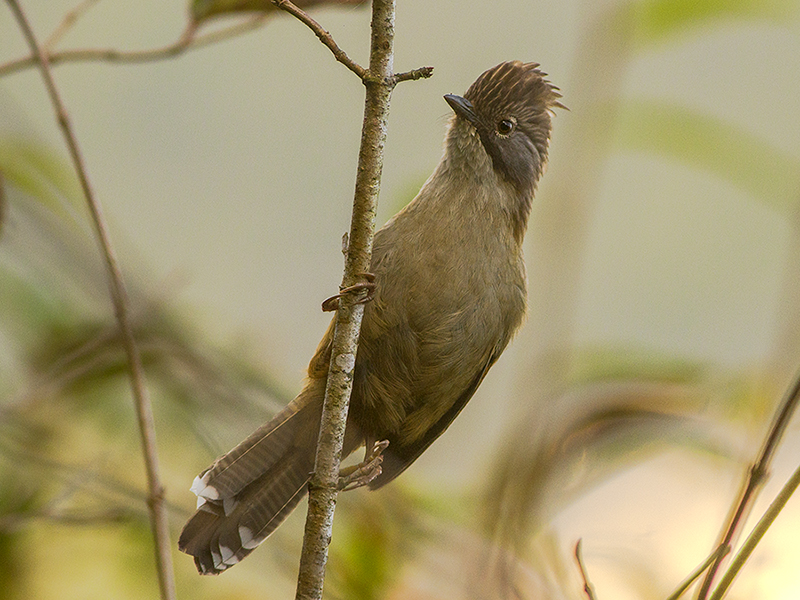
Adult Jungle Babblers have a predominantly grayish-brown plumage with a slight olive tinge. Their underparts are paler, often appearing buffy or grayish-white. The tail is long and rounded, while their legs are strong and adapted for perching. These birds possess a distinctive yellow eye and a slightly curved, robust bill that is pale yellow in color.
Juvenile Jungle Babblers resemble adults but tend to have a more rufous tint to their plumage, particularly on the wings and back. There is no significant sexual dimorphism in this species, meaning males and females look alike to the human eye. This lack of difference can sometimes make field identification challenging, but their behavior and group dynamics often provide distinguishing clues.
In flight, Jungle Babblers exhibit a somewhat labored, flapping style with short bursts of gliding. When perched, they often appear hunched with tails slightly cocked, a posture that is quite characteristic of the species. Despite their relatively drab coloration, their social behavior and vocalizations make them an unmistakable presence in their native habitats.
Having trouble telling birds apart? Upload a photo to our bird identification tool for an instant species match.
Jungle Babbler Habitat and Range
Preferred Habitat
Jungle Babblers thrive in a wide range of habitats, adapting well to both natural and man-made environments. They are commonly found in open woodlands, scrub forests, and gardens. In urban areas, they frequent parks and residential gardens, easily adapting to life alongside humans.
These birds are typically found at elevations up to 1,500 meters, though they prefer lower altitudes where open spaces with scattered shrubs and trees are more common. They do not show significant seasonal habitat shifts, as their sedentary nature keeps them within familiar territories year-round.
While the Jungle Babbler is often associated with rural settings, it has become increasingly common in urban areas, taking advantage of the shelter and food resources provided by human habitation. This adaptability has contributed to their widespread distribution across the Indian subcontinent.
Geographic Range
The Jungle Babbler's range encompasses much of the Indian subcontinent. They are predominantly found in India, Nepal, Bangladesh, and Sri Lanka. In India, their presence is noted from the foothills of the Himalayas down to the southern tip of the subcontinent.
Unlike many bird species, Jungle Babblers do not engage in long-distance migrations, maintaining a year-round presence in their established territories. Their sedentary nature and adaptability allow them to thrive in a variety of environments, from urban parks to rural farmlands.
Within their range, population density is highest in areas with a mixture of open fields and wooded patches, such as the Gangetic Plains and the Deccan Plateau. These regions offer optimal foraging opportunities and ample nesting sites, supporting large, stable populations of Jungle Babblers.
Want to know which birds visit your area? Browse our backyard birds by location guides for region-specific species lists.
What Does the Jungle Babbler Eat?
Jungle Babblers have an omnivorous diet, which includes a wide variety of food items. They primarily feed on insects, such as beetles, caterpillars, and ants, which they forage from the ground or low vegetation. Their diet also includes fruits, seeds, and small invertebrates.
During the breeding season, Jungle Babblers increase their intake of protein-rich insects, which are crucial for the growth and development of their chicks. In contrast, during the non-breeding season, they consume more fruits and seeds.
Jungle Babblers forage in groups, using a cooperative technique to flush out prey. This behavior not only increases their foraging efficiency but also reduces individual predation risk. They are most active during the early morning and late afternoon, avoiding the midday heat.
Jungle Babbler Behavior and Social Structure
Jungle Babblers are renowned for their social lifestyle, often forming cohesive groups known as 'parties.' These groups typically consist of six to ten individuals, although larger gatherings can occur. The birds communicate through a series of harsh, chattering calls that serve to maintain group cohesion and alert members to potential threats.
Territorial behavior is evident during the breeding season, with groups defending their territories from intruders. Within these territories, they engage in cooperative breeding, where non-breeding individuals assist with tasks such as feeding and protecting the young. This communal approach enhances the chances of survival for the offspring.
Courtship displays involve the male presenting food to the female, accompanied by soft calls and mutual preening. Jungle Babblers are diurnal, with peak activity observed in the early morning and late afternoon. They rest during the hottest parts of the day, taking shelter in shaded areas or dense vegetation.
Jungle Babbler Nesting and Reproduction
Jungle Babblers construct cup-shaped nests using twigs, grass, and leaves. These nests are typically located in shrubs or low trees, providing concealment and protection from predators. The birds exhibit a preference for nesting sites that are well hidden within dense foliage.
A typical clutch consists of three to four eggs, which are pale blue or greenish-blue in color. Both parents engage in incubation, which lasts for about 13 to 15 days. After hatching, the chicks remain in the nest for approximately two weeks before fledging.
The cooperative breeding system of Jungle Babblers allows non-breeding individuals to assist with chick-rearing, providing food and protection. This strategy supports the rearing of multiple broods per year, especially in regions where environmental conditions are favorable.
Jungle Babbler Sounds and Vocalizations
The Jungle Babbler's vocalizations are characterized by a series of harsh, chattering calls that are often delivered in rapid succession. These calls serve various purposes, including communication within the group and alerting members to threats.
Their primary song consists of a repetitive, high-pitched series of notes that can sound like 'chit-chit-chit.' Alarm calls are sharper and more urgent, designed to deter potential predators and warn other group members.
During the dawn chorus, Jungle Babblers become particularly vocal, their chatter contributing to the symphony of early morning bird sounds. Their vocalizations are a defining characteristic of their presence in any habitat.
Interesting Facts About the Jungle Babbler
- 1Jungle Babblers are often referred to as 'Seven Sisters' in India due to their habit of moving in groups of seven or more.
- 2These birds display a unique 'allopreening' behavior, where group members preen each other to strengthen social bonds.
- 3Their cooperative breeding strategy involves non-breeding individuals caring for young, a trait seen in only 9% of bird species globally.
- 4Jungle Babblers can learn to mimic the calls of other birds, a skill that helps them integrate into mixed-species flocks.
- 5Despite their noisy nature, Jungle Babblers are skilled at remaining hidden, often going unnoticed in dense vegetation.
- 6They have a lifespan of up to 10 years in the wild, a relatively long life for a bird of their size.
- 7The Jungle Babbler's chattering is so distinctive that it is often used as a sound effect in Indian films to evoke rural settings.
Jungle Babbler Conservation Status
Currently, the Jungle Babbler is listed as a species of 'Least Concern' by the IUCN. Their population is considered stable, with no immediate threats leading to significant declines. Their adaptability to various habitats, including urban areas, has contributed to their resilience. However, habitat destruction and urbanization pose potential threats to certain populations, as these can lead to the fragmentation of territories and reduced availability of nesting sites. Conservation efforts focus on habitat preservation and the maintenance of green spaces in urban environments. Historically, Jungle Babblers have maintained stable population levels, with their social structure and adaptability playing key roles in their ongoing success. Continued monitoring is essential to ensure that emerging threats do not impact their population dynamics.