Kerala Laughingthrush
Trochalopteron fairbanki
Order: Passeriformes / Family: Leiothrichidae

Wikimedia Commons
About the Kerala Laughingthrush
The Kerala Laughingthrush (Trochalopteron fairbanki) is a captivating bird species that inhabits the verdant landscapes of the Western Ghats in India. This region, known for its rich biodiversity, provides an ideal environment for the Kerala Laughingthrush to thrive. The bird predominantly inhabits the dense, moist montane forests of Kerala and the adjoining states, where it plays a significant ecological role as both a predator and prey species. Its presence contributes to the region's ecological balance, influencing insect populations and providing sustenance for larger predators. The laughingthrush exhibits seasonal behaviors, with breeding activities peaking during the monsoon months from June to August, coinciding with an abundance of food resources. During these times, the forests come alive with the bird's distinctive calls as males establish territories and engage in courtship. The Kerala Laughingthrush is a social bird, often found in small groups or mixed-species flocks, foraging among the undergrowth and lower canopy. Its cooperative behavior during foraging and breeding underscores its ecological significance, as it aids in the dispersal of seeds and the control of insect populations. The bird’s adaptability to varying elevations, from 600 to 2400 meters, allows it to exploit diverse forest habitats, from evergreen rainforests to shola grasslands. The Kerala Laughingthrush is not only an integral part of its ecosystem but also a symbol of the rich natural heritage of the Western Ghats, drawing birdwatchers and researchers alike for its melodious calls and vibrant plumage.
The Kerala Laughingthrush belongs to the family Leiothrichidae, within the order Passeriformes. These birds typically live 5-7 years with a maximum recorded of 9 years..
How to Identify a Kerala Laughingthrush
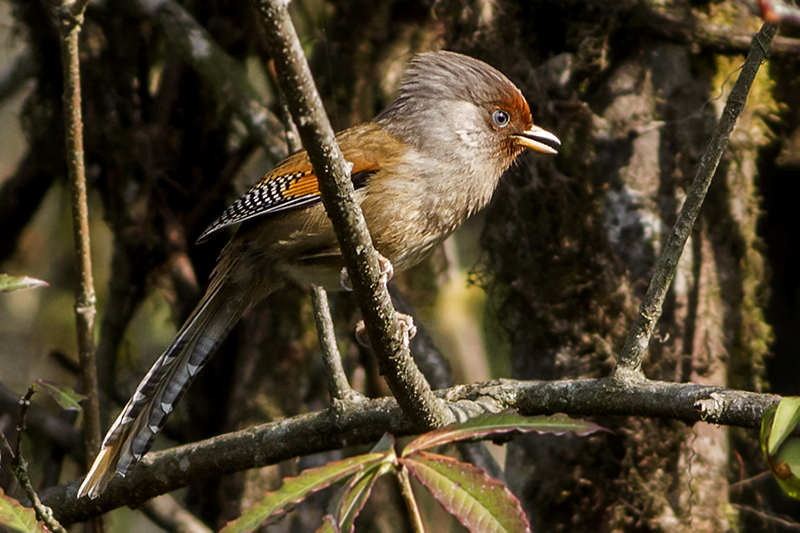
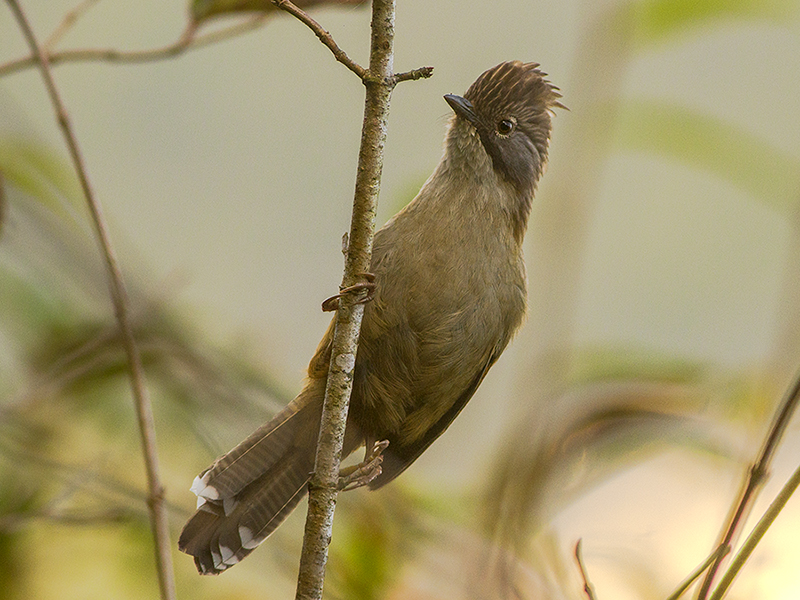
The Kerala Laughingthrush is a medium-sized bird with a distinctive appearance that aids in its identification. Adult birds exhibit a rich brown plumage on their upperparts, with a more subdued, grayish-brown coloration on the underparts. One of the most striking features is the bold white throat patch, bordered by a dark band that accentuates its face. The bird's eye is bright red, providing a stark contrast to its overall brown coloration, while the beak is slender and black. Juvenile birds appear similar to adults but with slightly duller plumage and less pronounced markings. Male and female Kerala Laughingthrushes share a similar appearance, making it challenging to differentiate them in the field. The flight of the Kerala Laughingthrush is typically low and undulating, as it often prefers moving through dense vegetation rather than taking to the open sky. When perched, the bird holds an upright posture, often flicking its tail and wings as it moves through the underbrush. Confusion with the Nilgiri Laughingthrush, another species found in the Western Ghats, can occur. However, the Kerala Laughingthrush is distinguishable by its more pronounced white throat patch and overall darker plumage.
Having trouble telling birds apart? Upload a photo to our bird identification tool for an instant species match.
Kerala Laughingthrush Habitat and Range
Preferred Habitat
The Kerala Laughingthrush is predominantly found in the montane forests of the Western Ghats, ranging from elevations of 600 to 2400 meters. These areas are characterized by dense, moist forests that provide ample cover and food resources. The bird is adapted to various forest types, including tropical evergreen forests, montane cloud forests, and shola-grassland complexes. In these habitats, it prefers the dense understory and lower canopy layers, where it forages for insects and small invertebrates. The bird shows some seasonal habitat shifts, moving to slightly lower elevations during the cooler months to exploit different food resources. While primarily a forest dweller, the Kerala Laughingthrush occasionally ventures into adjacent tea plantations and rural gardens, where it can be observed foraging and calling. Its presence in urban areas is minimal, as it tends to avoid heavily populated regions in favor of more undisturbed natural environments.
Geographic Range
The Kerala Laughingthrush is an endemic species to the Western Ghats of India, with a range primarily confined to the states of Kerala and Tamil Nadu. These birds are non-migratory, residing year-round in the same general area. Within this range, the bird is most commonly found in protected forest reserves and national parks, such as Periyar Tiger Reserve and Eravikulam National Park, where conservation efforts help maintain suitable habitats. The bird's population density is highest in regions with intact forest cover and minimal human disturbance. Due to its limited range and specific habitat requirements, the Kerala Laughingthrush is considered a regional endemic, highlighting the importance of preserving its natural habitat to ensure its continued survival. Although it does not undertake long migrations, the bird may move locally in response to seasonal changes in food availability and habitat conditions.
Want to know which birds visit your area? Browse our backyard birds by location guides for region-specific species lists.
What Does the Kerala Laughingthrush Eat?
The diet of the Kerala Laughingthrush is primarily insectivorous, with a strong preference for insects and small invertebrates. The bird forages actively along the forest floor and in the understory, using its sharp beak to probe the leaf litter and bark crevices for hidden prey. During the breeding season, the abundance of insects allows the bird to focus almost exclusively on this food source, providing the necessary protein to sustain itself and its chicks. In addition to insects, the Kerala Laughingthrush may consume small amounts of fruits and berries, particularly during the non-breeding season when insect availability declines. This dietary flexibility allows it to exploit a range of food sources depending on seasonal availability and environmental conditions. The bird typically forages in small groups or mixed-species flocks, which can enhance feeding efficiency and provide protection from predators. Its foraging behavior is diurnal, with peak activity occurring during the early morning and late afternoon when insect prey is most active.
Kerala Laughingthrush Behavior and Social Structure
The Kerala Laughingthrush is known for its social and cooperative behavior, often seen in small family groups or mixed-species flocks. This social structure not only enhances foraging success but also offers protection against predators. The bird exhibits strong territorial behavior, especially during the breeding season, with males actively defending their territories through vocal displays and occasional physical confrontations. Courtship displays involve a combination of vocalizations and physical gestures, such as wing flicking and tail fanning, to attract mates. Flocking behavior is particularly evident outside the breeding season, where the Kerala Laughingthrush joins other bird species to form larger foraging groups. This behavior increases the chances of locating food and reduces individual predation risk. The bird is primarily diurnal, with peak activity occurring during the cooler parts of the day, such as early morning and late afternoon. When faced with predators, the Kerala Laughingthrush employs a series of alarm calls and may engage in mobbing behavior to deter threats. Its daily activities are closely tied to the availability of food resources and suitable foraging conditions.
Kerala Laughingthrush Nesting and Reproduction
The nesting habits of the Kerala Laughingthrush are closely tied to the monsoon season, which provides the necessary resources for successful breeding. The bird constructs its nest in dense undergrowth or low trees, often choosing locations with ample cover to conceal it from predators. The nest is cup-shaped, crafted from twigs, leaves, and grass, with a soft lining of finer materials. Both male and female participate in nest building, showcasing a cooperative approach to raising their young. A typical clutch consists of 2 to 3 eggs, which are pale blue or greenish-blue with speckled markings. The incubation period lasts about 14 to 16 days, with both parents sharing the responsibility of keeping the eggs warm. After hatching, the chicks remain in the nest for approximately 12 to 14 days before fledging. During this time, the parents are diligent in feeding and protecting their offspring. The Kerala Laughingthrush typically raises one brood per year, although favorable conditions may allow for a second brood.
Kerala Laughingthrush Sounds and Vocalizations
The song of the Kerala Laughingthrush is a series of melodious, laughter-like notes that carry through the forest. These vocalizations are characterized by a rhythmic pattern, with a rich, warbling quality that is both enchanting and distinctive. In addition to its primary song, the bird emits a variety of call notes used for communication within flocks and during territorial disputes. These calls range from soft, conversational chirps to loud, sharp alarm calls that alert others to potential threats. The bird is particularly vocal during the dawn chorus, when its calls contribute to the vibrant soundscape of the forest. The laughter-like quality of its song is reminiscent of human laughter, which has earned the bird its common name and makes it a favorite among birdwatchers and naturalists.
Interesting Facts About the Kerala Laughingthrush
- 1The Kerala Laughingthrush is endemic to the Western Ghats, one of the world's biodiversity hotspots, highlighting its unique ecological niche.
- 2This bird's vocalizations often mimic human laughter, leading to its name and making it a favorite among birdwatchers for its distinctive calls.
- 3The Kerala Laughingthrush plays a crucial role in controlling insect populations, serving as an important predator in its forest ecosystem.
- 4During the breeding season, both male and female Kerala Laughingthrushes contribute to nest building, showcasing their cooperative nature.
- 5The bird's striking red eye and contrasting white throat patch make it easily distinguishable from other laughingthrush species in its range.
Kerala Laughingthrush Conservation Status
The Kerala Laughingthrush is currently classified as Least Concern by the IUCN, although it faces ongoing threats from habitat loss and degradation. Deforestation due to agricultural expansion, logging, and human settlement poses significant risks to its habitat in the Western Ghats. Despite these challenges, the population trend appears stable, thanks in part to the protection of key habitats within national parks and wildlife reserves. Conservation efforts focus on preserving forest ecosystems and mitigating human impacts, which are crucial for the bird's continued survival. Historically, the Kerala Laughingthrush has maintained a stable population, but continued vigilance is necessary to ensure that this emblematic species remains a part of India's avian diversity.