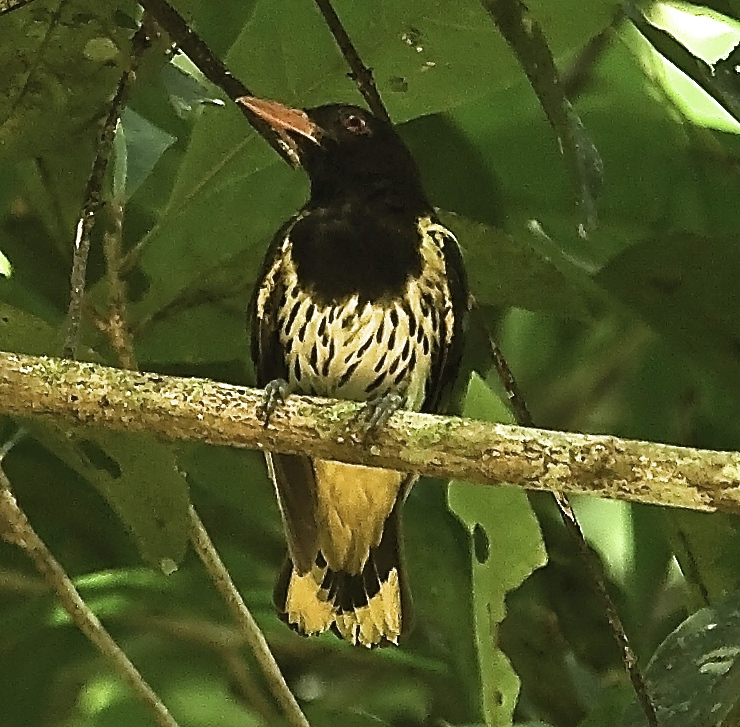
Maroon Oriole
Oriolus traillii
Order: Passeriformes / Family: Oriolidae

Wikimedia Commons
About the Maroon Oriole
The Maroon Oriole, Oriolus traillii, is a striking member of the Oriolidae family, renowned for its vibrant maroon plumage. This bird inhabits the forests of South and Southeast Asia, primarily found in regions such as the Himalayas, northeastern India, Myanmar, and parts of southern China. Its presence in these diverse habitats highlights its adaptability to different environments, from subtropical forests to temperate wooded areas. The Maroon Oriole plays a significant ecological role by aiding in seed dispersal and predating on various insects, thus contributing to the control of insect populations. This bird is particularly important in maintaining the ecological balance within its habitat, as it participates in both pollination and pest control.
In terms of seasonal behavior, the Maroon Oriole is known for its relatively sedentary lifestyle, with some populations being partially migratory depending on the availability of food resources. During the breeding season, which typically occurs from April to August, these birds become more vocal and active, engaging in complex courtship displays. In the non-breeding season, they are less conspicuous but maintain their territories and continue to forage actively. Their adaptability to different forest types, from lowland to montane forests, underscores their ecological versatility and importance.
The Maroon Oriole's significance extends beyond its ecological roles, as it is also a bird of cultural importance in several regions. Its melodious song and striking appearance make it a favorite among birdwatchers and nature enthusiasts. Observing the Maroon Oriole can offer insights into the complex interactions within forest ecosystems and the delicate balance that sustains these vibrant environments. As an indicator species, changes in its population can reflect broader ecological shifts, making its study vital for conservation efforts.
The Maroon Oriole belongs to the family Oriolidae, within the order Passeriformes. These birds typically live average 8-10 years with a max recorded of 12 years.
How to Identify a Maroon Oriole
Adult Maroon Orioles are easily identified by their rich maroon plumage, which covers their head, back, and wings. Their black wings and tail provide a striking contrast to the maroon body. The males often exhibit slightly brighter plumage than the females, who may appear more subdued in color. Juveniles, on the other hand, often display duller, more brownish plumage with less defined markings, which gradually become more vivid as they mature.
One of the key identification features of the Maroon Oriole is its bright yellow eyes, which stand out against its dark head. This feature is crucial for distinguishing it from similar species like the Black-headed Oriole, which lacks the maroon coloration. When in flight, the Maroon Oriole presents a robust silhouette, with strong, direct flight patterns and a notably broad tail.
The perching posture of the Maroon Oriole is upright and alert, often seen high in the canopy or on exposed branches. Their melodic song, combined with their distinct appearance, makes them a delight to spot in their natural habitat. They are rarely confused with other species, but keen birders should note the subtle plumage differences between males, females, and juveniles to ensure accurate identification.
Having trouble telling birds apart? Upload a photo to our bird identification tool for an instant species match.
Maroon Oriole Habitat and Range
Preferred Habitat
The Maroon Oriole thrives in a variety of forested environments, primarily favoring subtropical and tropical moist lowland and montane forests. It can be found at elevations ranging from 300 to 2500 meters, showcasing its adaptability to different altitudinal zones. In regions such as the Himalayas, it occupies both evergreen and deciduous forests, often seen in mixed-species flocks.
During the breeding season, the Maroon Oriole prefers dense forest canopies where it nests and forages for food. In contrast, during non-breeding periods, it may venture into secondary forests and even forest edges, demonstrating some flexibility in habitat selection. While it predominately resides in rural and semi-rural areas, it occasionally appears in urban parks and gardens, particularly where suitable tree cover exists.
Seasonal habitat shifts are minimal for the Maroon Oriole, as it tends to remain within its established territories year-round, only relocating if food resources become scarce. Its presence across diverse habitats underscores its adaptability and resilience in the face of habitat changes.
Geographic Range
The breeding range of the Maroon Oriole extends across the Himalayan foothills, including parts of northern India, Nepal, Bhutan, and southern China. It also breeds in the montane regions of Myanmar, Thailand, and Laos. These breeding territories are characterized by dense forest cover, which provides the necessary resources for nesting and rearing young.
In terms of wintering range, some populations may exhibit partial migratory behavior, moving to lower altitudes or adjacent regions during the colder months. However, many individuals remain within their breeding territories year-round, particularly in regions where food remains abundant throughout the year.
The Maroon Oriole's population density is generally highest in regions with extensive forest cover, such as the eastern Himalayas and parts of southern China. These areas serve as population hotspots due to the availability of suitable habitats and abundant food resources. While not considered a long-distance migratory species, the Maroon Oriole does utilize specific migration corridors within its range for short-distance movements driven by seasonal changes.
Want to know which birds visit your area? Browse our backyard birds by location guides for region-specific species lists.
What Does the Maroon Oriole Eat?
The Maroon Oriole's diet primarily consists of fruits and insects, making it an omnivorous feeder with a preference for fleshy fruits. This dietary choice contributes to its role as a seed disperser within its habitat. Common fruits consumed include figs, berries, and other soft-pulped fruits found in the forest canopy.
Insects form a vital component of its diet, particularly during the breeding season when the demand for protein-rich food increases. It preys on a variety of insects, including beetles, caterpillars, and flying insects, which it skillfully catches during agile flights or by foraging in the foliage. The Maroon Oriole employs a combination of gleaning and hawking techniques to capture its prey, showcasing its adaptability and hunting prowess.
Seasonal variations in the availability of fruits and insects lead to shifts in the Maroon Oriole's diet. During times when fruit is scarce, it may rely more heavily on insects, while during fruiting seasons, it takes advantage of the abundant fruit supply. This dietary flexibility allows the Maroon Oriole to thrive in diverse habitats and maintain its nutritional needs throughout the year.
Maroon Oriole Behavior and Social Structure
The Maroon Oriole exhibits a complex social structure and behavior that is intriguing to observe. Typically, these birds are seen either alone or in pairs, particularly during the breeding season. However, outside of this period, they often join mixed-species foraging flocks, a behavior that enhances their foraging efficiency and provides protection against predators.
Territorial behavior is prominent during the breeding season, with males becoming highly vocal and engaging in elaborate displays to establish dominance and attract mates. These courtship displays often involve fluttering flights, vocalizations, and posturing that highlight their vibrant plumage. The Maroon Oriole's response to predators includes alarm calls and evasive flight, often retreating to denser foliage for cover.
Daily activity patterns of the Maroon Oriole include active foraging during the early morning and late afternoon hours, when they are most vocal as well. Their activity decreases during the hottest parts of the day. The combination of social and solitary behaviors, along with their seasonal shifts in activity, provides a window into the life of this fascinating bird species.
Maroon Oriole Nesting and Reproduction
The Maroon Oriole constructs cup-shaped nests, usually positioned high in the canopy of tall trees, securely attached to branches. These nests are made from a variety of materials including twigs, grass, and leaves, skillfully woven together to create a sturdy structure. The selection of nesting sites often involves choosing locations that offer ample cover and protection from predators.
A typical clutch consists of 2 to 3 eggs, with the female primarily responsible for incubation, which lasts about 14 to 16 days. During this period, the male actively participates in providing food and protection. Once hatched, the chicks remain in the nest for approximately 15 to 18 days before fledging, during which both parents are involved in feeding and nurturing the young.
The Maroon Oriole typically raises one brood per year, though in regions with favorable conditions, a second brood may occur. The parental roles are well-defined, with both the male and female contributing to the successful rearing of the offspring, showcasing a strong commitment to their young.
Maroon Oriole Sounds and Vocalizations
The Maroon Oriole's song is a melodious series of flute-like notes that can vary in rhythm and pitch, often described as rich and clear. This song is most frequently heard during the breeding season, serving both to attract mates and establish territories. In addition to their primary song, Maroon Orioles produce a variety of call notes, including a soft, whistling call used for communication within pairs.
Alarm calls are harsher and more abrupt, signaling the presence of potential threats. These calls are vital in alerting other orioles and nearby birds to the danger. During the dawn chorus, the Maroon Oriole's song adds a distinctive element to the avian symphony, often being one of the more prominent voices heard.
Comparatively, the song of the Maroon Oriole may resemble that of the Black-naped Oriole but is typically more melodious and less harsh. This characteristic soundscape contributes to the auditory identity of the forests they inhabit.
Interesting Facts About the Maroon Oriole
- 1The Maroon Oriole can reach a length of up to 25 cm, making it a medium-sized songbird.
- 2Its vivid maroon plumage is more intense in males, helping distinguish them from females.
- 3Despite its striking appearance, the Maroon Oriole is adept at blending into the forest canopy.
- 4The Maroon Oriole's song is often compared to the sound of a flute, with a series of melodious notes.
- 5It plays a vital ecological role by controlling insect populations and dispersing seeds.
- 6The Maroon Oriole's diet shifts seasonally, highlighting its adaptability to environmental changes.
- 7This species is particularly prominent in the eastern Himalayas, a biodiversity hotspot.
Maroon Oriole Conservation Status
The Maroon Oriole is currently listed as Least Concern by the IUCN, indicating a relatively stable population trend. However, habitat destruction due to logging and agricultural expansion poses significant threats to its habitat, potentially impacting future population stability. Conservation efforts focus on preserving forest habitats and implementing sustainable land-use practices to mitigate these threats. Historically, the Maroon Oriole has maintained healthy population levels, benefiting from its adaptability to various forest types. Continued monitoring and research are necessary to ensure this trend persists. Conservation programs aimed at protecting key habitats, particularly in biodiversity-rich regions like the Himalayas, are crucial for the long-term survival of this species.
Other Oriolidae Species


Birds Similar to the Maroon Oriole
These species are often confused with the Maroon Oriole due to similar appearance or overlapping range.