Mount Victoria Babax
Pterorhinus woodi
Order: Passeriformes / Family: Leiothrichidae

Wikimedia Commons
About the Mount Victoria Babax
The Mount Victoria Babax, or Pterorhinus woodi, is a fascinating member of the Leiothrichidae family, residing primarily in the temperate and subtropical forested regions of Myanmar, particularly around Mount Victoria. These birds are an integral part of the local ecosystem, playing significant roles in seed dispersal and insect population control. The species thrives in montane habitats, often characterized by dense underbrush and bamboo thickets, which provide both feeding grounds and shelter. The Mount Victoria Babax has adapted well to this environment, displaying a behavior pattern that includes foraging both on the ground and in low vegetation. During the breeding season, which typically spans from April to June, these birds become more vocally active, using their rich songs to establish territory and attract mates. Outside the breeding season, the Mount Victoria Babax maintains a lower profile, usually observed in small flocks, foraging quietly through the undergrowth. This species shows a marked preference for areas with high humidity and ample vegetation cover, which support their insectivorous diet. The ecological role of the Mount Victoria Babax extends beyond its immediate habitat, as its foraging activities help maintain the health and balance of the forest ecosystem. By controlling insect populations and aiding in the distribution of seeds, this bird contributes to the overall biodiversity of its environment. Its presence is a valuable indicator of the health of the montane forest ecosystems where it resides.
The Mount Victoria Babax belongs to the family Leiothrichidae, within the order Passeriformes. These birds typically live average 6-8 years with max recorded of 11 years.
How to Identify a Mount Victoria Babax
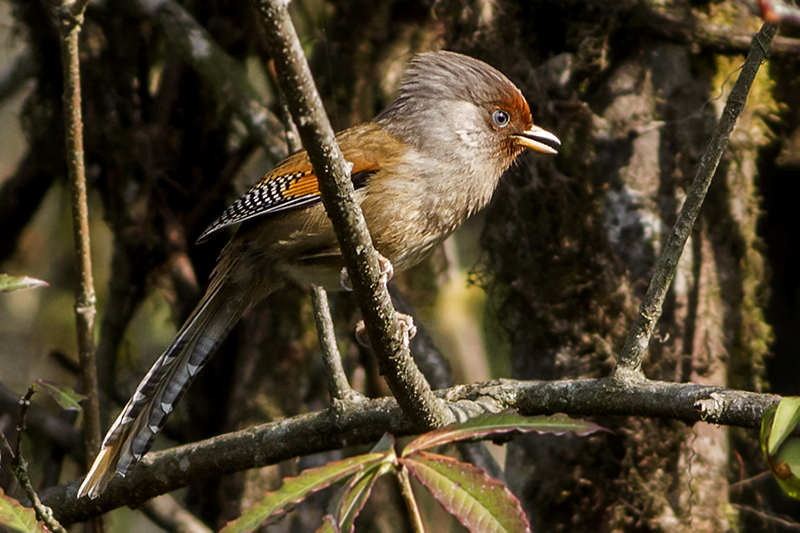
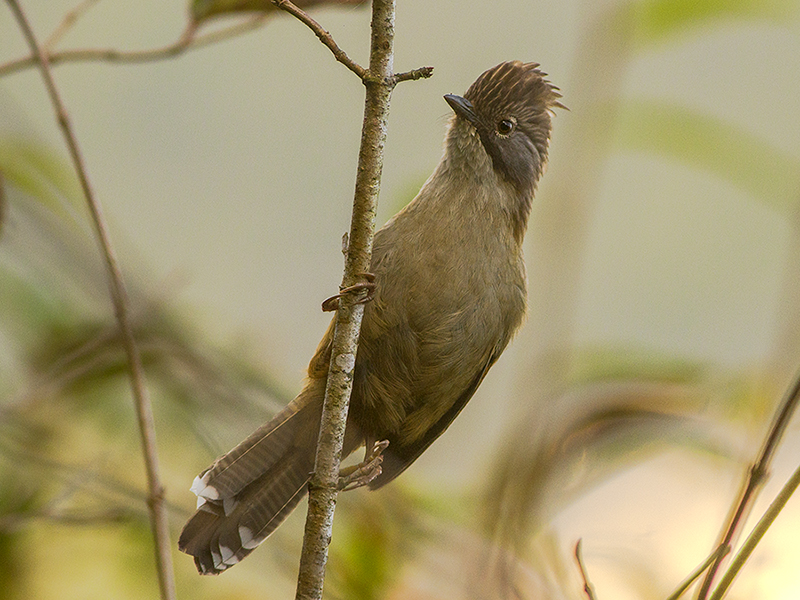
The Mount Victoria Babax is a medium-sized bird, approximately 28-32 cm in length, with a distinct, elongated shape typical of its genus. Adults display a predominately brown plumage, with subtle streaking along the breast and back that aids in camouflage within their forested environment. The face of the Mount Victoria Babax is marked by a prominent white supercilium and a contrasting dark eye stripe, which are key features for identification. The wings and tail are rounded, with the tail often held upright when the bird is perched. Males and females exhibit similar plumage, making them difficult to distinguish in the field based solely on appearance. Juvenile birds resemble adults but tend to have a less pronounced streaking on the breast and a more muted overall coloration. Compared to similar species, the Mount Victoria Babax can be differentiated by its larger size and the distinct richness of its vocalizations. In flight, this babax presents a somewhat heavy, slow silhouette, with broad wings and a long tail that assist in maneuvering through dense foliage. When perched, its posture is upright, often accompanied by a slight tilt of the head as it listens for insect prey.
Having trouble telling birds apart? Upload a photo to our bird identification tool for an instant species match.
Mount Victoria Babax Habitat and Range
Preferred Habitat
The Mount Victoria Babax inhabits subtropical and temperate montane forests, primarily within the altitude range of 1,500 to 3,000 meters. Its preferred habitat includes areas with dense undergrowth and bamboo clusters, which provide ample cover and feeding opportunities. These forests are typically found in regions with high humidity and a rich diversity of plant life, contributing to a robust ecosystem. Seasonal shifts in habitat are minimal, as the babax is a year-round resident within its range. Unlike some bird species, it does not frequently venture into urban areas, preferring the seclusion and resources of its natural forest habitat. This preference for remote, densely vegetated environments makes it less visible to casual observers and helps protect it from the impacts of human encroachment.
Geographic Range
The Mount Victoria Babax is endemic to Myanmar, with its range primarily concentrated around the Chin Hills, including the area surrounding Mount Victoria. This region's unique montane ecosystems provide the ideal conditions for the species. The bird does not exhibit long-distance migratory behavior, instead maintaining a relatively stable presence within its confined range throughout the year. Local movements may occur in response to seasonal availability of food resources, with slight altitudinal shifts observed during different times of the year. Population densities are highest in areas where the forest undergrowth remains dense and largely undisturbed by human activity. The limited range of this species contributes to its vulnerability, as habitat alteration or destruction can have significant impacts on its population.
Want to know which birds visit your area? Browse our backyard birds by location guides for region-specific species lists.
What Does the Mount Victoria Babax Eat?
The diet of the Mount Victoria Babax consists primarily of insects and other small invertebrates, which it forages for in the leaf litter and low vegetation of its forest habitat. During the breeding season, the babax increases its intake of protein-rich insects to support the demands of raising young. In addition to its primary insectivorous diet, the bird also consumes a variety of seeds and fruits, aiding in seed dispersal within its ecosystem. Foraging occurs mainly during the early morning and late afternoon, when insect activity is at its peak. The babax employs a methodical foraging technique, using its strong bill to overturn leaves and debris in search of hidden prey. Prey size varies, but typically includes small beetles, ants, caterpillars, and spiders. This dietary flexibility allows the Mount Victoria Babax to adapt to seasonal changes in food availability, ensuring its survival in a dynamic environment.
Mount Victoria Babax Behavior and Social Structure
Socially, the Mount Victoria Babax exhibits a preference for small, loosely structured flocks outside of the breeding season. These flocks, usually consisting of 4-8 individuals, move through the forest understory in search of food and protection from predators. During the breeding season, pairs become more territorial, defending their chosen nesting site with vocal displays and occasional physical confrontations. Courtship behaviors include mutual preening and the presentation of small food items, which help strengthen pair bonds. The Mount Victoria Babax remains vigilant against predators, relying on its acute hearing and the dense foliage for camouflage and cover. When threatened, it may emit alarm calls to warn other members of its flock. Activity patterns are largely diurnal, with peak activity occurring during the early hours of the morning and late afternoon. The bird often retreats to denser cover during the hottest parts of the day, reducing its vulnerability to predators and conserving energy.
Mount Victoria Babax Nesting and Reproduction
Nesting for the Mount Victoria Babax typically occurs from April to June, coinciding with the end of the dry season and the onset of increased food availability. The birds construct cup-shaped nests using twigs, leaves, and grasses, often selecting sites well-concealed within dense shrubs or low trees. Clutch size generally ranges from 2 to 4 eggs, with both parents sharing incubation duties over a period of approximately 14-16 days. Following hatching, both parents continue to play an active role in feeding and caring for the young, which fledge after about 14-18 days. The species usually produces one brood per year, although in favorable conditions a second clutch may occur. Success rates for fledgling survival vary, influenced by factors such as predation and food availability.
Mount Victoria Babax Sounds and Vocalizations
The Mount Victoria Babax is renowned for its rich, melodious song, which consists of complex, variable phrases delivered with a flute-like quality. The primary song features a series of whistles, chirps, and trills that can carry through the dense forest canopy. In addition to its song, the babax produces a variety of call notes, including a harsh, scolding chatter used in response to intruders or predators. Alarm calls are sharp and piercing, designed to alert other members of the flock to potential danger. During the dawn chorus, the babax's song is particularly prominent, as males compete to establish territory and attract mates. The complexity and diversity of the Mount Victoria Babax's vocalizations contribute to its recognition as a talented songbird within its habitat.
Interesting Facts About the Mount Victoria Babax
- 1The Mount Victoria Babax belongs to a group known for their complex vocalizations, making them a favorite among birdwatchers.
- 2Despite its name, the Mount Victoria Babax is not restricted to Mount Victoria but is endemic to the broader Chin Hills region.
- 3The babax's preference for dense undergrowth makes it a challenging bird to spot, often heard more than seen.
- 4Its rich song often features mimicry of other bird species, showcasing its impressive vocal range.
- 5The Mount Victoria Babax plays a crucial role in controlling insect populations, acting as a natural pest regulator.
- 6During the non-breeding season, the babax often forms mixed-species flocks, enhancing its foraging efficiency.
- 7The species' preference for high-altitude forest habitats helps it avoid some of the pressures of lowland habitat destruction.
Mount Victoria Babax Conservation Status
The Mount Victoria Babax is currently classified as Near Threatened according to the IUCN Red List. Despite its relatively stable population, the species faces threats from habitat loss due to deforestation and land conversion for agriculture. Additionally, the limited geographic range of the babax makes it particularly vulnerable to environmental changes and human activities. Conservation efforts focus on preserving the montane forest habitats that are crucial for the survival of this species. Protecting these areas not only benefits the babax but also supports the broader biodiversity of the region. Historical data suggests a gradual decline in population numbers, emphasizing the need for continued conservation attention.