Moustached Laughingthrush
Garrulax cineraceus
Order: Passeriformes / Family: Leiothrichidae

Wikimedia Commons
About the Moustached Laughingthrush
The Moustached Laughingthrush (Garrulax cineraceus) is a medium-sized bird found predominantly in the mountainous regions of Asia. This bird is part of the Leiothrichidae family, which is known for its diverse and often melodious members. The Moustached Laughingthrush is especially noted for its unique facial markings, which resemble a well-defined mustache, adding to its distinctive appearance. It inhabits the understory and mid-canopy layers of subtropical and temperate forests, particularly favoring areas with dense undergrowth. This bird plays a vital role in its ecosystem, participating in seed dispersal and insect population control. Furthermore, it serves as an indicator of forest health, as it thrives in well-preserved habitats. The Moustached Laughingthrush is mostly sedentary, with some populations exhibiting short-distance movements based on seasonal changes in food availability. During the breeding season, which occurs in the warmer months, the bird becomes more territorial, defending its chosen patch of forest with vigor. Outside of this period, it is more likely to be found in small flocks, engaging in social foraging. The ecological significance of the Moustached Laughingthrush extends beyond biology, as it also draws birdwatchers and naturalists to the regions it inhabits, thereby promoting conservation awareness and eco-tourism. Understanding the behavior and needs of this bird is crucial for conserving the forest habitats they depend on. Conservation efforts focused on protecting these vital ecosystems also benefit numerous other species, demonstrating the interconnectedness of forest biodiversity.
The Moustached Laughingthrush belongs to the family Leiothrichidae, within the order Passeriformes. These birds typically live average 6 years with max recorded up to 11 years.
How to Identify a Moustached Laughingthrush
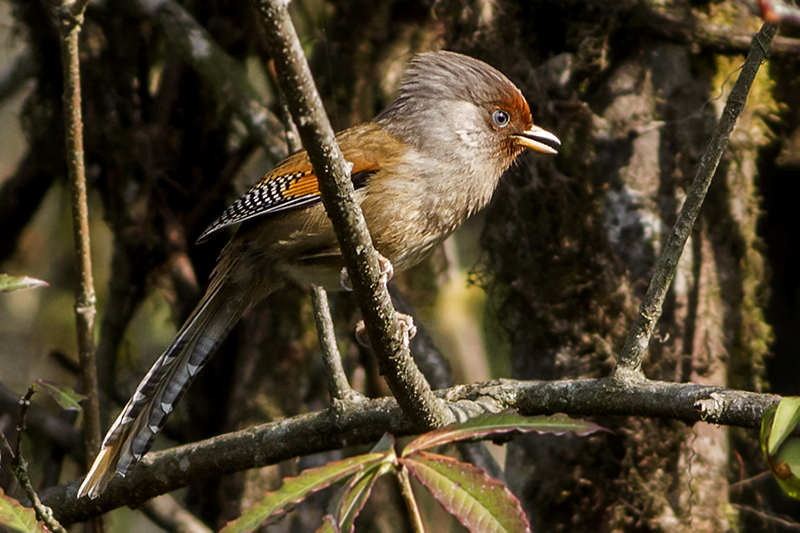
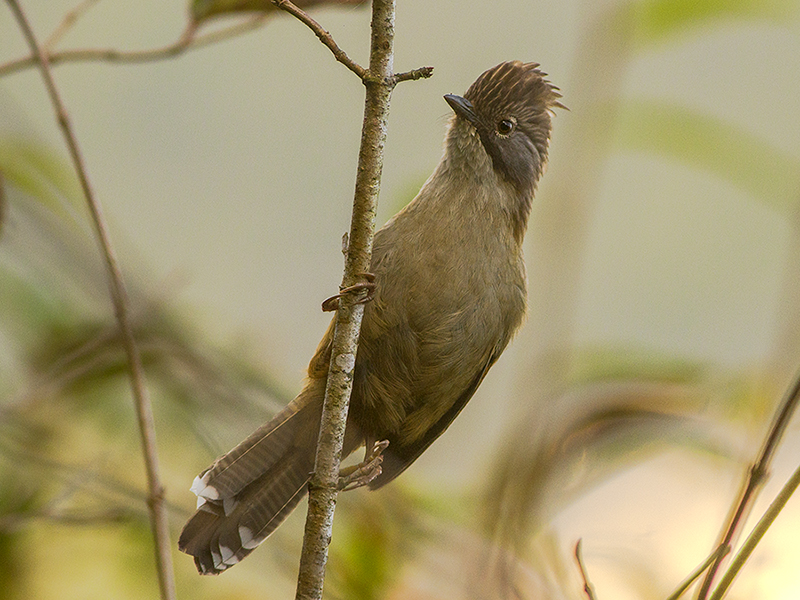
The Moustached Laughingthrush boasts a striking appearance with its prominent facial markings, which appear as dark, mustache-like streaks from the beak across the cheeks. Adults display a predominantly gray plumage, with the upperparts being slightly darker compared to the paler underparts. Juveniles resemble adults but may exhibit a duller coloration overall. Males and females are similar in appearance, which can make distinguishing between the sexes challenging in the field. One must rely on behavior rather than plumage for sex differentiation during the breeding season. In flight, the Moustached Laughingthrush shows a compact silhouette with rounded wings and a short tail, allowing for agile movement through dense foliage. When perched, this bird typically adopts an upright posture, often seen engaging in social interactions or foraging activities. While it shares its range with other laughingthrush species, the distinct facial markings of the Moustached Laughingthrush help prevent confusion. Observers should note its unique vocalizations, which can aid significantly in identification when visual confirmation proves difficult.
Having trouble telling birds apart? Upload a photo to our bird identification tool for an instant species match.
Moustached Laughingthrush Habitat and Range
Preferred Habitat
The Moustached Laughingthrush primarily inhabits subtropical and temperate forests, favoring areas with dense undergrowth and rich vegetation. These birds are often found at elevations ranging from 1,000 to 3,000 meters, depending on the specific region. Seasonal habitat shifts are minimal, though slight altitudinal movements may occur in response to food availability. The species shows a marked preference for primary forests but can also be found in well-preserved secondary growth areas. Urban presence is rare, and they are seldom seen in heavily disturbed areas, reflecting their reliance on mature forest environments for survival. The presence of bamboo and rhododendron thickets within their habitat often indicates a suitable environment for the Moustached Laughingthrush, as these provide both food and shelter.
Geographic Range
The Moustached Laughingthrush is native to the mountainous regions of Asia, with a distribution primarily in China, extending into parts of northern Myanmar and India. It occupies a relatively narrow range, focusing on the lush, forested areas of the Hengduan Mountains and other regional ranges. Breeding populations are concentrated in these high-altitude forests, with some altitudinal movements observed during non-breeding seasons to exploit different food sources. Migration is limited, with most individuals remaining within their general home range throughout the year. Population density tends to be higher in areas with extensive forest coverage and minimal human disturbance, making conservation of these regions critical for maintaining healthy populations of the species.
Want to know which birds visit your area? Browse our backyard birds by location guides for region-specific species lists.
What Does the Moustached Laughingthrush Eat?
The diet of the Moustached Laughingthrush is diverse, consisting mainly of insects, berries, and seeds. During the warmer months, insects become the primary food source, with the birds actively foraging among the leaf litter and lower canopy for beetles, caterpillars, and other invertebrates. In colder months, as insect availability decreases, the laughingthrushes shift their diet towards fruits and seeds, which they find in abundance in their forested habitats. These birds exhibit a methodical foraging technique, often seen hopping along branches or the forest floor, using their beaks to probe into crevices and foliage. Prey size typically ranges from small insects to moderately sized beetles. The feeding schedule is mostly diurnal, with peak activity occurring in the early morning and late afternoon when temperatures are cooler and food is more accessible.
Moustached Laughingthrush Behavior and Social Structure
The Moustached Laughingthrush is a social species, often observed in small flocks outside the breeding season. Their social structure is characterized by loose associations, with individuals frequently joining and leaving groups. Territorial behavior becomes pronounced during the breeding season, with pairs aggressively defending their nesting area from intruders. Courtship displays involve a combination of vocalizations and physical posturing, with males often seen puffing their chests and fanning their tails to attract females. When faced with predators, the laughingthrushes employ a variety of alarm calls and may engage in mobbing behavior to deter threats. Daily activity patterns are typically centered around foraging, with birds becoming more vocal during the dawn and dusk periods. As dusk approaches, the laughingthrushes retreat to thicker vegetation for roosting, often in communal groups for added protection.
Moustached Laughingthrush Nesting and Reproduction
Moustached Laughingthrushes construct cup-shaped nests, typically using twigs, leaves, and moss, with finer materials lining the interior for added comfort. These nests are generally situated in dense shrubs or low trees, providing both concealment and protection from predators. The clutch size ranges from two to four eggs, with both parents participating in incubation duties. The incubation period lasts approximately 14 to 16 days, after which the chicks hatch. Fledglings remain in the nest for another two weeks before gaining the strength and coordination necessary for independent flight. Both parents share feeding responsibilities, ensuring the young receive a balanced diet of insects and berries. The species usually produces one brooding per year, though favorable environmental conditions may support a second attempt.
Moustached Laughingthrush Sounds and Vocalizations
The primary song of the Moustached Laughingthrush is a series of melodious, flute-like notes delivered in a rhythmic sequence. This song is characterized by its clear and resonant quality, often heard echoing through the forest. In addition to their primary song, these birds emit a variety of call notes, ranging from sharp, scolding sounds used in alarm situations to soft, conversational chirps exchanged between flock members. The dawn chorus, a hallmark of their vocal behavior, involves multiple individuals singing in a loosely synchronized manner, creating a rich tapestry of sound that marks the beginning of the day. These vocalizations serve both in mate attraction and territorial defense, establishing auditory boundaries within their habitat.
Interesting Facts About the Moustached Laughingthrush
- 1The Moustached Laughingthrush's song can carry over half a kilometer in dense forest, making it a vital communication tool.
- 2Despite being relatively sedentary, the Moustached Laughingthrush can cover up to 3 kilometers a day while foraging.
- 3These birds can consume up to 20% of their body weight in food each day, showcasing their active foraging habits.
- 4Moustached Laughingthrushes participate in mixed-species flocks, enhancing their foraging efficiency and predator detection.
- 5The unique 'mustache' markings of the Moustached Laughingthrush serve both for species identification and mate attraction.
- 6Moustached Laughingthrushes exhibit a curious behavior of sunbathing, often observed spreading their wings on sunny days.
- 7In some regions, the presence of Moustached Laughingthrushes is used by local communities as an indicator of forest health.
Moustached Laughingthrush Conservation Status
Currently, the Moustached Laughingthrush is listed as Least Concern by the IUCN, with population trends considered stable. However, habitat destruction due to logging and agricultural expansion poses a significant threat to their long-term survival. Conservation efforts focus on preserving forest habitats and creating protected areas to mitigate these threats. Historical data indicate that populations have remained relatively stable over the past few decades, largely due to the inaccessibility of their preferred habitats. Continued monitoring and conservation initiatives are essential to ensure the species does not face more severe threats in the future.