
Nilgiri Pipit
Anthus nilghiriensis
Order: Passeriformes / Family: Motacillidae

Wikimedia Commons
About the Nilgiri Pipit
The Nilgiri Pipit, scientifically known as Anthus nilghiriensis, is an endemic bird of the Western Ghats in southern India, a biodiversity hotspot recognized for its unique flora and fauna. This small passerine bird belongs to the family Motacillidae and is particularly significant due to its limited distribution and specific habitat preferences. The Nilgiri Pipit typically inhabits montane grasslands within the Western Ghats, often found at elevations ranging from 1,200 to 2,600 meters. These high-altitude grasslands provide the ideal environment for the species, offering both food resources and suitable nesting sites. The ecological role of the Nilgiri Pipit is substantial, as it contributes to the control of insect populations in these grasslands. The bird's diet primarily consists of insects, which it forages for amidst the dense grass cover.
The significance of the Nilgiri Pipit extends beyond its ecological role; it serves as an indicator species for the health of montane grassland ecosystems. Conservationists often use the presence and population trends of this bird to gauge the impact of environmental changes, such as habitat fragmentation and climate change. Seasonal behavior of the Nilgiri Pipit includes subtle shifts within its habitat, as it may move to slightly lower elevations during adverse weather conditions, though it generally remains non-migratory.
Human activities, particularly agriculture and urbanization, threaten the Nilgiri Pipit's habitat, emphasizing the need for conservation efforts to preserve these high-altitude ecosystems. Efforts to protect and restore its natural habitat are vital for maintaining the population of this unique bird, which remains a subject of research and conservation interest. The Nilgiri Pipit, with its restricted range and specialized habitat requirements, highlights the intricate balance required to maintain biodiversity within the Western Ghats.
The Nilgiri Pipit belongs to the family Motacillidae, within the order Passeriformes. These birds typically live average 2-4 years, with a maximum of 6 years recorded.
How to Identify a Nilgiri Pipit
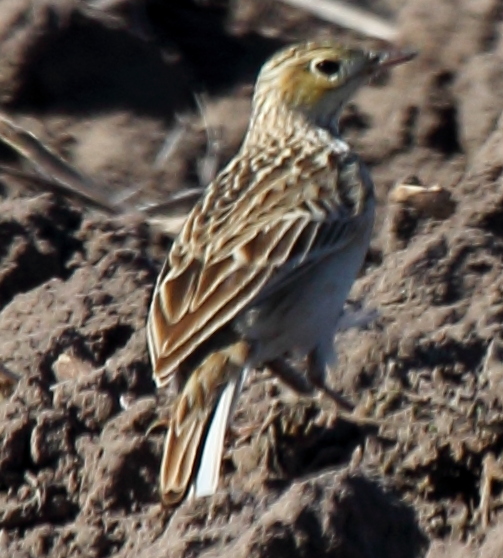
The Nilgiri Pipit is a small bird, measuring around 15 cm in length, and is easily recognized by its streaked brown plumage, which provides excellent camouflage against the grasslands it inhabits. Adult Nilgiri Pipits display a warm brown coloration on their upperparts, with bold, dark streaks running along the back and wings. Their underparts are paler, often exhibiting a whitish or buff hue with fine streaking on the breast. This streaked patterning is crucial for identification, as it distinguishes the Nilgiri Pipit from other pipit species in the region.
Juvenile Nilgiri Pipits resemble adults but tend to have a more pronounced buff wash on their underparts and less distinct streaking, which becomes more defined as they mature. There is little sexual dimorphism in this species, meaning that males and females look quite similar, a common trait among many pipit species. The Nilgiri Pipit can be distinguished from similar species, such as the Paddyfield Pipit, by its more robust build and the habitat it occupies, as the latter is typically found at lower elevations.
In flight, the Nilgiri Pipit showcases a characteristic undulating pattern, with wings flapping vigorously followed by short glides. While perched, it often adopts an upright stance, which, combined with its streaked plumage, helps it blend seamlessly into the grassland environment. Observers should note its quiet, unobtrusive presence, as it tends to be more secretive than other pipit species, often relying on its camouflage to evade detection.
Having trouble telling birds apart? Upload a photo to our bird identification tool for an instant species match.
Nilgiri Pipit Habitat and Range
Preferred Habitat
The Nilgiri Pipit is primarily found in the montane grasslands of the Western Ghats, a unique habitat within southern India. These grasslands, often interspersed with patches of shola forests, provide an ideal environment for the Nilgiri Pipit. The bird thrives at elevations between 1,200 and 2,600 meters, where the climate is cooler and the vegetation is predominantly tall grasses mixed with occasional shrubs.
These high-altitude grasslands are essential for the Nilgiri Pipit's survival, as they offer both food resources and nesting sites. Unlike many other pipit species, the Nilgiri Pipit shows a strong preference for these specific habitats and does not typically venture into lower-altitude areas or urban regions. The bird's reliance on such specialized habitats makes it particularly vulnerable to changes in land use and climate that may alter the montane grassland ecosystems.
Seasonally, the Nilgiri Pipit may shift slightly within its habitat, moving to lower elevations during harsher weather conditions, although it remains primarily a resident species. The stability and health of these grasslands are crucial for the long-term survival of the Nilgiri Pipit, emphasizing the importance of conservation efforts to protect these areas from degradation.
Geographic Range
The Nilgiri Pipit's range is restricted to the Western Ghats of southern India, specifically within the states of Kerala, Tamil Nadu, and Karnataka. This bird is considered endemic to this region, meaning it is not naturally found anywhere else in the world. The Western Ghats, a UNESCO World Heritage site, provide the unique montane grassland habitat essential for the Nilgiri Pipit.
The bird's distribution is primarily confined to the higher elevations of these mountain ranges, typically between 1,200 and 2,600 meters. Within these regions, the Nilgiri Pipit can be found in scattered, localized populations, often concentrated in areas where the grassland habitat remains intact. The species is non-migratory, generally residing year-round in its preferred habitat, although it may exhibit some altitudinal movement within its range in response to environmental conditions.
Due to its limited range and specific habitat requirements, the Nilgiri Pipit faces challenges from habitat fragmentation and environmental changes. Conservation of its habitat within the Western Ghats is crucial for maintaining its populations, as any significant alterations to the grasslands could have adverse effects on its distribution and survival.
Want to know which birds visit your area? Browse our backyard birds by location guides for region-specific species lists.
What Does the Nilgiri Pipit Eat?
The Nilgiri Pipit primarily feeds on insects, which it diligently searches for among the tall grasses of its montane habitat. Its diet consists mainly of small invertebrates, including beetles, grasshoppers, and caterpillars, which provide essential nutrients for its survival. The bird employs a methodical foraging technique, walking or hopping through the grass and using its keen eyesight to spot potential prey.
Seasonal variations in insect availability can influence the Nilgiri Pipit's diet. During the wetter months, when insect populations tend to be more abundant, the bird can exploit a wider variety of prey, whereas in drier periods, it may rely on whatever insects are available. In addition to insects, the Nilgiri Pipit occasionally consumes seeds and plant material, particularly when insect prey is scarce.
The bird typically forages alone or in pairs, maintaining a low profile as it moves through the grass, and it tends to feed during the cooler parts of the day, such as early morning and late afternoon. This feeding schedule helps the Nilgiri Pipit avoid the midday heat typical of its high-altitude environment, ensuring it can gather enough food without expending excessive energy.
Nilgiri Pipit Behavior and Social Structure
The Nilgiri Pipit exhibits solitary or loosely paired behavior, reflecting its preference for maintaining a low profile in its high-altitude grassland habitat. It is generally a non-migratory bird, remaining within its montane environment year-round, although it may move to slightly lower elevations during adverse weather conditions.
Territorial behavior is evident during the breeding season, with males establishing and defending territories to attract mates. This involves singing from elevated perches or performing short aerial displays to assert their presence and ward off rivals. The Nilgiri Pipit's song serves a dual purpose of marking territory and attracting females.
Courtship displays are relatively subtle, consisting mainly of the male's vocalizations and occasional wing-fluttering to demonstrate fitness to potential mates. Once paired, the birds focus on nesting and rearing their young, with both parents participating in feeding and caring for the chicks.
Flocking behavior is generally uncommon in the Nilgiri Pipit, especially outside the breeding season. The bird tends to remain inconspicuous, relying on its cryptic plumage to blend into the grassland environment and avoid predators. Its daily activity pattern involves periods of foraging interspersed with rest and preening, ensuring it remains well-camouflaged and vigilant throughout the day.
Nilgiri Pipit Nesting and Reproduction
The Nilgiri Pipit constructs its nest on the ground, well-concealed amidst the dense grass of its montane habitat. The nest is typically a cup-shaped structure, made using a combination of grass, leaves, and other fine plant materials to provide insulation and camouflage.
Preferred nesting sites are often located in areas where the grass is tall enough to offer protection from predators and environmental elements. The female lays a clutch of 3 to 4 eggs, which are speckled and blend well with the surrounding vegetation. Incubation duties are primarily carried out by the female, lasting approximately 13 to 15 days, while the male may contribute by foraging for food and keeping watch for potential threats.
Once hatched, the chicks remain in the nest for about 10 to 12 days before fledging. During this period, both parents are actively involved in feeding the young, ensuring they receive enough nourishment to grow and develop. The Nilgiri Pipit typically raises one brood per year, although favorable conditions may occasionally result in a second brood. Parental care continues even after fledging, with the young birds staying close to their parents as they learn essential foraging and survival skills.
Nilgiri Pipit Sounds and Vocalizations
The Nilgiri Pipit's song is a series of high-pitched, melodious notes often delivered from a prominent perch or during short flights. The rhythm is steady, with a sequence of clear, flute-like whistles that can carry across the open grasslands. This primary song is used by males to establish territory and attract females during the breeding season.
Aside from its song, the Nilgiri Pipit also produces various call notes, which are typically shorter and less complex. These calls include soft 'tsip' or 'tseep' sounds used for communication between mates or as contact calls when foraging.
Alarm calls are harsher and more abrupt, usually given in response to potential threats or disturbances, alerting other pipits to the presence of predators. While the Nilgiri Pipit is not known for a prominent dawn chorus, its vocalizations are most frequently heard during the early morning and late afternoon, coinciding with peak activity periods.
Interesting Facts About the Nilgiri Pipit
- 1The Nilgiri Pipit is one of the few bird species endemic to the Western Ghats of India, highlighting its unique ecological niche.
- 2Despite its small size, the Nilgiri Pipit plays a crucial role in controlling insect populations within its montane grassland habitat.
- 3The bird's restricted range makes it an excellent indicator species for assessing the health of high-altitude ecosystems in the Western Ghats.
- 4Nilgiri Pipits are known for their cryptic plumage that provides excellent camouflage, making them challenging to spot in their natural habitat.
- 5The species' vulnerability highlights the importance of conserving the Western Ghats, one of India's most significant biodiversity hotspots.
Nilgiri Pipit Conservation Status
The Nilgiri Pipit is currently listed as Vulnerable by the IUCN due to its restricted range and the ongoing threats to its montane grassland habitat. The primary threats include habitat loss and degradation resulting from agricultural expansion, urbanization, and infrastructure development within the Western Ghats. Conservation efforts focus on protecting and managing the high-altitude grasslands that the Nilgiri Pipit relies on. Initiatives include creating protected areas, promoting sustainable land-use practices, and raising awareness about the ecological significance of these habitats. Despite these efforts, the population trend of the Nilgiri Pipit remains of concern. Historical changes in land use and climate have already impacted its habitat, and ongoing vigilance is necessary to ensure its survival. Continued research and monitoring are essential to understand the species' ecological needs and to implement effective conservation strategies.
Other Motacillidae Species



Birds Similar to the Nilgiri Pipit
These species are often confused with the Nilgiri Pipit due to similar appearance or overlapping range.
