Northern Pied-Babbler
Turdoides hypoleuca
Order: Passeriformes / Family: Leiothrichidae

Wikimedia Commons
About the Northern Pied-Babbler
The Northern Pied-Babbler (Turdoides hypoleuca) is a captivating member of the Leiothrichidae family, renowned for its distinctive black and white coloration and social behavior. This medium-sized songbird is native to the open woodlands and savannas of eastern Africa, particularly in countries like Kenya, Tanzania, and Uganda. The species prefers habitats that provide a mixture of open ground for foraging and dense shrubs or trees for nesting and roosting. The Northern Pied-Babbler plays a vital ecological role within these ecosystems, acting as both a predator and prey. It helps control insect populations while also serving as a food source for larger birds of prey and mammals. Seasonal behaviors of the Northern Pied-Babbler are notable, as they often form cooperative breeding groups. These groups consist of a dominant breeding pair and several non-breeding helpers. This cooperative behavior extends to foraging, as they move together through their territory, communicating with a complex array of vocalizations. In the dry season, their activity becomes more focused near water sources, while during the wet season, they exploit the increased availability of insects.
The Northern Pied-Babbler belongs to the family Leiothrichidae, within the order Passeriformes. These birds typically live average 5-7 years, with a maximum recorded of 11 years..
How to Identify a Northern Pied-Babbler
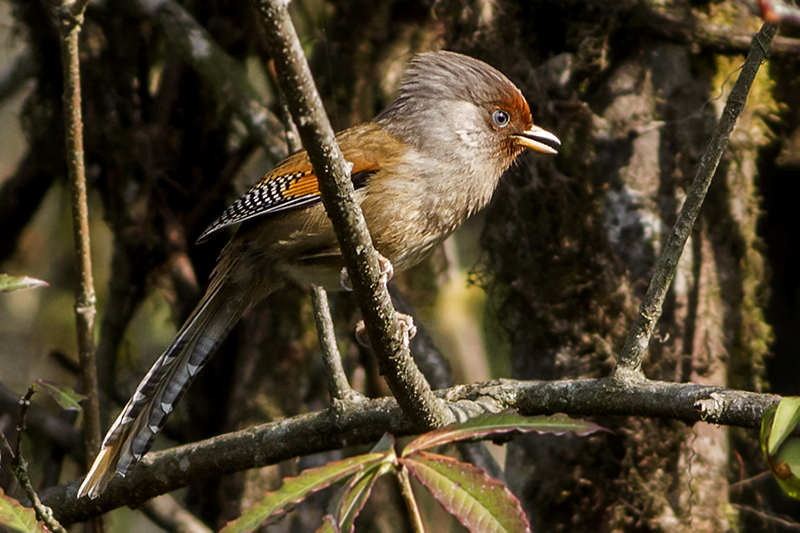
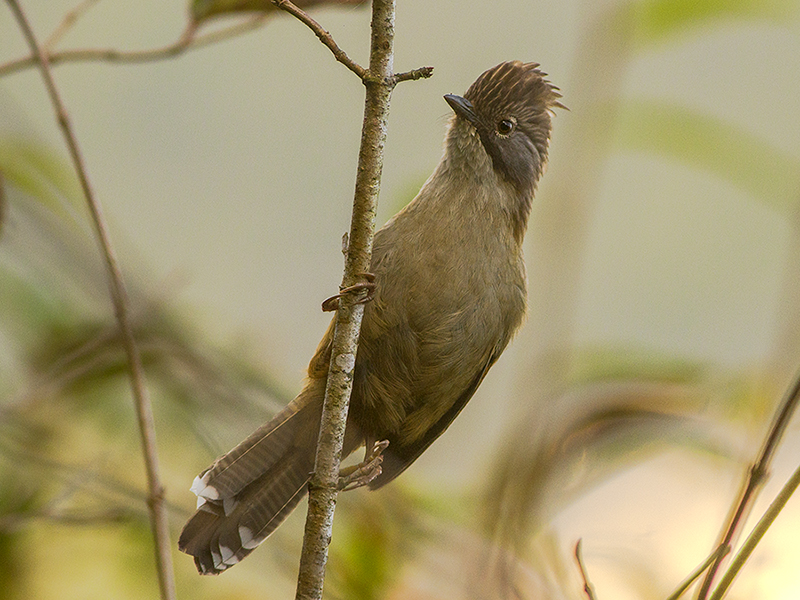
Adult Northern Pied-Babblers are easily recognized by their striking black and white plumage. The head, neck, and upper breast are a contrasting black, while the lower breast, belly, and flanks are a clean white. Their wings and back are black, creating a bold appearance. Juveniles are similar in size but have a more muted coloration, with their black areas appearing more grayish and less defined. There is little sexual dimorphism, making males and females difficult to distinguish based on plumage alone. In flight, the Northern Pied-Babbler displays broad, rounded wings and a relatively short tail, creating a unique silhouette. They often perch in an upright position, frequently accompanied by a characteristic tail flicking. While they are distinctive, Northern Pied-Babblers may be confused with similar species such as the Southern Pied-Babbler. However, the latter has a more extensive white on the wings and lacks the deep black coloration on the head.
Having trouble telling birds apart? Upload a photo to our bird identification tool for an instant species match.
Northern Pied-Babbler Habitat and Range
Preferred Habitat
The Northern Pied-Babbler inhabits a range of open woodland and savanna environments, often found at elevations up to 2,000 meters. They thrive in areas with a mix of bushy undergrowth and taller trees, which provide necessary cover and nesting sites. The species shows some adaptability, occasionally venturing into the edges of agricultural areas or semi-urban environments, particularly where natural habitats have been degraded. There is little evidence of significant seasonal habitat shifts, although they may congregate more around water sources during dry periods. Despite their adaptability, they are less common in dense forests or arid deserts, preferring habitats where they can forage on the ground while having easy access to cover.
Geographic Range
The Northern Pied-Babbler's range spans several countries in eastern Africa, including Kenya, Tanzania, and Uganda. The species is primarily a resident bird, with no significant migratory patterns. However, some local movements may occur in response to seasonal changes in food availability or environmental conditions. Within their range, they tend to occupy territories that they defend vigorously from other babbler groups. Population densities are highest in regions with optimal habitat, such as the savannas of southern Kenya and northern Tanzania, where they are considered common. In areas where habitat is less suitable, populations are less dense and more scattered.
Want to know which birds visit your area? Browse our backyard birds by location guides for region-specific species lists.
What Does the Northern Pied-Babbler Eat?
The diet of the Northern Pied-Babbler mainly consists of insects and other small invertebrates. They spend much of their time foraging on the ground, using a methodical approach to flip over leaf litter and probe the soil with their sturdy beaks. Their diet includes beetles, ants, termites, and occasionally small vertebrates such as lizards. During certain seasons, particularly the wet season, they may supplement their diet with berries and seeds, taking advantage of the seasonal abundance. Foraging usually occurs in the morning and late afternoon, when temperatures are cooler, which helps them avoid the midday heat.
Northern Pied-Babbler Behavior and Social Structure
Northern Pied-Babblers are highly social, often seen in groups ranging from five to fifteen individuals. These groups are typically composed of a dominant breeding pair and several non-breeding helpers, which assist in raising the young. They display strong territorial behavior, actively defending their home range from other babbler groups. Courtship displays involve elaborate singing duets between the breeding pair, often accompanied by synchronized movements. Their response to predators is communal; they employ alarm calls to alert the group and may even mob small predators. Daily activity patterns are characterized by early morning and late afternoon foraging, with midday spent resting or preening in the shade.
Northern Pied-Babbler Nesting and Reproduction
Northern Pied-Babblers construct cup-shaped nests, using materials such as grasses, twigs, and leaves. These nests are typically situated in the forks of trees or dense shrubs, providing concealment from predators. Clutch sizes range from two to four eggs, with both members of the breeding pair sharing incubation duties over a period of approximately 14 days. After hatching, the chicks are altricial, requiring extensive care and feeding, which is provided by both parents and helper birds. The fledging period lasts about 18 to 21 days, after which the young continue to be fed by the group members. The species usually raises one or two broods per year, depending on environmental conditions and food availability.
Northern Pied-Babbler Sounds and Vocalizations
The Northern Pied-Babbler's primary song is a melodious series of whistles and trills, often performed as a duet by the breeding pair. These songs serve both territorial and pair-bonding functions. Their call notes are varied, including sharp 'chack' sounds used for communication within the group. Alarm calls are harsh and rapid, used to alert the group of potential danger. During the dawn chorus, their songs are particularly prominent, contributing to the vibrant soundscape of the savanna. Their vocalizations can be compared to those of other babblers, though they are generally more structured and harmonious.
Interesting Facts About the Northern Pied-Babbler
- 1Northern Pied-Babblers are known for their cooperative breeding behavior, a rarity among many bird species in their range.
- 2They engage in highly coordinated group foraging, communicating through a series of complex vocalizations.
- 3The species plays an essential role in controlling insect populations, benefiting both natural and agricultural systems.
- 4Northern Pied-Babblers have been the subject of numerous behavioral studies, highlighting their social complexity.
- 5Their distinctive black-and-white plumage serves as effective camouflage in the dappled light of their savanna habitats.
- 6Despite their social nature, Northern Pied-Babblers maintain strict territorial boundaries, often engaging in vocal confrontations with rival groups.
- 7They are among the few bird species that exhibit true sentinel behavior, with individuals taking turns watching for predators while others forage.
Northern Pied-Babbler Conservation Status
The Northern Pied-Babbler is currently listed as Least Concern on the IUCN Red List, with populations considered stable. However, habitat loss due to agricultural expansion and urban development poses potential threats. Conservation efforts focus on habitat preservation and maintaining ecological integrity in their native ranges. Historical population trends suggest that the species has maintained a steady presence across its range, though localized declines may occur where habitat alteration is significant.