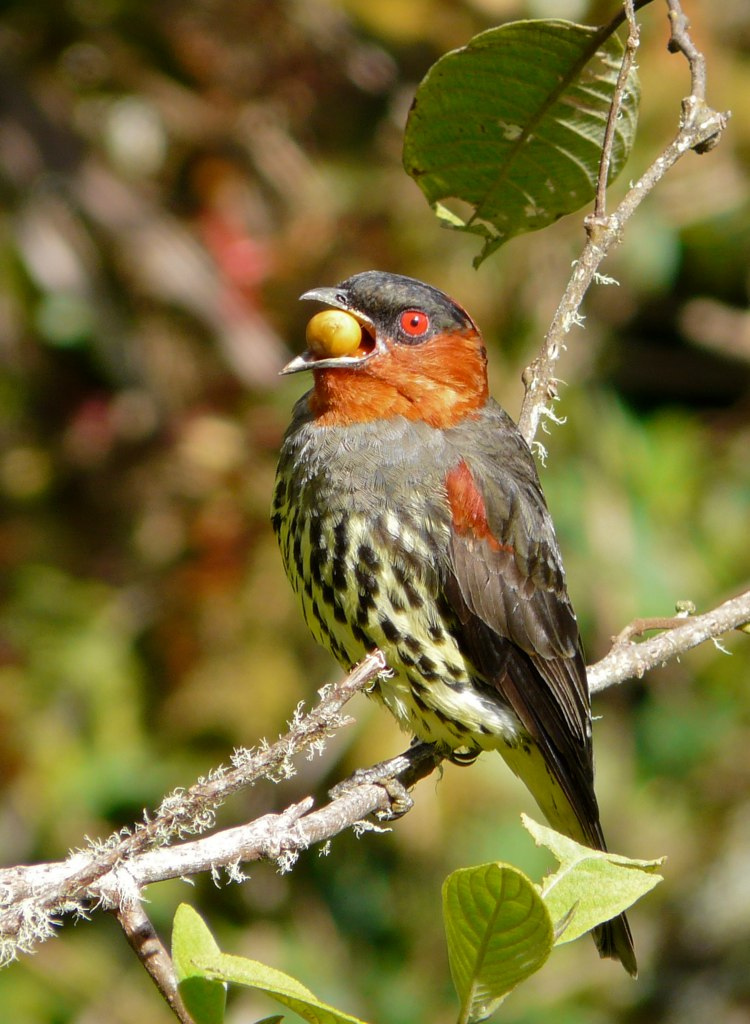
One-colored Becard
Pachyramphus homochrous
Order: Passeriformes / Family: Cotingidae

Wikimedia Commons
About the One-colored Becard
The One-colored Becard, Pachyramphus homochrous, belongs to the Cotingidae family and is a quintessential inhabitant of the neotropical regions. This species is widespread across Central and South America, occupying countries such as Panama, Costa Rica, Colombia, and Ecuador. It thrives in humid lowland forests, often found in the mid-story and canopy layers where it engages in foraging and breeding activities. The One-colored Becard plays a significant ecological role by contributing to seed dispersal, as its diet includes a variety of fruits and small insects. Its presence signifies the health of tropical forest ecosystems, which are essential for maintaining biodiversity. During the breeding season, which aligns with the rainy season in its habitat, the One-colored Becard is more conspicuous as it becomes more vocal and active in territorial displays. Although the One-colored Becard is not migratory, it may exhibit local movements influenced by food availability, particularly during dry spells when fruit is less abundant. This adaptability helps it maintain stable populations despite the challenges posed by habitat fragmentation and deforestation. As a part of the intricate web of tropical forest life, the One-colored Becard's interactions with other species, including potential predators and competitors, underscore its significance as both a seed disperser and a prey species. In essence, the One-colored Becard serves as both a guardian and a participant in the complex dynamics of tropical ecosystems.
The One-colored Becard belongs to the family Cotingidae, within the order Passeriformes. These birds typically live average 4 years with a max recorded of 8 years.
How to Identify a One-colored Becard
Identifying the One-colored Becard, Pachyramphus homochrous, requires attention to its subtle field marks. This bird is generally medium-sized, with a robust body and a thick, short bill characteristic of the Cotingidae family. The plumage is predominantly gray or olive, offering a monochrome appearance that blends seamlessly with the forest canopy. Males and females exhibit similar coloring, though males might have a slightly darker or more vibrant hue under optimal lighting conditions. Juvenile One-colored Becards resemble adults but tend to be duller with more diffuse feather patterns. In flight, the One-colored Becard presents a compact silhouette, with broad wings and a relatively short tail, which aids in agile maneuvers through densely foliaged areas. Perched, it often adopts an upright posture, allowing it to survey its surroundings efficiently. Confusion with similar species such as the Cinereous Becard can occur, but the One-colored Becard's lack of distinctive wing bars or contrasting cap helps distinguish it. Birders should note the bird's overall drab and uniform coloration as a key identifying trait.
Having trouble telling birds apart? Upload a photo to our bird identification tool for an instant species match.
One-colored Becard Habitat and Range
Preferred Habitat
The One-colored Becard favors tropical and subtropical forests, primarily in lowland and foothill regions up to about 1,500 meters in elevation. It is most commonly associated with humid primary forests but can also be found in secondary growth and forest edges, provided there is sufficient canopy cover. In areas where natural habitats are intact, such as the Darien region in Panama and the Choco forests of Colombia, the One-colored Becard thrives. While it is adaptable to some habitat changes, it generally avoids heavily urban or extensively cleared agricultural landscapes. Seasonal habitat shifts are minimal due to its non-migratory nature, although it may temporarily move to areas with more abundant food resources during dry conditions. The bird's preference for dense forest environments means that it is rarely seen in open or semi-open habitats, making it a special resident of richly vegetated ecosystems.
Geographic Range
The One-colored Becard's range spans a significant portion of Central and South America. Its breeding range includes Panama, Costa Rica, Colombia, and extends into northwestern Ecuador. This species does not partake in long-distance migration, maintaining a year-round presence within its range. However, local movements within this range are prompted by food availability. Population densities are greatest in undisturbed lowland tropical forests, with hotspots in the Choco biogeographic region, known for its high biodiversity. The One-colored Becard is absent from the Andean highlands, preferring the humid and lush environments of the rainforest. While its overall range is relatively stable, habitat destruction poses a threat to the continuity of its populations, particularly in areas experiencing rapid deforestation.
Want to know which birds visit your area? Browse our backyard birds by location guides for region-specific species lists.
What Does the One-colored Becard Eat?
The diet of the One-colored Becard is primarily frugivorous, with fruits making up a substantial portion of its intake. It feeds on a variety of forest fruits, often plucking them from trees and vines while perched or in short flights. In addition to fruits, it supplements its diet with insects and other small arthropods, which it gleans from foliage or catches mid-air. This dietary flexibility allows it to adapt to seasonal changes in food availability, shifting towards more insectivorous feeding during periods when fruit is scarce. The One-colored Becard employs a methodical foraging technique, moving through the mid to upper canopy levels with deliberate, purposeful movements. Its feeding schedule is largely diurnal, with peak activity in the early morning and late afternoon when the forest is cooler and more food sources are active.
One-colored Becard Behavior and Social Structure
The One-colored Becard exhibits a range of behaviors that reflect its adaptation to tropical forest life. It is primarily solitary or found in pairs, especially during the breeding season. Territoriality is marked by vocal displays and occasional chases, with males often singing to deter rivals and attract mates. Courtship involves subtle displays, where the male may offer food to the female as part of the pair-bonding ritual. Flocking behavior is uncommon, as the One-colored Becard prefers to maintain a small personal territory. When threatened by predators, it adopts a secretive behavior, remaining motionless among the foliage or slipping away quietly to avoid detection. Daily activities follow a predictable pattern, with peak periods of foraging and territorial defense occurring during the cooler parts of the day, while the heat of midday often sees the bird resting or preening in a shaded area.
One-colored Becard Nesting and Reproduction
Nesting for the One-colored Becard takes place during the rainy season, aligning with peak food availability. Nests are typically constructed in the mid-story or lower canopy, often concealed within dense foliage. The structure is a deep cup or domed shape, woven from twigs, moss, and leaves to provide camouflage and protection. Clutch size usually consists of two to three eggs, which the female incubates over a period of about 16 to 18 days. Both parents are involved in feeding the young, which fledge around two to three weeks after hatching. The One-colored Becard may rear one or two broods per year, depending on environmental conditions and food supply. Parental roles are generally collaborative, with both male and female sharing responsibilities for incubation and chick rearing.
One-colored Becard Sounds and Vocalizations
The vocalizations of the One-colored Becard are distinctive yet understated, consisting of short, melodious phrases that can be likened to a series of soft whistles or chirps. Its primary song is a gentle, rhythmic series of notes, often repeated in a pattern that carries well through the forest. Call notes are typically short and sharp, serving as contact calls between mates or warnings. Alarm calls are more abrupt and harsher, signaling potential threats to nearby conspecifics. During the dawn chorus, the One-colored Becard adds its voice to the symphony of forest sounds, although it is not the dominant singer. Its vocalizations serve primarily for mate attraction and territory defense, blending harmoniously with the ambient sounds of the tropics.
Interesting Facts About the One-colored Becard
- 1The One-colored Becard's diet includes over 50 different fruit species, making it a vital seed disperser in its ecosystem.
- 2Unlike many birds, the One-colored Becard lacks pronounced sexual dimorphism, making males and females challenging to distinguish.
- 3This bird is known to occasionally join mixed-species foraging flocks, benefiting from the collective vigilance against predators.
- 4The One-colored Becard can adapt to secondary forests, showing resilience to moderate habitat disturbance.
- 5Its nests are sometimes parasitized by cowbirds, which lay their eggs in the becard's nest, leading to brood parasitism challenges.
- 6The species exhibits a high degree of site fidelity, often returning to the same breeding territory year after year.
- 7The One-colored Becard's subtle vocalizations can help it avoid detection by predators, contributing to its survival strategy.
One-colored Becard Conservation Status
The One-colored Becard is currently classified as Least Concern by the IUCN, though its populations are subject to pressures from habitat destruction and fragmentation. Deforestation for agriculture and urban development poses the most significant threat, particularly in regions lacking strong conservation measures. Despite these challenges, the bird maintains stable populations in protected reserves and national parks where habitat integrity remains intact. Conservation efforts focus on preserving large tracts of contiguous forest and promoting sustainable land-use practices. Historical data suggest the One-colored Becard has experienced fluctuations in local population sizes correlating with habitat changes, underscoring the need for continued vigilance and habitat management to ensure its long-term survival.