Orange-billed Babbler
Turdoides rufescens
Order: Passeriformes / Family: Leiothrichidae

Wikimedia Commons
About the Orange-billed Babbler
The Orange-billed Babbler (Turdoides rufescens) is an endearing and gregarious bird endemic to the island of Sri Lanka. A member of the family Leiothrichidae, this species thrives in the lush, verdant tropical forests that blanket the island. Known for its striking orange bill and sociable nature, the Orange-billed Babbler plays a significant role in the ecosystems it inhabits, often found in mixed-species flocks, contributing to seed dispersal and insect population control. The bird's presence in Sri Lanka is a testament to the island's rich biodiversity. These babblers are commonly found in both primary and secondary forests, as well as in well-wooded gardens, indicating their adaptability to varying levels of human disturbance. Throughout the year, the Orange-billed Babbler remains a resident breeder in its range, exhibiting little to no migratory behavior. This constant presence makes it a reliable indicator of forest health in its native habitat. Despite being a non-migratory species, the Orange-billed Babbler shows distinct seasonal behaviors, particularly during the breeding season when its social dynamics shift. During this time, the babblers become more territorial, defending their chosen nesting sites with vigor. Outside of the breeding season, they are highly social, engaging in cooperative breeding and foraging. This behavior not only strengthens social bonds within the group but also enhances their survival by increasing foraging efficiency and predator vigilance. Ecologically, the Orange-billed Babbler plays a crucial role in its habitat. By feeding on a variety of insects and small invertebrates, it helps regulate pest populations, while its consumption of fruits aids in seed dispersal. As an integral part of mixed-species flocks, it contributes to the dynamic and interconnected ecosystem of Sri Lanka's forests. Its interactions with other species highlight the importance of maintaining biodiversity for ecosystem resilience.
The Orange-billed Babbler belongs to the family Leiothrichidae, within the order Passeriformes. These birds typically live around 6-8 years in the wild..
How to Identify a Orange-billed Babbler
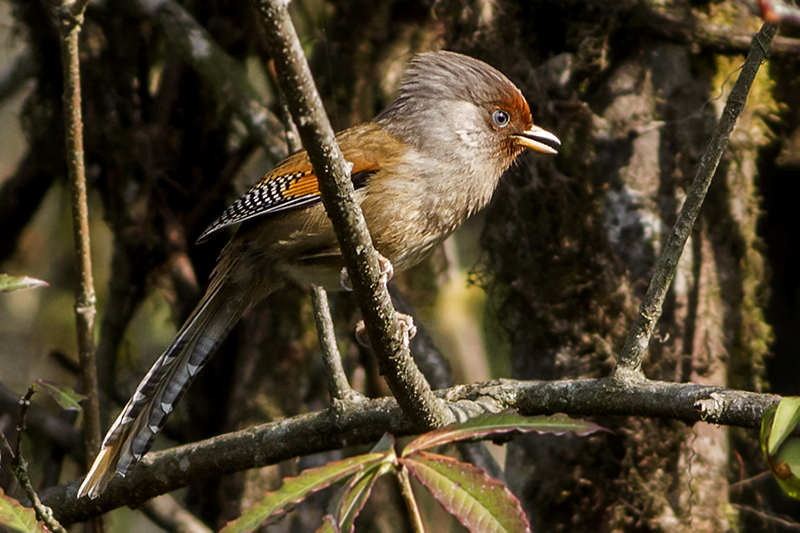
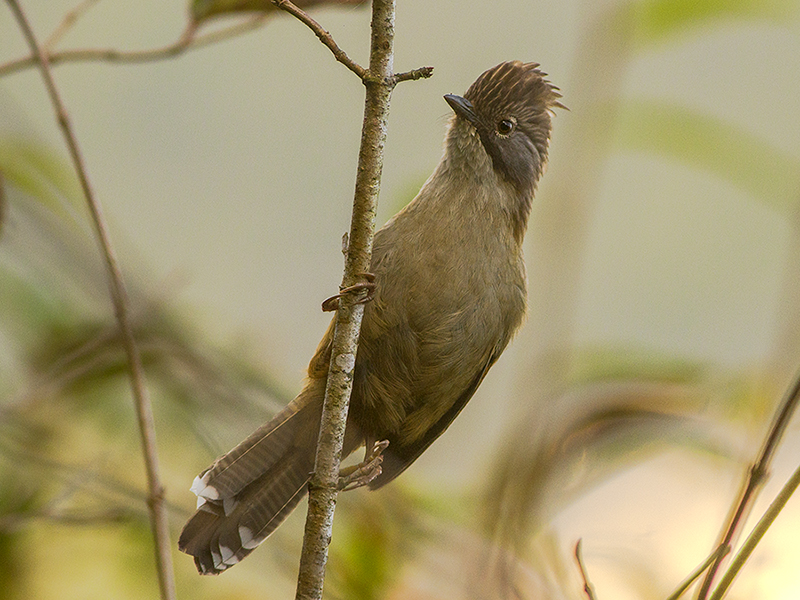
The Orange-billed Babbler is a medium-sized bird, typically measuring around 22 centimeters in length. Its most distinguishing feature is its vivid orange bill, which contrasts sharply with its predominantly brownish-gray plumage. The body is covered in soft, ruffled feathers that give it a slightly scruffy appearance. Adults of both sexes appear similar, making it challenging to distinguish between males and females based solely on plumage. Juveniles, however, can be identified by their duller coloration and less pronounced orange bills. In the field, the Orange-billed Babbler can be confused with the Yellow-billed Babbler (Turdoides affinis), especially at a distance. However, the latter species, which is also found in Sri Lanka, has a distinctly yellow bill and a generally paler appearance. When observing the Orange-billed Babbler in flight, its silhouette is characterized by broad, rounded wings and a relatively short tail compared to its body length. Its flight is typically short and low, often moving from one bush to another within its dense forest habitat. Perching postures are often horizontal, with the bird appearing relaxed and at ease, reflecting its social and cooperative nature.
Having trouble telling birds apart? Upload a photo to our bird identification tool for an instant species match.
Orange-billed Babbler Habitat and Range
Preferred Habitat
The Orange-billed Babbler primarily inhabits the tropical and subtropical moist broadleaf forests of Sri Lanka. It is found at elevations ranging from sea level up to about 2,000 meters, with a preference for dense, humid environments. These forests provide ample cover and foraging opportunities, making them ideal habitats for this social bird. Within these forests, the babbler frequents both primary and secondary growth areas, displaying a degree of adaptability to habitat alteration. It is also commonly observed in well-wooded gardens and near human settlements, showcasing its ability to thrive in moderately disturbed environments. Unlike some other forest birds, the Orange-billed Babbler does not exhibit significant seasonal habitat shifts, remaining in its preferred forested areas year-round. Its presence in urban gardens and rural plantations demonstrates its versatility and resilience in the face of habitat changes.
Geographic Range
The Orange-billed Babbler is exclusively found in Sri Lanka, where it is a resident species across the island. Its range extends throughout the lowland rainforests and into the foothills, covering the central and southern parts of the country more densely. While it does not migrate, the bird's population distribution within Sri Lanka shows higher densities in areas with rich, intact forest cover. Notable hotspots for observing the Orange-billed Babbler include the Sinharaja Forest Reserve and the Horton Plains National Park, where it is a frequent member of mixed-species flocks. Its presence in these protected areas underscores the importance of conservation efforts in maintaining suitable habitats for endemic species. The babbler's distribution is largely influenced by the availability of forested landscapes, with fewer sightings in heavily urbanized or deforested regions.
Want to know which birds visit your area? Browse our backyard birds by location guides for region-specific species lists.
What Does the Orange-billed Babbler Eat?
The diet of the Orange-billed Babbler is diverse and primarily consists of insects and small invertebrates, which it actively forages for within the leaf litter and among the branches of trees and shrubs. This diet is supplemented by a variety of fruits and berries, particularly during the fruiting season, when these become more abundant. This dietary flexibility allows the babbler to adapt to seasonal changes in food availability. The bird employs a cooperative foraging technique, often moving in small groups or as part of larger mixed-species flocks. This behavior enhances their efficiency in locating food sources and provides added protection against predators. Prey items typically range from small beetles and caterpillars to spiders and other arthropods. Feeding occurs throughout the day, with peaks in activity during the cooler hours of early morning and late afternoon, when insects are more active. The Orange-billed Babbler's foraging habits contribute significantly to controlling insect populations within its habitat, underscoring its role as a vital component of the ecosystem.
Orange-billed Babbler Behavior and Social Structure
Orange-billed Babblers are highly social birds, often found in flocks that can number from a few individuals to up to 20 members. This social structure is integral to their survival, providing mutual protection and increasing foraging success. Within these flocks, they exhibit a cooperative breeding system where non-breeding individuals assist in raising the young. Territorial behavior becomes more pronounced during the breeding season, with flocks defending nesting territories against intruders. Courtship displays among these babblers are subtle, involving mutual preening and soft vocalizations between potential mates. Flocking patterns are dynamic, especially outside the breeding season, when mixed-species flocking becomes common. This behavior aids in predator detection and enhances feeding opportunities. In response to predators, the babblers exhibit alarm calls and collective mobbing behavior, often successfully deterring potential threats. Daily activity patterns are diurnal, with peak activities occurring during the early morning and late afternoon, aligning with optimal feeding conditions and reduced predation risk.
Orange-billed Babbler Nesting and Reproduction
The nesting habits of the Orange-billed Babbler reflect its cooperative breeding system. Nests are typically constructed in dense foliage, often at heights ranging from 1 to 5 meters above the ground. The nest itself is a cup-shaped structure made from twigs, leaves, and fibers, often lined with softer materials such as grass or feathers. The preferred nesting sites are within the dense understory of forests or well-wooded areas, providing ample cover and protection from predators. Clutch size generally ranges from 2 to 4 eggs, which are incubated primarily by the breeding female. The incubation period lasts approximately 14 days, after which the chicks hatch. Both parents, along with helper individuals from the flock, participate in feeding the young. Fledging occurs about 12 to 15 days post-hatching, although the young often remain reliant on the flock for several weeks thereafter. The Orange-billed Babbler typically raises one to two broods per year, depending on environmental conditions and food availability.
Orange-billed Babbler Sounds and Vocalizations
The Orange-billed Babbler is known for its distinctive vocalizations, which are an essential part of its social behavior. The primary song is a melodious series of whistles and chatters, characterized by a rhythmic and harmonious quality. These vocalizations serve various purposes, including communication within the flock and territory defense. Call notes are often sharp and repetitive, used to maintain contact with flock members during foraging. Alarm calls are more abrupt and louder, signaling the presence of potential predators to others in the group. During the dawn chorus, the Orange-billed Babbler's song contributes to the vibrant acoustic landscape of its forest habitat, often blending with the calls of other species. These vocalizations are not only a delight to the ear but also provide valuable insights into the social structure and dynamics of the species.
Interesting Facts About the Orange-billed Babbler
- 1The Orange-billed Babbler is often referred to as the 'Seven Sisters' in Sri Lanka due to its gregarious nature and tendency to form small family groups.
- 2Despite being a tropical forest dweller, the Orange-billed Babbler can adapt to well-wooded urban gardens, showcasing its ecological flexibility.
- 3The species is a keystone in mixed-species foraging flocks, often leading joint movements and coordinating activities across different bird species.
- 4Orange-billed Babblers are known for their cooperative breeding, where non-breeding individuals help care for the young, a trait shared by only a few bird species.
- 5Their loud, chattering calls are a hallmark of the Sri Lankan forests, often heard before the birds are seen.
- 6The Orange-billed Babbler’s social structure allows for efficient predator detection, with alarm calls prompting collective mobbing of threats.
- 7During the breeding season, Orange-billed Babblers become more territorial, contrasting their usual cooperative and social behavior.
Orange-billed Babbler Conservation Status
The Orange-billed Babbler is currently listed as Least Concern on the IUCN Red List, with populations considered stable. However, the primary threats to its continued well-being include habitat loss due to deforestation and land conversion for agriculture and urbanization. Conservation efforts in Sri Lanka, such as the establishment of protected areas like the Sinharaja Forest Reserve, play a crucial role in preserving the habitats essential for the survival of this and many other endemic species. Historical population changes have remained relatively stable, but ongoing monitoring is required to ensure that these trends continue. Public awareness and community involvement in conservation initiatives are vital components in safeguarding the future of the Orange-billed Babbler and its habitat.