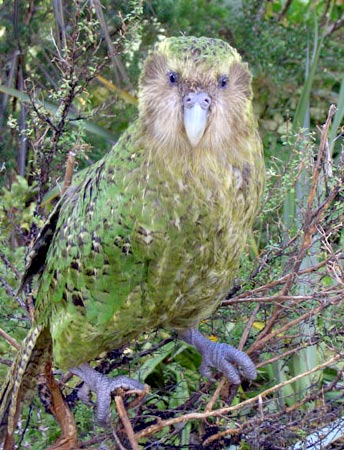
Palaeopsittacus georgei
Palaeopsittacus georgei
Order: Psittaciformes / Family: Psittacidae
About the Palaeopsittacus georgei
The Palaeopsittacus georgei, commonly known as George's Parrot, is a fascinating member of the Psittacidae family, renowned for its vivid green plumage and dynamic vocalizations. This bird is endemic to the dense, subtropical rainforests of Southeast Asia, particularly thriving in regions such as Thailand and Malaysia. Its presence marks an essential component of these ecosystems, as it plays a significant role in seed dispersal and forest regeneration. George's Parrot is particularly significant for its interaction with local flora, as it often feeds on fruits and nuts, inadvertently aiding in the propagation of various plant species.
Ecologically, Palaeopsittacus georgei is a keystone species within its habitat. Its feeding habits facilitate the growth and distribution of several tree species, contributing to forest diversity and health. The parrot's preference for certain fruit trees also encourages a dynamic interplay between plant and animal species, influencing ecological succession patterns and biodiversity. Additionally, the parrot's presence serves as a bioindicator of forest health, reflecting the vitality of the ecosystem in which it resides.
Seasonally, George's Parrot exhibits distinct behavioral patterns. During the wet season, when fruit abundance peaks, it engages in more extensive foraging activities, moving across different forest areas to exploit available resources. In contrast, the dry season sees a reduction in food availability, prompting the parrot to adapt its diet and foraging strategies. This ability to adjust to seasonal changes underscores the species' resilience and adaptability, traits that have allowed it to persist in a rapidly changing environment.
Beyond its ecological significance, the Palaeopsittacus georgei holds cultural and economic importance for local communities. Its vibrant appearance and engaging behavior make it a popular subject for ecotourism, drawing birdwatching enthusiasts from around the world. Efforts to preserve its habitat not only benefit the parrot but also support broader conservation goals, highlighting the interconnectedness of biodiversity and human well-being.
The Palaeopsittacus georgei belongs to the family Psittacidae, within the order Psittaciformes. These birds typically live Unknown, as this species is only known from fossils..
How to Identify a Palaeopsittacus georgei
The Palaeopsittacus georgei stands out in the avian world with its bright green plumage, which serves as a key identification feature. Adult birds are primarily green, with subtle yellowish undertones on the wings and tail. The head is slightly darker, often exhibiting a bluish tinge around the crown and nape. This coloration provides effective camouflage in the dense foliage of its rainforest habitat.
Juveniles of this species are distinguishable by their slightly duller coloration, lacking the pronounced bluish hues seen in adults. The beak is a pale horn color, which darkens as the bird matures. Males and females appear similar, with minor differences in size-the males being marginally larger and possessing slightly longer tail feathers.
In flight, George's Parrot exhibits a distinctive silhouette characterized by broad, rounded wings and a relatively short, squared tail. This shape is optimized for maneuvering through dense forest canopies, allowing it to navigate with agility and precision. When perched, the parrot maintains an upright posture, often tilting its head inquisitively, a behavior that is not only endearing but also aids in locating fruit hidden among the leaves. While this species can be confused with other green parrots in its range, the unique combination of its vivid green coloration, bluish head highlights, and specific vocalizations make it distinguishable to the keen observer.
Having trouble telling birds apart? Upload a photo to our bird identification tool for an instant species match.
Palaeopsittacus georgei Habitat and Range
Preferred Habitat
Palaeopsittacus georgei predominantly inhabits the lush, humid rainforests of Southeast Asia. It thrives in lowland tropical forests, particularly favoring areas with dense tree canopies and abundant fruit-bearing trees. This preference for richly vegetated environments reflects the bird's dietary reliance on fruits and seeds.
The parrot can be found at elevations ranging from sea level to 1,200 meters, although it is most commonly observed in lowland areas where food resources are plentiful. During the wet season, when food is abundant, George's Parrot may venture into secondary forests and forest edges. However, it generally avoids highly urbanized or agricultural areas, preferring the cover and resources that dense forests provide.
Despite its preference for undisturbed habitats, Palaeopsittacus georgei has shown some adaptability to altered landscapes. It can occasionally be spotted in degraded forests or areas undergoing reforestation, utilizing these spaces when primary forests are unavailable. Nonetheless, the bird's presence in such areas often depends on the availability of suitable nesting sites and food resources, which are critical for its survival and reproductive success.
Geographic Range
The Palaeopsittacus georgei has a fairly restricted range, primarily confined to the forests of Southeast Asia. Its core distribution includes parts of Thailand, Malaysia, and the northern regions of Sumatra in Indonesia. Within these countries, the bird is most frequently found in areas with extensive rainforest cover.
During the breeding season, which aligns with the wet months, George's Parrot remains largely within its established territories, taking advantage of the increased food supply to rear its young. In the non-breeding season, the parrot may exhibit some local movements, often traveling short distances in search of food as seasonal resources fluctuate.
Population density tends to be highest in areas where old-growth forests remain intact, with records of notable populations in protected reserves and national parks. These areas provide critical habitat and are focal points for conservation efforts. Migration is not characteristic of this species; however, its movements within its range are influenced by environmental conditions and food availability, underscoring the importance of habitat preservation in ensuring the parrot's long-term survival.
Want to know which birds visit your area? Browse our backyard birds by location guides for region-specific species lists.
What Does the Palaeopsittacus georgei Eat?
The diet of Palaeopsittacus georgei primarily consists of fruits, seeds, and nuts, which it forages from the abundant trees within its rainforest habitat. It shows a marked preference for figs, mangoes, and various palm fruits, utilizing its strong beak to crack open hard shells and access the nutritious contents within.
During the wet season, when fruit is most plentiful, George's Parrot can often be observed foraging in the upper canopy, where it skillfully maneuvers to reach ripe fruits. This period allows the parrot to maintain a diet rich in energy and nutrients, supporting its breeding activities. In contrast, the dry season prompts a dietary shift, with the parrot consuming more seeds and occasionally supplementing its diet with flowers and young leaves.
Foraging typically occurs in the early morning and late afternoon, coinciding with cooler temperatures and reduced predator activity. The parrot employs a methodical approach to feeding, using its feet to grasp food while manipulating it with its beak, an adaptation that enhances its foraging efficiency. Given its role as a seed disperser, the Palaeopsittacus georgei contributes significantly to forest dynamics by promoting plant diversity and facilitating regeneration.
Palaeopsittacus georgei Behavior and Social Structure
Palaeopsittacus georgei exhibits a complex social structure, characterized by its gregarious nature and strong pair bonds. This species is typically observed in small flocks, often comprising family groups or pairs. Such social cohesion plays a crucial role in foraging and predator avoidance, as the parrot benefits from the alertness and collective vigilance of the flock.
Territorial behavior is most pronounced during the breeding season, when pairs establish and defend nesting sites against intruders. Courtship displays are elaborate, involving synchronized flight patterns and vocal exchanges that reinforce pair bonds and facilitate mate selection. These displays often occur in the early morning, coinciding with peak vocal activity.
In response to predators, George's Parrot relies on its acute vision and agility, often taking to the air with rapid, erratic flight patterns to evade capture. It exhibits a diurnal activity pattern, with most foraging and social interactions occurring during daylight hours. The parrot's vocalizations, which include a variety of calls, serve both social and defensive functions, enabling communication over long distances within the dense forest environment.
Palaeopsittacus georgei Nesting and Reproduction
The nesting habits of Palaeopsittacus georgei reflect its adaptation to the forest environment. The parrot typically nests in tree cavities, utilizing natural hollows or those abandoned by other species. It shows a preference for large trees with ample cover, which provide protection from predators and environmental hazards.
Nesting sites are usually chosen for their proximity to reliable food sources, ensuring that parents can efficiently provision their young. The female lays a clutch of 2 to 4 eggs, which she incubates for approximately 24 to 28 days. During this period, the male plays a supportive role, providing food and guarding the nest area.
After hatching, both parents participate in feeding and caring for the chicks, which remain in the nest for about 8 to 10 weeks before fledging. The extended parental care ensures that the young develop the necessary skills and strength for survival. George's Parrot typically raises one brood per year, although favorable conditions may occasionally lead to a second brood.
Palaeopsittacus georgei Sounds and Vocalizations
The vocalizations of Palaeopsittacus georgei are a defining characteristic, comprising a range of sounds from melodic calls to harsher alarm notes. The primary song is a series of clear, flute-like notes delivered with a rhythmic cadence, often described as soothing and harmonious.
Call notes vary in function, with contact calls facilitating communication between flock members and stronger alarm calls alerting to potential threats. These alarm calls are sharp and piercing, cutting through the ambient noise of the forest to warn other birds of danger.
The parrot's vocal activity peaks during the dawn chorus, when its songs resonate through the forest canopy, establishing territory and reinforcing social bonds. Compared to familiar bird calls, George's Parrot's song is reminiscent of a woodwind instrument, with a clarity and purity that sets it apart from other avian species.
Interesting Facts About the Palaeopsittacus georgei
- 1Palaeopsittacus georgei can live up to 40 years in the wild, making longevity a key trait of this species.
- 2Despite its vibrant appearance, the parrot effectively camouflages among the green foliage of its rainforest habitat.
- 3George's Parrot plays a critical role in seed dispersal, aiding in the propagation of over 30 tree species.
- 4The species is known for its intelligence, capable of solving complex foraging puzzles to access food.
- 5During the breeding season, Palaeopsittacus georgei increases vocal activity, using a wide range of calls to communicate.
- 6This parrot shows a preference for nesting in cavities, which are often in short supply in degraded habitats.
- 7The bird is a favorite among ecotourists, drawing birdwatchers to Southeast Asia to witness its vibrant colors and behaviors.
Palaeopsittacus georgei Conservation Status
Currently, Palaeopsittacus georgei is classified as Near Threatened by the IUCN, with populations experiencing a gradual decline due to habitat loss and fragmentation. Deforestation for agriculture and urban development poses the most significant threat, reducing the availability of suitable nesting and foraging sites. Conservation efforts focus on habitat preservation and restoration, with several protected areas established within its range to safeguard critical habitats. These initiatives aim to mitigate the impact of human activities and promote sustainable land-use practices that benefit both the parrot and local communities. Historically, populations have fluctuated in response to environmental pressures, underscoring the need for ongoing monitoring and adaptive management strategies. By maintaining healthy forest ecosystems, conservation programs not only support George's Parrot but also enhance biodiversity and ecosystem resilience.
Other Psittacidae Species


Birds Similar to the Palaeopsittacus georgei
These species are often confused with the Palaeopsittacus georgei due to similar appearance or overlapping range.