
Pale-legged Shrike-Vireo
Vireolanius mikettae
Order: Passeriformes / Family: Vireonidae
About the Pale-legged Shrike-Vireo
The Pale-legged Shrike-Vireo, or Vireolanius mikettae, is a distinctive member of the family Vireonidae, known for its striking green and yellow plumage. This bird is primarily found in the tropical forests of South America, with its range extending from northern Colombia to eastern Ecuador and northern Peru. Its presence in these regions underscores its preference for humid, lowland rainforests, where it thrives in the dense canopy. This species plays a significant ecological role as both predator and prey. By consuming a variety of insects, it helps control insect populations, while its own population supports higher trophic levels, including avian predators.
The Pale-legged Shrike-Vireo is a vital indicator of forest health. Its presence often signifies an intact and thriving ecosystem. The bird's seasonal behaviors reflect its adaptation to the tropical climate. It remains relatively sedentary throughout the year, showing only minor local movements in response to food availability. Unlike many migratory birds, the Pale-legged Shrike-Vireo does not engage in long-distance migrations, which makes it a reliable resident in its preferred habitats.
The bird's significance extends beyond its ecological role. It is a subject of interest for birdwatchers and ornithologists due to its vivid coloration and elusive nature. Observing this species often requires patience and a keen understanding of its behavioral patterns, as it tends to remain in the upper canopy, flitting among branches in search of food. Conservationists also monitor the Pale-legged Shrike-Vireo closely, as its presence or absence can reflect broader changes in tropical forest environments.
Its ecological importance, combined with its striking appearance, makes the Pale-legged Shrike-Vireo a key species for further study and conservation efforts. This bird exemplifies the intricate connections within tropical ecosystems, serving as both a predator and prey, a resident species, and an indicator of environmental health.
The Pale-legged Shrike-Vireo belongs to the family Vireonidae, within the order Passeriformes. These birds typically live average 5 years with max recorded of 8 years..
How to Identify a Pale-legged Shrike-Vireo
The Pale-legged Shrike-Vireo is easily identified by its vibrant green upperparts and contrasting yellow underparts. The bird's head features a notable grayish crown, which provides a subtle contrast to its olive-green back. Its eyes are highlighted by a bright yellow eye-ring, adding to its distinctive facial appearance. The pale legs, which give the bird its common name, are a unique identifying feature.
Male and female Pale-legged Shrike-Vireos display similar plumage, making it challenging to differentiate between the sexes visually. Juveniles, however, can be distinguished by their slightly duller coloration and less pronounced eye-ring. In flight, the Pale-legged Shrike-Vireo exhibits a rapid and direct flight pattern, characterized by short, flitting movements between trees. Its perching posture is upright and alert, often with the head tilted slightly upward as it scans its surroundings.
This species may be confused with other members of the Vireolanius genus, such as the Chestnut-sided Shrike-Vireo, but can be distinguished by its lack of chestnut coloration and its characteristic pale legs. The bird's size, approximately 15-16 cm in length, classifies it as a medium-sized songbird, further aiding identification in the field.
Having trouble telling birds apart? Upload a photo to our bird identification tool for an instant species match.
Pale-legged Shrike-Vireo Habitat and Range
Preferred Habitat
The Pale-legged Shrike-Vireo predominantly inhabits lowland tropical rainforests, where it thrives in dense, humid environments. It prefers the upper canopy of these forests, exploiting the rich availability of insects and fruits. The bird is typically found at elevations ranging from sea level to about 1000 meters.
Despite its preference for dense forests, the Pale-legged Shrike-Vireo shows some adaptability to secondary growth and forest edges. This flexibility allows it to occupy areas where primary forest has been partially disturbed. However, it is rarely found in urban environments, as it favors the continuous forest cover and complex structure provided by mature rainforests.
Seasonal habitat shifts are minimal for this species, as it does not engage in significant migratory behavior. However, local movements within the forest may occur in response to changes in food resources, particularly during the rainy season when insect abundance peaks.
Geographic Range
The Pale-legged Shrike-Vireo is endemic to South America, with its breeding range concentrated in the tropical forests of northern Colombia, eastern Ecuador, and northern Peru. The bird's distribution overlaps significantly with the Amazon Basin, though it tends to avoid the most densely forested central regions in favor of slightly more open forest margins.
This species does not undertake long-distance migrations; thus, its wintering range coincides closely with its breeding areas. However, it may engage in local movements within its range to exploit seasonal food resources. The population density is highest in areas of undisturbed forest, though it can persist in secondary growth provided sufficient canopy cover remains.
Hotspots for observing the Pale-legged Shrike-Vireo include the Amazonian foothills of the Andes, where birdwatchers can encounter it alongside a diverse array of tropical bird species. Its presence in these areas highlights the ecological richness of these transitional zones.
Want to know which birds visit your area? Browse our backyard birds by location guides for region-specific species lists.
What Does the Pale-legged Shrike-Vireo Eat?
The Pale-legged Shrike-Vireo's diet primarily consists of insects, which it gleans from the leaves and branches of the forest canopy. It favors a varied diet, including caterpillars, beetles, and other arthropods, which it captures using its sharp, slightly hooked bill.
Seasonal changes in diet occur as the bird takes advantage of fluctuations in insect populations. During periods of high fruit availability, the Pale-legged Shrike-Vireo supplements its diet with small fruits, contributing to seed dispersal in its habitat. This opportunistic feeding strategy ensures a steady food supply throughout the year.
Foraging typically occurs during the cooler hours of the morning and late afternoon, when insect activity is at its peak. The bird employs a methodical approach, moving deliberately among the foliage to locate prey. Its feeding behavior often involves short flights to capture insects in mid-air or glean them from the undersides of leaves.
Pale-legged Shrike-Vireo Behavior and Social Structure
The Pale-legged Shrike-Vireo exhibits a primarily solitary lifestyle, though it occasionally forms loose associations with mixed-species flocks. These temporary groupings offer enhanced protection from predators and increase foraging efficiency.
Territorial behavior is evident, as males defend their chosen areas through vocal displays and occasional physical confrontations. The bird's song, a series of melodious whistles, serves both to establish territory and attract mates. Courtship displays involve the male showcasing its vibrant plumage and engaging in aerial maneuvers to appeal to potential partners.
Daily activity patterns include foraging during cooler parts of the day and resting during the heat. The bird's response to predators involves a combination of cryptic behavior and quick, darting flights to dense cover. By remaining within the canopy and utilizing its green plumage for camouflage, it effectively avoids many avian predators.
Pale-legged Shrike-Vireo Nesting and Reproduction
The nesting habits of the Pale-legged Shrike-Vireo are tied closely to its forest habitat. It constructs a cup-shaped nest, typically placed high in the canopy to reduce predation risk. Nests are crafted from materials such as twigs, leaves, and spider silk, providing both strength and camouflage.
A typical clutch consists of two to three eggs, which are incubated primarily by the female. The incubation period lasts approximately 14 days, followed by a fledging period of about two weeks. Both parents participate in feeding and caring for the young, ensuring a high rate of survival.
The Pale-legged Shrike-Vireo typically raises one brood per year, though favorable conditions may allow for a second. Nesting success is closely linked to the availability of food and the level of disturbance in the surrounding habitat.
Pale-legged Shrike-Vireo Sounds and Vocalizations
The song of the Pale-legged Shrike-Vireo is a distinctive series of melodious whistles, characterized by a clear, rising and falling pitch. This song serves as both a territorial marker and a mating call. Additionally, the bird produces a variety of call notes, including sharp chips used to communicate with potential mates or warn of nearby predators.
Alarm calls are more abrupt and harsh, designed to alert other birds to danger. During the dawn chorus, the Pale-legged Shrike-Vireo's song can often be heard as a prominent part of the tropical soundscape, intermingling with the calls of other forest residents.
Interesting Facts About the Pale-legged Shrike-Vireo
- 1The Pale-legged Shrike-Vireo can often be found in mixed-species flocks, enhancing its foraging success.
- 2This bird's name is derived from its unique pale-colored legs, a distinguishing feature among vireos.
- 3Pale-legged Shrike-Vireos are sedentary, with no long-distance migrations, allowing them to maintain stable territories year-round.
- 4The species helps control insect populations and contributes to seed dispersal, playing a crucial ecological role in tropical forests.
- 5Its melodious song is a key identifier for birdwatchers, often heard in the early morning hours.
Pale-legged Shrike-Vireo Conservation Status
The Pale-legged Shrike-Vireo is currently listed as Least Concern by the IUCN, though its population is subject to pressures from habitat loss and fragmentation. Deforestation for agriculture and logging poses significant threats to its rainforest habitat. Conservation efforts focus on the preservation of large, contiguous tracts of tropical forest. Initiatives aimed at sustainable land use and the establishment of protected areas are crucial for maintaining the bird's habitat. Despite these challenges, the Pale-legged Shrike-Vireo's adaptability to secondary forests offers some hope for its resilience in the face of environmental change.
Other Vireonidae Species
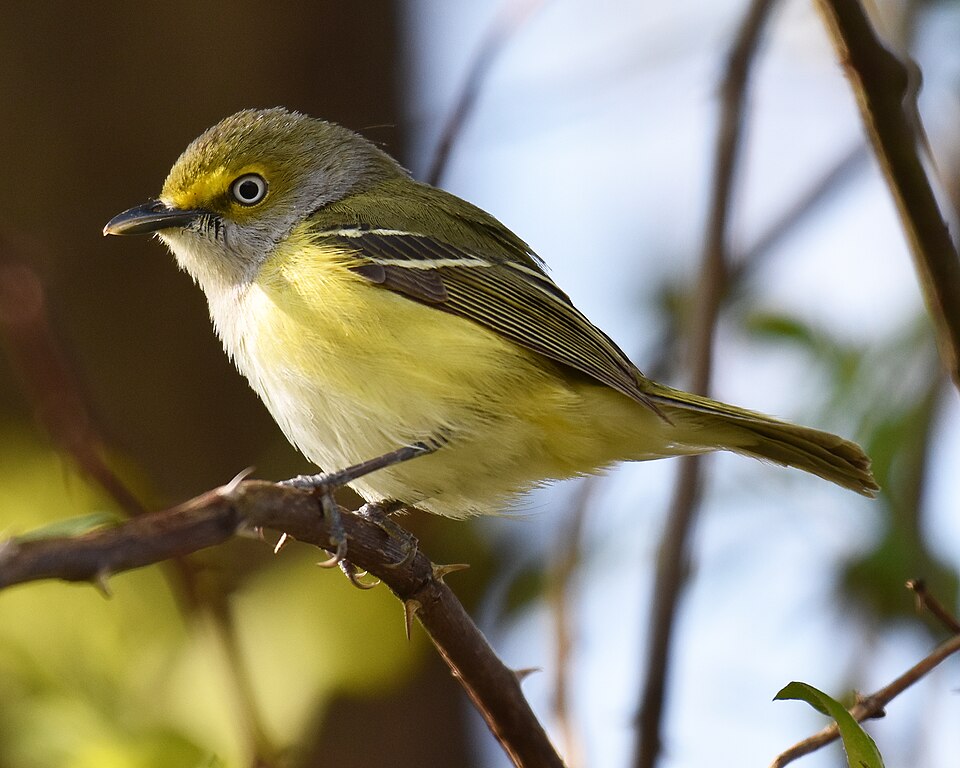

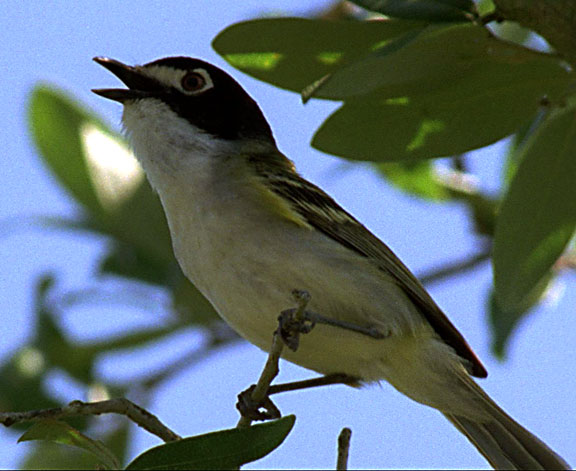

Birds Similar to the Pale-legged Shrike-Vireo
These species are often confused with the Pale-legged Shrike-Vireo due to similar appearance or overlapping range.

