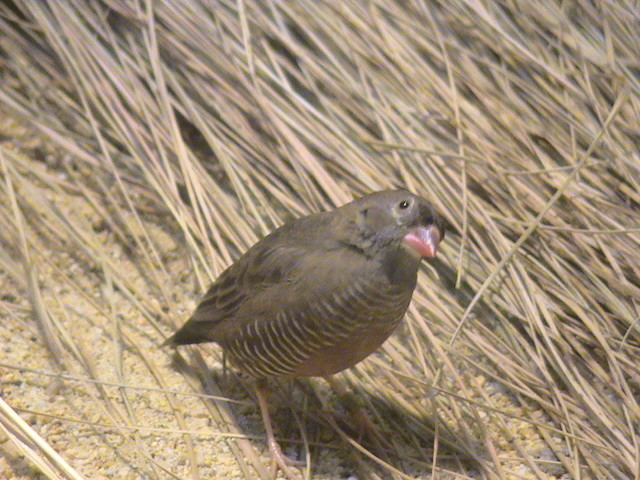
Paludipasser uelensis
Paludipasser uelensis
Order: Passeriformes / Family: Estrildidae
About the Paludipasser uelensis
The Uele Indigobird, scientifically known as Paludipasser uelensis, is a remarkable member of the Estrildidae family, primarily inhabiting the humid regions of central Africa. This bird is known for its close association with specific host species, particularly the Brown Firefinch, whose calls it mimics with impressive accuracy. The Uele Indigobird is predominantly found in the Democratic Republic of the Congo, especially in the Uele region, from which it derives its name. The striking visual appearance and behavioral adaptations make it a subject of interest among ornithologists and bird enthusiasts alike.
The Uele Indigobird plays a crucial role in the ecosystems it inhabits, especially in savanna and open woodland habitats. As a brood parasite, it relies on the nests of its host species for reproductive success. This relationship influences the population dynamics of its host and contributes to the complex ecological interactions within these environments. The Uele Indigobird is often seen in mixed-species flocks during the non-breeding season, which facilitates seed dispersal and pest control, thereby maintaining the ecological balance in its native habitats.
Seasonally, the Uele Indigobird exhibits changes in behavior, particularly during the breeding season, which peaks during the wet months when food resources are abundant. This seasonality ensures that the young have a higher chance of survival due to the increased availability of insects and seeds. The bird's presence in central Africa not only highlights its ecological importance but also underscores the rich biodiversity of the region, where it contributes to the vibrant tapestry of avian life.
The Paludipasser uelensis belongs to the family Estrildidae, within the order Passeriformes. These birds typically live estimated 4-6 years, though exact data is scarce..
How to Identify a Paludipasser uelensis
Identifying the Uele Indigobird in the field requires attention to specific plumage details and behaviors. Adult males are adorned with brilliant blue-black plumage that shimmers with a metallic sheen under direct sunlight. This iridescent coloration is one of the most striking features of the species, making them relatively easy to spot when perched in open areas.
Females and juveniles, however, exhibit a more subdued appearance, with brown and gray tones that provide effective camouflage in their natural habitat. This sexual dimorphism is common in the Estrildidae family and serves different ecological roles. The females' cryptic plumage aids in avoiding predation, especially during nesting periods.
In flight, the Uele Indigobird displays a rapid, undulating pattern typical of many small passerines. Their perching posture is upright, often accompanied by subtle head movements as they survey their surroundings. Despite their distinctive coloration, they can sometimes be confused with other indigobirds or viduids, but their specific mimicry of host species' calls aids in accurate identification.
Having trouble telling birds apart? Upload a photo to our bird identification tool for an instant species match.
Paludipasser uelensis Habitat and Range
Preferred Habitat
The Uele Indigobird predominantly inhabits lowland savannas and open woodlands, thriving in areas with scattered trees and bushy understory. These environments provide ample opportunities for foraging and nesting. While generally found at elevations ranging from sea level to 1500 meters, they prefer regions with a mix of grasses and shrubs, which support their insectivorous and granivorous diet.
Seasonal shifts can occur, with these birds moving slightly to different elevations or habitat types in response to resource availability. For instance, during wetter months, they might venture into more densely wooded areas where insect prey becomes more abundant.
Although not typically associated with urban environments, the Uele Indigobird can occasionally be seen near rural settlements, especially where their host species are present. Their presence in such areas highlights the adaptability of the species to various habitat types, provided that the essential ecological components are intact.
Geographic Range
The Uele Indigobird's range is primarily centered in central Africa, with a strong presence in the Democratic Republic of the Congo, particularly the Uele region. This area provides the ideal conditions for their life cycle, with a suitable climate and host species availability.
Outside of the Congo, their range extends into neighboring regions where similar ecological conditions exist, although sightings become less frequent. The species does not engage in long-distance migration, instead exhibiting more localized movements in response to seasonal changes in food availability and breeding opportunities.
Population densities are highest in regions where the Brown Firefinch, their primary host, is abundant. These hotspots of interaction play a pivotal role in the bird's life history, as the success of their reproductive strategy depends heavily on the presence of suitable host nests during the breeding season.
Want to know which birds visit your area? Browse our backyard birds by location guides for region-specific species lists.
What Does the Paludipasser uelensis Eat?
The diet of the Uele Indigobird is primarily granivorous, with seeds forming the bulk of their food intake. They exhibit a preference for the seeds of grasses and small shrubs, which are plentiful in their savanna and woodland habitats. During the wet season, their diet becomes more diverse with the inclusion of insects, providing a necessary protein boost for breeding and chick development.
Foraging techniques include both ground feeding and gleaning from vegetation, with the birds often seen hopping among grasses or fluttering briefly to capture insects. The Uele Indigobird's feeding schedule is largely diurnal, with peak activity during the cooler hours of the early morning and late afternoon.
The ability to switch diets seasonally is a vital adaptation that allows the Uele Indigobird to thrive in environments where resource availability can fluctuate significantly. This dietary flexibility ensures that the species maintains its role in seed dispersal and pest control within its ecosystem.
Paludipasser uelensis Behavior and Social Structure
The Uele Indigobird exhibits fascinating social and territorial behaviors that are central to its ecological interactions. These birds are known to be brood parasites, laying their eggs in the nests of specific host species like the Brown Firefinch. This behavior requires precise timing and stealth, as females must lay their eggs when the host is absent.
Socially, the Uele Indigobird is often seen in small groups, particularly outside the breeding season. These flocks can include mixed species, which provides protection against predators and increases foraging efficiency. During the breeding season, males engage in elaborate displays to attract females, involving song and flight patterns that showcase their vibrant plumage.
In response to predators, the Uele Indigobird employs a range of tactics, including alarm calls and group mobbing. Daily activity patterns are influenced by temperature and food availability, with birds most active during cooler parts of the day. Such behaviors highlight the complex social dynamics and adaptive strategies of this intriguing species.
Paludipasser uelensis Nesting and Reproduction
Nesting for the Uele Indigobird involves a unique strategy of brood parasitism, where females lay their eggs in the nests of other bird species, specifically the Brown Firefinch. The female Uele Indigobird carefully selects a nest, usually during the host's laying period, to deposit her eggs. This strategy allows the young to benefit from the care and feeding provided by the unsuspecting host.
The clutch size of the Uele Indigobird is typically small, often consisting of one to three eggs per host nest. The incubation period aligns with that of the host species, ensuring that the indigobird chicks hatch synchronously with the host's own young. Fledging occurs over a period of approximately 18 to 22 days, during which the indigobird chicks compete with the host's offspring for food and parental care.
Parental roles in this case are entirely outsourced to the host species, a fascinating evolutionary adaptation that reduces the direct reproductive costs for the Uele Indigobird. This strategy, however, limits the number of broods per year to the availability of suitable host nests.
Paludipasser uelensis Sounds and Vocalizations
The vocalizations of the Uele Indigobird are a key aspect of its behavior, particularly its ability to mimic the calls of its host species, the Brown Firefinch. The primary song is complex and varied, often incorporating elements of the host's calls with unique indigobird notes.
Call notes are typically high-pitched and include a series of rapid, melodious whistles that can vary in rhythm and pitch. Alarm calls are more abrupt and harsh, serving to warn other birds of potential threats.
During the dawn chorus, the Uele Indigobird's song is most prominent, as males use this time to establish territory and attract mates. The mimicry skills of these birds are so refined that they can often be mistaken for their host species, a testament to their evolutionary adaptation and ecological intrigue.
Interesting Facts About the Paludipasser uelensis
- 1The Uele Indigobird's mimicry abilities extend beyond vocalizations, as they can also replicate the behavior of their host species.
- 2A single Uele Indigobird female can lay eggs in multiple nests, increasing her reproductive success without parental investment.
- 3The iridescent sheen of the Uele Indigobird's plumage is caused by microscopic structures in the feathers that reflect light.
- 4Despite being brood parasites, Uele Indigobirds sometimes aid in raising unrelated chicks by joining mixed-species flocks.
- 5The specific mimicry of host calls by Uele Indigobirds is so accurate that it often confuses even experienced birdwatchers.
- 6Uele Indigobird chicks often outcompete the host's chicks by hatching slightly earlier and being more aggressive in begging for food.
- 7Research into Uele Indigobird mimicry is providing insights into the complex evolution of vocal learning in birds.
Paludipasser uelensis Conservation Status
Currently, the Uele Indigobird is not considered threatened, with a stable population trend according to the IUCN Red List. However, habitat destruction and changes in land use pose potential threats to their populations, primarily through the impact on host species. Conservation efforts are focused on habitat preservation and ensuring the health of ecosystems that support both the Uele Indigobird and its host species. Historical population trends have shown resilience, with the species adapting to changes within its environment to some extent. Continued monitoring is essential to ensure that this unique bird maintains its role within its habitat, as disruptions to the delicate balance between the indigobird and its hosts could lead to unforeseen consequences for both.
Other Estrildidae Species


Birds Similar to the Paludipasser uelensis
These species are often confused with the Paludipasser uelensis due to similar appearance or overlapping range.