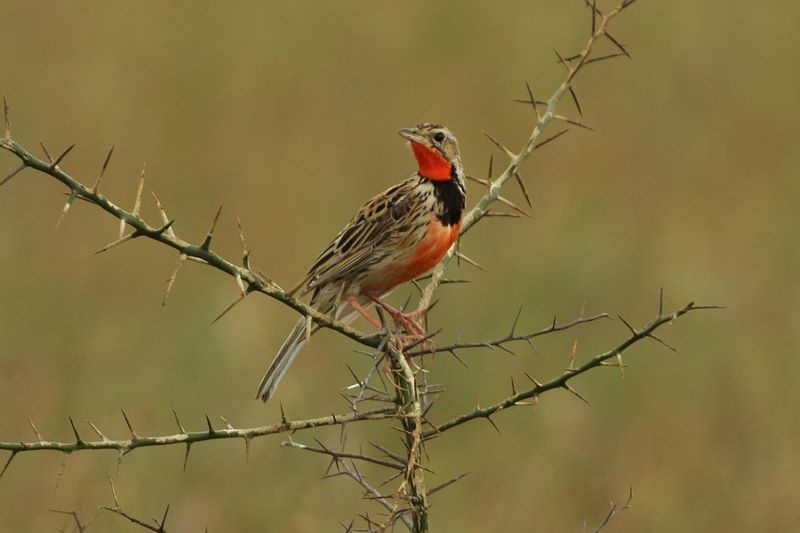
Pangani Longclaw
Macronyx aurantiigula
Order: Passeriformes / Family: Motacillidae

Wikimedia Commons
About the Pangani Longclaw
The Pangani Longclaw (Macronyx aurantiigula) is an intriguing bird species belonging to the Motacillidae family and is primarily found in the grasslands and savannas of East Africa. It is particularly prevalent in areas of Tanzania and Kenya, where these habitats provide an ideal setting for its lifestyle. The bird plays a significant ecological role by contributing to insect population control and serving as a prey species for larger predators. In these regions, the Pangani Longclaw is an integral part of the avian community, where it shares its environment with other grassland specialists.
The Pangani Longclaw is a songbird that is both a visual and auditory delight. Its melodious song is a common sound in its habitat, adding to the acoustic landscape of the savannas. The species is not only a delight for bird watchers but also an important part of the ecosystem, as it helps in pollination and seed dispersal through its feeding habits. The seasonal behaviors of the Pangani Longclaw are closely tied to the rainy and dry seasons typical of its home regions. During the rainy season, the availability of food increases, leading to heightened breeding activities.
Ecologically, the Pangani Longclaw serves as a bioindicator, reflecting the health of its grassland habitats. The bird’s presence or absence can indicate changes in the ecosystem, such as alterations in vegetation cover or insect populations. This bird species is crucial for maintaining the balance within its habitat, and its interactions with other species highlight the interconnectedness of savanna ecosystems. By understanding the Pangani Longclaw’s role and behavior, conservationists can better monitor and manage these environments.
The Pangani Longclaw belongs to the family Motacillidae, within the order Passeriformes. These birds typically live 5-7 years in the wild..
How to Identify a Pangani Longclaw
The Pangani Longclaw is a medium-sized bird characterized by its striking orange throat, which serves as its most distinguishing field mark. The adults exhibit a bright yellow belly, with olive-brown upperparts that provide excellent camouflage in grassy environments. The bird's head features prominent white supercilia that contrast with the darker crown and eye line. In flight, the Pangani Longclaw displays broad, rounded wings and a relatively short tail.
Juveniles differ slightly from adults, with more subdued coloration and less pronounced orange on the throat. The difference between male and female Pangani Longclaws is subtle, with males generally exhibiting more vibrant coloration. These birds can sometimes be confused with the Yellow-throated Longclaw, but the latter has a more extensive yellow on the throat and lacks the distinct orange hue.
When perched, the Pangani Longclaw often adopts an upright posture, scanning the grass for insects. Its song, a series of melodious whistles, can often be heard before the bird is spotted, guiding birdwatchers to its location. Observing these field marks and behaviors is essential for accurate identification in the field.
Having trouble telling birds apart? Upload a photo to our bird identification tool for an instant species match.
Pangani Longclaw Habitat and Range
Preferred Habitat
The Pangani Longclaw thrives in open grasslands and savanna habitats, where it can be found from sea level up to altitudes of about 2000 meters. These environments provide the tall grasses and scattered shrubs that the species prefers for foraging and nesting. During the wet season, the Pangani Longclaw may be more frequently observed at wetter grassland edges and in areas with fresh vegetation growth.
Although primarily associated with rural settings, the Pangani Longclaw can sometimes be found near agricultural lands, where it benefits from the abundance of insects. Unlike some other grassland birds, it rarely ventures into urban areas, preferring the quieter and more expansive rural landscapes where it can maintain its natural behaviors. Seasonal habitat shifts are minimal, as the bird remains relatively sedentary throughout the year, relying on the consistent presence of its preferred grassland environment.
Geographic Range
The Pangani Longclaw's range is confined to the East African region, with its core population centered in Tanzania and southern Kenya. It inhabits the grasslands and savannas within these countries, where it is considered a resident species. Although there is some local movement in response to seasonal changes in habitat conditions, the bird is not migratory.
The breeding range of the Pangani Longclaw is tightly linked to these grassland areas, which provide the necessary resources for raising young. Population density is highest in regions with well-preserved grassland ecosystems, such as the Serengeti and Ngorongoro Crater in Tanzania. In Kenya, the species is commonly observed in the Maasai Mara and in areas adjoining the Rift Valley. These hotspots are crucial for the bird's survival and are focal points for conservation efforts.
Want to know which birds visit your area? Browse our backyard birds by location guides for region-specific species lists.
What Does the Pangani Longclaw Eat?
The Pangani Longclaw primarily feeds on insects, which form the bulk of its diet. It specializes in catching grasshoppers, beetles, and caterpillars, which it deftly plucks from the grass or captures in mid-air. During the wet season, the abundance of insects allows the Pangani Longclaw to feed more vigorously, which supports its heightened breeding activity.
In addition to insects, the Pangani Longclaw may consume small seeds and grains, especially during periods when insects are less plentiful. Its foraging technique involves walking slowly through the grass, pausing frequently to probe or pick at the ground. This methodical approach ensures that it covers its territory efficiently, maximizing its food intake. The bird typically feeds throughout the day, with peak activity periods in the cooler hours of the morning and late afternoon when insect activity is also high.
Pangani Longclaw Behavior and Social Structure
The Pangani Longclaw exhibits a mainly solitary or paired social structure, particularly during the breeding season when territoriality is pronounced. Males establish and defend territories through song, using elevated perches to broadcast their presence. These birds are highly vocal, and their song serves both to attract mates and to ward off rivals.
Courtship displays involve males showcasing their vibrant throat and engaging in aerial maneuvers to impress females. Once paired, the birds remain close partners, jointly defending their territory. Outside the breeding season, the Pangani Longclaw may join loose flocks with other grassland bird species, especially when foraging.
The bird's response to predators is typically to freeze or rely on its camouflage, though it will take flight if directly threatened. Daily activity patterns are largely diurnal, with most feeding and social interactions occurring during daylight hours. During the hottest parts of the day, the Pangani Longclaw tends to seek shade, reducing its activity until temperatures drop.
Pangani Longclaw Nesting and Reproduction
The Pangani Longclaw constructs a cup-shaped nest, typically hidden within a clump of grass to provide concealment from predators. The nest is skillfully woven from grasses and lined with softer materials to ensure comfort for the eggs and chicks.
Preferred nesting sites are low to the ground, usually in areas with dense grass cover. The female lays a clutch of 2 to 4 eggs, which she incubates for approximately two weeks. Both parents participate in feeding the chicks once they hatch, though the female often takes a more active role in brooding.
The fledging period lasts about two to three weeks, during which time the chicks grow rapidly and develop their characteristic plumage. Typically, the Pangani Longclaw raises one brood per year, although favorable conditions may occasionally allow for a second. Parental roles are clearly defined, with both male and female sharing responsibilities to ensure the young receive adequate care.
Pangani Longclaw Sounds and Vocalizations
The Pangani Longclaw's primary song is a series of melodious whistles that rise and fall in pitch, creating a distinctive and pleasing soundscape in its habitat. This song is most often heard during the breeding season when males sing from elevated perches to establish and defend territories.
Call notes of the Pangani Longclaw include sharp, metallic chips, used in communication between mates and to alert others to potential threats. Alarm calls are more rapid and are employed in response to predators, effectively warning nearby birds. During the dawn chorus, the Pangani Longclaw adds its voice to the myriad of sounds, contributing to the vibrant acoustic environment typical of East African grasslands.
Interesting Facts About the Pangani Longclaw
- 1The Pangani Longclaw can be distinguished from other longclaws by its unique orange throat, a feature not shared by its relatives.
- 2Unlike many birds, the Pangani Longclaw is largely sedentary, staying within the same region year-round rather than migrating.
- 3The species' name, 'Longclaw,' comes from its noticeably elongated hind claw, which aids in walking through grasslands.
- 4During courtship, males perform aerial displays akin to other birds of the savanna, showing off their agility and plumage.
- 5The Pangani Longclaw is an important bioindicator species, providing insights into the health of East African grassland ecosystems.
- 6Their nests are often constructed with grass stems and lined with finer plant material for insulation and comfort.
- 7The distinctive song of the Pangani Longclaw can carry across the savanna, serving as both a territorial signal and a mate attraction call.
Pangani Longclaw Conservation Status
The Pangani Longclaw is currently listed as a species of least concern by the IUCN, with a stable population trend. However, ongoing threats such as habitat destruction due to agriculture expansion and overgrazing by livestock pose significant risks to its grassland habitats. Conservation efforts focus on preserving and restoring these habitats through sustainable land management practices and community engagement. Historically, the Pangani Longclaw's population has remained relatively stable, benefiting from conservation initiatives aimed at protecting East Africa's diverse grassland ecosystems. Continuous monitoring and habitat protection are essential to ensure the species' long-term survival.
Other Motacillidae Species

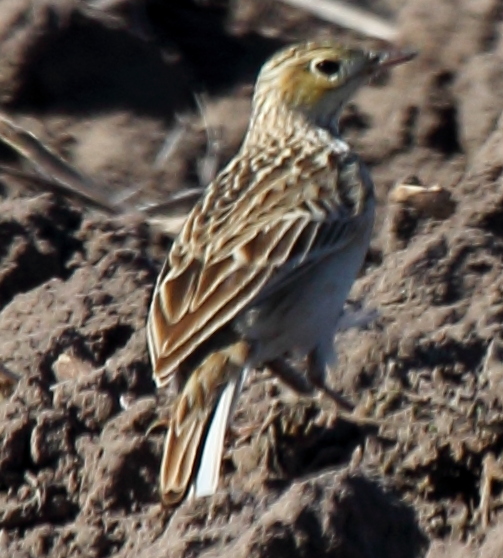


Birds Similar to the Pangani Longclaw
These species are often confused with the Pangani Longclaw due to similar appearance or overlapping range.