
Parkinson's Petrel
Procellaria parkinsoni
Order: Procellariiformes / Family: Procellariidae
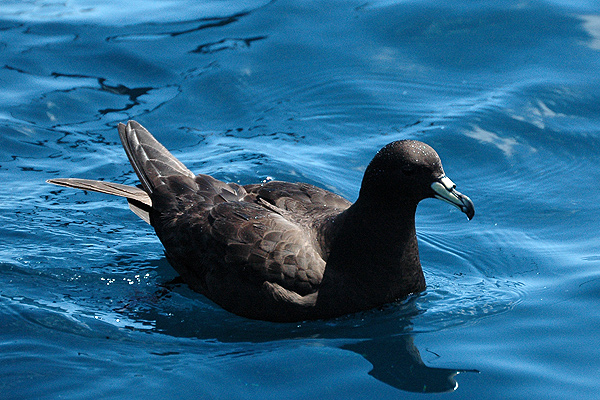
Wikimedia Commons
About the Parkinson's Petrel
The Parkinson's Petrel, scientifically known as Procellaria parkinsoni, is a medium-sized seabird that belongs to the family Procellariidae. This species is endemic to New Zealand, specifically breeding on the Great and Little Barrier Islands. The bird is significant due to its restricted range and specialized breeding habitats, predominantly in subtropical forests on these islands. The Parkinson's Petrel plays a crucial ecological role in its environment, contributing to the nutrient cycling within its island habitats. During the breeding season, these petrels nest in burrows in dense forested areas, taking advantage of the moist, well-drained soils. Outside the breeding season, the Parkinson's Petrel displays a remarkable seasonal migration, traveling across the Pacific Ocean to wintering grounds off the coasts of Peru and Ecuador. These long migratory journeys highlight the bird's adaptability and endurance, as it navigates vast oceanic expanses. Throughout its range, the Parkinson's Petrel is a vital part of the marine ecosystem. It participates in the ocean's food web by preying on squid and fish, thus regulating these populations. Moreover, the bird's presence at sea indicates healthy marine environments, as it relies on abundant food sources to sustain its populations. Conservation efforts have focused on protecting its breeding habitats from invasive predators and human disturbances, ensuring the continued survival of this unique seabird.
The Parkinson's Petrel belongs to the family Procellariidae, within the order Procellariiformes. These birds typically live around 15-20 years, with some individuals reaching 30 years..
How to Identify a Parkinson's Petrel
The Parkinson's Petrel can be identified by its predominantly black plumage, which contrasts with its pale gray underwings. Adults typically measure about 46 cm in length with a wingspan reaching up to 110 cm. The bird's stout body and strong bill, which is hooked at the tip, are distinctive field marks. Juveniles resemble adults, but their plumage may appear slightly browner until they mature. Males and females are similar in appearance, making sex differentiation in the field challenging. One might confuse the Parkinson's Petrel with other petrels, such as the Westland Petrel or the Black Petrel, due to similar coloration. However, the Parkinson's Petrel's robust build and more extensive wingspan provide distinguishing characteristics. In flight, it exhibits powerful wingbeats interspersed with gliding, often holding its wings in a straight line profile. When perched, the bird's posture is upright and alert, reflecting its readiness to take flight at a moment's notice.
Having trouble telling birds apart? Upload a photo to our bird identification tool for an instant species match.
Parkinson's Petrel Habitat and Range
Preferred Habitat
The Parkinson's Petrel primarily inhabits subtropical forests during the breeding season, specifically on New Zealand's Great and Little Barrier Islands. These areas provide the ideal environment with dense vegetation and suitable burrowing sites. The petrel favors elevations from sea level up to 500 meters, where it finds the necessary soil conditions for nesting. During the non-breeding season, it shifts to a pelagic lifestyle, occupying open ocean habitats far from land. Unlike some seabirds, the Parkinson's Petrel is rarely seen in urban areas or near human developments, as it prefers remote and untouched natural settings.
Geographic Range
The breeding range of the Parkinson's Petrel is highly restricted, confined to the Great and Little Barrier Islands of New Zealand. These islands provide the specialized habitat necessary for its reproductive success. After breeding, the petrels undertake extensive migrations across the Pacific Ocean. They traverse the open seas to reach wintering grounds off the coasts of Peru and Ecuador. During migration, they follow specific oceanic corridors that provide ample feeding opportunities and favorable winds. Despite their long-distance travels, the Parkinson's Petrel's population remains concentrated in its breeding areas, with occasional sightings reported along migration routes.
Want to know which birds visit your area? Browse our backyard birds by location guides for region-specific species lists.
What Does the Parkinson's Petrel Eat?
The diet of the Parkinson's Petrel consists primarily of squid and small fish, which it captures while foraging at sea. The bird employs surface seizing and shallow diving techniques to catch its prey, often feeding in association with other seabirds and marine predators like dolphins. Seasonal changes in ocean productivity influence its diet composition, with different prey species becoming more abundant at various times of the year. The petrel typically forages during daylight hours, taking advantage of the increased visibility to locate food. Prey size ranges from small squid to medium-sized fish, enabling the bird to adapt its foraging strategy to available resources.
Parkinson's Petrel Behavior and Social Structure
Parkinson's Petrels are social seabirds, often observed in flocks, especially during migration and foraging. They exhibit cooperative feeding behavior, where individuals work together to locate and capture prey. Territorial behavior is less pronounced in this species due to their pelagic lifestyle, but during the breeding season, they defend their nesting burrows from intruders. Courtship displays involve vocalizations and aerial maneuvers, with pairs often engaging in mutual preening to strengthen pair bonds. In response to predators, particularly introduced mammals on breeding islands, the petrels have developed nocturnal nesting habits to minimize predation risks. Daily activity patterns at sea include periods of active foraging interspersed with rest and preening.
Parkinson's Petrel Nesting and Reproduction
Parkinson's Petrels nest in burrows excavated in soft, well-drained soils within subtropical forests. These burrows, lined with leaves and twigs, provide a safe environment for their single-egg clutch. The incubation period lasts approximately 53-55 days, with both parents sharing incubation duties. Once hatched, the chick remains in the burrow for about 92-105 days until fledging. Both parents contribute to feeding the chick, regurgitating partially digested food. Typically, the species raises only one brood per year due to the demanding nature of their migratory lifestyle.
Parkinson's Petrel Sounds and Vocalizations
The primary vocalization of the Parkinson's Petrel is a low, guttural call used during social interactions and courtship. These calls, often described as a series of rhythmic croaks and grunts, serve as communication between mates and neighboring birds. During the breeding season, these vocalizations are most frequent at night when the birds are active around their nesting sites. Alarm calls, sharper and more urgent in tone, are used to alert others to potential dangers, especially when predators approach their burrows.
Interesting Facts About the Parkinson's Petrel
- 1Parkinson's Petrels undertake migratory journeys exceeding 10,000 kilometers from New Zealand to South America.
- 2These petrels can dive up to 5 meters deep to catch squid and fish during foraging.
- 3The species was named after Sydney Parkinson, a naturalist who traveled with Captain Cook.
- 4Parkinson's Petrels have a remarkable lifespan, with some individuals living over 30 years.
- 5Despite their strong flight, they are rarely seen on land outside the breeding season.
- 6Their burrows can extend over a meter deep, providing protection from predators.
- 7The petrels' diet plays a crucial role in oceanic nutrient distribution and marine ecosystem health.
Parkinson's Petrel Conservation Status
The IUCN lists the Parkinson's Petrel as vulnerable due to its limited breeding range and threats from introduced predators. The population is currently stable, with conservation efforts focusing on habitat protection and predator control. Historical declines occurred due to habitat destruction and introduced species, but recent measures have improved their breeding success. Ongoing conservation programs aim to further mitigate risks and ensure the species' long-term survival.
Other Procellariidae Species


Birds Similar to the Parkinson's Petrel
These species are often confused with the Parkinson's Petrel due to similar appearance or overlapping range.

