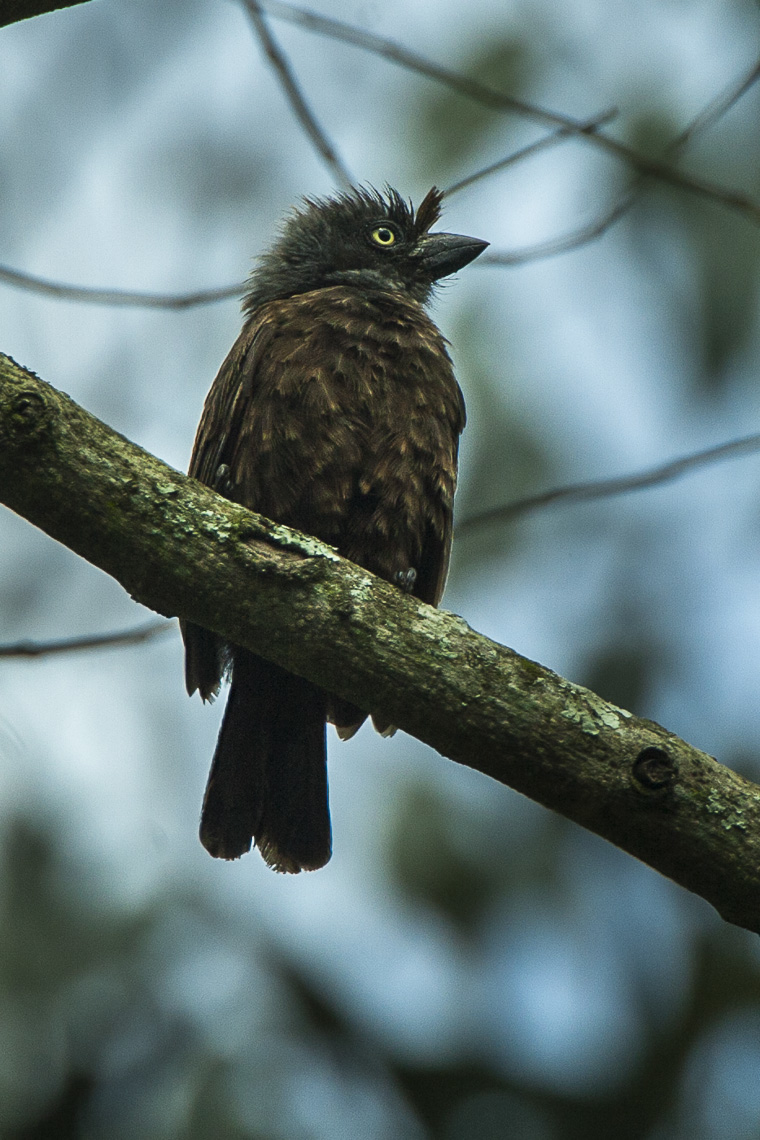
Pied Barbet
Tricholaema leucomelas
Order: Piciformes / Family: Lybiidae

Wikimedia Commons
About the Pied Barbet
The Pied Barbet (Tricholaema leucomelas) thrives in the savannas and semi-arid regions of sub-Saharan Africa. This small, vibrant bird belongs to the family Lybiidae, known for its ability to adapt to various habitats. Its presence in regions like Botswana, Namibia, and South Africa highlights its adaptability to the unique ecological niches within these areas. The Pied Barbet plays a significant role in seed dispersal, contributing to the diversity and health of its ecosystem. Its preference for arid woodland and thornveld showcases its adaptability to environments where other species might struggle. The Pied Barbet is often seen during the day, hopping through the branches of acacia trees or perched prominently to catch the first rays of sunlight. During the breeding season, which typically spans from August to March, this species becomes more vocal and visible, engaging in complex courtship rituals that emphasize its role as a key participant in the avian community. The social nature of the Pied Barbet extends beyond its breeding behaviors. Even outside the breeding season, it remains a communal bird, often seen in small groups or pairs. This social structure allows it to efficiently communicate and guard territories, using its distinctive calls and physical displays. The bird's presence in these regions also indicates its ecological significance, as it participates actively in insect control by feeding on a variety of arthropods. This dietary preference aids in regulating insect populations, which could otherwise become overwhelming. The Pied Barbet's role is not limited to its ecological contributions; it also serves as a critical indicator of environmental health. Its abundance or decline can signal changes in habitat quality, making it an important species for monitoring by conservationists and ornithologists alike. In regions where natural habitats are threatened by urban expansion or agricultural practices, the presence of the Pied Barbet suggests resilience and adaptability, though long-term survival requires careful attention to habitat preservation. Seasonal behavior in the Pied Barbet is particularly noteworthy. During wetter months, when insect activity peaks, the bird adjusts its diet to include more protein-rich insects. These seasonal shifts highlight the bird's adaptability and the dynamic nature of its ecological interactions. The Pied Barbet's ability to thrive in both rural and semi-urban environments underscores its versatility. It often utilizes human-modified landscapes, feeding on fruiting garden plants or even nesting in man-made structures. This adaptability provides an opportunity for humans to observe and appreciate this remarkable bird up close, fostering an increased interest in local biodiversity.
The Pied Barbet belongs to the family Lybiidae, within the order Piciformes. These birds typically live average 6 years, with a maximum recorded lifespan of 12 years..
How to Identify a Pied Barbet
Adult Pied Barbets possess a distinctive black and white pattern, with a striking red forehead and a yellowish nape. These colors create a noticeable contrast against the bird's otherwise white throat and underparts. The back and wings exhibit a mottled black and white appearance. Juveniles differ by having a more muted coloration, with less distinct red and less contrast in their plumage. Males and females appear similar, though males may show slightly brighter red on the forehead. Confusion with similar species is possible, particularly with the Black-collared Barbet, which has more extensive red on its head and lacks the Pied Barbet's yellow nape. In flight, the Pied Barbet's silhouette is rounded, with short wings and a relatively short tail, contributing to its agility in wooded environments. When perched, the Pied Barbet maintains an alert posture, often tilting its head to survey its surroundings. Its strong bill is adapted for pecking at wood, primarily used to excavate nesting cavities in dead branches. Observers should note the Pied Barbet's habit of sitting in exposed locations during territorial displays, using its vivid coloration to full advantage.
Having trouble telling birds apart? Upload a photo to our bird identification tool for an instant species match.
Pied Barbet Habitat and Range
Preferred Habitat
The Pied Barbet favors savannas, arid woodlands, and thornveld, thriving in elevations ranging from sea level to 1500 meters. It frequently inhabits areas with a mix of Acacia and Mopane trees, which provide both food and nesting sites. In places like the Kalahari Desert and the Namib, its presence signals adaptability to arid conditions. Seasonal habitat shifts occur as the Pied Barbet moves toward areas with more abundant food resources during the wet season. In urban areas, it can be found in parks and gardens where native plants are present, though rural habitats remain its stronghold. Its preference for open, dry environments with scattered trees allows it to exploit both natural and human-modified landscapes effectively.
Geographic Range
The Pied Barbet's range spans across southern Africa, from Angola and Zambia in the north to South Africa in the south. It is a resident bird, meaning it does not engage in long-distance migrations. However, local movements occur in response to food availability and environmental conditions, particularly during dry spells. In Botswana and Namibia, it is widespread, favoring the Kalahari and adjacent regions. South Africa hosts significant populations, particularly in the Northern Cape and parts of the Eastern Cape. While not densely populated in all regions, the Pied Barbet is considered common throughout much of its range. Areas with abundant fruiting trees and insect prey serve as population density hotspots.
Want to know which birds visit your area? Browse our backyard birds by location guides for region-specific species lists.
What Does the Pied Barbet Eat?
The Pied Barbet primarily feeds on fruits and insects, showcasing a diet that reflects its ecological versatility. Its strong bill allows it to consume a variety of seasonal fruits, including figs and berries, which form the bulk of its diet during the fruiting season. Insect consumption increases during wetter months, providing necessary protein for breeding adults and growing juveniles. The bird's foraging technique involves a combination of gleaning insects from foliage and pecking at wood to extract insects. It can also employ a method known as 'hover-gleaning,' where it hovers briefly to capture insects on the wing. Prey size varies but typically includes small beetles, caterpillars, and spiders. The Pied Barbet feeds primarily during early morning and late afternoon when temperatures are cooler, ensuring efficient energy use.
Pied Barbet Behavior and Social Structure
Pied Barbets exhibit a complex social structure, often forming monogamous pairs that maintain territories year-round. These territories are defended with vocalizations and physical displays, including wing-flapping and beak-clacking. Courtship displays involve both visual and auditory signals, with males showcasing their vibrant red crowns and engaging in synchronized duets with their mates. These displays not only strengthen pair bonds but also serve to deter rival males. Outside the breeding season, the Pied Barbet may join small flocks, particularly when foraging. This social behavior aids in locating food and provides protection against predators. When threatened, the Pied Barbet gives sharp alarm calls, alerting both its mate and other nearby birds. Daily activity patterns include active foraging during cooler parts of the day, with periods of rest during midday heat.
Pied Barbet Nesting and Reproduction
The nesting habits of the Pied Barbet involve the excavation of cavities in dead trees or branches, primarily Acacia species. These cavities provide protection from predators and environmental elements. Nest construction is a shared responsibility, with both sexes participating in hollowing out the nesting site. The typical clutch comprises 2-4 eggs, which are white and unmarked. Incubation lasts approximately 14 days, with both parents sharing duties. After hatching, the young remain in the nest for about 30 days, during which both parents actively feed them. Pied Barbets may produce up to two broods per year, depending on environmental conditions and food availability. The parental roles extend beyond feeding, with adults guarding the nest and teaching fledglings essential survival skills.
Pied Barbet Sounds and Vocalizations
The Pied Barbet's primary song is a repetitive, melodious series of 'poot-poot-poot' notes, delivered in a rhythmic pattern. This song serves as both a territorial call and a means of communication between mates. Call notes include sharp 'tik' sounds, often used as contact calls when foraging. Alarm calls differ, consisting of rapid, harsh notes that alert others to potential danger. During the dawn chorus, the Pied Barbet's song is most prominent, resonating through its habitat and establishing its presence. The tonal quality of its vocalizations is clear and carries well over distances, akin to the sound of a wooden mallet striking a hollow object.
Interesting Facts About the Pied Barbet
- 1Pied Barbets have an unusual method of communication involving synchronized duets between mates, serving both bonding and territorial functions.
- 2These birds play an essential ecological role by dispersing seeds from the fruits they consume, aiding in the regeneration of their habitats.
- 3Pied Barbets are known for their acrobatic foraging techniques, such as 'hover-gleaning,' where they briefly hover to snatch insects off leaves.
- 4The bird's distinctive 'poot-poot-poot' call is often one of the first sounds heard in the morning, marking its presence in the ecosystem.
- 5Pairs of Pied Barbets will often spend significant time preening each other, a behavior that strengthens pair bonds and helps with feather maintenance.
Pied Barbet Conservation Status
The Pied Barbet is currently listed as a species of Least Concern by the IUCN, with a stable population trend. Despite its stable status, habitat loss due to agricultural expansion and urbanization poses a threat. Conservation efforts focus on habitat preservation and maintaining native vegetation in both rural and urban areas. Historical population changes have been minimal, though localized declines have occurred in heavily developed regions. Continued monitoring and habitat management aim to ensure the Pied Barbet remains a common and widespread species across its range.