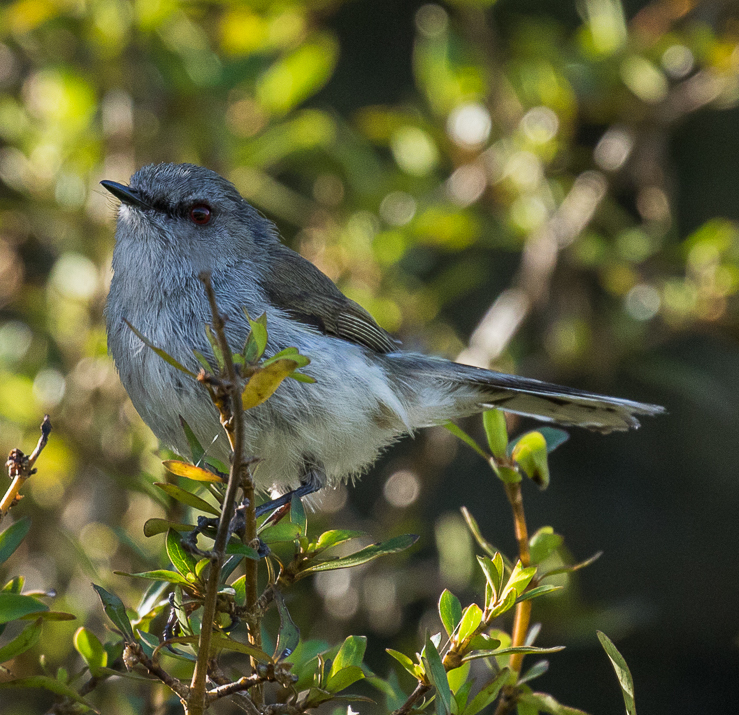
Plain Gerygone
Gerygone inornata
Order: Passeriformes / Family: Acanthizidae

Wikimedia Commons
About the Plain Gerygone
The Plain Gerygone (Gerygone inornata) is a petite songbird found predominantly in the Australian continent, where it inhabits a variety of forested environments. This species plays a significant ecological role as both an insectivore and a participant in seed dispersal, thus contributing to the health of its ecosystem. Primarily observed in eastern Australia, the Plain Gerygone adapts well to different forest types, from coastal mangroves to the dense eucalypt forests of New South Wales and Queensland. It thrives at low to mid-elevations, favoring areas where it can exploit the rich insect life that its habitat supports. During the breeding season, which typically occurs from August to January, their activity heightens as they engage in nesting and rearing their young. The Plain Gerygone’s significance extends beyond its ecological role; it is a species admired by birdwatchers for its distinctive vocalizations, which offer a delightful acoustic experience in Australian forests. This bird’s presence in forested areas is an indicator of environmental health, as it requires an abundant insect population to sustain its diet. As a non-migratory bird, the Plain Gerygone remains within its range year-round, adapting its feeding and breeding behaviors to seasonal changes. Despite its plain appearance, this bird's active foraging behavior and complex vocalizations make it a fascinating subject for ornithologists and nature enthusiasts alike.
The Plain Gerygone belongs to the family Acanthizidae, within the order Passeriformes. These birds typically live average 2-4 years, with a maximum of 6 years recorded..
How to Identify a Plain Gerygone
The Plain Gerygone is a small bird, measuring approximately 10 centimeters in length, with a wingspan ranging from 16 to 19 centimeters. Its plumage is characterized by subtle hues, primarily gray-brown on the upperparts and a paler gray on the underparts, which may appear slightly buffy in certain lights. The tail is long and rounded, with a notable white tip that can assist in identification when the bird is in flight. Males and females bear similar plumage, making sexing in the field challenging without observing behavior. Juveniles resemble adults but may have a slightly fluffier appearance with less defined feather edges. The Plain Gerygone can be confused with other members of the Gerygone genus and similar small passerines, but its distinctive vocalizations often aid in accurate identification. When perched, the bird exhibits a characteristic tail flicking behavior, which, combined with its vocal repertoire, helps distinguish it from similar species. The flight silhouette of the Plain Gerygone is marked by its rapid, undulating flight pattern, consistent with its small size and agile nature.
Having trouble telling birds apart? Upload a photo to our bird identification tool for an instant species match.
Plain Gerygone Habitat and Range
Preferred Habitat
The Plain Gerygone occupies a range of forested habitats across eastern Australia, including coastal mangroves, open eucalypt forests, and dense rainforests. It shows a preference for areas with abundant insect life, which supports its dietary needs. Typically found at elevations from sea level up to 1,000 meters, this species is adaptable to both inland and coastal environments. While it predominantly resides in natural settings, it may occasionally venture into suburban gardens if the habitat is suitably vegetated and offers ample foraging opportunities. Seasonal habitat shifts are minimal, as the Plain Gerygone is largely sedentary, though it may move slightly in response to food availability or environmental conditions.
Geographic Range
The range of the Plain Gerygone is concentrated in eastern Australia, with a strong presence in the states of Queensland and New South Wales. While it is primarily a resident bird, remaining in its territory year-round, local movements may occur in response to climatic conditions and food supply. The density of the population tends to be higher in regions with optimal forest habitats and less human disturbance. Although not migratory, the bird's local dispersal ensures its presence across a variety of suitable environments within its range, making it a consistent feature of the eastern Australian avifauna.
Want to know which birds visit your area? Browse our backyard birds by location guides for region-specific species lists.
What Does the Plain Gerygone Eat?
The diet of the Plain Gerygone consists predominantly of small insects and other arthropods, which it skillfully gleans from foliage and branches in its forested habitat. During the breeding season, when energy demands increase, it may also consume spiders and occasionally small seeds or fruits. Foraging occurs primarily during daylight hours, with peak activity in the early morning and late afternoon. The bird's foraging technique is agile and active, often involving rapid movements among leaves and branches to capture prey. This behavior not only aids in controlling insect populations but also provides a dynamic spectacle for observers.
Plain Gerygone Behavior and Social Structure
The Plain Gerygone exhibits a variety of behaviors that reflect its social and ecological adaptations. It typically forms monogamous pairs, engaging in cooperative breeding and territorial defense. During the breeding season, males often sing to assert their presence and attract mates, while both parents participate in nest building and rearing of young. The bird is generally non-aggressive towards other species, although it will vigorously defend its nesting area from perceived threats. Grouping in small family units or loose flocks outside the breeding season is common, facilitating social interactions and cooperative foraging. Its response to predators involves an array of alarm calls and distraction displays designed to protect its young.
Plain Gerygone Nesting and Reproduction
The Plain Gerygone constructs a delicate, dome-shaped nest made of fine grasses, moss, and spider silk, typically suspended from a tree branch or shrub. Nest placement is often in a well-concealed location within dense foliage, providing protection from predators and environmental elements. The clutch size ranges from two to four eggs, which are incubated primarily by the female for about 14 days. After hatching, both parents share the responsibility of feeding and caring for the chicks. The fledging period lasts approximately 16 to 18 days, during which the young birds develop the necessary skills to survive independently. The species usually raises one to two broods per year, depending on environmental conditions and food availability.
Plain Gerygone Sounds and Vocalizations
The vocalizations of the Plain Gerygone are distinct and melodious, characterized by a series of high-pitched, rhythmic notes that rise and fall in musical phrases. This song serves both to establish territory and to attract mates. In addition to its primary song, the bird emits a variety of call notes, including sharp alarm calls when threatened. During the dawn chorus, the Plain Gerygone's clear, sweet song can be heard prominently, adding to the avian symphony of its forest home. These vocalizations are an essential component of its communication and social interactions.
Interesting Facts About the Plain Gerygone
- 1The Plain Gerygone’s song is often likened to a series of tinkling bells due to its clarity and musicality.
- 2Despite its small size, the Plain Gerygone can consume a remarkable number of insects daily, aiding in pest control.
- 3The species constructs its nest using spider silk, which provides both strength and flexibility to the structure.
- 4Plain Gerygones participate in a type of cooperative breeding, where older siblings may help care for new chicks.
- 5The bird’s name, Gerygone, comes from Greek words meaning 'born of sound,' reflecting its vocal prowess.
- 6Although named 'Plain,' its vocal abilities and active behavior make it a standout in its forest habitat.
- 7The Plain Gerygone’s tail flicking behavior is a common signal among many small passerines, often used in communication.
Plain Gerygone Conservation Status
The Plain Gerygone is currently classified as Least Concern by the IUCN, with a stable population trend. While habitat loss due to deforestation poses a potential threat, the species' adaptability to different forest types has mitigated significant declines. Conservation efforts focus on preserving forest habitats and maintaining ecological integrity through sustainable land management practices. Past population assessments indicate relative stability, ensuring that the Plain Gerygone remains a thriving component of Australia's avian diversity.
Other Acanthizidae Species


Birds Similar to the Plain Gerygone
These species are often confused with the Plain Gerygone due to similar appearance or overlapping range.