Plain Laughingthrush
Garrulax davidi
Order: Passeriformes / Family: Leiothrichidae

Wikimedia Commons
About the Plain Laughingthrush
The Plain Laughingthrush, scientifically known as Garrulax davidi, is a striking member of the Leiothrichidae family. This bird exhibits a unique blend of subtle beauty and vocal prowess, making it a remarkable species across its native range in Asia. The Plain Laughingthrush is primarily found in the montane forests of central and eastern China, including provinces such as Sichuan, Shaanxi, and Hubei. These regions offer the dense understory and tangled shrubbery that the species prefers for foraging and nesting.
The ecological role of the Plain Laughingthrush is significant, as it participates actively in the forest ecosystem. It plays an important part in controlling insect populations, as its diet mainly consists of insects and other invertebrates. Additionally, this bird aids in seed dispersal, contributing to the propagation of various plant species within its habitat. The Plain Laughingthrush is also a key indicator of forest health, as its presence or absence can reflect changes in forest structure and human impact.
Seasonally, the Plain Laughingthrush demonstrates some altitudinal movement, though it is largely a resident bird. In the colder months, it may descend to lower elevations in search of food and more favorable climatic conditions. During the breeding season in spring and early summer, this bird becomes particularly vocal, using its melodious song to establish territories and attract mates. Its adaptability to different forest habitats, from broadleaf to mixed forests, allows it to thrive in a variety of environments, although it tends to avoid heavily disturbed or urbanized areas.
The Plain Laughingthrush belongs to the family Leiothrichidae, within the order Passeriformes. These birds typically live average 5-8 years with a maximum recorded of 10 years.
How to Identify a Plain Laughingthrush
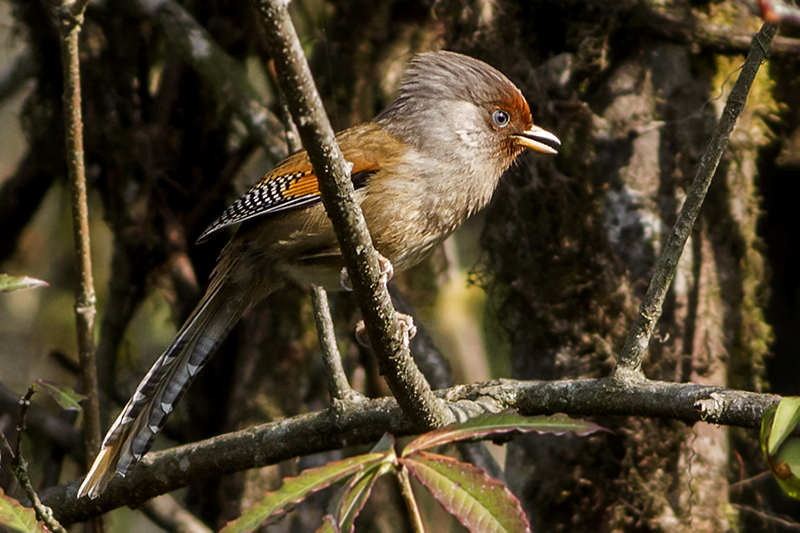
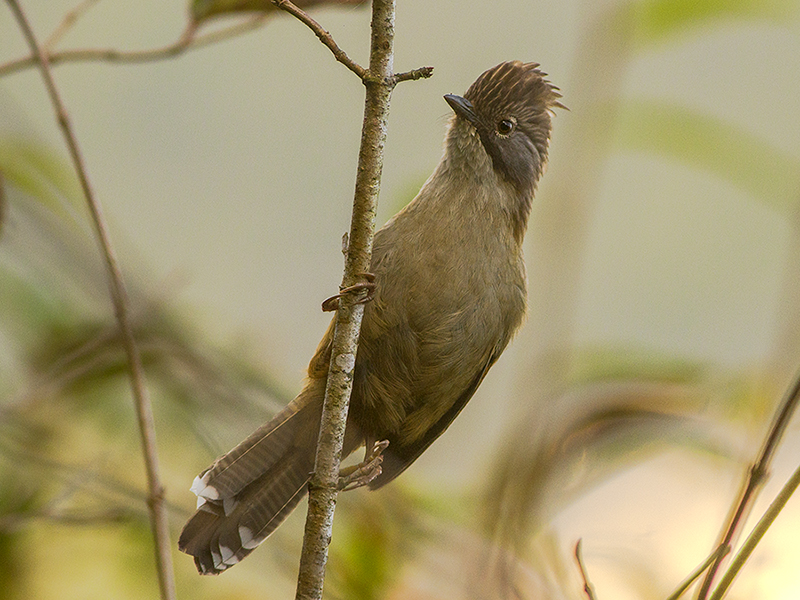
The Plain Laughingthrush is a medium-sized bird, measuring approximately 26 to 28 centimeters in length. Its plumage is predominantly brown, with a paler underside and a slightly darker crown, which provides a subtle but distinct contrast. The bird's wings and tail are darker, often edged with lighter brown, giving it a patterned appearance in flight. Males and females are similar in appearance, making sex identification in the field challenging without behavioral cues.
Juvenile Plain Laughingthrushes bear a resemblance to adults but have slightly duller plumage and may exhibit more streaking on the breast, which fades as they mature. This species' stout bill is adapted for its omnivorous diet, while its strong legs facilitate hopping among branches and leaf litter.
In comparison to similar species, such as the Spotted Laughingthrush, the Plain Laughingthrush lacks prominent spotting on its plumage, making it distinguishable. When perched, it holds a slightly upright posture, allowing for easy observation of its body and tail. In flight, its rounded wings and long tail are evident, giving it a graceful yet deliberate appearance as it moves through the forest canopy.
Having trouble telling birds apart? Upload a photo to our bird identification tool for an instant species match.
Plain Laughingthrush Habitat and Range
Preferred Habitat
The Plain Laughingthrush thrives in a variety of forested environments, predominantly favoring montane forests. It is commonly found in broadleaf and mixed forests, where dense understory provides excellent cover and foraging opportunities. This bird typically resides at elevations ranging from 1,000 to 3,000 meters, though it may descend lower in winter.
While primarily a forest bird, the Plain Laughingthrush occasionally ventures into adjacent scrublands and forest edges, particularly during non-breeding seasons when it seeks out additional food resources. Its presence in rural areas is limited, as it prefers the undisturbed expanses of forest. Despite its adaptability, it generally avoids urban settings, relying instead on the natural cover of wooded habitats.
The bird's seasonal habitat shifts are subtle, as it is largely sedentary, though some local movements occur in response to changing weather conditions and food availability. These movements ensure that the Plain Laughingthrush can exploit various microhabitats within its range, maintaining its survival throughout the year.
Geographic Range
The Plain Laughingthrush's range is largely confined to central and eastern China. It inhabits provinces such as Sichuan, Shaanxi, and Hubei, where it occupies a relatively stable range year-round. The species is non-migratory, with its breeding and wintering ranges overlapping significantly.
During the breeding season, which spans from late spring to early summer, the Plain Laughingthrush remains in its montane forest habitats, establishing territories and raising young. Its preference for higher elevations and dense forested areas limits its geographical spread, though it can be locally abundant within suitable habitats.
While it does not undertake long-distance migrations, the Plain Laughingthrush may engage in altitudinal movements. In winter, it descends to lower elevations to escape harsher conditions and seek out food. These movements are typically within a relatively small geographic area, reflecting the bird's dependence on specific forest types and its adaptability to local environmental changes.
Want to know which birds visit your area? Browse our backyard birds by location guides for region-specific species lists.
What Does the Plain Laughingthrush Eat?
The diet of the Plain Laughingthrush consists primarily of insects and other small invertebrates, which it actively forages for on the forest floor and among low vegetation. Its stout bill and strong legs facilitate efficient foraging, allowing it to dig and probe into leaf litter and soil.
In addition to insects, the Plain Laughingthrush also consumes a variety of plant materials. It feeds on seeds, berries, and small fruits, which become more prominent in its diet during the autumn and winter months when insect availability decreases. This dietary flexibility allows the bird to thrive in its montane forest habitat year-round.
The bird's foraging technique is characterized by a combination of hopping and short flights, as it moves through the understory in search of food. It often feeds in small groups, especially outside of the breeding season, which may enhance foraging efficiency and predator detection. Its feeding schedule is diurnal, with peak activity in the early morning and late afternoon, coinciding with the periods of highest prey activity.
Plain Laughingthrush Behavior and Social Structure
The Plain Laughingthrush is a highly social bird, often seen in small flocks outside of the breeding season. These flocks can consist of family groups and unrelated individuals, which cooperate in foraging and predator detection. The bird exhibits strong territorial behavior during the breeding season, with males singing loudly to establish and defend their territories.
Courtship displays in the Plain Laughingthrush involve both vocal and visual elements. Males sing complex, melodious songs and perform displays that include wing fluttering and tail fanning. These displays serve to attract females and strengthen pair bonds.
Daily activity patterns of the Plain Laughingthrush align with its diurnal nature. It is most active during the early morning and late afternoon when it forages, socializes, and engages in territorial disputes. In response to predators, the bird emits sharp alarm calls and often retreats to dense cover, where it relies on its drab plumage for camouflage. Flocking behavior provides additional safety, as group vigilance helps detect and deter potential threats.
Plain Laughingthrush Nesting and Reproduction
The Plain Laughingthrush constructs its nest in dense shrubs or small trees, usually at a height of 1 to 3 meters above the ground. The nest is a cup-like structure made from twigs, leaves, and grasses, lined with finer materials such as feathers and hair for insulation and comfort.
Typically, the female lays a clutch of 3 to 5 eggs, which she incubates for about 14 to 16 days. During this period, the male assists by bringing food to the female and helping with nest defense. After hatching, both parents participate in feeding the chicks, which fledge approximately 14 to 16 days post-hatching.
The number of broods per year varies, but the Plain Laughingthrush generally raises one to two broods. This reproductive strategy helps maintain its population in the stable yet competitive environment of montane forests, ensuring the continued presence of this vocal and vibrant bird.
Plain Laughingthrush Sounds and Vocalizations
The Plain Laughingthrush is renowned for its complex and melodious song, which consists of a series of whistles, trills, and flutelike notes. Its song features a rhythmic pattern with varying pitch and quality, making it a distinctive sound in the montane forests where it resides.
Aside from its primary song, the Plain Laughingthrush also produces a variety of calls. These include harsh chattering notes used in social interactions and sharp alarm calls that signal the presence of predators. During the dawn chorus, its song is particularly prominent, as males sing to reaffirm territories and strengthen pair bonds.
The vocalizations of the Plain Laughingthrush are often compared to the flute-like songs of thrushes, though they possess a distinctive richness and complexity that sets them apart. The bird's ability to produce such a wide range of sounds underscores its role as both a communicator and a territorial defender within its forest habitat.
Interesting Facts About the Plain Laughingthrush
- 1The Plain Laughingthrush's song can be heard from over 100 meters away, making it a prominent presence in its habitat.
- 2Despite its name, the Plain Laughingthrush is not plain in vocal talent, singing complex melodies with ease.
- 3This bird's diet shifts seasonally, highlighting its adaptability to changing food availability in montane forests.
- 4Unlike many birds, the Plain Laughingthrush is largely sedentary, with only minor altitudinal movements observed.
- 5Historically, the Plain Laughingthrush has been a symbol of songbird diversity in the montane forests of China.
- 6The species' preference for dense underbrush provides crucial cover for nesting and protection from predators.
- 7During the breeding season, the Plain Laughingthrush's vocalizations become more frequent and elaborate.
Plain Laughingthrush Conservation Status
The IUCN lists the Plain Laughingthrush as a species of Least Concern, reflecting its relatively stable population trend. However, habitat loss due to deforestation and human encroachment poses ongoing threats. Conservation efforts focus on protecting montane forest habitats and minimizing human impact. Historically, the Plain Laughingthrush has maintained stable populations within its range, though localized declines have occurred in areas subject to significant habitat degradation. Maintaining healthy forest ecosystems is crucial for the long-term conservation of this species. Conservationists emphasize the importance of protecting large tracts of continuous forest, as fragmentation can lead to isolated populations and increased vulnerability. Efforts to raise awareness of the ecological value of forest habitats and the role of species like the Plain Laughingthrush are key components of ongoing conservation strategies.