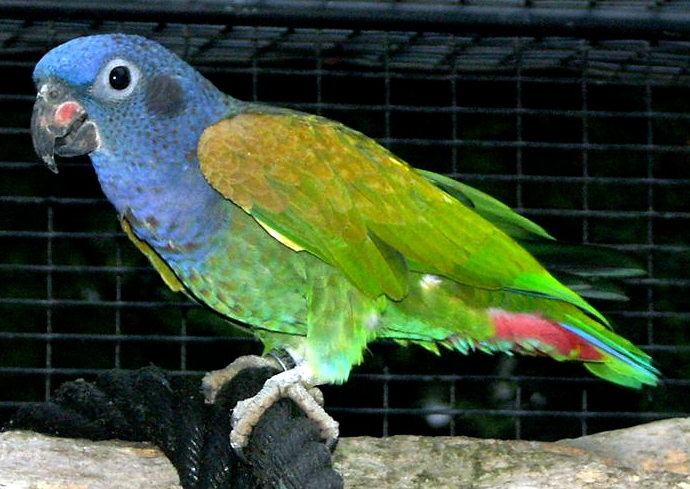
Cyan Parrot
Psittacus cyaneus
Order: Psittaciformes / Family: Psittacidae
About the Cyan Parrot
The Cyan Parrot, scientifically known as Psittacus cyaneus, is a striking example of avian beauty, characterized by its vivid blue feathers that shimmer in the sunlight. This species inhabits the lush tropical rainforests of Central and South America, particularly thriving in areas such as the Amazon Basin and the Atlantic Forest. Its preference for these dense, humid environments underscores its ecological significance as both a seed disperser and a prominent member of the forest's complex food web. By consuming a variety of fruits and seeds, the Cyan Parrot plays a crucial role in shaping the vegetation structure of its habitat, aiding in the propagation of numerous plant species. Beyond its ecological contributions, the Cyan Parrot also holds cultural significance among indigenous peoples, who regard it with reverence and incorporate its image into traditional art and mythology. During the breeding season, typically from November to March, these parrots showcase fascinating courtship behaviors, such as synchronized flying and mutual preening, as they strengthen pair bonds. Outside of breeding months, Cyan Parrots exhibit more solitary or small group behaviors, often seen foraging in the canopy. Their adaptability also allows them to exploit secondary forests and plantations, where they can sometimes be observed feeding on cultivated crops. However, their reliance on specific forest types makes them susceptible to habitat destruction and fragmentation, leading to conservation concerns. Understanding the Cyan Parrot's role within its ecosystem and the challenges it faces is crucial for developing effective conservation strategies and ensuring the survival of this spectacular species.
The Cyan Parrot belongs to the family Psittacidae, within the order Psittaciformes. These birds typically live 20 years with max recorded of 28 years.
How to Identify a Cyan Parrot
The Cyan Parrot is easily recognized by its bright blue plumage, which covers its entire body except for a black beak and dark gray feet. Adult plumage is consistent across both sexes, making gender differentiation challenging based solely on appearance. Juvenile Cyan Parrots, however, exhibit duller blue tones and possess a slightly lighter beak, which darkens as they mature. In flight, the Cyan Parrot's silhouette is distinctive, with broad, rounded wings and a relatively short tail compared to other parrot species. When perched, it displays a sturdy, upright posture, often accompanied by a curious tilt of the head. While the Cyan Parrot's blue coloration sets it apart from many other species, it may occasionally be confused with other blue parrots within its range, such as the Blue-headed Parrot. However, the latter species features a prominent green body, making the Cyan Parrot's uniform blue plumage a key distinguishing feature. Observers should also note the Cyan Parrot's robust size, as it is larger than many sympatric parrot species, further aiding in its identification.
Having trouble telling birds apart? Upload a photo to our bird identification tool for an instant species match.
Cyan Parrot Habitat and Range
Preferred Habitat
The Cyan Parrot primarily inhabits tropical rainforests, thriving in the dense canopy layers of these ecosystems. It is most frequently found at elevations ranging from sea level to approximately 1000 meters, though it can occasionally be observed at higher altitudes in mountainous regions. The parrot shows a marked preference for primary forests, where its dietary needs and nesting sites are readily available. During the non-breeding season, the Cyan Parrot may venture into secondary forests and edge habitats, including plantations and agricultural areas, where it forages opportunistically. While it is adaptable to some degree of habitat change, extensive deforestation poses a significant threat to its preferred living conditions. Cyan Parrots are generally less common in urban areas, although they may occasionally appear in suburban gardens if suitable food sources are present.
Geographic Range
The Cyan Parrot's distribution spans a broad range across Central and South America, with breeding populations primarily concentrated in the Amazon Basin, including Brazil, Peru, and Colombia. It is also found in parts of Venezuela and the Guianas. While the species does not undertake long-distance migrations, it may exhibit localized movements in response to food availability and seasonal changes in its environment. During peak fruiting seasons, Cyan Parrots may temporarily expand their range to include adjacent habitats, such as the Pantanal and Cerrado regions, where they exploit seasonal food resources. Population densities are highest in undisturbed forested areas, where the availability of nesting sites and food sources supports larger breeding colonies. Conversely, habitat destruction and fragmentation have led to declines in certain areas, particularly at the fringes of their range.
Want to know which birds visit your area? Browse our backyard birds by location guides for region-specific species lists.
What Does the Cyan Parrot Eat?
The Cyan Parrot's diet primarily consists of fruits, seeds, and nuts, with a preference for those sourced from canopy-level trees. Figs, palm fruits, and various tropical berries form a significant part of its diet, providing essential nutrients and energy. Seasonal variations in fruiting patterns influence the parrot's foraging behavior, prompting it to travel in search of abundant food supplies. During periods of fruit scarcity, the Cyan Parrot may supplement its diet with flowers, nectar, and even small invertebrates, demonstrating its dietary flexibility. Foraging usually occurs during the early morning and late afternoon, aligning with the cooler parts of the day. The parrot employs its strong, curved beak to crack open hard-shelled nuts and seeds, showcasing its adeptness at accessing otherwise challenging food resources. This feeding behavior not only sustains the parrot but also contributes to seed dispersal, aiding in forest regeneration.
Cyan Parrot Behavior and Social Structure
Cyan Parrots exhibit complex social structures, often forming monogamous pairs that remain together throughout the year. Within their territory, these pairs engage in cooperative activities, such as foraging and nest building. During the breeding season, courtship displays become more pronounced, with pairs engaging in aerial acrobatics and mutual grooming to reinforce their bond. Outside of breeding periods, Cyan Parrots may form small flocks, especially when food resources are concentrated or scarce. These flocks, typically comprising 5 to 15 individuals, navigate the forest canopy with coordinated movements, communicating through a series of calls. Territorial behavior is evident during nesting, with pairs actively defending their chosen sites from intruders. The Cyan Parrot responds to potential threats with alarm calls and evasive flight, often seeking refuge in the dense canopy. Daily activity patterns revolve around feeding and social interactions, with periods of rest during the hottest parts of the day.
Cyan Parrot Nesting and Reproduction
The Cyan Parrot typically selects nest sites in natural tree cavities, a preference that underscores the importance of mature forests for its breeding success. These cavities, often found in large, old-growth trees, provide the necessary protection and space for raising young. On occasion, the parrot may modify abandoned woodpecker holes or exploit artificial nest boxes if available. Clutch size averages three to four eggs, with both parents sharing incubation duties over a period of approximately 25 to 30 days. After hatching, the chicks remain in the nest for about 8 to 10 weeks, during which both parents participate in feeding and caring for the young. Cyan Parrots often produce one brood per year, although favorable conditions may lead to a second brood. The development of fledglings is closely monitored by the parents, who continue to feed and protect them even after they leave the nest.
Cyan Parrot Sounds and Vocalizations
The primary vocalization of the Cyan Parrot is a sharp, melodic call, characterized by a series of high-pitched whistles and squawks. These sounds serve various purposes, from maintaining contact with flock members to signaling alarm in the presence of predators. During the dawn chorus, Cyan Parrots contribute to the vibrant soundscape of the tropical forest with their lively and rhythmic calls, which can carry over long distances. Their vocal repertoire also includes softer chattering noises used in close-range communication between pairs or family groups. The clarity and repetition of their calls can resemble certain musical instruments, making them a distinctive presence in their habitat's auditory environment.
Interesting Facts About the Cyan Parrot
- 1The Cyan Parrot can live up to 50 years in the wild, making it one of the longer-lived parrot species.
- 2Their strong, curved beaks can exert a force of over 300 pounds per square inch, capable of cracking tough nuts.
- 3Cyan Parrots have zygodactyl feet, with two toes facing forward and two backward, aiding in climbing and manipulation.
- 4These parrots are known to mimic sounds and human speech, a trait that contributes to their popularity in aviculture.
- 5A single Cyan Parrot can consume over 100 different fruit species, showcasing its dietary versatility.
- 6Cyan Parrots engage in mutual preening, a behavior that strengthens social bonds and helps maintain feather condition.
- 7In the wild, they often form mixed-species flocks with other parrots and birds, enhancing foraging efficiency.
Cyan Parrot Conservation Status
Currently, the Cyan Parrot is classified as a species of Least Concern on the IUCN Red List, but it faces ongoing threats that could impact its future status. Habitat loss due to deforestation and land conversion for agriculture poses significant challenges, as these activities reduce available nesting sites and food sources. Additionally, the illegal pet trade continues to exert pressure on wild populations, despite legal protections in many countries. Conservation efforts are focused on habitat preservation and anti-poaching measures, with some success in establishing protected reserves. Historical population trends indicate a decline in certain regions, highlighting the need for continued monitoring and proactive management strategies to ensure the species' long-term survival.
Other Psittacidae Species


Birds Similar to the Cyan Parrot
These species are often confused with the Cyan Parrot due to similar appearance or overlapping range.