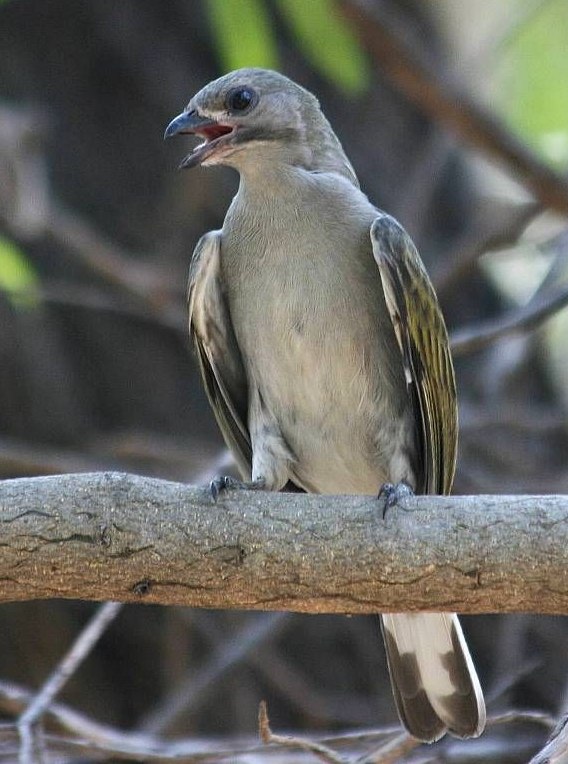
Purple-bearded Bee-eater
Meropogon forsteni
Order: Coraciiformes / Family: Meropidae

Wikimedia Commons
About the Purple-bearded Bee-eater
The Purple-bearded Bee-eater (Meropogon forsteni) is a captivating member of the bee-eater family, Meropidae, known for its striking appearance and dynamic behaviors. This bird inhabits the lush tropical forests of Sulawesi, Indonesia, where it thrives in the dense canopy and mixed evergreen landscapes. With its vivid emerald-green plumage contrasted by a brilliant purple beard, this species is not only a visual marvel but also plays a significant ecological role as a predator of flying insects. Bee-eaters as a group are renowned for their aerial agility, and the Purple-bearded Bee-eater is no exception, often seen darting through the forest in pursuit of its prey.
Sulawesi presents a unique ecological niche for the Purple-bearded Bee-eater, with its complex geography and varied habitats. This bird demonstrates significant adaptability to different elevations, from lowland forests to montane regions, reflecting its versatile hunting strategies and dietary preferences. The presence of this species is indicative of healthy insect populations, particularly bees and wasps, which it primarily feeds on. The Purple-bearded Bee-eater's behavior and life cycle are closely aligned with the seasonal abundance of these insects, making it an integral component of the forest ecosystem.
This species’ ecological contributions extend beyond its predation. It participates in the pollination of certain flowering plants, as some pollen inadvertently sticks to its feathers and beak while hunting. Such interactions highlight the interconnectedness of the Purple-bearded Bee-eater with its environment. As the forests of Sulawesi face increasing pressures from deforestation and habitat fragmentation, understanding and conserving this bird becomes ever more crucial. Its presence can serve as an indicator of ecological health, prompting conservation efforts to maintain biodiversity within these tropical regions.
The Purple-bearded Bee-eater belongs to the family Meropidae, within the order Coraciiformes. These birds typically live average 6-8 years, with a maximum recorded of 12 years..
How to Identify a Purple-bearded Bee-eater
The Purple-bearded Bee-eater exhibits a striking blend of colors and features that make it relatively easy to identify in the field. Adults boast a predominantly emerald-green plumage that shimmers in sunlight, contrasted by a vivid purple 'beard' that extends from the throat, giving the bird its common name. The crown and nape are tinged with a subtle bluish hue, adding depth to its already vibrant coloration. Juveniles differ slightly, exhibiting a duller green and less pronounced purple on the throat, which becomes more vivid as they mature.
Both sexes of the Purple-bearded Bee-eater are similar in appearance, making it challenging to distinguish between males and females without close observation. However, some subtle differences may exist in the intensity of the purple throat coloration, with males potentially displaying a slightly more pronounced hue. In flight, the bird's elongated tail feathers and slender body create a distinctive silhouette, characterized by rapid, agile maneuvers as it pursues flying insects.
Compared to other bee-eaters, the Purple-bearded Bee-eater is unique due to its isolated range and the specific coloration of its throat. It is less likely to be confused with other species, though distant views might suggest similarities to other green bee-eaters. However, its purple beard and specific behaviors, such as its preference for dense forest habitats, help differentiate it from its relatives.
Having trouble telling birds apart? Upload a photo to our bird identification tool for an instant species match.
Purple-bearded Bee-eater Habitat and Range
Preferred Habitat
The Purple-bearded Bee-eater primarily inhabits the dense tropical forests of Sulawesi, Indonesia. Its presence is strongly associated with primary evergreen forests, though it also adapts to secondary growth and areas with dense vegetation. The bird thrives in both lowland regions and montane forests, typically at elevations ranging from sea level up to 2000 meters. This adaptability to various elevations allows it to exploit a range of insect prey throughout its habitat.
During different times of the year, the Purple-bearded Bee-eater may shift slightly within its habitat range to follow prey abundance, moving from lower elevations in wetter seasons to higher altitudes during drier periods when insect activity varies. While primarily a forest dweller, it occasionally ventures into more open areas, such as forest edges and clearings, where insect activity is high. However, it is not commonly found in urban environments, maintaining its preference for more secluded, natural settings.
Geographic Range
The range of the Purple-bearded Bee-eater is relatively restricted, primarily confined to the island of Sulawesi in Indonesia. Within Sulawesi, the bird occupies a wide variety of forested regions, from the central mountainous spine of the island to the coastal lowlands. This species does not exhibit significant migratory behavior, instead remaining resident throughout its range year-round.
The distribution of the Purple-bearded Bee-eater is fragmented, often dictated by the availability of suitable forested habitats. Certain regions of Sulawesi, such as the Lore Lindu National Park, offer population density hotspots due to the preserved primary forest areas. Despite its limited range, the species remains relatively widespread within its preferred habitats, though deforestation poses a threat to its continued presence in some areas.
Want to know which birds visit your area? Browse our backyard birds by location guides for region-specific species lists.
What Does the Purple-bearded Bee-eater Eat?
As its name suggests, the Purple-bearded Bee-eater primarily feeds on bees and other flying insects, utilizing its remarkable aerial agility to catch prey mid-flight. Its diet includes a variety of insects, with bees and wasps forming a significant portion of its intake. The bird's choice of insects is not random, often targeting those that are most abundant and accessible within its forested habitat.
During different seasons, the Purple-bearded Bee-eater may adjust its diet to reflect the availability of prey. In wetter months, when insect populations flourish, it will engage in more frequent foraging, often seen darting through the forest in pursuit of its meals. In drier periods, its diet may expand to include a wider array of flying insects, demonstrating its adaptability in response to environmental conditions.
The bee-eater typically hunts during daylight hours, with peak activity occurring in the early morning and late afternoon when insects are most active. It utilizes a strategy of perching on an exposed branch, scanning for prey before launching into a swift, acrobatic flight to capture its target. This method not only showcases its hunting prowess but also reflects its role as a vital controller of insect populations within its ecosystem.
Purple-bearded Bee-eater Behavior and Social Structure
The Purple-bearded Bee-eater exhibits a variety of interesting behaviors that reflect its adaptability and ecological niche. Socially, this species tends to be relatively solitary or seen in small family groups, rather than large flocks common with other bee-eaters. It maintains territories that are defended against intruding conspecifics, with territorial calls and aerial displays used to assert dominance.
During the breeding season, courtship displays become more prominent. Males perform a series of acrobatic flights and vocalizations to attract females, often presenting captured insects as part of the courtship ritual. This behavior not only cements pair bonds but also demonstrates the male's proficiency as a provider.
The Purple-bearded Bee-eater is diurnal, with its daily activities revolving around foraging and territory maintenance. In response to predators, it employs a combination of vocal alarms and evasive flight maneuvers, relying on its speed and agility to avoid capture. This species is also known for its distinctive perching habits, often choosing high vantage points from which to survey its surroundings and spot potential prey.
Purple-bearded Bee-eater Nesting and Reproduction
Nesting habits of the Purple-bearded Bee-eater reflect its adaptation to forest environments. It typically selects nesting sites in earthen banks or steep, forested slopes where it can excavate burrows for laying eggs. These burrows are carefully constructed, often reaching depths of up to one meter to protect the nest from predators and environmental fluctuations.
The clutch size generally consists of two to four eggs, with both parents actively participating in incubation and rearing duties. The incubation period lasts approximately 22-24 days, during which time the parents take turns warming the eggs and ensuring the burrow remains undisturbed. Once hatched, the chicks are dependent on their parents for food and protection, with fledging occurring around 30 days after hatching.
Parental roles are shared, with both male and female bee-eaters contributing to the feeding and care of the chicks. The species typically raises one brood per year, though in areas with abundant resources, a second brood is possible. These nesting behaviors emphasize the importance of stable, undisturbed habitats for successful reproduction.
Purple-bearded Bee-eater Sounds and Vocalizations
The vocalizations of the Purple-bearded Bee-eater are distinctive and play a crucial role in communication. Its primary song is a series of melodious, flute-like notes delivered in a rhythmic sequence, often heard during courtship or territorial disputes. The pitch is relatively high, with a clear, ringing quality that can carry over considerable distances.
In addition to its song, the bee-eater produces a variety of call notes, including sharp, repeated 'kik-kik' sounds used for maintaining contact with mates and offspring. Alarm calls are more abrupt and louder, serving as warnings of nearby predators.
During the early morning hours, the bird may participate in a dawn chorus, where its song blends with the calls of other forest inhabitants, creating a vibrant soundscape. These vocal characteristics are essential for understanding its behavior and interactions within its environment.
Interesting Facts About the Purple-bearded Bee-eater
- 1The Purple-bearded Bee-eater's name comes from the striking purple feathers on its throat, a rare trait among bee-eaters.
- 2Despite its vibrant coloration, the Purple-bearded Bee-eater can be surprisingly difficult to spot in dense forest canopies.
- 3This species is endemic to Sulawesi, making it a unique part of the island's rich biodiversity.
- 4The Purple-bearded Bee-eater's diet primarily consists of bees, wasps, and other flying insects, which it catches in mid-air.
- 5Unlike many bee-eaters, the Purple-bearded Bee-eater often prefers solitary hunting over flocking.
- 6The burrows used for nesting can reach up to one meter in length, providing safe havens for their eggs and chicks.
- 7The Purple-bearded Bee-eater sometimes plays a role in pollination by inadvertently transferring pollen on its feathers.
Purple-bearded Bee-eater Conservation Status
The Purple-bearded Bee-eater is currently classified as Least Concern by the IUCN, though its population trend is difficult to assess accurately due to the lack of comprehensive data. Habitat loss due to deforestation and land conversion for agriculture poses the most significant threat to its continued survival. Conservation efforts aim to preserve the primary forests of Sulawesi, which are vital for maintaining viable populations of this species. Protected areas, such as national parks, play a crucial role in these efforts, providing safe havens for the bee-eater and other forest-dependent species. Historically, the Purple-bearded Bee-eater's population has experienced fluctuations in response to environmental changes, but current efforts focus on stabilizing and potentially increasing its numbers through habitat conservation and research initiatives.