Red-and-blue Lory
Eos histrio
Order: Psittaciformes / Family: Psittacidae
Wikimedia Commons
About the Red-and-blue Lory
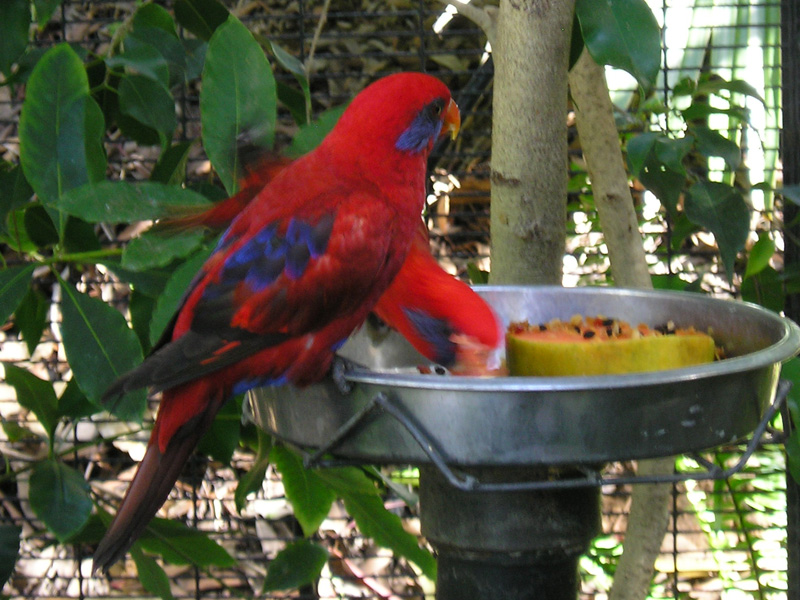
The Red-and-blue Lory, scientifically known as Eos histrio, is an eye-catching parrot native to the Sulawesi region and its neighboring islands like Talaud and Sangihe in Indonesia. This species plays a significant ecological role as a pollinator and seed disperser, contributing to the health of its tropical forest habitat. The Red-and-blue Lory's vivid coloration makes it an attractive target for the illegal pet trade, which has impacted its population numbers. This lory inhabits lowland and hill forests, often frequenting coconut plantations and other cultivated areas where it can find food. Its preference for flowering trees highlights its importance in the ecosystem, as it facilitates the cross-pollination of various tropical plant species. Observers will often find this lory in flocks, indulging in social interactions and feeding on nectar, fruit, and sometimes insects. Seasonal behaviors of the Red-and-blue Lory include slight altitudinal migrations in response to food availability. During the breeding season, they become more territorial, defending nesting sites vigorously. Conservation efforts are crucial to preserve this species, as habitat destruction and trapping continue to pose threats. Efforts to protect their natural habitat and enforce anti-poaching laws are of utmost importance. Eos histrio's future hinges on effective conservation strategies, including habitat restoration and local community engagement to raise awareness about the importance of protecting this charismatic bird.
The Red-and-blue Lory belongs to the family Psittacidae, within the order Psittaciformes. These birds typically live average 15-20 years, with a maximum recorded of 25 years..
How to Identify a Red-and-blue Lory
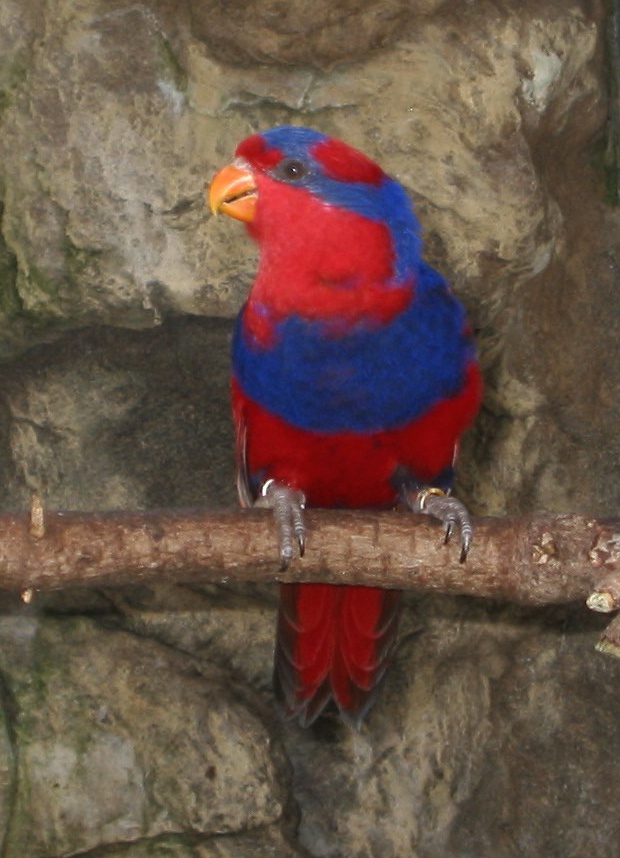
The Red-and-blue Lory is immediately recognizable due to its vibrant red plumage, which covers most of its body, accented by striking blue on the wings and tail. Adult lories show a robust build, with a strong, curved bill adapted for their frugivorous and nectarivorous diet. Males and females are similar in appearance, making sexing difficult in the field. Juveniles can be identified by their slightly duller plumage and less pronounced blue markings. In flight, the Red-and-blue Lory exhibits a swift, direct flight pattern, with rapid wingbeats. Its silhouette is characterized by long, pointed wings and a relatively short tail. When perched, this lory's posture is upright, often seen clinging to branches or hanging upside down while foraging. Eos histrio can be confused with other lories within its range, such as the Violet-necked Lory (Eos squamata), but its distinct coloration and vocalizations typically set it apart. Accurate identification requires observing these subtle differences in plumage and behavior.
Having trouble telling birds apart? Upload a photo to our bird identification tool for an instant species match.
Red-and-blue Lory Habitat and Range
Preferred Habitat
The Red-and-blue Lory resides primarily in tropical lowland and hill forests. It favors areas rich in flowering and fruiting trees, such as coconut plantations and secondary growth forests. This lory typically occurs at elevations from sea level up to about 1,000 meters, although it occasionally ventures higher during certain times of the year. In urban and rural landscapes, it can sometimes be found in parks and gardens, provided there are sufficient feeding resources. Eos histrio demonstrates adaptability to altered habitats, but it remains most abundant in pristine forest environments. Seasonal shifts in habitat are often driven by food availability, with the lory migrating altitudinally within its range to exploit different flowering periods.
Geographic Range
The Red-and-blue Lory's range is limited to the islands of Indonesia, including the northern parts of Sulawesi and the smaller islands of Talaud and Sangihe. It is a non-migratory bird, generally residing year-round within its established territories. The highest population densities occur in regions where suitable forest habitats remain intact. Despite its restricted range, this lory can be locally abundant, especially in areas where conservation measures have been implemented. Its distribution is adversely affected by habitat loss and fragmentation, leading to reduced population sizes in some parts of its range. Conservationists focus efforts on protecting key forest areas to ensure the survival of this vibrant species.
Want to know which birds visit your area? Browse our backyard birds by location guides for region-specific species lists.
What Does the Red-and-blue Lory Eat?
Eos histrio primarily feeds on nectar and pollen from a variety of flowering plants, playing a vital role in the pollination process. Its specialized brush-tipped tongue allows it to efficiently harvest these resources. In addition to nectar, the Red-and-blue Lory consumes fruits, seeds, and occasionally insects, which provide essential proteins. Seasonal changes in diet occur as the availability of flowering and fruiting plants fluctuates throughout the year. Foraging often involves acrobatic maneuvers, with lories hanging upside down from branches to access food. They exhibit a preference for certain plant species, such as coconut and eucalyptus, which are commonly found in their habitat.
Red-and-blue Lory Behavior and Social Structure
The Red-and-blue Lory is a highly social and vocal species, often found in small to medium-sized flocks. These flocks play a crucial role in locating food sources, as lories communicate actively while foraging. Territorial behavior becomes prominent during the breeding season, with pairs defending nesting sites against intruders. Courtship displays involve mutual preening and synchronized movements, strengthening pair bonds. Eos histrio responds to predators with alarm calls and group mobbing, a cooperative defense strategy. Daily activity patterns include periods of active foraging interspersed with rest during the hottest parts of the day. At dusk, lories gather in communal roosts, engaging in social interactions before settling down for the night.
Red-and-blue Lory Nesting and Reproduction
Nesting for the Red-and-blue Lory occurs in tree cavities, often in tall trees that provide security from ground predators. They show a preference for natural tree hollows but may also utilize abandoned nests of other bird species. The typical clutch size ranges from two to three eggs, with both parents participating in incubation duties. The incubation period lasts about 24 to 26 days, after which the chicks hatch. Fledging occurs approximately eight to nine weeks later, with parental care extending for several weeks as the young learn to forage independently. The lory typically raises one brood per year, although favorable conditions may allow for a second attempt.
Red-and-blue Lory Sounds and Vocalizations
The Red-and-blue Lory produces a range of vocalizations, from high-pitched whistles to harsh chattering calls. Its primary song consists of a series of melodious notes interspersed with rasping sounds, often described as a mix of whistles and squawks. Alarm calls are sharp and piercing, serving to alert flock members of potential danger. During the dawn chorus, these lories contribute a lively cacophony that resonates through the forest. When compared to other bird sounds, its calls might resemble the chatter of a busy parrot aviary, characterized by their energetic and social nature.
Interesting Facts About the Red-and-blue Lory
- 1The Red-and-blue Lory's specialized tongue is perfectly adapted for collecting nectar, featuring brush-like papillae.
- 2Eos histrio, despite its vibrant appearance, blends surprisingly well into the canopy when feeding on flowering trees.
- 3This lory species can travel considerable distances in search of food, showcasing impressive stamina and navigational skills.
- 4Red-and-blue Lories are known for their playful nature, often seen engaging in acrobatics among the tree branches.
- 5Unlike many other parrots, these lories do not mimic human speech but compensate with a range of natural calls.
- 6Their role as pollinators is crucial for maintaining biodiversity in their native tropical ecosystems.
- 7Eos histrio forms lifelong pair bonds, with pairs exhibiting strong mutual affection through social grooming.
Red-and-blue Lory Conservation Status
The IUCN lists the Red-and-blue Lory as endangered, with a population trend showing a decline. Major threats include habitat destruction due to logging and agriculture, as well as illegal trapping for the pet trade. Conservation efforts focus on habitat protection and restoration, along with the enforcement of anti-poaching laws. Historical data indicates a significant reduction in population size over the past decades, emphasizing the need for urgent conservation measures. Community involvement and education play crucial roles in protecting this species, ensuring its continued presence in the wild.
Other Psittacidae Species


Birds Similar to the Red-and-blue Lory
These species are often confused with the Red-and-blue Lory due to similar appearance or overlapping range.