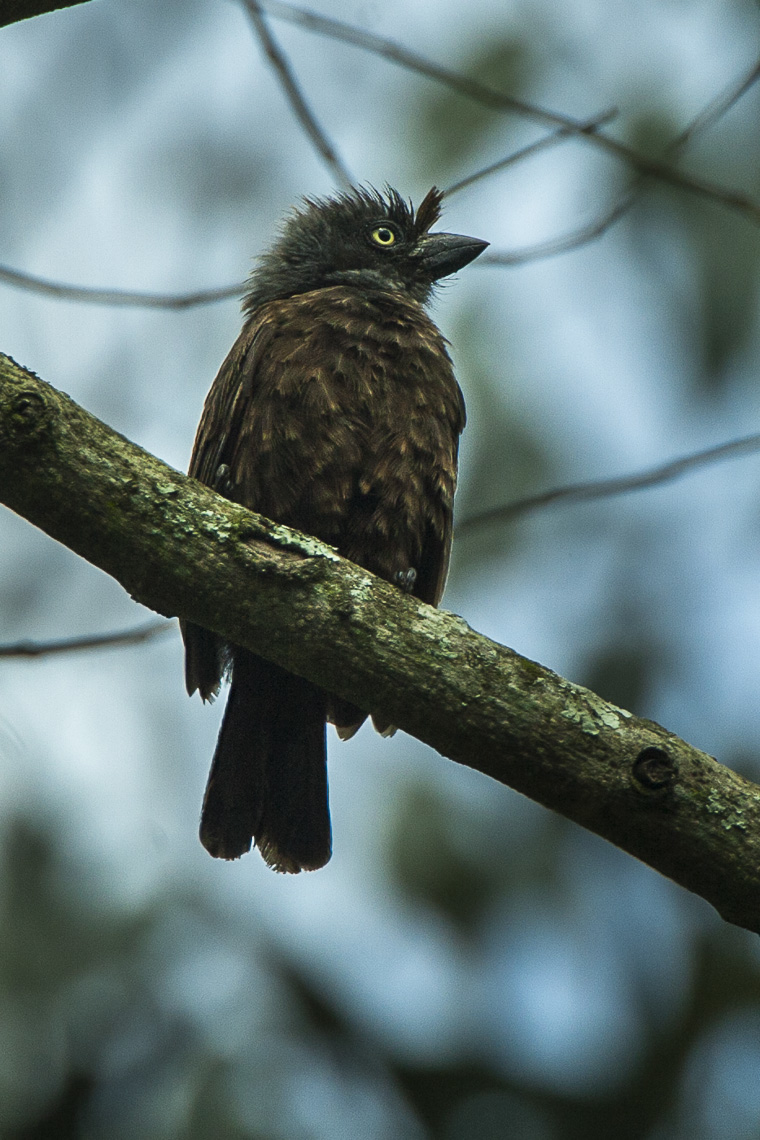
Red-and-yellow Barbet
Trachyphonus erythrocephalus
Order: Piciformes / Family: Lybiidae

Wikimedia Commons
About the Red-and-yellow Barbet
The Red-and-yellow Barbet (Trachyphonus erythrocephalus) is a captivating presence in the landscapes of East Africa. This bird, known for its vibrant plumage, plays a vital ecological role in its native habitat. Found primarily in countries such as Kenya, Tanzania, and Ethiopia, the Red-and-yellow Barbet thrives in arid and semi-arid environments, including scrubland and savannahs.
The bird's striking coloration is not merely for show; it serves as a means of communication and mate attraction. The Red-and-yellow Barbet's bright colors are a common sight in the thorny vegetation and rocky outcrops it calls home. As a member of the family Lybiidae, this barbet is closely related to other African barbets, contributing to the region's rich avian diversity.
Ecologically, the Red-and-yellow Barbet plays an important role as both predator and prey. It helps control insect populations, feeding on a variety of invertebrates. Additionally, it is preyed upon by larger birds and mammals, making it a crucial link in the food chain. During the breeding season, these birds become particularly active and vocal, establishing territories and engaging in elaborate courtship displays.
The seasonal behaviors of the Red-and-yellow Barbet are intriguing. While they inhabit the same regions year-round, their feeding and social behaviors may shift with the availability of food resources. During rainy seasons, when insects are plentiful, these barbets are more likely to forage actively and showcase their striking plumage to potential mates.
The Red-and-yellow Barbet belongs to the family Lybiidae, within the order Piciformes. These birds typically live average 5-8 years, with a maximum recorded of 12 years..
How to Identify a Red-and-yellow Barbet
Adult Red-and-yellow Barbets are unmistakable, thanks to their vivid red and yellow plumage. The head and neck are predominantly red with black markings, while the body showcases a mosaic of yellow, black, and white spots. The underparts are primarily yellow, with a distinctive red band across the chest.
Juvenile Red-and-yellow Barbets, while sharing the basic color pattern of adults, exhibit duller and less defined markings. This difference allows for easy distinction in the field, especially when observing family groups.
Males and females are similar in appearance, but males typically exhibit more intense coloration, particularly around the head and neck regions. This sexual dimorphism, while subtle, can be a helpful field mark for experienced birders. When perched, the barbet's stout build and upright posture are distinctive, aiding in identification even at a distance.
Having trouble telling birds apart? Upload a photo to our bird identification tool for an instant species match.
Red-and-yellow Barbet Habitat and Range
Preferred Habitat
The Red-and-yellow Barbet prefers arid and semi-arid habitats, thriving in thorny scrubland, savannahs, and rocky areas. These environments provide the bird with ample foraging opportunities and suitable nesting sites. It can often be found at elevations ranging from sea level to 2,000 meters, depending on the specific region.
While primarily associated with rural and wild areas, the Red-and-yellow Barbet occasionally ventures into more urban settings, especially in regions where natural habitat interfaces with human settlements. However, it remains more abundant in undisturbed habitats, where it can exploit its preferred foraging grounds without competition from other bird species.
Geographic Range
The Red-and-yellow Barbet's range is largely confined to East Africa, with populations concentrated in Kenya, Tanzania, and Ethiopia. It is a non-migratory species, residing year-round within these countries. The bird's distribution is patchy, aligning with the availability of its preferred arid and semi-arid habitats.
While not considered migratory, the Red-and-yellow Barbet may exhibit local movements in response to changes in food availability or environmental conditions. In some areas, particularly those experiencing seasonal droughts, the barbet may relocate temporarily to regions with more abundant resources.
Want to know which birds visit your area? Browse our backyard birds by location guides for region-specific species lists.
What Does the Red-and-yellow Barbet Eat?
The diet of the Red-and-yellow Barbet is primarily insectivorous, with a strong preference for beetles, grasshoppers, and termites. These birds employ a foraging technique that involves pecking at the ground or probing into crevices to extract prey. They are known to take advantage of seasonal swarms of insects, shifting their diet based on availability.
In addition to insects, the Red-and-yellow Barbet occasionally consumes fruits and seeds, supplementing its diet with plant matter when animal prey is scarce. This dietary flexibility allows it to thrive in various environments, adjusting its feeding strategies to suit local conditions.
Red-and-yellow Barbet Behavior and Social Structure
The Red-and-yellow Barbet exhibits a complex social structure, often forming monogamous pairs or small family groups. These birds are territorial, with pairs defending their nesting sites and feeding areas against intruders. Territorial disputes can involve vocal displays and short chases.
Courtship displays in Red-and-yellow Barbets are elaborate, with males performing a series of head bobs and calls to attract females. Once paired, both sexes contribute to nest building and chick rearing.
These barbets are primarily diurnal, with activity peaking in the early morning and late afternoon. During the hottest parts of the day, they may seek shade to avoid the intense heat. In response to predators, the barbet employs alarm calls and evasive flight tactics, using its agility to avoid capture.
Red-and-yellow Barbet Nesting and Reproduction
Red-and-yellow Barbets build their nests in holes, either in trees or in earthen banks. They excavate these cavities themselves, using their strong bills to carve out the nesting site. The nest chamber is lined with plant matter, providing a cushioned environment for the eggs.
The typical clutch size ranges from two to four eggs, with both parents sharing incubation duties over a period of about 13 to 15 days. After hatching, the chicks remain in the nest for approximately three to four weeks, during which time both parents are involved in feeding and caring for the young.
The species typically raises one brood per year, although in regions with extended favorable conditions, it may occasionally attempt a second.
Red-and-yellow Barbet Sounds and Vocalizations
The primary song of the Red-and-yellow Barbet is a rhythmic series of drumming notes, often described as 'trrrrrr-trrrrrr'. This sound is steady and mechanical, serving as both a territorial marker and a communication tool between mates.
In addition to their song, Red-and-yellow Barbets produce a variety of call notes, including sharp 'chik-chik' sounds used in alarm or contact. These calls are particularly prominent during the dawn chorus, when the birds are most vocally active.
Interesting Facts About the Red-and-yellow Barbet
- 1The Red-and-yellow Barbet's striking plumage serves as a deterrent to predators, signaling that it may be toxic or unpalatable.
- 2These barbets are known to use their heavy bills to excavate nesting holes in termite mounds, taking advantage of the mound's structural integrity.
- 3Despite their bright colors, Red-and-yellow Barbets can be surprisingly elusive, often remaining hidden in dense thorny vegetation.
- 4Their diet includes a significant amount of fruit, which aids in seed dispersal for various plant species in their habitat.
- 5Red-and-yellow Barbets are one of the few bird species that can thrive in the harsh environments of East Africa's semi-arid regions.
Red-and-yellow Barbet Conservation Status
The Red-and-yellow Barbet is currently listed as Least Concern by the IUCN. Its population trend appears stable, with no significant declines reported across its range. However, habitat destruction and fragmentation pose potential threats to local populations. Conservation efforts in some regions include habitat preservation and restoration projects, aimed at maintaining the arid and semi-arid environments these birds depend on. While not currently at risk, continued monitoring is essential to ensure the species remains secure.