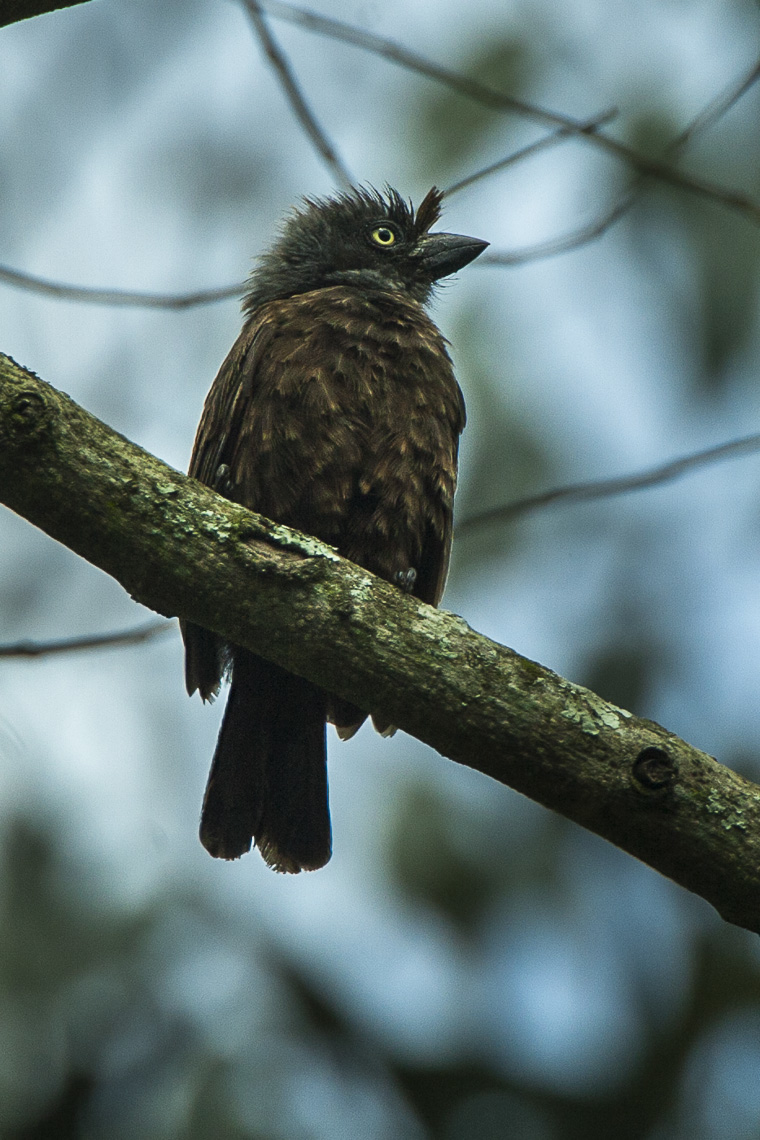
Red-faced Barbet
Lybius rubrifacies
Order: Piciformes / Family: Lybiidae

Wikimedia Commons
About the Red-faced Barbet
The Red-faced Barbet (Lybius rubrifacies) is a vibrant member of the Lybiidae family, found primarily in the tropical woodlands and savannas of East Africa. This bird is particularly noted for the distinctive red coloration that adorns its face, making it easily recognizable among its peers. Beyond its striking appearance, the Red-faced Barbet plays a crucial ecological role in its habitat. As a frugivore, it assists in seed dispersal, contributing to the health and regeneration of its ecosystem. It predominantly inhabits regions within Rwanda, Burundi, and parts of Uganda, thriving in areas where acacia and other fruiting trees are abundant.
The significance of the Red-faced Barbet extends beyond its ecological contributions. In many of the regions it inhabits, the bird is part of local folklore and culture, often symbolizing vibrancy and vitality. Birdwatchers and naturalists alike are drawn to the Red-faced Barbet not only for its beauty but also for its behavior. The bird is known for its gregarious nature, often seen in small groups, chattering and foraging together. During the dry season, it tends to stay closer to permanent water sources, while the wet season sees it venturing further afield as food becomes more plentiful.
Ecologically, the Red-faced Barbet serves as a bioindicator, reflecting the health of its environment. Changes in its population can signal shifts in the ecosystem, whether due to habitat loss, climate change, or human activity. Observations have shown that the Red-faced Barbet can adapt to modified landscapes, although it prefers areas with dense vegetation and a reliable supply of fruit. Conservationists are particularly interested in this species as it helps gauge the effectiveness of forest conservation efforts in East Africa. The bird's presence in protected areas highlights the importance of maintaining biodiversity in these regions, ensuring the survival of the Red-faced Barbet and countless other species that share its habitat.
The Red-faced Barbet belongs to the family Lybiidae, within the order Piciformes. These birds typically live typically 6-8 years, with some individuals living up to 10 years..
How to Identify a Red-faced Barbet
The Red-faced Barbet is a medium-sized bird, measuring about 21 centimeters in length. Its most distinguishing feature is the vibrant red plumage covering its face, which contrasts starkly with its otherwise olive-green body. The wings and tail are a duller green, while the underparts are pale and somewhat streaked. Both sexes appear similar, but males might exhibit slightly more intense coloration, particularly during the breeding season. Juveniles, on the other hand, are duller with less pronounced facial coloring, allowing them to blend more easily into their environment.
In terms of field marks, the Red-faced Barbet's stout bill is another defining characteristic. It is strong and slightly curved, adapted for its frugivorous diet. The bird's eyes are dark and lively, set against the vivid red of its face. When in flight, its silhouette is compact with rapid, undulating wingbeats typical of barbets. Perched, the Red-faced Barbet maintains an upright posture, often found on exposed branches where it can survey its surroundings for food and threats.
While the Red-faced Barbet is quite distinct, it can sometimes be confused with other barbet species, such as the Black-collared Barbet. However, the latter lacks the intense red facial markings, making differentiation straightforward for those familiar with the region's avifauna. Observers should note the bird's preference for lower to mid-canopy perches, where it is most often seen engaging in its characteristic social behaviors.
Having trouble telling birds apart? Upload a photo to our bird identification tool for an instant species match.
Red-faced Barbet Habitat and Range
Preferred Habitat
The Red-faced Barbet primarily inhabits tropical woodlands and savannas, favoring areas with abundant fruiting trees such as acacias and figs. It is most commonly found at elevations ranging from 1,000 to 2,500 meters, where the climate supports a diverse array of flora and fauna. The bird is particularly associated with the Albertine Rift montane forests, where it thrives in the mosaic of forest patches and open woodlands.
During the dry season, the Red-faced Barbet may move to areas closer to permanent water sources, ensuring access to both food and hydration. In contrast, the wet season allows it to expand its territory, as the availability of fruit increases. While primarily a resident of rural and semi-wild landscapes, the Red-faced Barbet occasionally ventures into suburban gardens and orchards, particularly where native trees are present.
Though not typically a bird of urban environments, the Red-faced Barbet's adaptability allows for occasional sightings in city parks and botanical gardens, especially in regions where urbanization encroaches upon natural habitats. Its presence in such areas underscores the importance of green spaces in urban planning, providing crucial refuges for native wildlife.
Geographic Range
The Red-faced Barbet's range is largely confined to East Africa, with its core population residing in the countries of Rwanda, Burundi, and Uganda. It thrives in the tropical and subtropical woodlands and savannas of these regions. Within Uganda, the bird is most commonly observed in the western parts, particularly near the Bwindi Impenetrable Forest and Queen Elizabeth National Park.
Unlike many other bird species, the Red-faced Barbet does not undertake long-distance migrations, remaining within its established range year-round. However, it may engage in short-distance movements in response to seasonal variations in food supply and habitat conditions. These movements are typically elevation-based, with the bird descending to lower altitudes during cooler months and returning to higher elevations as temperatures rise.
Population density hotspots for the Red-faced Barbet include the Albertine Rift, a region renowned for its biodiversity and endemism. Here, the bird benefits from the combination of forest cover and open woodlands, where fruiting trees abound. As a result, conservation efforts in this area are vital for maintaining the health and stability of the species' population.
Want to know which birds visit your area? Browse our backyard birds by location guides for region-specific species lists.
What Does the Red-faced Barbet Eat?
The Red-faced Barbet is primarily frugivorous, relying on a diet rich in fruits and berries. It shows a marked preference for figs and other soft fruits, which are abundant in its native habitats. In addition to fruit, the bird supplements its diet with insects, particularly during the breeding season when the demand for protein increases. This dietary flexibility aids in its survival, allowing it to exploit various food sources throughout the year.
Seasonal changes influence the Red-faced Barbet's diet. During the wet season, when fruits are plentiful, the bird can indulge in a variety of fruiting trees, often foraging in the canopy. In contrast, the dry season necessitates a switch to insects and occasionally seeds, which it finds closer to the ground or within the bark of trees.
Foraging techniques of the Red-faced Barbet are as varied as its diet. It employs a combination of gleaning and probing, using its strong bill to access hard-to-reach food items. The bird often forages in small groups, which allows it to efficiently locate and exploit food sources. This social foraging behavior also provides safety in numbers, reducing the risk of predation as the birds move between feeding sites throughout the day.
Red-faced Barbet Behavior and Social Structure
The Red-faced Barbet exhibits a range of interesting and complex behaviors. It is a social species, typically found in small groups or pairs, particularly outside the breeding season. These groups engage in cooperative foraging and often communicate through a series of calls and songs, strengthening social bonds and aiding in territory defense.
Territorial behavior is pronounced in the Red-faced Barbet, with males and females both participating in the defense of their chosen area. Vocalizations play a key role in this, with the birds using calls to assert dominance and establish boundaries. During the breeding season, the Red-faced Barbet displays heightened territoriality. Males perform courtship displays that include song and physical posturing to attract females.
The bird's response to predators is also notable. When threatened, the Red-faced Barbet may engage in mobbing behavior, calling in others to harass and drive away potential threats. This cooperative defense mechanism is effective against a variety of avian and terrestrial predators. In terms of daily activity, the Red-faced Barbet is diurnal, with peak activity occurring during the morning and late afternoon when foraging conditions are optimal. It spends the hottest parts of the day resting in the shade, conserving energy for more productive feeding periods.
Red-faced Barbet Nesting and Reproduction
Red-faced Barbets exhibit unique nesting behaviors consistent with their family, the Lybiidae. They are cavity nesters, often utilizing natural tree holes or those excavated by other species. Occasionally, they will carve out their own nesting site using their robust bills. Preferred nesting trees are those with soft wood, making excavation easier.
The typical clutch size for the Red-faced Barbet ranges from two to four eggs. Both parents share responsibilities, with the incubation period lasting approximately 13 to 15 days. During this time, the female may spend more time incubating, but both parents are actively involved in feeding and caring for the young.
Once hatched, the chicks remain in the nest for about 30 days before fledging. Parental care extends beyond fledging, with both adults continuing to feed and protect the young. The Red-faced Barbet generally raises one brood per year, although in particularly fruitful seasons, a second brood may be attempted. Nesting sites are often reused, provided they remain secure from predators and environmental threats.
Red-faced Barbet Sounds and Vocalizations
The Red-faced Barbet's vocalizations are a key aspect of its behavior and social structure. Its primary song is a rhythmic series of notes, often described as a 'puk-puk-puk,' delivered in a rapid sequence. This song serves as both a territorial marker and a means of communication between mates.
In addition to its song, the Red-faced Barbet emits a variety of call notes, including short, sharp 'tuk' sounds used in alarm situations. These alarm calls are crucial for alerting other group members to potential threats, prompting a swift and coordinated response.
During the dawn chorus, the Red-faced Barbet's calls contribute to the vibrant early morning soundscape of its habitat. Its vocal repertoire, while not as varied as some other songbirds, is distinctive enough to facilitate individual recognition among conspecifics. This ability to distinguish between individuals may play a role in maintaining social hierarchies and reproductive pair bonds within its community.
Interesting Facts About the Red-faced Barbet
- 1The Red-faced Barbet can be heard from over 100 meters away, thanks to its loud, distinctive calls.
- 2Despite its name, the Red-faced Barbet's facial plumage can vary in intensity, depending on the season and individual age.
- 3This species is known to engage in sunbathing, spreading its wings to soak up the warmth, a behavior that aids in feather maintenance.
- 4The Red-faced Barbet is adept at mimicking the calls of other birds, which may help it communicate with different species.
- 5In some local cultures, the Red-faced Barbet is considered a symbol of happiness, often associated with festival times.
Red-faced Barbet Conservation Status
Currently, the Red-faced Barbet is classified as Near Threatened by the IUCN. Its population trend is considered stable, but it faces several threats that could impact its future. Habitat loss, primarily due to deforestation and agricultural expansion, poses the most significant risk to this species. As their natural habitats are altered or destroyed, Red-faced Barbets are forced into less suitable environments, which can affect their breeding success and survival. Conservation efforts focus on preserving the bird's natural habitats, particularly within protected areas like national parks and wildlife reserves. These efforts include reforestation projects and the establishment of community-based conservation programs that promote sustainable land use practices. Historically, the Red-faced Barbet's population has experienced fluctuations corresponding to changes in land use and habitat availability. Although currently stable, continuous monitoring and habitat protection are essential to ensure the species does not move closer to endangerment. Engaging local communities in conservation initiatives has proven beneficial, fostering a sense of stewardship and awareness about the importance of preserving biodiversity.