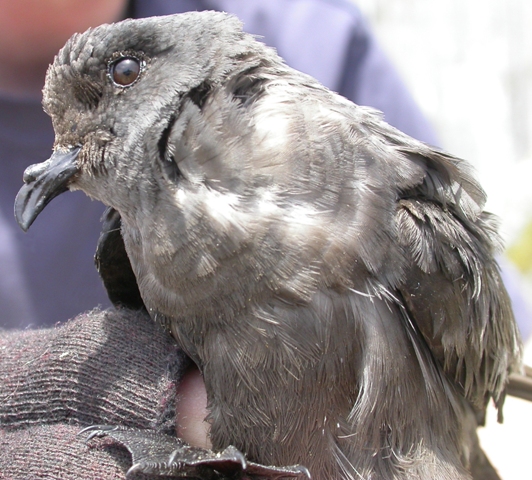
Ringed Storm-Petrel
Oceanodroma hornbyi
Order: Procellariiformes / Family: Hydrobatidae

Wikimedia Commons
About the Ringed Storm-Petrel
The Ringed Storm-Petrel (Oceanodroma hornbyi) is a small seabird belonging to the family Hydrobatidae, found primarily in the arid coastal regions of the western coast of South America. This species plays a crucial role in the marine ecosystem, serving as both predator and prey. It primarily inhabits the Humboldt Current, a cold, nutrient-rich oceanic current that supports a diverse marine food web. The current extends from northern Peru to central Chile, creating an ideal environment for the Ringed Storm-Petrel's foraging activities. This species is significant not only for its ecological role but also as an indicator of ocean health. As a pelagic bird, it rarely comes close to land except during the breeding season. This elusive nature makes it a fascinating subject for ornithologists and birdwatchers alike. The Ringed Storm-Petrel exhibits unique seasonal behaviors, migrating over vast ocean distances. During the breeding season, they congregate on remote, rocky islands or coastal cliffs where they nest in burrows or crevices. Outside the breeding season, these birds are truly pelagic, spending months at sea and covering thousands of kilometers in search of food. Their movements are closely tied to ocean currents and winds, which aid their long-distance travel. The Ringed Storm-Petrel's presence in specific regions highlights the health and productivity of these marine areas. As they feed on small fish, crustaceans, and cephalopods, they help maintain the balance of marine life. Observations of their feeding patterns and population dynamics provide valuable insights into changes in oceanic conditions, such as shifts in temperature and food availability. Understanding the distribution and behavior of the Ringed Storm-Petrel contributes to a broader comprehension of marine biodiversity and ecosystem health, underscoring the interconnectedness of avian species and their environments.
The Ringed Storm-Petrel belongs to the family Hydrobatidae, within the order Procellariiformes. These birds typically live average 15 years with a max recorded of 20 years..
How to Identify a Ringed Storm-Petrel
The Ringed Storm-Petrel is easily recognized by its striking plumage, which features a distinctive white band encircling its chest. Adults primarily display a sooty black coloration on their upperparts, contrasting sharply with their white underparts. This stark contrast aids in their identification at sea, especially during flight when the white band becomes readily visible. Juveniles resemble adults in plumage, but their markings may appear less defined. There is no notable sexual dimorphism in this species, meaning males and females look alike, which can pose a challenge for identification based solely on visual cues. When compared to similar species like the Black Storm-Petrel, the Ringed Storm-Petrel's white band and slightly smaller size are key differentiators. In flight, they display a characteristic erratic, fluttering flight pattern typical of storm-petrels, with intermittent glides. Their silhouette often shows a slightly forked tail and long wings. When perched, which is infrequent given their pelagic nature, they maintain a low profile with wings held close to the body. These field marks, combined with their behavior and habitat preference, aid in their identification by birdwatchers and researchers.
Having trouble telling birds apart? Upload a photo to our bird identification tool for an instant species match.
Ringed Storm-Petrel Habitat and Range
Preferred Habitat
The Ringed Storm-Petrel inhabits open ocean environments, particularly favoring the waters influenced by the Humboldt Current. This current is renowned for its cold, nutrient-rich waters that support a diverse array of marine life. During the breeding season, they are found on remote islands and coastal cliffs with little to no vegetation, offering them suitable nesting sites. These locations often include regions off the coasts of Peru and northern Chile. Unlike many coastal birds, the Ringed Storm-Petrel does not frequent urban environments or inland areas. Its life is intricately tied to the sea, where it spends most of its time exploiting the oceanic conditions for food and survival. Seasonal shifts in ocean currents may influence their distribution slightly, but they primarily remain within the Humboldt Current's influence throughout the year.
Geographic Range
The Ringed Storm-Petrel's range largely centers around the coastal waters of western South America, specifically from northern Peru to central Chile. This species breeds on isolated islands and rocky coastal areas within this range. During the non-breeding season, they remain pelagic, traversing the open ocean and following the Humboldt Current. Their presence is particularly noted in areas where this current creates nutrient upwellings, supporting abundant marine life. While some seabirds exhibit extensive migratory patterns, the Ringed Storm-Petrel's movements are more localized, dictated by the availability of food and suitable oceanic conditions. Population density hotspots occur near rich feeding grounds, often correlating with the most productive areas of the current.
Want to know which birds visit your area? Browse our backyard birds by location guides for region-specific species lists.
What Does the Ringed Storm-Petrel Eat?
The Ringed Storm-Petrel primarily feeds on small fish, crustaceans, and cephalopods, exploiting the rich feeding grounds provided by the Humboldt Current. Their diet varies seasonally, depending on the availability of prey species. During breeding season, their foraging is concentrated near nesting sites, where they gather food for their chicks. They employ a dynamic feeding technique, skimming over the ocean surface to pick up prey, a behavior common to many storm-petrels. In addition to this surface feeding, they occasionally plunge-dive to capture prey just below the water's surface. Prey size generally ranges from small to moderately-sized marine organisms, allowing the Ringed Storm-Petrel to exploit a variety of oceanic food resources. Their feeding schedule is primarily dictated by prey availability, with increased activity during the early morning and late afternoon when fish and other prey are near the surface.
Ringed Storm-Petrel Behavior and Social Structure
The Ringed Storm-Petrel exhibits fascinating behaviors typical of pelagic seabirds. They are highly social, often seen in flocks at sea, especially near productive feeding grounds. These flocks can number from a few individuals to several hundred, depending on food availability. Territorial behavior is minimal, as their vast oceanic environment offers ample space. During the breeding season, courtship displays involve synchronized flight patterns and vocalizations, strengthening pair bonds. Once paired, they exhibit strong site fidelity, returning to the same nesting locations annually. Their response to predators, such as skuas and gulls, includes evasive flight and seeking refuge in burrows. Daily activity patterns revolve around feeding, with peak activity during dawn and dusk. Their nocturnal foraging habits allow them to exploit different prey and reduce competition with diurnal species.
Ringed Storm-Petrel Nesting and Reproduction
Ringed Storm-Petrels nest in burrows or natural crevices on remote islands and coastal cliffs. These locations offer protection from predators and harsh weather. Nests consist of simple scrapes in the soil or rock, occasionally lined with feathers or vegetation. Clutch size typically consists of a single egg, which both parents incubate for about 40-50 days. This shared incubation ensures the egg remains warm and protected while allowing both adults to feed. Once hatched, the chick remains in the nest for an additional 60-70 days until it fledges. During this period, both parents take turns feeding the chick, bringing back partially digested food from sea for regurgitation. The Ringed Storm-Petrel usually raises one brood per year, with breeding success closely tied to food availability and environmental conditions.
Ringed Storm-Petrel Sounds and Vocalizations
The Ringed Storm-Petrel produces a variety of vocalizations, primarily used during the breeding season. Their primary song consists of a rhythmic series of chattering notes, often described as a rapid 'chi-chi-chi' sound, which can be likened to the mechanical clicks of an old typewriter. Call notes are typically soft and high-pitched, used for communication between mates or parents and chicks. Alarm calls, emitted when predators approach, are harsher and more urgent, serving as a warning to others. Unlike many land birds, the Ringed Storm-Petrel does not participate in a dawn chorus. Their vocalizations are more commonly heard at night near nesting colonies, where they serve as a means to maintain contact in the darkness.
Interesting Facts About the Ringed Storm-Petrel
- 1The Ringed Storm-Petrel can travel thousands of kilometers without touching land, relying on ocean currents for navigation.
- 2Unlike many birds, the Ringed Storm-Petrel has a highly developed sense of smell, which aids in locating food and nesting sites.
- 3Despite its name, the Ringed Storm-Petrel is not closely related to other petrels but shares similar ecological niches.
- 4Breeding colonies of Ringed Storm-Petrels are so remote that many remain undiscovered, offering potential for new research.
- 5The white chest band of the Ringed Storm-Petrel is unique among storm-petrels, making it a reliable identification marker.
- 6The Ringed Storm-Petrel's nocturnal feeding habits reduce competition with diurnal seabirds, optimizing their foraging success.
- 7Their small size, about 20 cm in length, allows the Ringed Storm-Petrel to maneuver deftly in flight, avoiding predators.
Ringed Storm-Petrel Conservation Status
The Ringed Storm-Petrel is currently listed as Near Threatened by the IUCN. The population trend shows a slow decline, primarily due to habitat degradation and human disturbance at nesting sites. Introduced predators, such as rats and cats, pose significant threats to their eggs and chicks. Conservation efforts focus on habitat protection and predator control on breeding islands. Historically, population numbers were likely higher before significant human impact, but precise historical data remains limited. Continued monitoring and conservation actions are vital to prevent further decline and to ensure the survival of this unique seabird.