
Rosy Pipit
Anthus roseatus
Order: Passeriformes / Family: Motacillidae

Wikimedia Commons
About the Rosy Pipit
The Rosy Pipit, Anthus roseatus, is a captivating songbird of the family Motacillidae, flourishing in the alpine meadows and grasslands of the Himalayas. This bird stands out due to its distinctive rosy underparts, a feature that is both aesthetically appealing and aids in identification. The Rosy Pipit is distributed across central and southern Asia, with a presence in countries like India, Nepal, Bhutan, and parts of China. It predominantly inhabits high-altitude regions, often found at elevations ranging from 3,000 to 5,500 meters. These birds are integral components of their ecosystems, contributing to insect population control and serving as prey for larger predators. During the breeding season, the Rosy Pipit undergoes a spectacular transformation, with males exhibiting more vibrant plumage. This seasonal change plays a critical role in their courtship rituals. The ecological role of the Rosy Pipit extends beyond its immediate habitat. As a migratory species, it undertakes long journeys between breeding and wintering grounds. This migration influences nutrient cycles across regions, as the birds disperse seeds and contribute to the flow of energy within ecosystems. In terms of behavior, the Rosy Pipit is a ground-dwelling bird, adept at navigating the rugged terrains of its alpine habitat. Its foraging habits are particularly notable, as it employs a characteristic "run-and-pause" technique to capture insects. This behavior not only ensures its dietary needs are met but also highlights the adaptability and resourcefulness of the species. Moreover, their presence in such diverse habitats underscores their ecological significance, as they serve as indicators of environmental health. Seasonal behaviors of the Rosy Pipit include altitudinal migration. During the harsh Himalayan winters, these birds descend to lower altitudes, where conditions are less severe. This seasonal shift is crucial for their survival, allowing them to exploit different resources throughout the year. Their breeding season, typically from May to July, is a period of heightened activity, with males engaging in elaborate aerial displays to attract mates. These displays are not only a spectacle for birdwatchers but also a vital aspect of their reproductive strategy.
The Rosy Pipit belongs to the family Motacillidae, within the order Passeriformes. These birds typically live average 2-3 years, with some individuals living longer..
How to Identify a Rosy Pipit
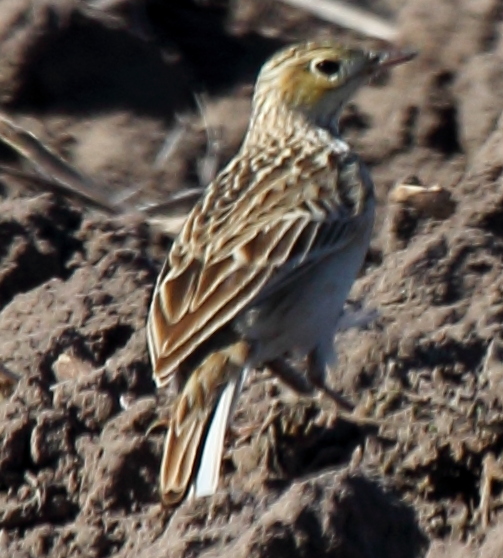
The Rosy Pipit presents a striking appearance that facilitates identification in the field. Adult Rosy Pipits possess a distinctive pinkish wash on their underparts, with brown streaking on their backs and wings. Their legs are pale, and their bills are slender and pointed. The rosy tinge is more pronounced in males, especially during the breeding season, while females tend to be slightly duller. Juveniles, on the other hand, exhibit a more subdued coloration, with less visible rosy tones and more pronounced streaking. These differences in plumage between adults and juveniles are important for accurate identification. When observing in flight, the Rosy Pipit displays a characteristic flight silhouette, with rapid wingbeats and an undulating motion. This flight pattern, combined with its vocalizations, aids birders in distinguishing it from similar species. Its perching posture is often upright, a trait common among pipits, allowing for easy observation of its features. Due to its habitat, the Rosy Pipit may be confused with other pipit species, such as the Tree Pipit or Meadow Pipit. However, the distinctive rosy underparts and high-altitude preference set it apart from these relatives. Additionally, the Rosy Pipit's song, a series of high-pitched notes, differs from the songs of other pipits, providing another layer of identification.
Having trouble telling birds apart? Upload a photo to our bird identification tool for an instant species match.
Rosy Pipit Habitat and Range
Preferred Habitat
The Rosy Pipit thrives in specific habitats, predominantly alpine meadows and grasslands. These areas provide the open spaces and low vegetation that the species favors. In the Himalayas, from Bhutan to Nepal and into northern India, these pipits are commonly found at elevations between 3,000 to 5,500 meters. This high-altitude preference limits their habitat range but also reduces competition with other pipit species. During the non-breeding season, the Rosy Pipit descends to lower elevations, where it inhabits less harsh environments. These seasonal shifts highlight the importance of diverse habitats for their survival. While primarily associated with rural and wilderness areas, the Rosy Pipit occasionally ventures into lightly populated zones, although it remains rare in urban settings. The absence of dense forests in their preferred habitats underscores their reliance on open skies and ground-dwelling foraging.
Geographic Range
The Rosy Pipit's range extends across a swath of central Asia, with a concentration in the Himalayas. Its breeding range includes the high-altitude regions of northern India, Nepal, Bhutan, and parts of Tibet and western China. In these areas, the Rosy Pipit finds suitable nesting sites and abundant food resources. During the non-breeding season, this bird migrates to lower altitudes, reaching as far south as the foothills of the Himalayas and occasionally into northern Myanmar. Migration corridors for the Rosy Pipit are primarily altitudinal, with movements dictated by seasonal weather changes. This migration pattern influences breeding and foraging behaviors, as the birds adjust to different environmental conditions. While specific population density hotspots are difficult to pinpoint due to the remoteness of their habitats, the presence of Rosy Pipits in known areas suggests stable populations in suitable conditions.
Want to know which birds visit your area? Browse our backyard birds by location guides for region-specific species lists.
What Does the Rosy Pipit Eat?
The Rosy Pipit's diet primarily comprises insects and other small invertebrates. During the breeding season, when energy demands are high, these birds focus on protein-rich prey such as beetles, caterpillars, and flies. This diet supports their rapid growth and reproductive success. In cooler months, their diet may diversify to include small seeds and grains, especially when insect availability declines. Foraging takes place mainly on the ground, with the Rosy Pipit employing a "run-and-pause" technique to capture prey. This method is efficient in the open, grassy habitats they inhabit. Prey size varies, with the birds adept at capturing both small and moderately sized insects. Feeding typically occurs during daylight hours, with peak activity in the early morning and late afternoon when insects are most active.
Rosy Pipit Behavior and Social Structure
Socially, the Rosy Pipit exhibits a mix of solitary and flocking behaviors. During the breeding season, males establish territories through song and display flights, showcasing their vibrant plumage. These territories are defended vigorously against rivals. Courtship involves aerial displays, where the male ascends and then descends with outspread wings while singing. Outside the breeding season, the Rosy Pipit may form loose flocks, especially during migration. These flocks offer safety in numbers and facilitate information sharing about food sources. In response to predators, such as raptors, the Rosy Pipit employs swift, erratic flight patterns to evade capture. Daily activity patterns are diurnal, with foraging and social interactions occurring primarily during daylight. These behaviors underscore the adaptability and resourcefulness of the Rosy Pipit in its challenging environment.
Rosy Pipit Nesting and Reproduction
The Rosy Pipit's nesting habits reflect its adaptation to high-altitude environments. Nests are typically built on the ground, concealed among tufts of grass or rocks. The nest itself is a cup-shaped structure, constructed from grass, moss, and occasionally lined with feathers for insulation. Clutch size ranges from three to five eggs, with incubation lasting approximately 12 to 14 days. During this period, the female assumes primary responsibility for incubation, while the male provides food. Once hatched, the chicks develop rapidly, fledging within 14 to 16 days. Both parents participate in feeding the young, ensuring a steady supply of insects. The number of broods per year is generally one, although in some cases, a second brood may occur if conditions are favorable. This nesting strategy is crucial for survival in the limited breeding window of their high-altitude habitats.
Rosy Pipit Sounds and Vocalizations
The Rosy Pipit's song is a melodious series of high-pitched notes, delivered during flight or from a perch. The rhythm is lively, with a sequence that often rises and falls, resembling the tinkling of a small bell. Call notes are softer, used for communication between mates and signaling alarm. Alarm calls are sharp, serving as warnings of potential threats. During the dawn chorus, the Rosy Pipit's song stands out, adding to the symphony of alpine meadows. The quality of the song is clear and sweet, with a purity that resonates in the crisp mountain air, making it a favorite among bird enthusiasts.
Interesting Facts About the Rosy Pipit
- 1The Rosy Pipit can be seen at altitudes as high as 5,500 meters, making it one of the highest breeding pipits.
- 2Its distinctive rosy plumage during the breeding season helps in mate attraction and species recognition.
- 3Rosy Pipits are known for their elaborate aerial courtship displays, involving a series of loops and spirals.
- 4This species' migratory patterns are primarily altitudinal rather than latitudinal, showcasing their adaptation to mountainous environments.
- 5Despite its high-altitude habitat, the Rosy Pipit can adapt to lower elevations during harsh winter conditions.
- 6Their diet shift from insects to seeds in winter reflects their adaptability to seasonal changes in food availability.
- 7Rosy Pipits' songs can travel long distances in alpine meadows, a feature that aids in territory defense.
Rosy Pipit Conservation Status
The IUCN currently classifies the Rosy Pipit as a species of Least Concern, with populations considered stable. Habitat loss and climate change pose potential threats, particularly in their breeding and wintering grounds. Conservation efforts focus on maintaining alpine habitats and monitoring population trends. Historically, the Rosy Pipit has maintained stable numbers, benefiting from remote breeding areas that limit human disturbance. Ongoing research and conservation initiatives aim to ensure this bird continues to thrive in its unique habitat.
Other Motacillidae Species



Birds Similar to the Rosy Pipit
These species are often confused with the Rosy Pipit due to similar appearance or overlapping range.

