Rufous-cheeked Laughingthrush
Garrulax castanotis
Order: Passeriformes / Family: Leiothrichidae

Wikimedia Commons
About the Rufous-cheeked Laughingthrush
The Rufous-cheeked Laughingthrush (Garrulax castanotis) is a captivating bird that draws attention with its charming vocalizations and vibrant plumage. Belonging to the Leiothrichidae family, this species is primarily found in the dense, subtropical forests of Southeast Asia, including regions such as Yunnan in China, northern Myanmar, and the northeastern parts of India. The bird plays a significant ecological role as both a seed disperser and insectivore, contributing to the health of the forest ecosystems it inhabits. The Rufous-cheeked Laughingthrush is often seen in mixed-species flocks, which enhances its ability to detect predators and increases foraging efficiency. The subtropical and tropical broadleaf forests where it resides are rich in biodiversity, offering this species abundant food resources and shelter. During the breeding season, which typically spans from April to July, the Rufous-cheeked Laughingthrush becomes more vocal and territorial. Its breeding behaviors and nesting habits are integral to maintaining its population, as well as supporting the diversity of the forest community. Within its habitat, this bird exhibits a variety of interactions with other avian species, contributing to the dynamic and complex web of ecological relationships. The Rufous-cheeked Laughingthrush's adaptability to different forest strata, along with its varied diet, underscores its role as a versatile and integral component of its environment.
The Rufous-cheeked Laughingthrush belongs to the family Leiothrichidae, within the order Passeriformes. These birds typically live average 5 years with max recorded up to 10 years.
How to Identify a Rufous-cheeked Laughingthrush
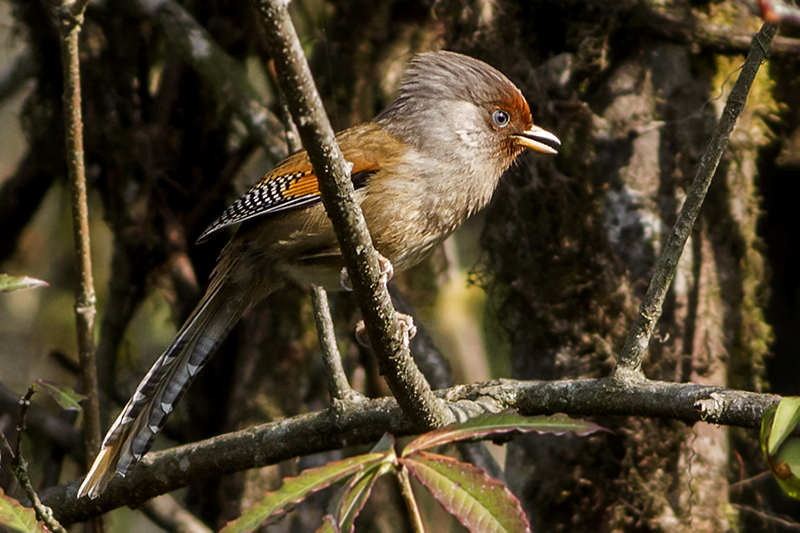
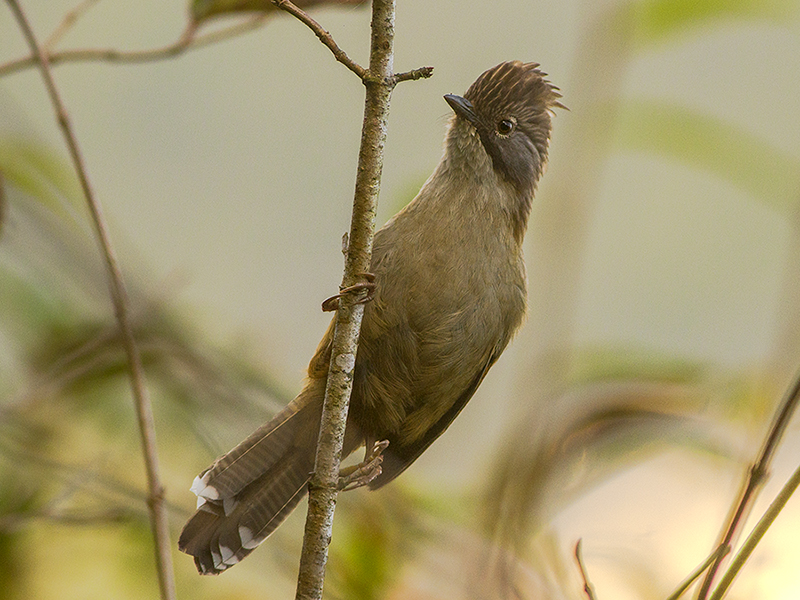
The Rufous-cheeked Laughingthrush is medium-sized, measuring about 25 to 28 cm in length. Adults are characterized by their striking rufous cheeks and ear coverts, which contrast sharply with their olive-brown body plumage. The head is capped with a slightly darker brown, while the underparts are lighter with a subtle buffy tinge. Juveniles resemble adults but exhibit duller overall coloration, lacking the pronounced rufous cheek patch. Males and females are similar in plumage, making gender differentiation challenging in the field. In flight, the Rufous-cheeked Laughingthrush displays a moderately rounded tail and broad wings, which aid in its agile movements through dense foliage. Its perching posture often involves a slightly raised tail and an alert stance, which is typical of many laughingthrushes. When comparing to similar species, it is essential to note the unique facial coloration, as other laughingthrushes in its range may lack such distinctive rufous markings.
Having trouble telling birds apart? Upload a photo to our bird identification tool for an instant species match.
Rufous-cheeked Laughingthrush Habitat and Range
Preferred Habitat
The Rufous-cheeked Laughingthrush thrives in subtropical and tropical moist broadleaf forests. These forests, rich in dense undergrowth and a diverse canopy, provide ideal conditions for foraging and nesting. The species is often found at elevations ranging from 500 to 2000 meters, favoring areas with abundant shrubbery and secondary growth. During the non-breeding season, it may venture into more open woodland areas, but it generally avoids urban environments. Unlike some other members of its family, the Rufous-cheeked Laughingthrush is not commonly found in gardens or agricultural lands, preferring undisturbed forest areas where it can exploit the rich insect life and fruit abundance.
Geographic Range
The Rufous-cheeked Laughingthrush is primarily distributed across Southeast Asia. Its breeding range includes the forested regions of Yunnan province in China, northern Myanmar, and northeastern India, particularly Assam and Arunachal Pradesh. It is considered a resident species, with little evidence of long-distance migration. However, local movements may occur in response to seasonal changes in food availability and habitat conditions. The bird is most frequently observed in forested regions with suitable understory and canopy cover, where it maintains a relatively stable population density. In areas where its habitat overlaps with human activity, it remains elusive, often retreating deeper into forested areas.
Want to know which birds visit your area? Browse our backyard birds by location guides for region-specific species lists.
What Does the Rufous-cheeked Laughingthrush Eat?
The diet of the Rufous-cheeked Laughingthrush includes a wide variety of insects and small invertebrates, which it forages from the forest floor and understory. It also consumes fruits and berries, which become particularly important during the breeding season when insect abundance might fluctuate. The bird exhibits a methodical foraging technique, often turning over leaf litter and probing into crevices to uncover hidden prey. It is known to consume insects like beetles, caterpillars, and ants, with prey sizes ranging from small insects to medium-sized arthropods. Feeding often occurs in the early morning and late afternoon, aligning with cooler temperatures and higher prey activity. In seasonal shifts, the bird may adjust its diet to include a higher proportion of fruits, which provide essential nutrients during times when insect prey is less abundant.
Rufous-cheeked Laughingthrush Behavior and Social Structure
The Rufous-cheeked Laughingthrush is a social bird, often seen in small family groups or larger mixed-species flocks. These flocks provide safety in numbers, allowing for better predator detection and increased foraging success. Territorial behavior is most evident during the breeding season, with pairs defending their nesting area vigorously against intruders. Courtship displays include mutual preening and vocalizations, which strengthen pair bonds. The bird's daily activity patterns are largely diurnal, with peak activity in the morning and late afternoon. It exhibits a curious and inquisitive nature, often exploring new areas of its habitat. In response to predators, the Rufous-cheeked Laughingthrush relies on its agility and dense habitat cover to escape, using alarm calls to alert other flock members.
Rufous-cheeked Laughingthrush Nesting and Reproduction
The Rufous-cheeked Laughingthrush constructs a cup-shaped nest, typically using twigs, grass, and leaves. These nests are often placed low in dense shrubs or small trees, providing concealment from predators. The clutch size ranges from two to four eggs, with both parents sharing incubation duties over a period of approximately 14 to 16 days. The eggs are pale blue with brownish speckles, blending well with the surrounding nest materials. Once hatched, the chicks are altricial, requiring parental care for feeding and warmth. The fledging period lasts about 12 to 15 days, after which the young birds remain with the parents for several weeks to learn essential survival skills. The Rufous-cheeked Laughingthrush typically raises one to two broods per year, depending on food availability and environmental conditions.
Rufous-cheeked Laughingthrush Sounds and Vocalizations
The Rufous-cheeked Laughingthrush is renowned for its melodious song, which consists of a series of rich, fluty notes delivered with a rhythmic, laughing cadence. These vocalizations are often exchanged between pairs or family groups, serving both as communication and territorial advertisement. Call notes include soft whistles and chuckles, while the alarm call is a sharp, abrupt 'chack.' During the dawn chorus, this species is one of the most prominent contributors, its song carrying through the forest understory. The vocalizations are reminiscent of a bubbling brook, adding a natural acoustic layer to the already vibrant forest soundscape.
Interesting Facts About the Rufous-cheeked Laughingthrush
- 1The Rufous-cheeked Laughingthrush can be identified by its distinctive rufous cheek patches, a feature that sets it apart from other laughingthrushes.
- 2This species participates in mixed-species flocks, enhancing its foraging success and predator detection capabilities.
- 3During the breeding season, the Rufous-cheeked Laughingthrush becomes more vocal, using its melodious song to establish territories.
- 4Unlike many birds, the male and female Rufous-cheeked Laughingthrushes share incubation duties equally, showcasing cooperative breeding behavior.
- 5The Rufous-cheeked Laughingthrush has adapted to a variety of forest strata, demonstrating both ground and canopy foraging techniques.
- 6This bird's diet shifts with the seasons, with an increased reliance on fruit during periods of insect scarcity.
- 7The Rufous-cheeked Laughingthrush contributes to forest health as both a seed disperser and insect predator.
Rufous-cheeked Laughingthrush Conservation Status
As of the latest assessments, the Rufous-cheeked Laughingthrush is listed as Least Concern by the IUCN. The population trend appears stable, benefiting from the extensive forest habitats that remain in its range. However, primary threats include habitat destruction and fragmentation due to logging and agricultural expansion. Conservation efforts focus on protecting the remaining forested areas and promoting sustainable land use practices. Historical population changes have been minimal, but ongoing habitat monitoring is essential to ensure long-term viability. Collaboration between local communities and conservation organizations is crucial in maintaining a healthy population of this charismatic species.