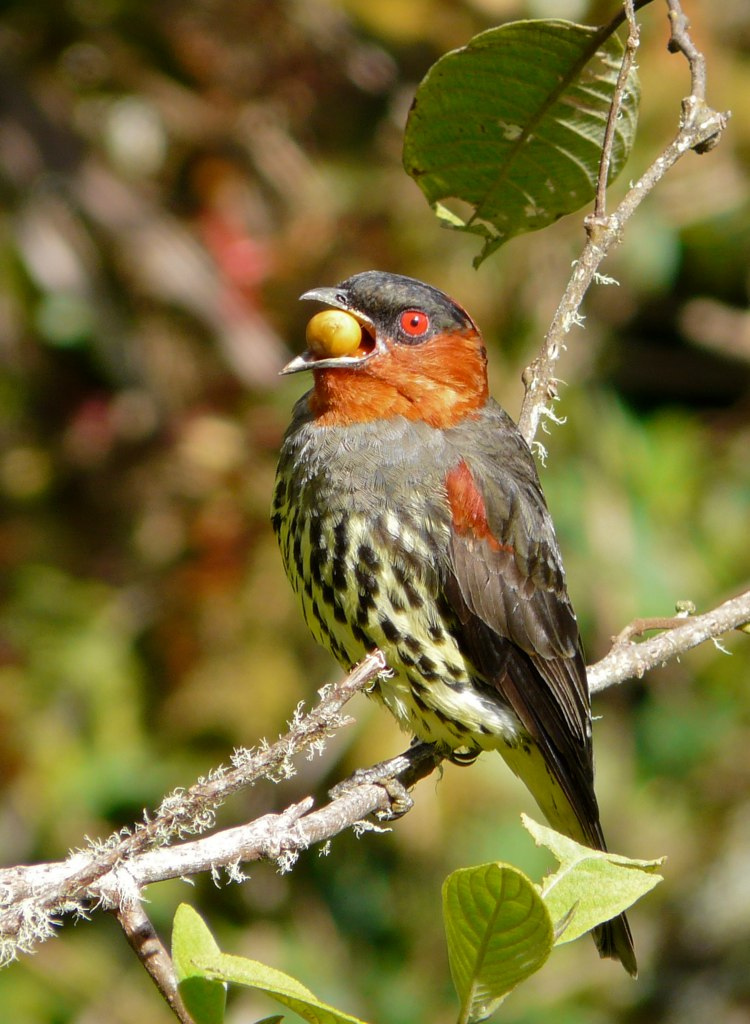
Rufous Piha
Lipaugus unirufus
Order: Passeriformes / Family: Cotingidae

Wikimedia Commons
About the Rufous Piha
The Rufous Piha, scientifically known as Lipaugus unirufus, is a striking bird found primarily in the humid forests of Central and South America. This species belongs to the Cotingidae family, a group of birds renowned for their vibrant colors and unique vocalizations. The Rufous Piha primarily inhabits the lowland tropical forests of countries such as Costa Rica, Panama, Colombia, and Ecuador. It thrives in dense forest habitats where it can often be found perched quietly amidst the canopy. The bird's reddish-brown plumage allows it to blend seamlessly into the forest environment, making it a master of camouflage.
The ecological significance of the Rufous Piha is rooted in its role as both a predator and a prey species within its ecosystem. Feeding predominantly on fruits and insects, the Rufous Piha contributes to seed dispersal, which is crucial for forest regeneration. Its diet also includes small invertebrates, which helps control insect populations. During the breeding season, usually from March to July, the Rufous Piha becomes more vocal and active. Males are known for their loud, distinctive calls, which serve both to attract females and to establish territory. This period of increased activity is critical for reproductive success and influences the dynamics of local bird communities.
The Rufous Piha plays a vital role in the intricate web of forest life, interacting with numerous species of plants and animals. Its presence indicates a healthy, biodiverse ecosystem. Conservation of its habitat is essential, as deforestation poses a significant threat to its population. Despite these challenges, the Rufous Piha remains a common sight in protected areas, underscoring the importance of conservation efforts in preserving tropical biodiversity. As a sentinel species, it provides important insights into the health of tropical ecosystems, making it a focal point for research and conservation initiatives.
The Rufous Piha belongs to the family Cotingidae, within the order Passeriformes. These birds typically live average 5-8 years with a maximum recorded of 10 years..
How to Identify a Rufous Piha
Identifying the Rufous Piha involves noting its uniform rufous-brown plumage, which covers its entire body without any distinct markings. This color helps it blend into the forest canopy. The bird measures approximately 20-22 cm in length, placing it in the medium-sized category among forest birds. The adult plumage does not vary significantly between males and females, which makes gender identification challenging without observing behavior. Juvenile Rufous Pihas resemble adults but may appear slightly duller and less vibrant, which can make them harder to spot in the dense foliage.
When in flight, the Rufous Piha exhibits a silhouette characterized by rounded wings and a moderately long tail, which aids in maneuvering through the forest canopy. Its flight is typically short and direct, often between perches, as it prefers to stay within the cover of trees. While perched, this bird maintains an upright posture, often remaining motionless, which can make it challenging to spot despite its size.
The Rufous Piha can be confused with other cotingas and manakins due to its rufous coloration. However, its lack of distinctive markings and its size help differentiate it from the more boldly patterned manakins. Observing its behavior, such as its quiet perching habits and distinctive calls, can aid in accurate identification.
Having trouble telling birds apart? Upload a photo to our bird identification tool for an instant species match.
Rufous Piha Habitat and Range
Preferred Habitat
The Rufous Piha primarily inhabits lowland tropical forests, with a preference for humid and semi-humid environments. These forests provide the dense canopy cover that the species relies on for foraging and nesting. It is commonly found at elevations ranging from sea level to 1,200 meters, although it may occasionally venture higher in search of food or during dispersal.
Seasonal habitat shifts are minimal for the Rufous Piha, as it tends to remain within its preferred forest environments year-round. The bird's adaptability to intact forest habitats means it is less frequently observed in urban or fragmented landscapes. However, in areas where forest edges meet secondary growth, the Rufous Piha may be seen taking advantage of the increased availability of fruiting plants.
In terms of urban versus rural presence, the Rufous Piha is decidedly a forest species. It does not adapt well to urban environments and is rarely found in areas heavily altered by human activity. Conservation of its forest habitat is crucial to ensuring its continued presence and ecological role.
Geographic Range
The Rufous Piha's range extends across Central and northern South America, with its presence documented in countries such as Costa Rica, Panama, Colombia, Ecuador, and western Venezuela. It occupies a swath of tropical forests that provide the necessary resources for its survival. The Rufous Piha does not undertake long-distance migrations, remaining within its established range throughout the year.
Within this range, population densities can vary depending on habitat quality and availability of resources. Dense, undisturbed forests in regions like the Darien Gap of Panama and the Choco region of Colombia often serve as population density hotspots for the Rufous Piha. These areas provide the optimal conditions for foraging, breeding, and shelter.
The Rufous Piha's range does not extend into temperate regions, as its ecological requirements are tightly aligned with the tropical environments found within its natural range. Conservation of these habitats is essential to maintaining stable populations, particularly given the threats of deforestation and habitat fragmentation that are prevalent in its range.
Want to know which birds visit your area? Browse our backyard birds by location guides for region-specific species lists.
What Does the Rufous Piha Eat?
The Rufous Piha's diet primarily consists of fruits and small invertebrates, reflecting its role as both a frugivore and insectivore. The bird's fruit consumption plays a critical role in seed dispersal, aiding in the regeneration of tropical forests. It has a particular preference for small berries and drupes, which it consumes while perched or during short flights.
In addition to fruits, the Rufous Piha supplements its diet with a variety of insects and other small arthropods. It often gleans these prey items from foliage and branches, using a methodical approach to foraging. The bird's diet may vary seasonally based on the availability of certain fruiting plants and insect populations.
During the breeding season, the Rufous Piha may increase its intake of protein-rich invertebrates to meet the nutritional demands of raising young. This seasonal dietary shift highlights the bird's adaptability and its reliance on diverse food sources within its forest habitat. Feeding activity typically peaks during the cooler parts of the day, such as early morning and late afternoon, when the bird is most active.
Rufous Piha Behavior and Social Structure
The Rufous Piha exhibits a solitary and secretive lifestyle, often remaining hidden within the dense canopy of its forest habitat. This bird is generally non-territorial, although males may become more vocal and assertive during the breeding season to attract mates and establish a temporary territory.
Courtship displays of the Rufous Piha involve vocalizations rather than elaborate physical displays. Males emit a series of loud, melodious calls to attract females. These calls can be heard echoing through the forest, serving as both a mating signal and a means of communication among individuals.
The Rufous Piha does not typically form large flocks. Instead, it is often observed alone or in pairs, particularly during the breeding season. Its response to predators is usually limited to remaining motionless and relying on its camouflage, although it may emit alarm calls if directly threatened.
Daily activity patterns of the Rufous Piha align with those of many forest birds, with peak activity occurring during the early morning and late afternoon. This schedule allows the bird to take advantage of optimal foraging conditions while avoiding the heat of midday.
Rufous Piha Nesting and Reproduction
The nesting habits of the Rufous Piha are characteristic of many forest-dwelling birds. It constructs a simple cup-shaped nest, often situated in the fork of a tree branch. The nest is typically composed of fine twigs, moss, and leaves, carefully woven together to create a secure structure.
Preferred nesting locations are within the dense canopy, providing protection from predators and environmental elements. The Rufous Piha typically lays a clutch of two to three eggs, which are incubated primarily by the female. The incubation period lasts approximately 16 to 18 days, during which the male may assist by providing food for the female.
After hatching, the nestlings remain in the nest for about 18 to 20 days before fledging. Both parents are involved in feeding and caring for the young, ensuring that they receive adequate nutrition during this critical developmental stage. The Rufous Piha generally raises one brood per year, although favorable conditions may occasionally allow for a second brood.
Rufous Piha Sounds and Vocalizations
The Rufous Piha is known for its distinctive vocalizations, which play a key role in its communication and courtship behaviors. Its primary song consists of a series of clear, melodious notes delivered in a rhythmic pattern. These calls are often described as haunting and can be heard resonating through the forest canopy.
In addition to its primary song, the Rufous Piha also produces a variety of call notes. These include short, sharp whistles and soft chirps used for communication between mates or as alarm signals. The bird's calls are most prominent during the dawn chorus, when males actively sing to attract females and establish presence.
Compared to many other bird species, the Rufous Piha's vocal repertoire is relatively simple, yet its clear and resonant calls make it a distinctive voice within its forest habitat. The sounds of the Rufous Piha contribute to the rich auditory landscape of tropical forests, making it an integral part of the natural soundscape.
Interesting Facts About the Rufous Piha
- 1The Rufous Piha measures approximately 20-22 cm in length, making it a medium-sized bird within the tropical forest ecosystem.
- 2Unlike many other birds, the Rufous Piha does not exhibit significant sexual dimorphism, with males and females appearing similar.
- 3The Rufous Piha's call can carry over long distances in the forest, helping it communicate with potential mates and rivals.
- 4The bird's reddish-brown plumage provides excellent camouflage in the forest canopy, aiding it in avoiding predators.
- 5Although primarily a forest bird, the Rufous Piha is occasionally found at forest edges where it takes advantage of increased fruit availability.
- 6The Rufous Piha's role as a seed disperser makes it an important contributor to forest regeneration and biodiversity.
- 7During the breeding season, Rufous Pihas become more vocal, using their calls to establish temporary territories and attract mates.
Rufous Piha Conservation Status
The Rufous Piha is currently listed as a species of Least Concern by the IUCN, indicating that its populations are relatively stable. However, ongoing threats such as deforestation and habitat fragmentation pose significant risks to its habitat and long-term survival. Primary threats include logging, agricultural expansion, and land conversion for human development, all of which contribute to habitat loss. Conservation efforts focus on protecting and preserving large tracts of intact forest, which are essential for maintaining healthy Rufous Piha populations. Historically, the Rufous Piha has benefited from the establishment of protected areas and national parks within its range. These conservation measures have helped stabilize populations in key areas, although continued vigilance is necessary to address emerging threats and ensure the bird's continued survival.